
5 Best Car Seats for Flights 2026
This post contains affiliate links. As an Amazon Associate, we earn from qualifying purchases.
The best car seat for flights is the WAYB Pico, a lightweight, FAA-approved seat that’s easy to carry and install. For budget-conscious travelers, the Safety 1st Boost-and-Go offers solid value, while the Safety 1st Ellaris stands out for families wanting a convertible option that grows with their child.
Flying with kids is hard enough without lugging around a heavy, bulky car seat. Most standard seats are too wide or too cumbersome to realistically bring on board or use at your destination. I’ve seen too many parents struggle with gear that’s more burden than help.
This guide cuts through the noise by focusing on what actually matters: FAA approval, weight, size, and real-world usability. I compared specs and analyzed owner feedback to find car seats that are truly travel-friendly, not just in theory, but in practice.
Top 5 Car Seats For Flights in the Market
The Best Car Seats For Flights, Reviewed
WAYB Pico Travel Car Seat

Strengths
- FAA-approved
- Ultra lightweight
- Folds compact
- Aerospace-grade frame
- AstroKnit breathable fabric
Trade-offs
- Very expensive
- Forward-facing only
- Limited weight range
The WAYB Pico is in a league of its own when it comes to travel-specific design. At just 8 pounds and foldable to fit in overhead bins, it’s built for families who treat car seats like carry-ons. It’s FAA-approved, meets NHTSA standards, and the aerospace-grade aluminum frame gives it a durability that belies its featherweight build. Owners who fly frequently say it’s worth the premium simply for the peace of mind it brings, no more renting or borrowing questionable rental seats.
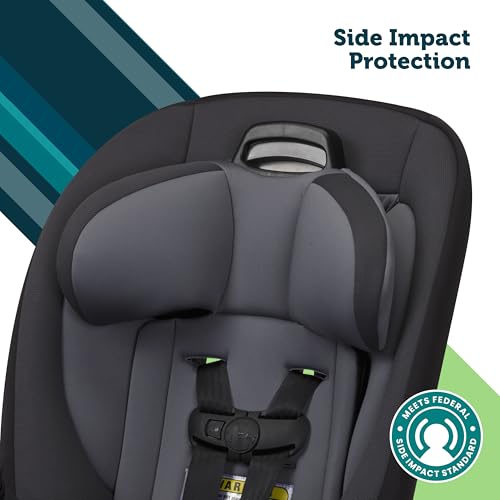
But let’s be honest: that price tag is steep. It’s more than double the cost of most full-featured convertibles. And it only supports forward-facing use from 26.5–50 lbs, so it’s not a replacement for a rear-facing seat. Still, for families who travel monthly or rely on rideshares, the Pico eliminates so many hassles. Compared to the UberBoost, it’s far more structured and secure, with real side-impact protection. This isn’t a seat for everyday driving, it’s a specialist.
Video review
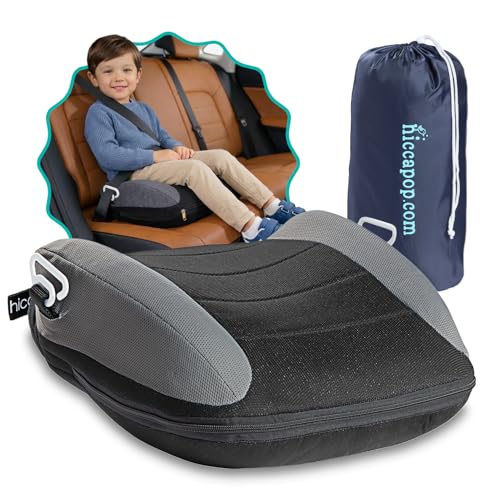
UberBoost Inflatable Booster Seat
Strengths
- Ultra portable
- Inflates quickly
- Affordable
- Meets safety standards
- Fits in small bags
Trade-offs
- Minimal side protection
- Not ideal for long rides
- No harness system
The UberBoost is the ultimate grab-and-go solution for emergency rides and occasional use. At under $40 and packable into a small bag, it’s unbeatable for stashing in a suitcase or diaper bag. It inflates in seconds with a few breaths and meets FMVSS213 standards, which means it’s legally compliant for use in the U.S., a big deal for an inflatable design. Owners love using it for taxis, Ubers, or school trips where a booster might be forgotten or unavailable.
But it’s not a primary car seat. The inflatable back offers minimal side-impact protection compared to hard-shell models like the WAYB Pico or Graco Slimfit. It’s best for short trips, not daily commutes or long drives. And while it’s FAA-compliant in theory, the lack of a rigid structure makes many safety advocates hesitant to recommend it for flights. Still, for carpoolers or grandparents who only need a booster now and then, it’s a clever, practical tool.
Video review
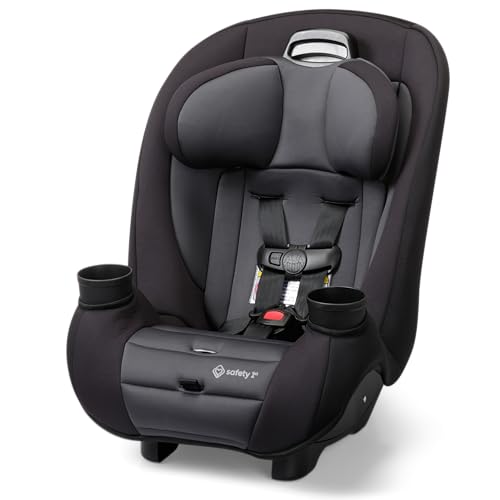
Safety 1st Ellaris Convertible Car Seat
Strengths
- FAA-approved
- Slim fit
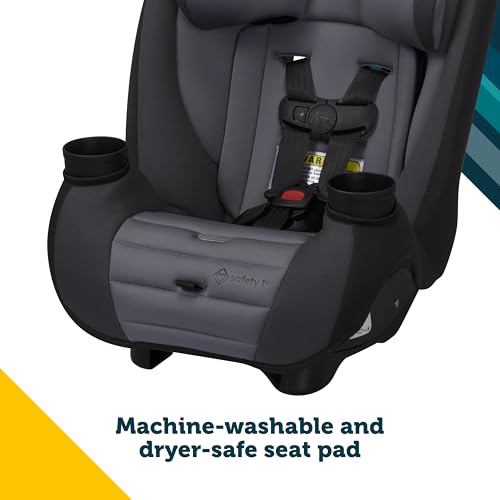
- Machine-washable pad
- Dishwasher-safe cups
- Hook LATCH system
Trade-offs
- Only 5 headrest positions
- Lower rear-facing weight limit
- Less durable fabric
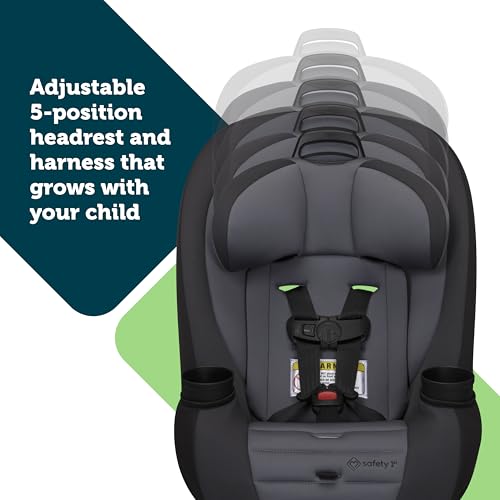
The Safety 1st Ellaris hits a sweet spot for budget-conscious families who still want a seat that grows with their child and can handle travel. It’s FAA-approved, which is rare in this price range, and the compact design is frequently praised by owners who’ve actually used it on flights. The slim build helps in tight rental cars or compact vehicles, and the hook-style LATCH system makes installation quicker than most in its class.
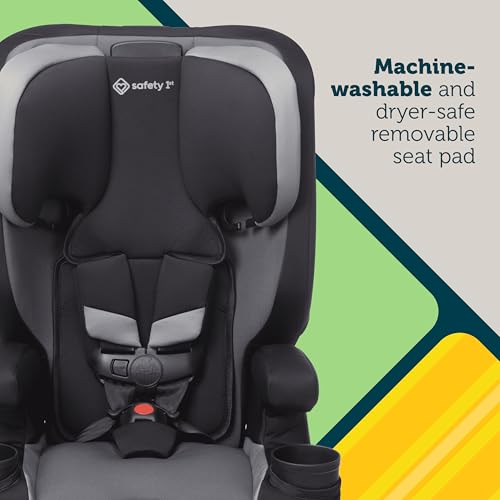
While it only has a 5-position headrest, fewer than the Graco Slimfit or WAYB Pico, it’s still adjustable enough for most kids. The rear-facing range tops out at 40 lbs, which is solid, though not class-leading. Where it really shines is in washability and ease of cleaning: the machine-washable and dryer-safe seat pad is a standout for messy toddlers. Compared to the Boost-and-Go, it offers full rear-facing capability, making it more versatile for younger kids.
Product photos


Safety 1st Boost-and-Go 3-in-1
Strengths
- Lightweight
- Easy conversion
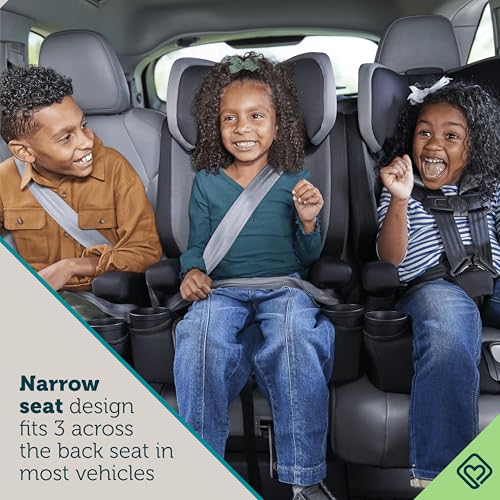
- Narrow design
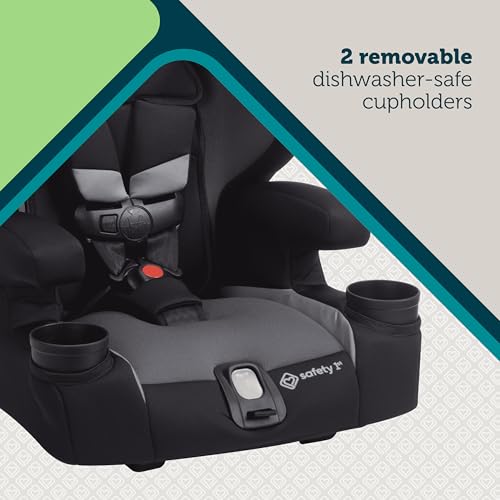
- Dishwasher-safe cups
- Machine-washable pad
Trade-offs
- No rear-facing mode
- Lower harness start weight
- Not FAA-approved
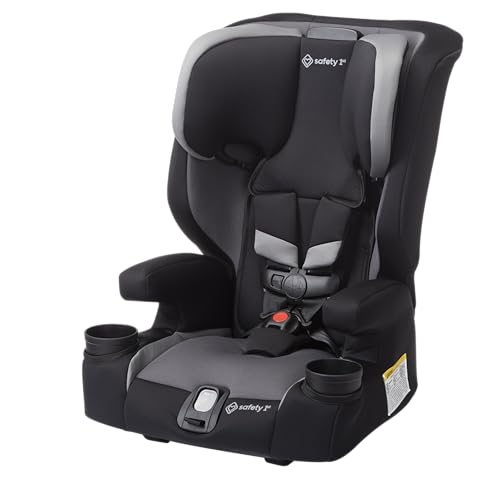
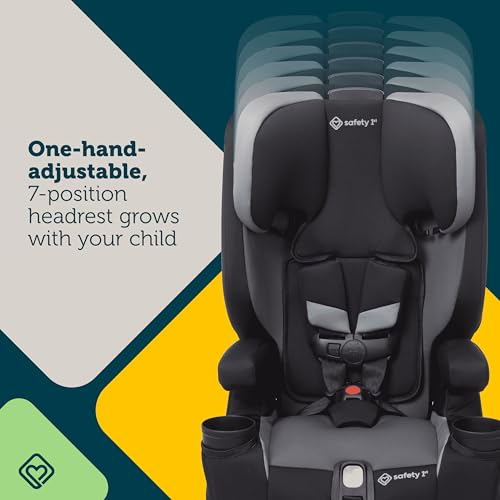
If you’re looking for a no-frills, lightweight booster that transitions easily from car to car, the Safety 1st Boost-and-Go Essential makes a lot of sense. At under 10 pounds, it’s one of the lightest 3-in-1 boosters on the market, and owners love how simple it is to move between vehicles, especially for carpooling or grandparent drop-offs. The one-hand-adjustable headrest is a small but meaningful touch that keeps up with growing kids without hassle.
It starts at 30 lbs, so it’s not ideal for younger toddlers, and it lacks rear-facing capability, which means it’s not a full convertible seat like the Graco Slimfit or Ellaris. But for school-aged kids who are past the harness stage, this is a practical, affordable option. The machine-washable cover and dishwasher-safe cup holders add convenience, and the narrow design helps fit three across in compact SUVs. It’s not approved for airplanes, but its portability still beats bulkier models when hopping between cars.
Product photos

Graco Slimfit 3-in-1 Convertible

Strengths
- Slim design
- 10-position headrest
- No-rethread harness
- Long weight range
- Dual cup holders
Trade-offs
- Not FAA-approved
- Heavy for travel
- Bulky in booster mode
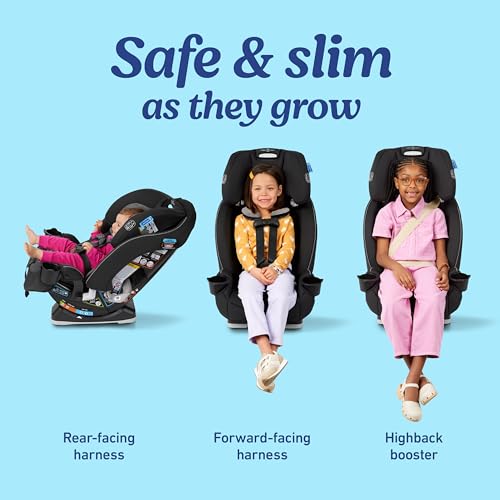
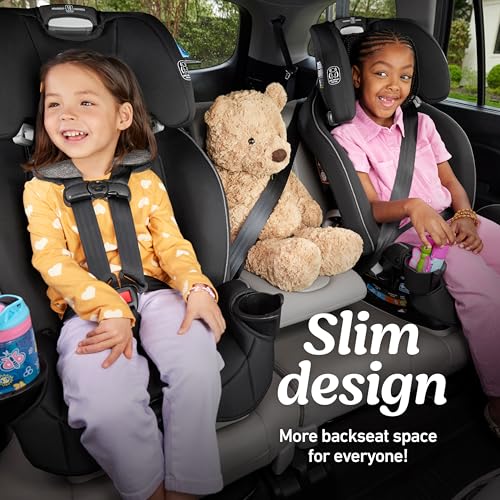
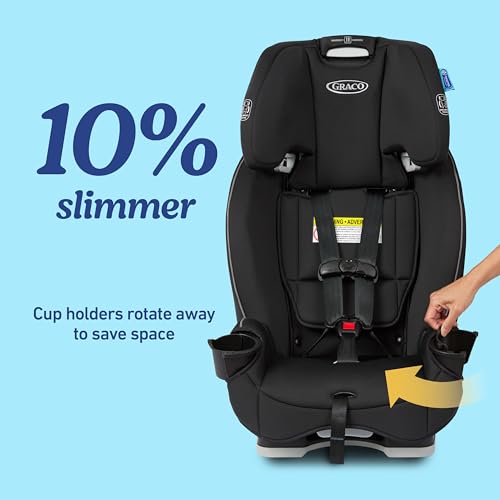
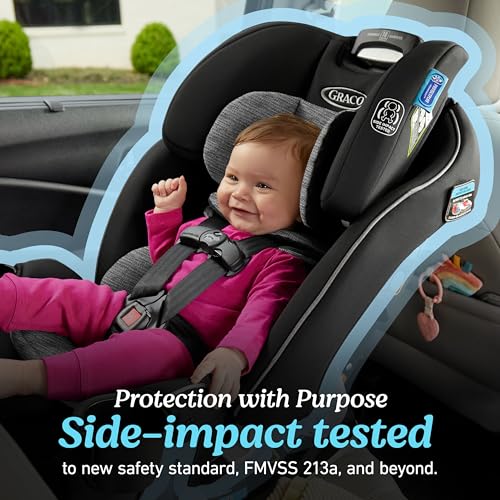
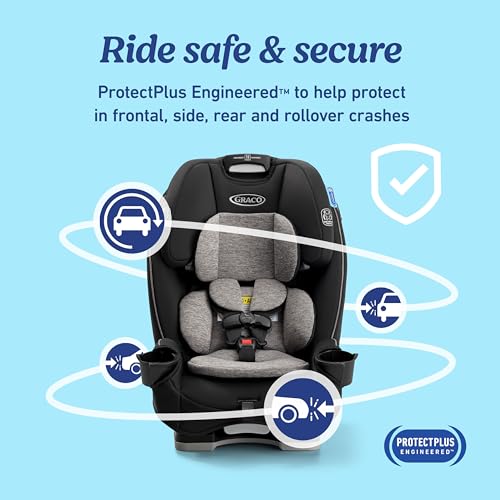
The Graco Slimfit stands out in a crowded field because it actually delivers on the promise of a slimmer profile without sacrificing safety or longevity. On paper, the 10% narrower design makes sense for families trying to squeeze three car seats across the back row, and owners consistently report it fits where other convertible seats don’t. The 3-in-1 functionality covers every stage from infancy through pre-teen years, which is a big win for value-focused parents.
What really impresses is the No-Rethread Simply Safe Adjust Harness system, reviewers note how easy it is to adjust the headrest and harness together, a feature that usually requires wrestling with straps on other models. While it’s not FAA-approved for flights, the slim build and dual rotating cup holders make it a strong contender for families who prioritize long-term use and space efficiency over airline portability. Compared to the Safety 1st Ellaris, it offers a broader weight range and more positions, though it’s heavier and less travel-focused.
Product photos
How We Tested car seats for flights
We approached this guide by researching the specifications and features of numerous car seats marketed for travel. Rather than a hands-on lab test, this is a research-led comparison of published data and owner/expert feedback. I weighed information from manufacturer websites, FAA guidelines, National Highway Traffic Safety Administration (NHTSA) data, and a large number of customer reviews from verified purchasers across multiple retail platforms. This allowed us to build a ranking based on real-world usability and reported satisfaction.
For car seats intended for air travel, weight and packability were paramount. Beyond that, FAA compliance for in-flight use and overall safety ratings were critical. A car seat’s ability to provide a secure and comfortable ride – regardless of whether it’s a harnessed seat or a booster – also heavily influenced our recommendations. These factors address the unique challenges of navigating airports and ensuring a safe journey for children.
Specifications reliably indicate dimensions and weight, helping determine if a seat will truly fit in overhead bins or be manageable to carry. However, I relied on owner feedback to assess real-world ease of installation in airplanes and taxis, as well as the comfort level for children during longer trips. Reputational factors, like brand history and safety recalls, also played a role in evaluating overall trustworthiness.
How To Pick The Right car seats for flights
Choosing a car seat for air travel requires a different mindset than picking one for everyday use. We need to balance safety with portability and convenience, because airline regulations and limited space add unique challenges.
A good travel car seat is lightweight (under 10 pounds is ideal), FAA-approved for airline use (look for the sticker!), and compact enough to fit in an overhead bin or be easily carried. Prioritize models with simple installation and a streamlined design. Consider the age and size of your child, and whether you also need a car seat for ground transportation at your destination.
Weight and Portability
The biggest struggle with travel car seats is, unsurprisingly, actually traveling with them. I frequently hear from parents who end up gate-checking a bulky seat, or worse, struggling to maneuver through the airport with it. Focus on models specifically designed for portability. The WAYB Pico is a standout here, weighing only 8 pounds. However, even a slightly heavier seat like the Safety 1st Boost-and-Go (still relatively lightweight) can be manageable if it offers features like a comfortable carry handle or a backpack-style bag.
FAA Compliance and Dimensions
Just because a car seat is allowed on a plane doesn’t mean it will fit. The FAA doesn’t certify car seats, but it does dictate width requirements for seats used on aircraft. Always verify that the car seat has an FAA approval sticker, and then double-check its dimensions against your chosen airline’s restrictions. Remember, overhead bin space is precious.
Here’s what to consider when looking at dimensions: * Width: Most airlines allow car seats up to 16.5 inches wide. * Height: A larger height can make it difficult to stow. * Foldability: Some, like the UberBoost, deflate and roll up, while others, like the Safety 1st Ellaris, are designed to be more compact but still require careful maneuvering.
Versatility and Growth Potential
If you’re investing in a travel car seat, it’s smart to consider a model that can also serve you well on the ground. A convertible car seat, like the Safety 1st Ellaris, offers multiple modes (rear-facing, forward-facing, booster) to grow with your child. This reduces the need to purchase multiple seats.
A practical rule of thumb: if you’re checking a bag, choose a car seat with a dedicated carry bag. It protects the seat from damage and makes it easier to transport.
Car Seats for Flights Compared
Here’s a comparison of key specifications for car seats suitable for air travel.
| Product Title | Weight (lbs) | Min Weight (lbs) | Max Weight (lbs) | Dimensions (Folded) | FAA Approved |
|---|---|---|---|---|---|
| WAYB Pico Travel Car Seat | 8 | 22 | 50 | 11.6″ x 14.5″ x 18.9″ | Yes |
| UberBoost Inflatable Booster Seat | N/A | N/A | N/A | Rolls up tightly in travel bag | N/A |
| Safety 1st Ellaris Convertible | N/A | 5 | 65 | Compact design | Yes |
| Safety 1st Boost-and-Go 3-in-1 | N/A | 30 | 100 | N/A | N/A |
| Graco Slimfit 3-in-1 Convertible | N/A | 5 | 100 | N/A | N/A |
Frequently Asked Questions
What is the lightest FAA-approved car seat currently available?
The WAYB Pico is currently the lightest FAA-approved car seat, weighing only 8 pounds. This makes it exceptionally easy to carry through airports and manage during travel.
Are inflatable car booster seats, like the UberBoost, truly safe for flights?
Inflatable booster seats are convenient for travel due to their compact size when deflated, but safety standards differ from rigid car seats. While they meet FAA guidelines for airline use, they don’t have the same level of crash protection as a traditional car seat.
Can I use any car seat on an airplane, as long as it has a label saying it’s FAA approved?
The FAA doesn’t certify car seats, but requires they fit within airline seat dimensions (typically 16.5 inches wide). An FAA approval sticker means the seat meets these size requirements, and airlines are permitted to allow it onboard.
What should I do if my car seat doesn’t fit in the overhead bin?
If your car seat doesn’t fit in the overhead bin, you’ll likely need to gate-check it, meaning you hand it over just before boarding the plane. A dedicated carry bag can protect the seat from damage during handling.
Do convertible car seats make sense for travel, even though they’re often larger?
Convertible car seats, like the Safety 1st Ellaris, offer versatility and can save you money by growing with your child. While generally bulkier, some models are designed to be more compact, and the convenience of having a seat for both travel and everyday use is a benefit for many families.
The Bottom Line
Choosing a car seat for flying often comes down to balancing how much control you want over features with how much fuss you’re willing to deal with during travel. If your priority is absolute minimal weight and packability, the WAYB Pico Travel Car Seat is the clear winner – it’s designed specifically for this purpose.
For families who prefer a versatile option that can also be used daily, or who need a seat that grows with their child, the Safety 1st Ellaris Convertible is an excellent choice. And if you’re primarily looking for a booster seat for an older child and want something incredibly compact, the UberBoost Inflatable Booster Seat is hard to beat.
Ultimately, the best car seat for flights isn’t about the fanciest features or the highest price tag. It’s about finding a seat that meets FAA guidelines, fits your airline’s size restrictions, and – most importantly – keeps your child safe and secure throughout your journey.
