
7 Best Car Seats for Airplanes 2026
This post contains affiliate links. As an Amazon Associate, we earn from qualifying purchases.
The best car seat for airplanes is the WAYB Pico, a lightweight, FAA-approved seat that’s easy to carry and install. For budget-conscious families, the BubbleBum inflatable booster offers solid safety in a packable form, while the Mifold hifold delivers clever, space-saving design for older kids.
Traveling with a child means balancing safety, logistics, and sanity. A car seat that works in your car might be a nightmare at the airport, too heavy, too bulky, or not approved for flight. Parents need gear that’s not only safe but practical for tight cabins and long layovers.
This guide cuts through the noise, focusing on models that meet FAA standards and real-world travel demands. We compared specs, analyzed owner experiences, and prioritized seats that deliver on portability, ease of use, and long-term value.
Top 7 Car Seats For Airplanes in the Market
The Best Car Seats For Airplanes, Reviewed
WAYB Pico Travel Car Seat

Strengths
- Fits in overhead bin
- Ultra lightweight
- Premium build quality
Trade-offs
- Very expensive
- Forward-facing only
- Shorter usage window
The WAYB Pico is in a class of its own, and so is its price. At well over $600, it’s the most expensive travel seat on the market, but it also delivers on a promise no other seat does: a lightweight, foldable, FAA-approved seat that fits in an overhead bin and weighs just 8 pounds. Made with aerospace-grade materials, it’s built like a piece of carry-on luggage, with a sleek design and premium mesh fabric that resists heat buildup. The fold-and-go mechanism works smoothly, and owners consistently report it’s a standout for rideshares, road trips, and international flights where gate-checking a car seat isn’t an option.
Still, that price tag demands scrutiny. You’re paying for innovation and portability, not longevity, the weight and height limits end at 50 pounds, so it won’t last as long as a 3-in-1 like the Diono. And while it meets all FAA and NHTSA standards, it doesn’t offer the side-impact protection or extended rear-facing features some parents want. But if you travel constantly and hate lugging car seats, the Pico is the closest thing to a luxury travel solution.
Video review
Mifold hifold Adjustable Booster
Strengths
- Extremely portable
- Highly adjustable
- FAA and global approved
Trade-offs
- Unconventional belt fit
- Steeper learning curve
- Minimal padding
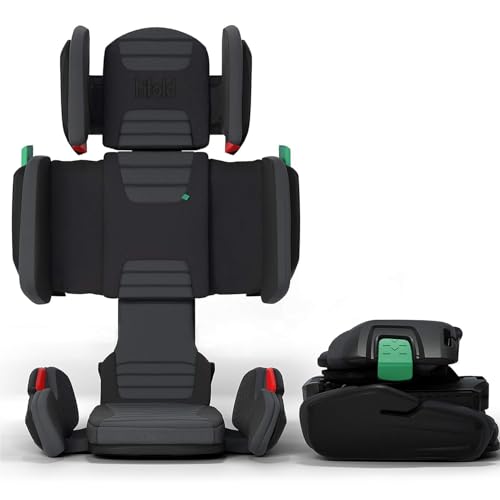
The Mifold Hifold flips traditional booster design on its head, literally. Instead of lifting the child up to the seatbelt, it brings the seatbelt down to fit the child, using adjustable straps and a compact frame. This “grab and go” high-back booster folds down to a fraction of the size of rigid models and weighs next to nothing, making it ideal for grandparents’ cars, taxis, or carry-on storage. With 243 adjustment settings, it fits a wide range of kids, and its EPE foam offers solid impact protection. It’s FAA-approved and globally compliant, a big plus for international travelers.
However, the learning curve is real. First-time users often struggle with correct belt routing, and some kids find the fit less intuitive than a traditional high-back. While it’s safer than inflatable options, it doesn’t offer the same head support as the Evenflo or Diono. Still, for a seat that bridges portability and real safety, the Mifold is one of the few that truly delivers on both.
Video review
BubbleBum Inflatable Travel Booster
Strengths
- Ultra portable
- Crash tested
- Fits three across
Trade-offs
- Requires inflation
- No head support
- Less durable than rigid boosters
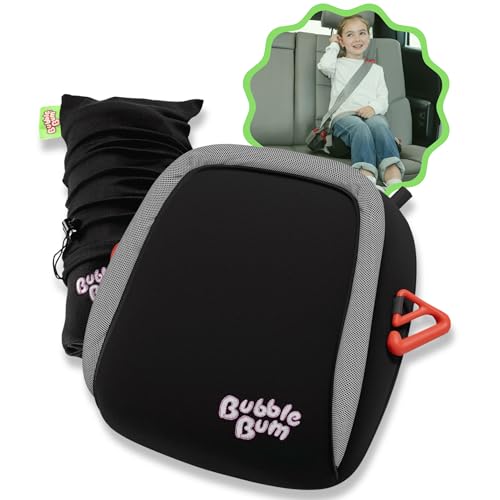
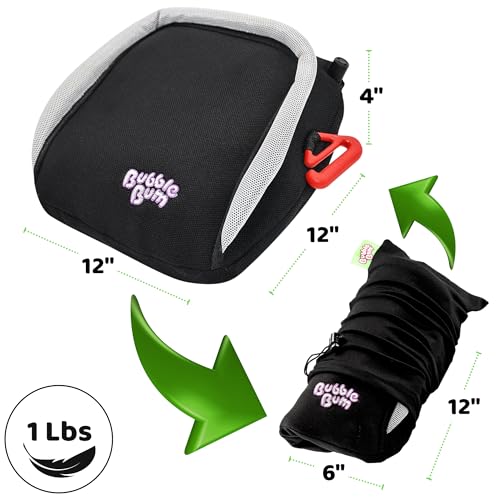
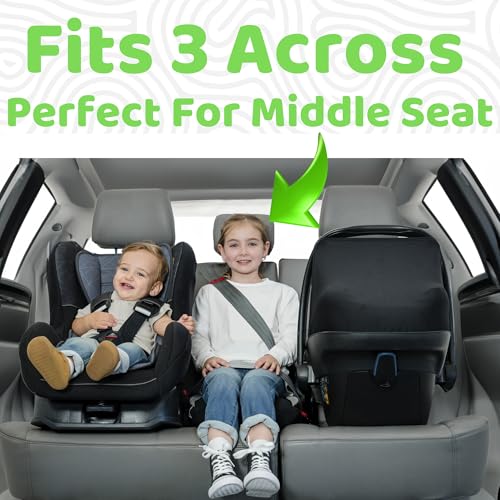
If space and weight are your top concerns, the BubbleBum is a genius solution for school-age kids who’ve outgrown harnessed seats. It’s inflatable, so it packs down to the size of a water bottle, easily slipping into a backpack or carry-on. This is the go-to booster for grandparents, rideshares, or rental cars where lugging a full-sized seat isn’t practical. The fact that it’s independently crash tested and meets U.S. safety standards gives it legitimacy, which many inflatable seats lack. Parents note it holds up well over time, and the soft cushioning is a hit with kids who complain about hard plastic on long trips.
Still, it’s not a seat you’d want to use daily in your own car. The inflation process adds a small friction point, especially if you forget to check it before leaving, and some owners report slow leaks after heavy use. Compared to rigid boosters like the Evenflo GoTime LX, it offers less side impact protection and no head support. But for its niche, portability and convenience, it’s unmatched at this price.
Product photos



Diono Radian 3R Convertible
Strengths
- Extends to booster
- Folds for storage
- Fits 3 across
Trade-offs
- Heavy for travel
- Expensive upfront
- Longer installation time
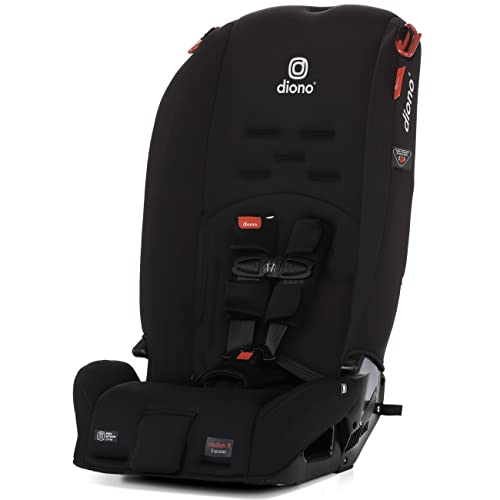
The Diono Radian 3R is the gold standard for long-term, all-in-one convertible seats, and it’s a standout for air travel too. It grows with your child from birth to booster, supporting up to 120 pounds, which means you’ll never need to buy another seat. Its slim design fits three across, a rarity at this weight class, and it’s FAA-approved for airplane use, though at 23 pounds, it’s heavier than dedicated travel seats. The steel-reinforced core and memory foam padding deliver top-tier crash protection, and owners rave about its durability and ease of cleaning.
What really sets it apart is the folding feature: unlike most large convertibles, it folds flat for storage or travel. That’s a huge win for families who want one seat for everything, daily commutes, road trips, and flights, without sacrificing safety or longevity. Compared to the Graco Contender or Safety 1st Ellaris, it’s pricier but far more versatile. For parents who want to invest once and forget it, this is the smarter long-game play.
Product photos


Graco Contender Slim Convertible
Strengths
- Lightweight design
- FAA approved
- Slim fit
Trade-offs
- Shorter rear-facing range
- No 3-in-1 conversion
- Lower weight limit
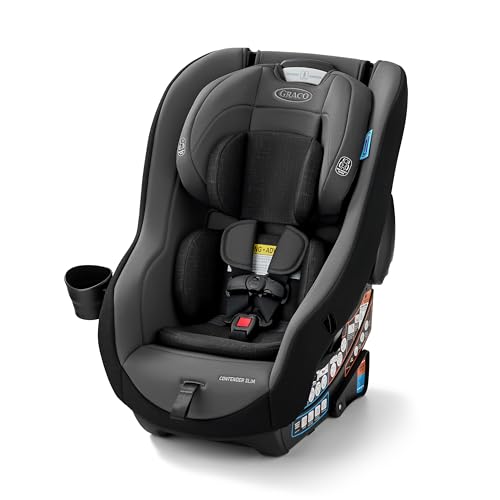
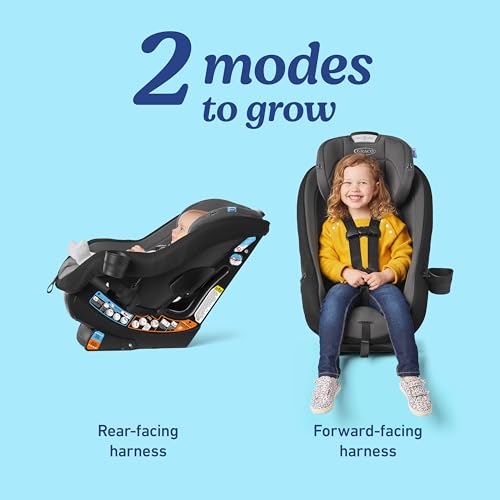
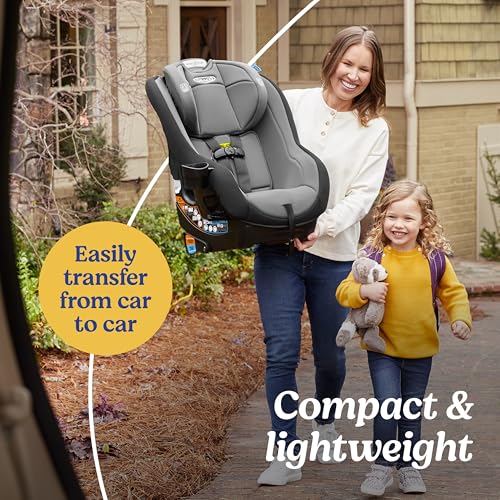
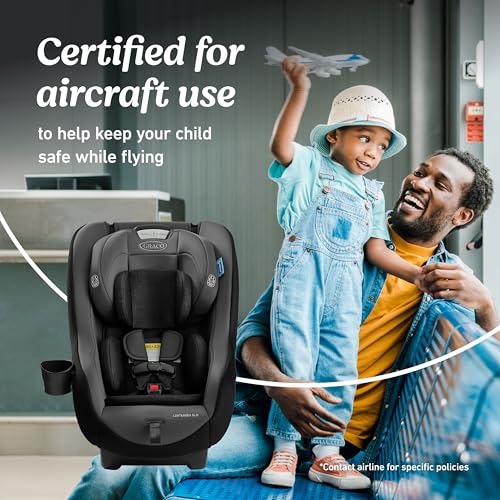
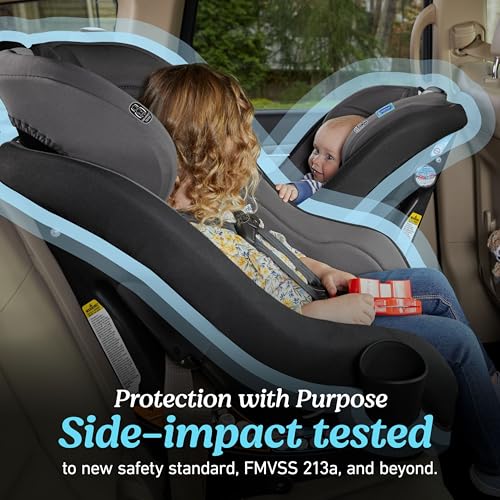
The Graco Contender Slim stands out in the convertible seat category for families who fly regularly and need a seat that won’t eat up precious space in a rental car or airplane row. Its slim footprint is a real advantage when you’re trying to fit three car seats across or navigating tight middle seats on a flight. On paper, the 5–40 lb rear-facing range is modest compared to some extended-rear-facing models, but it’s sufficient for most toddlers under age 3. The fact that it’s FAA-approved and lightweight makes it a solid travel companion, and owners consistently report it’s easy to install and move between vehicles without strain.
Graco’s ProtectPlus engineering is a known quantity in the car seat world, and while crash test performance isn’t unique to this model, it’s reassuring for parents who prioritize layered safety. Compared to bulkier convertibles like the Diono Radian, the Contender Slim trades some longevity for portability. But for families who want one seat that handles both daily drives and occasional flights without hassle, this balance makes sense.
Product photos

Safety 1st Ellaris 3-in-1

Strengths
- Affordable price
- 3-in-1 use
- Easy to clean
Trade-offs
- Lower rear-facing limit
- Lightweight frame
- Average crash protection
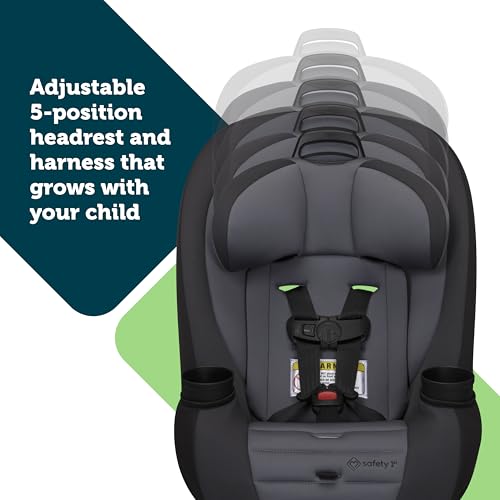
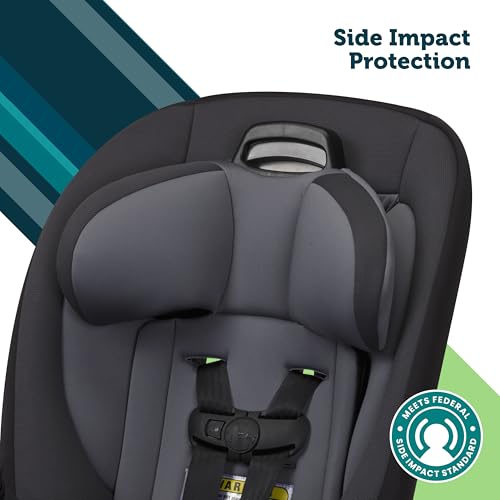
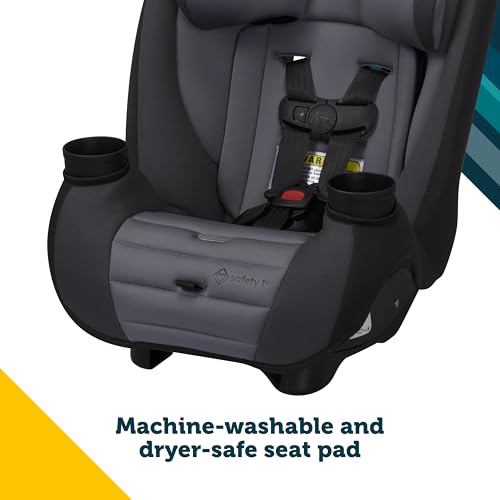
At under $100, the Safety 1st Ellaris delivers exceptional value without cutting major corners. It’s a slim 3-in-1 convertible that transitions from rear-facing infant to forward-facing with harness and eventually to a belt-positioning booster. The 5-position headrest adjusts easily, and the machine-washable cover is a practical win for messy kids. It’s FAA-approved and compact enough for most airplane seats, making it a solid budget-friendly pick for families who fly occasionally. Owners appreciate the dishwasher-safe cup holders and simple LATCH system, which make daily use less of a chore.
But value comes with trade-offs. The rear-facing limit tops out at 40 pounds, which means some kids will outgrow it before age 4. The padding is thinner than in premium models like the Diono, and the plastic feels less durable over time. Still, for half the price of a Radian, it covers all the basics and then some. When compared to the Graco Contender Slim, it offers more growth stages but less structural heft.
Product photos


Evenflo GoTime LX Booster
Strengths
- Long weight range
- Easy height adjustment
- Cup holders
Trade-offs
- Bulky for travel
- No LATCH for boosters
- Average padding
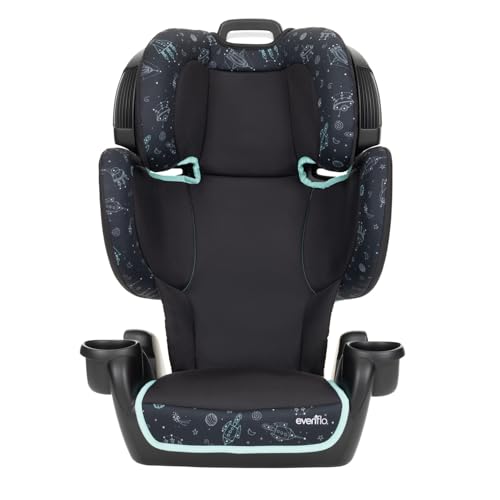
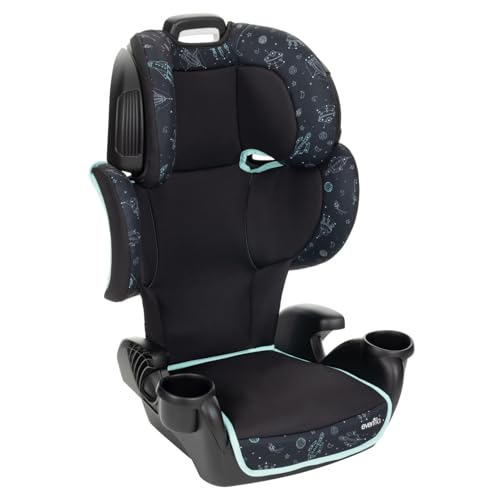
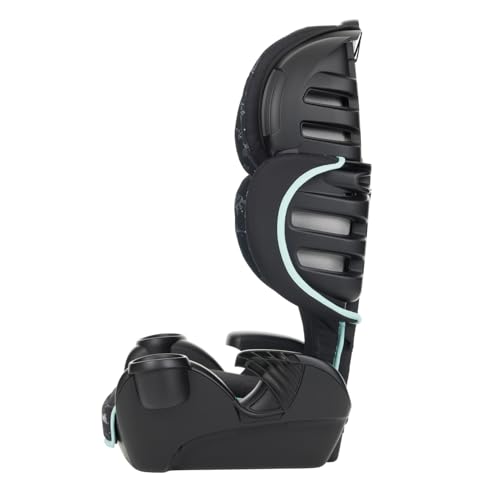
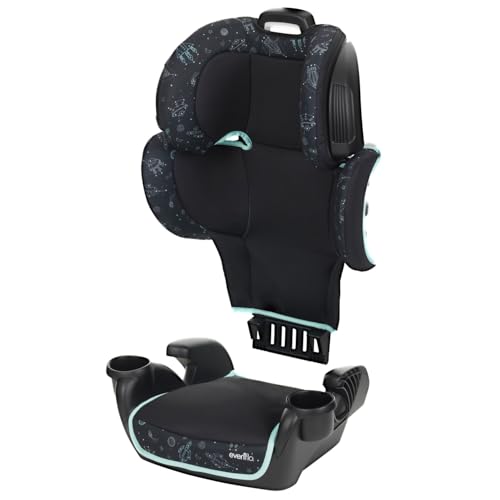
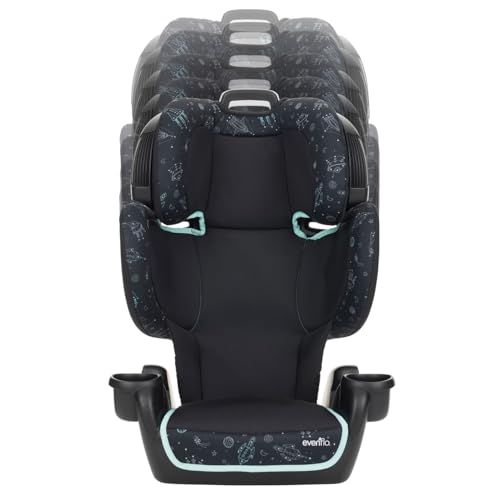
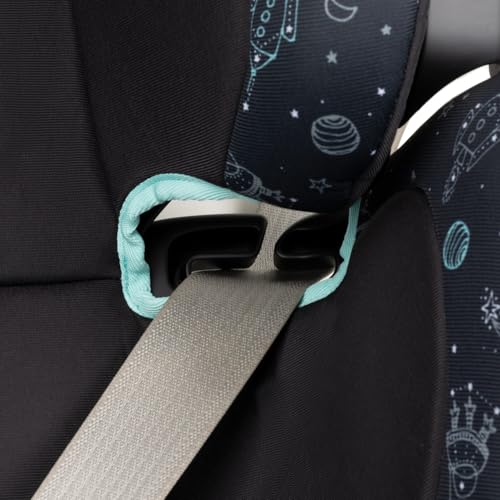
The Evenflo GoTime LX is a no-frills booster that does exactly what it promises: grows with your child and stays out of the way. It transitions from high-back to backless mode, which means you can keep using it from age 5 up to 120 pounds, longer than most basic boosters. The 7-position headrest adjusts with one hand, a small but meaningful detail for busy parents. Owners appreciate the built-in cup holders, which keep drinks off the floor and reduce backseat distractions. It’s not the slimmest or lightest booster, but it’s narrow enough to fit three across in many midsize SUVs.
Compared to the BubbleBum or Mifold, it’s less travel-friendly due to its rigid frame, but it’s a better daily driver. Safety-wise, it meets all federal standards, though it lacks the advanced side-impact features of higher-end models. For families who want a dependable, affordable booster without gimmicks, this is the smarter buy over pricier, flashier options.
Product photos
How We Picked These car seats for airplanes
We approached this guide by researching the specifications and features of numerous car seats, then weighing those details against owner reviews and assessments from trusted experts. Rather than a hands-on lab test, this is a research-led comparison designed to identify models that consistently receive positive feedback and align with the needs of traveling families. We focused on identifying key characteristics that deliver safety, portability, and value.
For car seats intended for airplane use, weight and packability are paramount, but safety is never compromised. We heavily weighted FAA compliance and crash test results, as these are fundamental. Beyond that, we prioritized adjustability and ease of use – a complicated car seat is less likely to be used correctly, negating its safety benefits. Positive owner feedback regarding real-world travel experiences also significantly influenced our rankings.
Specifications reliably indicate a seat’s dimensions, weight, and safety certifications. However, we turned to owner feedback to understand how these features perform in practice. Reviews revealed valuable insights into ease of installation in various aircraft, the comfort level for children on long flights, and the durability of the materials. Reputable expert reviews helped validate safety claims and identify potential drawbacks not always apparent in owner experiences.
How To Choose The car seats for airplanes
Choosing a car seat for air travel requires a different mindset than selecting one for everyday use. We need to balance safety regulations with portability and convenience.
A good travel car seat prioritizes FAA approval for in-flight use, a lightweight design for easy maneuvering through airports, and a compact profile for fitting into overhead bins or tight spaces. Consider the child’s age, weight, and height requirements, and how the seat will integrate with your travel plans – from rental cars to ride-sharing services.
Weight and Portability
Weight truly matters when you’re juggling luggage and a child. Many standard car seats are simply too heavy and bulky for travel. For frequent fliers, models like the WAYB Pico or the BubbleBum inflatable booster are standouts. The Pico weighs a mere 8 pounds, a significant advantage. However, don’t automatically equate lightness with compromise. Ensure any lightweight seat still meets FAA standards and provides appropriate protection. The Mifold hifold is another clever design, folding down remarkably small, though it isn’t the lightest option.
FAA Compliance and Approved Use
The FAA has specific guidelines for what car seats are allowed on airplanes. It’s vital that the seat is clearly labeled with an FAA approval sticker. While many convertible seats are FAA approved (like the Diono Radian 3R), it’s crucial to verify this before your flight. Some airlines may have additional restrictions, so checking with your specific carrier is always a good idea. Don’t assume a seat that’s safe for car use is automatically safe for air travel.
Growth and Versatility
Think about how long you’ll need the seat. A basic booster like the Evenflo GoTime LX is fine for a quick trip with an older child but won’t work for a toddler. Convertible models, such as the Safety 1st Ellaris 3-in-1 or the Graco Contender Slim Convertible, offer extended use, adapting from rear-facing to forward-facing and eventually to a booster seat.
A car seat should fit your child, your vehicle, and your travel style. Don’t get caught up in feature overload; focus on the essentials.
Car Seats for Airplanes Compared
Here’s a comparison of specifications for various car seats suitable for use on airplanes.
| Product Title | Weight (lbs) | Min. Weight (lbs) | Max. Weight (lbs) | Dimensions (Folded) | FAA Approved |
|---|---|---|---|---|---|
| WAYB Pico Travel Car Seat | 8 | 22 (pre 6/30/25) / 26.5 | 50 | 11.6″ x 14.5″ x 18.9″ | Yes |
| Mifold hifold Adjustable Booster | N/A | 40 | 100 | N/A | Yes |
| BubbleBum Inflatable Travel Booster | N/A | 40 | 100 | Backpack size | Yes |
| Diono Radian 3R Convertible | N/A | 5 | 120 | N/A | Yes |
| Graco Contender Slim Convertible | N/A | 5 | 65 | N/A | Yes |
| Safety 1st Ellaris 3-in-1 | N/A | 5 | 65 | Compact | Yes |
| Evenflo GoTime LX Booster | N/A | 40 | 120 | N/A | N/A |
Frequently Asked Questions
What is the FAA’s role in approving car seats for airplanes?
The FAA requires car seats used on airplanes to fit within a standard airline seat and have a red label stating FAA approval. This ensures the seat won’t impede the movement of other passengers or compromise aircraft safety during turbulence or an emergency.
Are all convertible car seats FAA approved?
No, not all are. While many convertible seats can be FAA approved, you must specifically check for the FAA approval label. Even if a seat is safe for use in a car, it isn’t automatically approved for airplane travel.
How do I know if a car seat will actually fit in an airplane seat?
Airline seat widths vary, but generally, a car seat should be no wider than 18 inches to fit comfortably. The Diono Radian 3R is known for its slim design and is often recommended for its compatibility with narrow airplane seats.
What’s the advantage of an inflatable car booster like the BubbleBum?
The BubbleBum is exceptionally lightweight and packs down into a small backpack, making it ideal for travel where space is limited. It’s a convenient option for children who have outgrown a traditional five-point harness but still require a booster seat.
What weight limit should I prioritize when choosing a car seat for air travel?
Prioritize a weight limit that accommodates your child’s current weight and anticipates their growth during the seat’s lifespan. While lightweight seats like the WAYB Pico start at 22 pounds (pre 6/30/25) or 26.5 pounds, a convertible seat like the Graco Contender Slim has a higher 65-pound limit, offering longer use.
The Bottom Line
Choosing a car seat for travel often comes down to balancing convenience with peace of mind. While a lighter, more portable option like the WAYB Pico is fantastic for frequent flyers who want to minimize hassle, it’s the overall safety record and FAA compliance that truly matter. We believe the Diono Radian 3R strikes a smart balance, offering a robust safety profile alongside the versatility needed for various travel scenarios.
For those prioritizing budget-friendliness or needing a simple booster for older children, the BubbleBum inflatable booster provides an excellent, lightweight solution. If you need a seat that grows with your child, the Graco Contender Slim Convertible is a solid pick. However, remember that features are secondary to ensuring the seat is appropriate for your child’s current size and weight, and is correctly installed.
Ultimately, the best car seat for an airplane is the one you’ll consistently use correctly. Don’t get lost in the details of weight or folded dimensions if it means sacrificing a proper fit or a seat with a proven safety record. Focus on FAA approval, a secure installation, and a comfortable experience for your little one – those are the fundamentals of safe travels.
