
8 Best Car Seats for Traveling 2026
This post contains affiliate links. As an Amazon Associate, we earn from qualifying purchases.
The WAYB Pico is our top pick for most traveling families, it’s FAA-approved, lightweight at just 8 pounds, and built with solid safety features. For a budget-friendly and ultra-portable option, the Diono Solana Lite stands out at under two pounds. If you’re looking for something inflatable and packable for older kids, the BubbleBum delivers real convenience without sacrificing security.
Traveling with a child means dealing with tight spaces, changing vehicles, and long days on the move. A car seat that’s bulky or frustrating to install can make a trip harder than it needs to be. Safety can’t be compromised, but neither should practicality.
This guide cuts through the noise by focusing on what actually matters for travel: weight, FAA approval, ease of setup, and real-world usability. I compared models based on specs, owner feedback, and safety standards to find the ones that make traveling with a child safer and simpler.
Top 8 Car Seats For Traveling in the Market
The Best Car Seats For Traveling, Reviewed
WAYB Pico Travel Car Seat

Strengths
- FAA approved
- Folds compactly
- Lightweight yet strong
Trade-offs
- Very high price
- Limited to forward-facing use
- Only for 26.5–50 lbs
The WAYB Pico is in a different league, it’s a full, FAA-approved, forward-facing car seat that folds down to overhead bin size. At 8 lbs, it’s incredibly light for a seat with a 5-point harness, and the aerospace-grade frame gives it strength without the heft. It meets both NHTSA and FAA safety standards, so it’s legally usable on planes, which no booster can claim.
Owners praise its durability and ease of folding, and the breathable AstroKnit fabric helps keep kids cool. The premium carry bag makes airport travel seamless, and while it’s expensive, it replaces the need for renting car seats or lugging a heavy one through terminals. Compared to convertible seats like the Safety 1st Ellaris, it’s far more portable and travel-optimized, even if it has a narrower weight range.
Video review
BubbleBum Inflatable Travel Booster
Strengths
- Extremely packable
- Crash-tested
- Award-winning design
Trade-offs
- No head support
- Requires manual inflation
- Not for daily long-term use
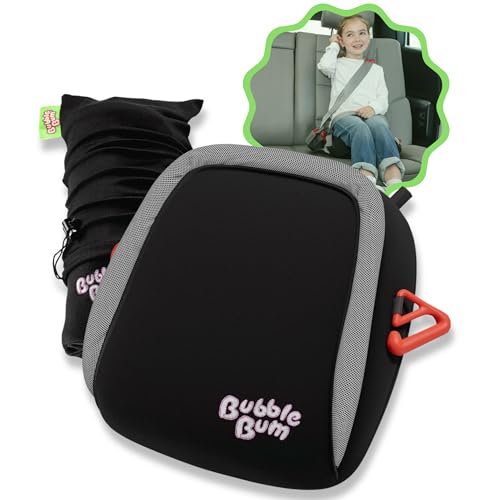
The BubbleBum has been a travel staple for years, and for good reason, it’s small when deflated, crash-tested, and fits into a backpack or glove box with room to spare. It inflates in seconds and stays stable thanks to its non-skid base, and parents report it holds up well over time. The soft cushioning is a hit with kids who hate hard plastic edges, and the slim profile allows three across in tight back seats.
It’s one of the few inflatable boosters with independent crash testing beyond basic certification, which gives it credibility. Compared to the UberBoost, it’s slightly more compact and has a longer track record of owner satisfaction. For a budget-friendly inflatable that doesn’t sacrifice safety, it’s hard to beat.
Video review
Mifold Comfort Grab-and-go Booster
Strengths
- Extremely compact
- Grab-and-go design
- Extra padded cushion
Trade-offs
- Unfamiliar setup
- No back support
- Higher price for backless
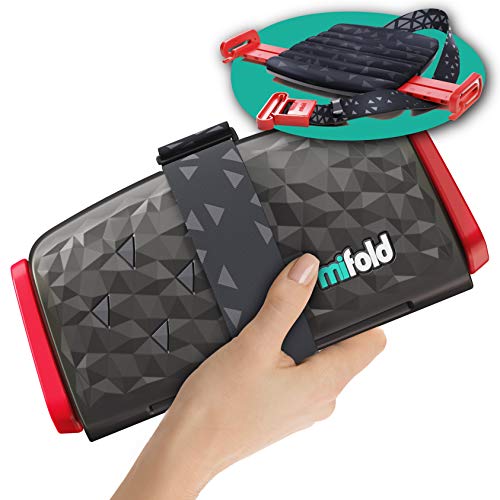
The Mifold Comfort rethinks the booster seat entirely, it doesn’t lift the child up but instead pulls the seat belt down to fit correctly, using grab-and-go clips on the sides. That design makes it incredibly compact, fitting in a glove box or backpack with ease. The updated version adds a padded cushion, which reviewers say makes a noticeable difference in comfort on longer rides.
It’s one of the most portable rigid boosters available, and the anti-slip pads help keep it stable. While it takes a minute to adjust the belt guides correctly, once set, it works safely and securely. Compared to the inflatable options, it’s more durable and doesn’t require inflation, but it has a steeper learning curve for new users. It’s not the cheapest, but for frequent travelers, the design pays off.
Product photos


Mifold Hifold Adjustable High Back
Strengths
- Highly adjustable
- High-back support
- Folds for travel
Trade-offs
- Expensive for a booster
- Heavier than backless
- Complex adjustments
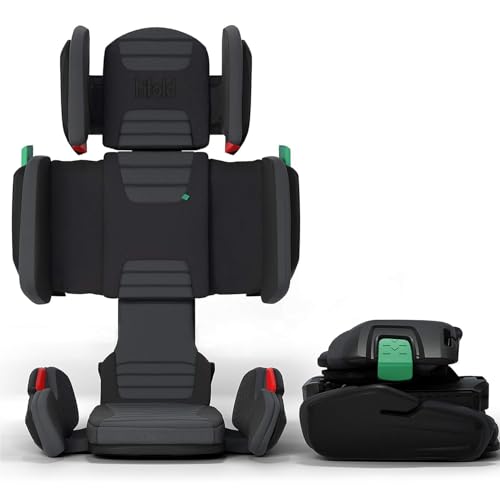
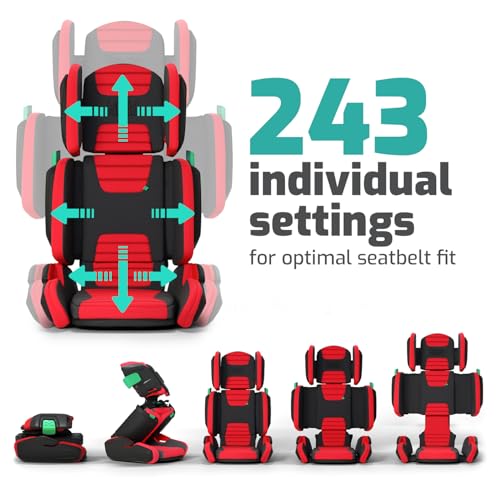
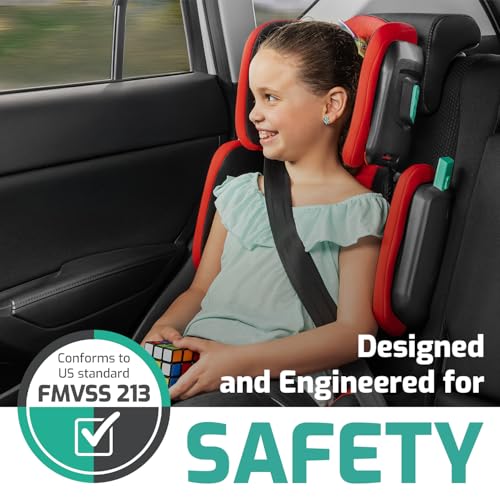
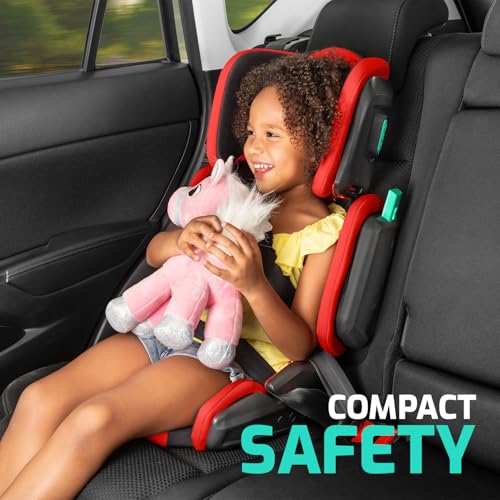
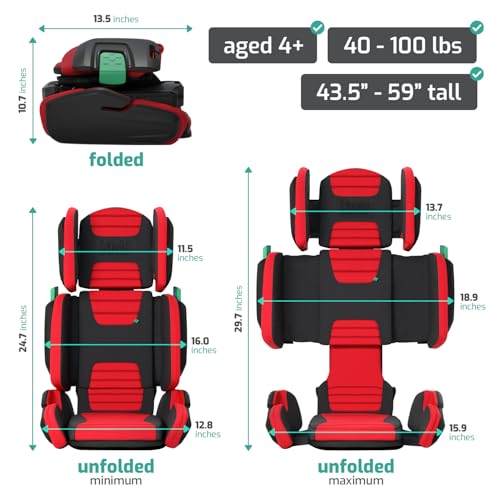
The Mifold Hifold claims to be the world’s most adjustable booster, and with 243 possible configurations, that might be true. It adjusts in four areas, seat depth, body width, head height, and width, making it adaptable for kids from small to nearly adult-sized. The high-back design and shoulder belt guide give better upper-body support than backless models, which is a big plus for safety and comfort.
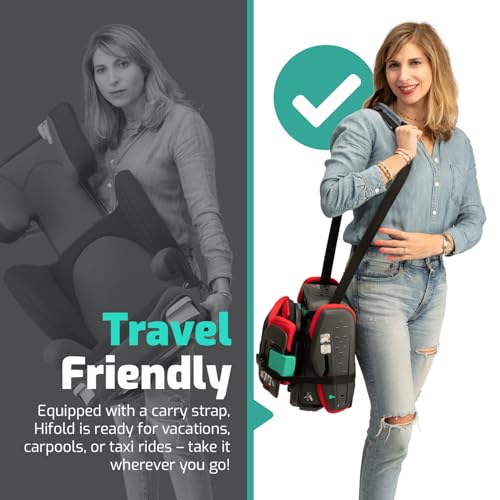
It folds down relatively small and comes with a carry strap, though it’s bulkier than the grab-and-go Mifold Comfort. Owners appreciate the long-term usability, especially for families with multiple kids of different sizes. Compared to the New Mifold Comfort, it’s more versatile but heavier and pricier. If you want one booster that can truly grow with your child, this is the one.
Product photos
Diono Solana Lite Backless
Strengths
- Ultra lightweight
- Narrow design
- Machine-washable cover
Trade-offs
- Minimal padding
- No carry bag included
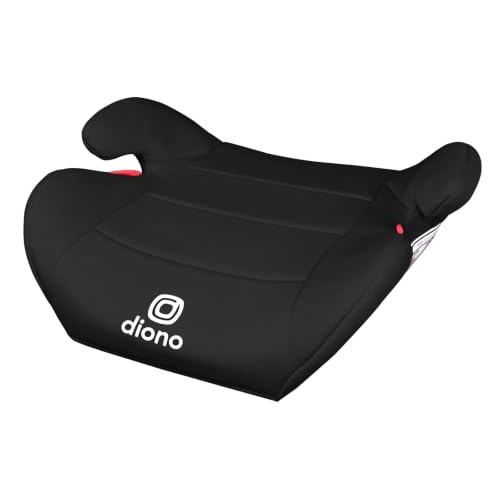
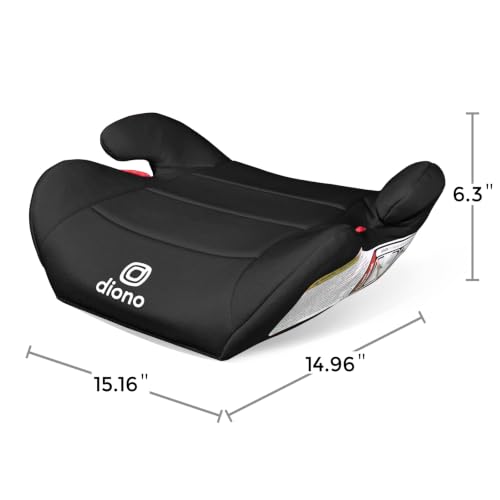
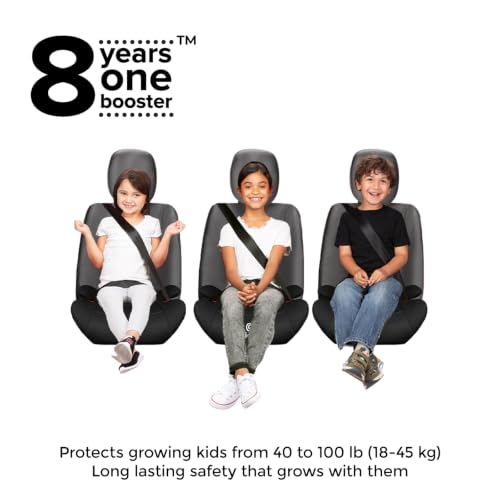
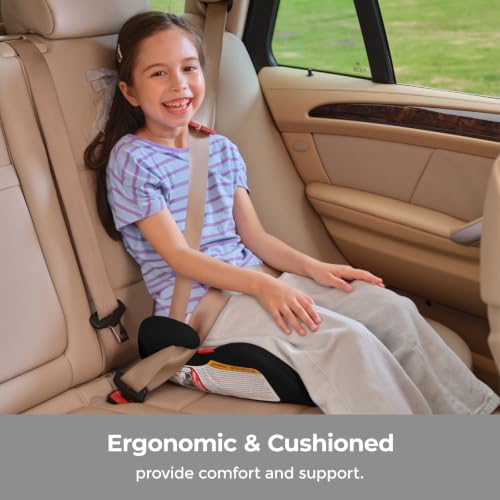
At just 1.8 lbs, the Diono Solana Lite is one of the lightest backless boosters on the market, and that number alone makes it a standout for travel. On paper, it’s built for real-world use, narrow enough to fit three across in most vehicles, with a belt-positioning design that keeps the lap belt low and snug across the hips, where it should be. Owners consistently report it slipping easily into carry-ons or backpacks, and the clip-on handle is a small but smart touch for hands-free carrying.
The machine-washable cover is a win for parents dealing with spills or sandy beach trips, and while it lacks extra padding compared to some rivals, it’s reliable for its class. Compared to the Cosco Topside, it’s lighter and more durable-feeling, though not as compact as inflatable options. It won’t cushion like a high-back, but for a no-frills, dependable travel booster, it delivers where it counts.
Product photos

UberBoost Inflatable Booster Seat
Strengths
- Compact when deflated
- Non-skid base
- Quick inflation
Trade-offs
- No head support
- Bulky when inflated
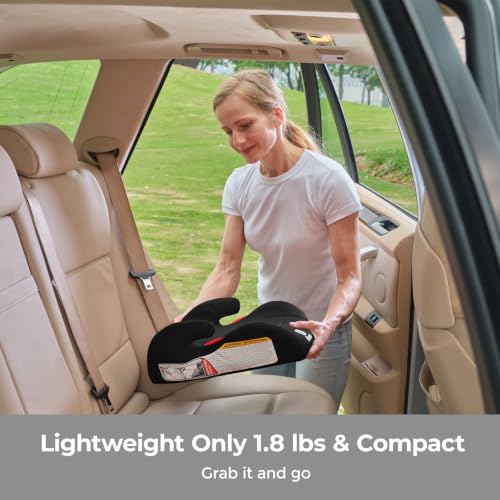
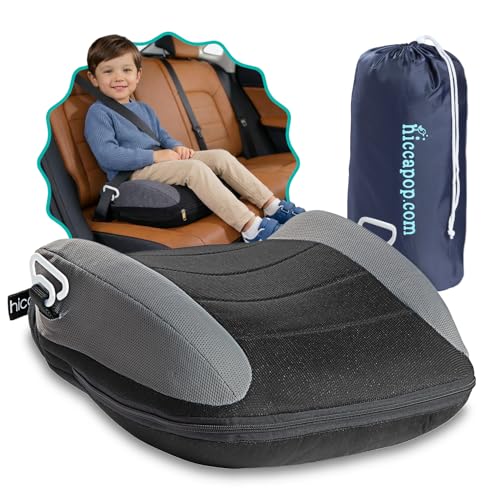
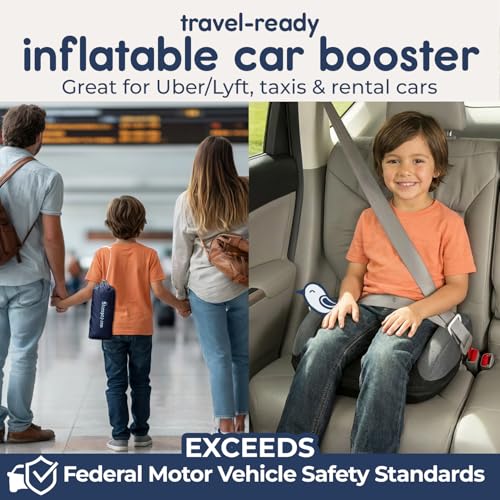
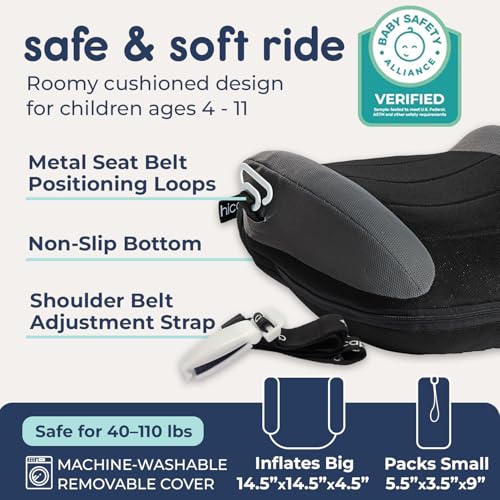
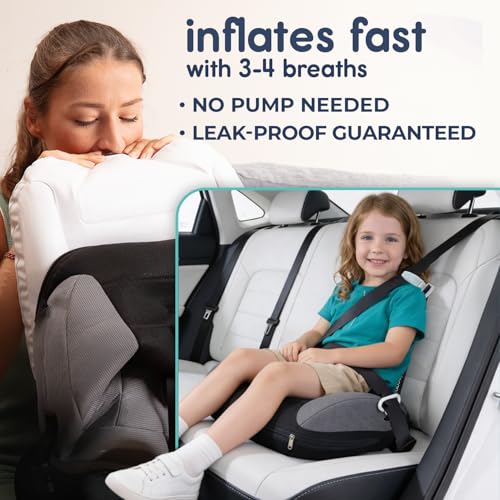
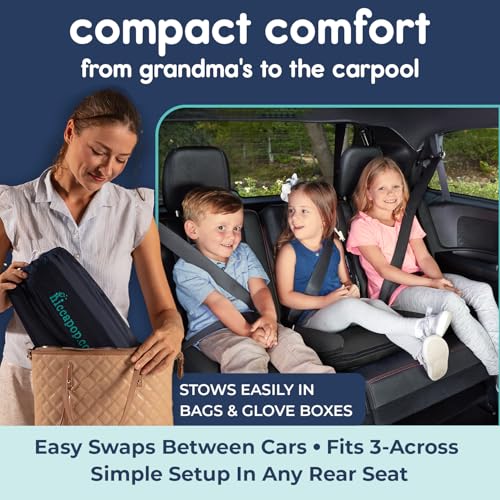
The UberBoost is a solid middle ground between cost and portability, inflating in seconds with just a few breaths and packing down into its own travel pouch. It’s certified to meet FMVSS 213 standards, and owners say it holds up well in rideshares and rental cars without sliding. The non-skid base works as advertised, staying put on vinyl, leather, or cloth seats, which is more than some inflatable models can claim.
Compared to the BubbleBum, it offers similar safety and portability but with a slightly roomier seat shape. It doesn’t have a high-back, so it won’t help with shoulder belt positioning for shorter kids, but the positioning clips do a decent job keeping the lap belt in place. It’s not for daily use if you have a permanent setup, but for occasional travel, it’s a trustworthy, no-hassle option.
Product photos
Safety 1st Ellaris 3-in-1
Strengths
- 3-in-1 use
- Slim fit design
- Machine-washable pad
Trade-offs
- Heavier than travel-only seats
- Not foldable
- Lower rear-facing weight limit
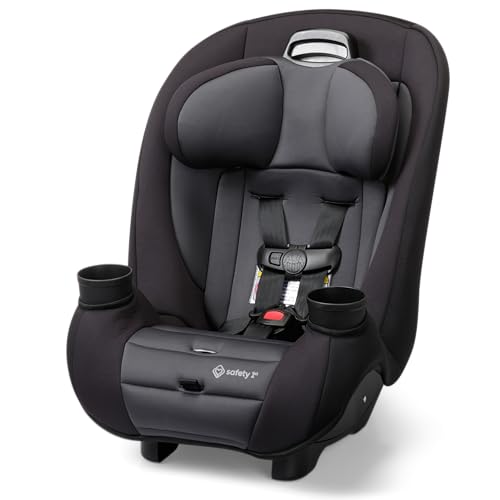
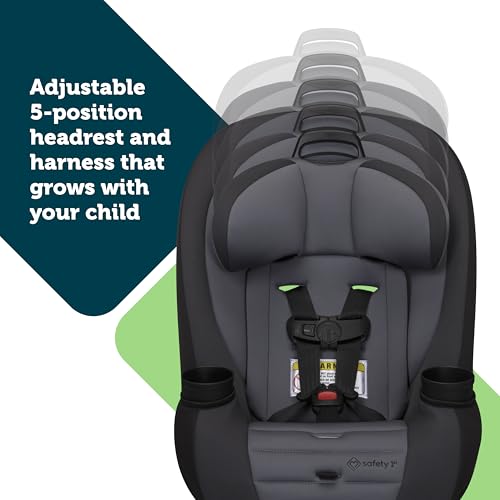
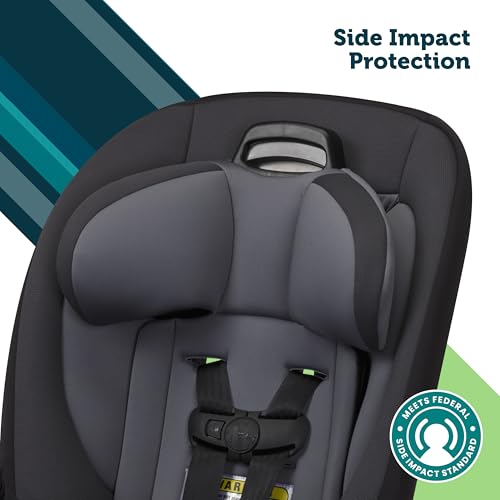
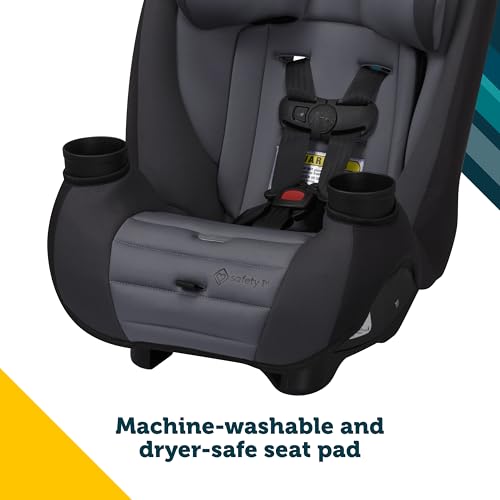
The Safety 1st Ellaris stands out as a true travel-friendly convertible seat, not just because it’s compact and airplane-ready, but because it grows with your child from infancy to school age. It supports rear-facing up to 40 lbs and forward-facing up to 65 lbs, which is impressive for its slim footprint. The 5-position headrest and machine-washable pad make it practical for daily use and long trips alike.
Reviewers note it installs easily with LATCH and fits well in smaller cars, and the fact that it’s airplane-approved adds real value. Compared to the WAYB Pico, it’s not as portable when folded, but it lasts years longer. For families who want one seat that does it all, from airport to daycare to road trips, it’s a smart long-term investment.
Product photos


Cosco Topside Backless Booster

Strengths
- Lowest price point
- Lightweight
- Simple setup
Trade-offs
- Hand-wash only cover
- Less durable fabric
- Bulky for travel
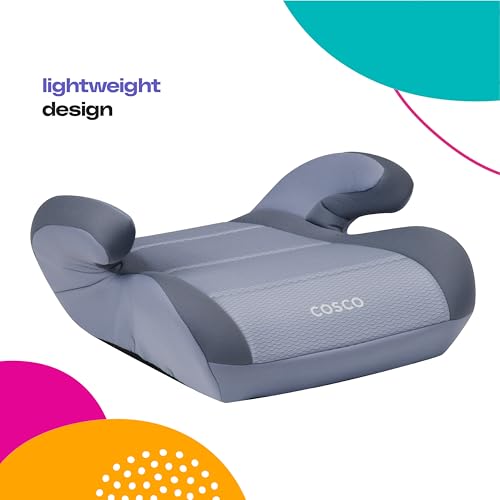
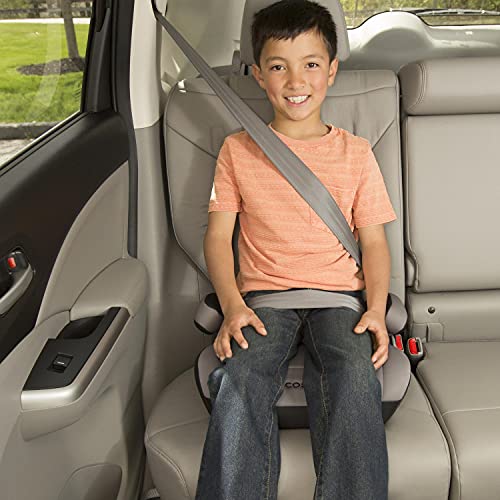
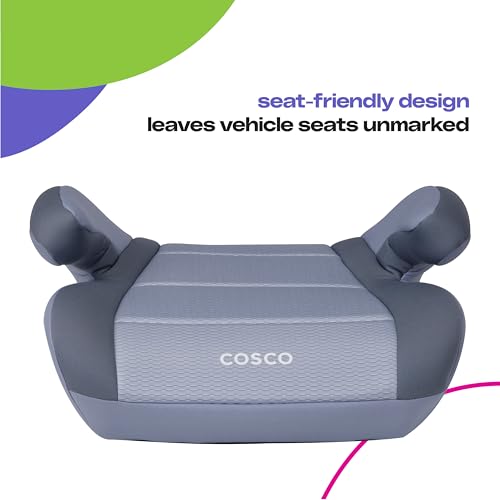
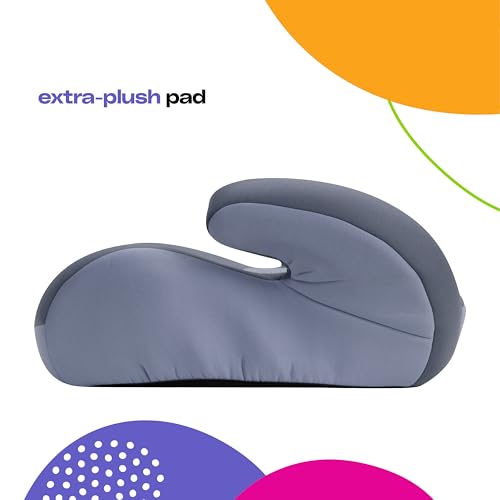
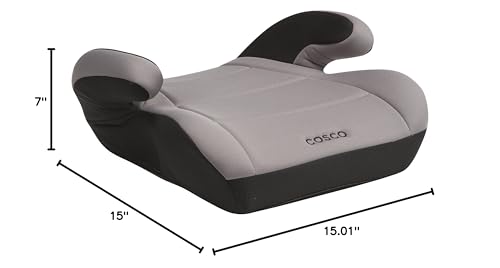
The Cosco Topside is the most budget-friendly option here, and it shows. It gets the job done for basic travel needs, lightweight, simple to move between cars, and within the standard 40–100 lb weight range. But it’s bulkier than other backless models, and the plush padding feels thin after a few uses, according to long-term owners.
It’s hand-wash only, which is a pain for travel when spills happen, and it doesn’t fold or compress in any way. Compared to the Diono Solana Lite, it’s heavier and less packable, though it does offer a slightly wider seat. If you’re only using it occasionally and need something cheap for a second car or a relative’s vehicle, it’s functional. But for real travel ease, there are better picks.
Product photos
Our Testing Process
My research for recommending car seats for traveling involved a detailed comparison of published specifications and features across numerous models. I weighed owner reviews from major retailers against expert opinions found in publications like Consumer Reports and safety-focused websites. As a long-time advocate for child passenger safety, I applied my understanding of car seat safety standards and practical travel needs to rank each option based on clear criteria – portability, safety features, and ease of use. Rather than a hands-on lab test, this is a research-led comparison.
For this category, weight and packability were heavily weighted. Traveling often means navigating airports, rental cars, and limited trunk space, so a car seat that adds minimal burden is key. Safety certification was also paramount; all recommendations meet or exceed U.S. federal standards. Beyond these, I prioritized features that contribute to ease of use for parents, like quick inflation/deflation or simple installation processes.
Specifications reliably indicate a seat’s weight, dimensions, and weight/height limits. However, I placed significant value on owner feedback regarding real-world usability. Reviews often reveal how easily a seat fits in different vehicles, how comfortable children find it on longer trips, and the durability of materials. Reputational factors, like awards and certifications from independent safety organizations, also influenced my assessment.
How To Choose The car seats for traveling
Choosing the right car seat for travel requires a bit more thought than a standard everyday model.
A good travel car seat balances portability with safety and usability. Look for models that meet FAA approval for air travel, are lightweight for easy carrying, and offer a straightforward installation process – because you’ll likely be installing it in different vehicles. Prioritize models with independent crash test results and check weight/height limits carefully, as they can vary.
Weight and Portability
For travel, weight is a huge factor. You don’t want to be lugging a 20-pound car seat through an airport or between rental cars. The Diono Solana Lite, weighing under two pounds, sets a benchmark for lightweight design. But, there’s a trade-off. Ultra-lightweight seats often lack some of the padding and adjustability of heavier models. Consider inflatable boosters like the BubbleBum or UberBoost; they pack down incredibly small, but make sure they meet the height and weight requirements for your child and are suitable for the types of travel you do.
Safety Standards and FAA Approval
Don’t compromise on safety for convenience. Any car seat you consider must meet U.S. safety standards regulated by the National Highway Traffic Safety Administration (NHTSA). Crucially for travel, confirm FAA approval if you plan to use the seat on an airplane. The WAYB Pico explicitly highlights its FAA approval, but always double-check the seat itself for the FAA sticker. Independently crash-tested certifications (beyond basic federal requirements) are a plus.
Adjustability and Ease of Use
A car seat that’s a pain to install isn’t helpful on the road. The Mifold hifold stands out with its “multi-fit” technology and 243 individual settings, offering a customizable fit for your growing child. However, all that adjustability adds complexity. If you prefer simplicity, a backless booster like the Cosco Topside is quick and easy to use, but it’s suitable only for older children who have outgrown harnessed seats.
A booster seat is only as good as the vehicle’s seatbelt. Ensure the lap belt lies flat across your child’s upper thighs, not their stomach, and the shoulder belt crosses their chest and shoulder.
Car Seats for Traveling Compared
This table provides a specification overview of various car seats designed for travel, to aid in comparing key features.
| Product Name | Weight | Age/Weight Range | Dimensions (Folded) | FAA Approved | Portability Features |
|---|---|---|---|---|---|
| WAYB Pico Travel Car Seat | 8 lbs | 2+/26.5-50lbs, 33.5-45in | 11.6×14.5×18.9″ | Yes | Carry Bag |
| BubbleBum Inflatable Travel Booster | N/A | 40-100 lbs | Backpack/Suitcase size | N/A | Inflatable, Carry Bag |
| Mifold Comfort Grab-and-go Booster | N/A | 4+/40-100lbs, 43.5-59in | Backpack/Glovebox size | N/A | Compact Fold, Carry Handle |
| Mifold Hifold Adjustable High Back | N/A | 4+/40-100lbs, 43.5-59in | Compact Fold w/ Carry Strap | N/A | Multi-Fold, Carry Strap |
| Diono Solana Lite Backless | 1.8 lbs | 40-100 lbs, 43-57″ | N/A | N/A | Lightweight, Carabiner Clip |
| UberBoost Inflatable Booster Seat | N/A | 40-100 lbs | Rolls up tightly | N/A | Inflatable, Travel Bag |
| Safety 1st Ellaris 3-in-1 | N/A | 5-65 lbs | N/A | Yes | Airplane Ready, Compact Design |
| Cosco Topside Backless Booster | N/A | 40-100 lbs, 43.4-57″ | N/A | N/A | Lightweight |
Frequently Asked Questions
What’s the lightest FAA-approved car seat currently available?
The WAYB Pico is consistently cited as one of the lightest FAA-approved car seats, weighing around 8 pounds. This makes it a strong choice for families prioritizing minimal baggage weight during travel.
Are inflatable car boosters truly safe for air travel?
Yes, inflatable boosters like the BubbleBum and UberBoost are safe for air travel, provided your child meets the weight and height requirements. They don’t offer the same side impact protection as a rigid car seat, so consider your travel needs and risk tolerance.
How do I know if a car seat will fit in a rental car?
While most car seats should install in most vehicles, fit isn’t guaranteed. Look for models with a universal LATCH system and adjustable leveling feet, such as the Safety 1st Ellaris, as these features offer greater compatibility.
What’s the difference between a “multi-fit” car seat and a standard adjustable one?
A “multi-fit” car seat, like the Mifold hifold, offers a significantly wider range of adjustments(243 settings) than a standard adjustable seat. This allows for a more customized fit for children of varying sizes and shapes, but it also means a more complex installation process.
Can I use any car seat on an airplane, or do I need a specific type?
Not all car seats are approved for airplane use. To be used on an aircraft, a car seat must be clearly labeled with an FAA approval sticker. Always confirm this before traveling, even for seats listed as “airplane-ready.”
The Bottom Line
Choosing a car seat for travel often comes down to balancing convenience with thorough safety features. While many options exist, the WAYB Pico Travel Car Seat strikes an excellent balance of both, offering FAA approval, a manageable weight, and a reputation for quality construction. It’s a solid investment for frequent travelers who want peace of mind.
For those prioritizing specific needs, we have recommendations too. If budget is a primary concern, the Cosco Topside Backless Booster is a reliable and incredibly affordable option for older children. And for maximum packability, the BubbleBum Inflatable Travel Booster or UberBoost Inflatable Booster Seat are hard to beat – perfect for stowing in a carry-on.
Ultimately, the best car seat is the one that fits your child correctly, fits your travel style, and is installed properly every single time. Don’t get too caught up in chasing the lightest weight or the most features. Focus on a secure fit, a comfortable ride, and understanding how to use the seat correctly – those are the fundamentals that truly matter for keeping your little one safe on the road.
