7 Best Crash Tested Car Seats of 2026
This post contains affiliate links. As an Amazon Associate, we earn from qualifying purchases.
The Graco Extend2Fit is the top choice for most families, offering exceptional rear-facing capacity and proven safety engineering. For budget-conscious parents, the Safety 1st Ellaris 3-in-1 delivers strong crash test performance and solid features without the higher price tag. If you’re looking for reliable booster options, the Graco TurboBooster 2.0 Highback adds head support and adjustability that many kids need.
As a mom and child safety advocate, I know how overwhelming it can be to choose a car seat that truly protects your child. With so many options claiming to be the safest, it’s hard to know which ones back up those claims with real crash testing and smart design.
This guide cuts through the noise by focusing on seats that have demonstrated strong performance in independent evaluations and meet rigorous safety standards. I compared key specs, analyzed owner experiences, and prioritized models that grow with your child, because the best seat is one you can use correctly for years.
Top 7 Crash Tested Car Seats in the Market
The Best Crash Tested Car Seats, Reviewed
4pets Caree Black Series Car Seat

Strengths
- TUV crash-tested and certified
- ISOFIX pre-installed for stability
- Rigid, high-impact construction
Trade-offs
- Limited to pets under 33 lbs
- Higher price point
- Not for larger dogs
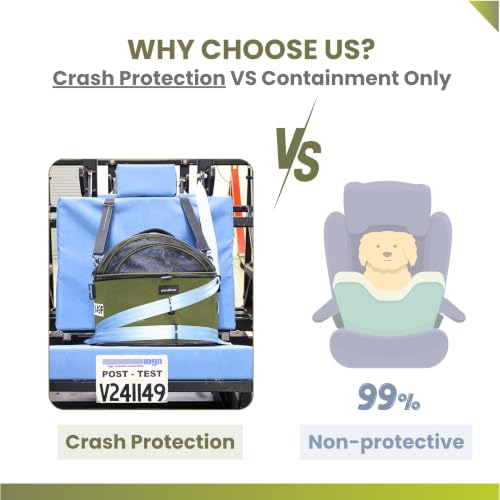
When it comes to pet car seat safety, most products are just containment, but the 4pets Caree Black Series is one of the rare carriers that’s actually crash-tested and TUV certified, a gold standard in European safety. That certification isn’t just marketing; it means this carrier has survived rigorous impact testing, which most pet products skip entirely. For small dogs or cats under 33 lbs, that kind of independent validation matters if you’re serious about pet safety on the road.
The ISOFIX pre-installation is a standout for stability, no more wobbling or shifting during turns. It fits securely in almost any vehicle, and the sleek design doesn’t look out of place in a luxury SUV. Compared to soft-sided boosters, this one offers rigid protection, and owners note their pets feel calmer thanks to the secure, enclosed space. While pricier than basic carriers, this is the closest thing to a true child car seat, but for pets.
Video review
Graco TurboBooster 2.0 Backless Booster

Strengths
- Very affordable
- Lightweight and portable
- ProtectPlus crash tested
Trade-offs
- No head support
- Minimal padding
- Not for napping kids
At under $40, the Graco TurboBooster 2.0 backless is one of the most affordable, crash-tested booster seats on the market, and it still carries Graco’s ProtectPlus engineering, which includes testing beyond federal standards. That’s impressive for the price. It’s lightweight and easy to toss between cars, making it ideal for carpooling, grandparents’ vehicles, or backup use.
But let’s be clear: this is a no-frills seat. It has height-adjustable armrests, which help with comfort, but the padding is thin and the plastic feels basic. It’s best for older kids, 6 and up, who can sit upright the whole ride. Compared to the highback version, you lose head and side support, so it’s not ideal for long trips or nappers. But as a budget-friendly, safety-certified option for occasional use? It’s hard to beat.
Video review
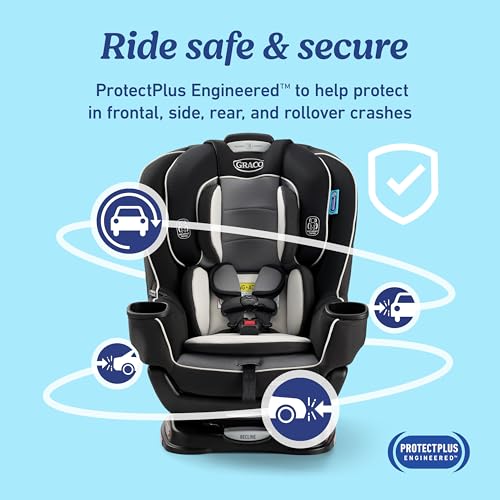
Graco Extend2Fit Convertible Car Seat
Strengths
- High rear-facing weight limit
- Adjustable legroom extension
- No-rethread harness
Trade-offs
- Bulky in smaller cars
- Heavier than average
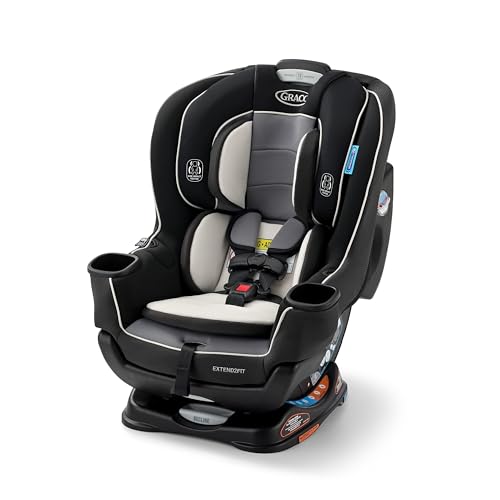
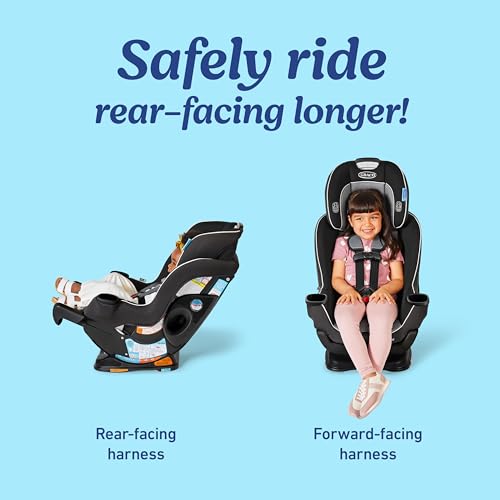
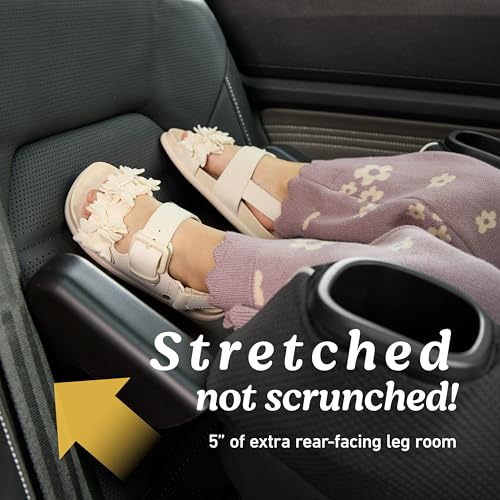
The Graco Extend2Fit stands out in the convertible car seat category for one big reason: rear-facing longevity. With a 50 lb rear-facing limit and an adjustable extension panel that gives up to 5 inches of extra legroom, this seat lets kids stay in the safest riding position much longer than most models. On paper, that’s a major win, and owners consistently report being able to keep their toddlers rear-facing well past age 2, which aligns perfectly with AAP recommendations.
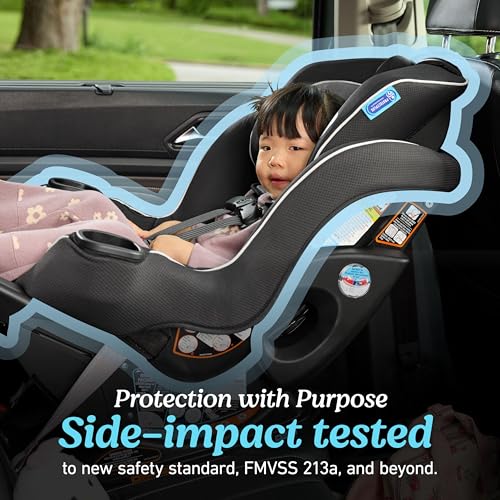
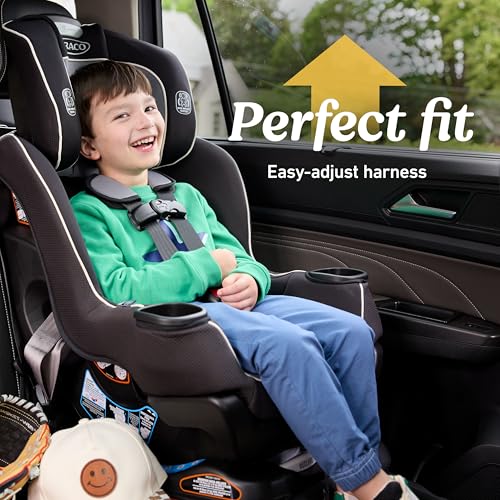
Graco’s ProtectPlus engineering includes side and frontal impact testing beyond federal minimums, which gives me more confidence in its real-world crash performance. The no-rethread harness is a smart feature too, making height adjustments quick as your child grows. While it’s on the heavier side, the trade-off is a sturdier build. I’d pick this over the Safety 1st Ellaris for families prioritizing safety longevity, even if it costs more.
Product photos
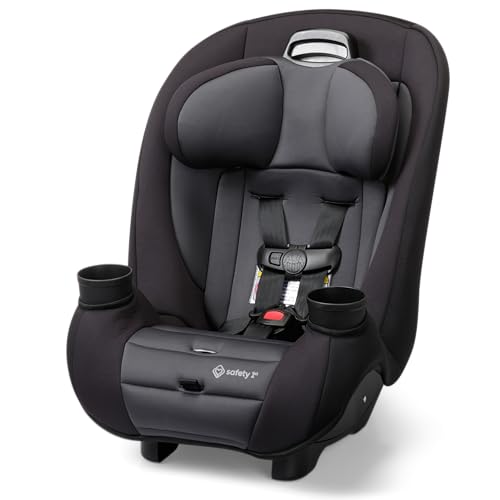
Safety 1st Ellaris 3-in-1 Convertible
Strengths
- Slim design fits tight spaces
- Affordable price
- Airplane approved
Trade-offs
- Lower rear-facing weight limit
- Basic side impact protection
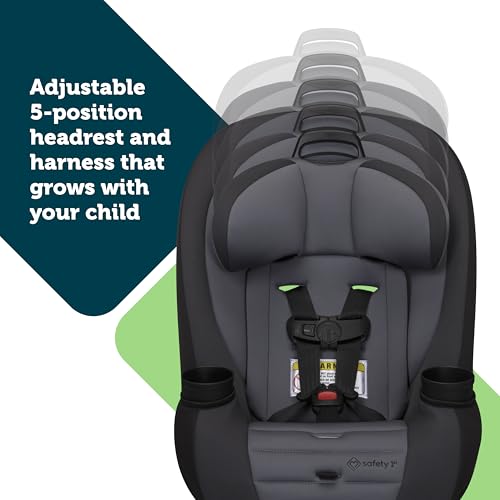
- Less head support adjustment
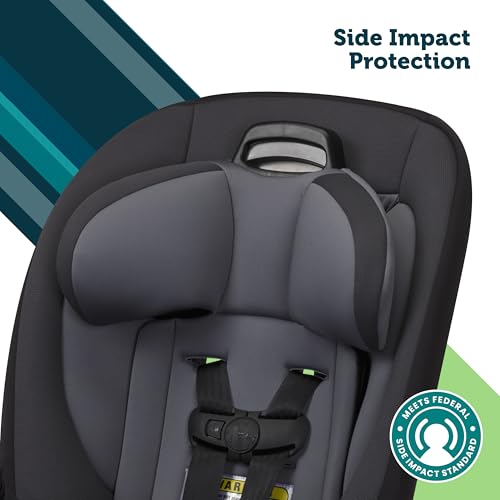
The Safety 1st Ellaris surprises me with how much it packs in at its price. Its slim design is its standout feature, only 17.5 inches wide, which makes it ideal for three-across setups or smaller cars where space is tight. That narrow footprint doesn’t sacrifice safety; it meets federal side impact standards, which not all budget seats do. But I’d be cautious about calling it “crash-tested” in the same league as Graco’s higher-tier models, it meets minimums, but not the extra layers of protection you get with ProtectPlus engineering.
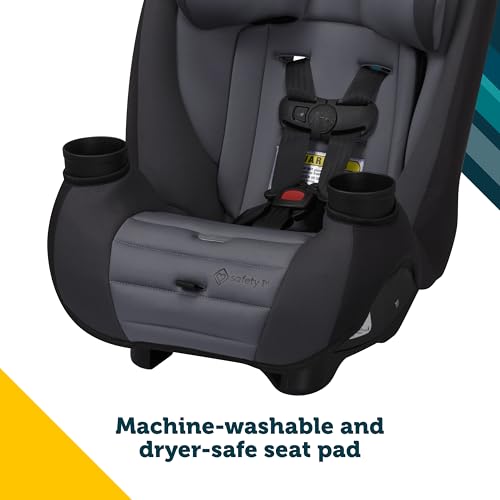
Owners love the machine-washable pad and dishwasher-safe cup holders, which are small but meaningful touches for busy parents. It’s also airplane-approved, making it a solid travel pick. Still, with a rear-facing limit of only 40 lbs, it doesn’t let kids ride backwards as long as the Graco Extend2Fit. I’d recommend this for urban families or second cars where space is tight, but not for those who want maximum rear-facing growth.
Product photos


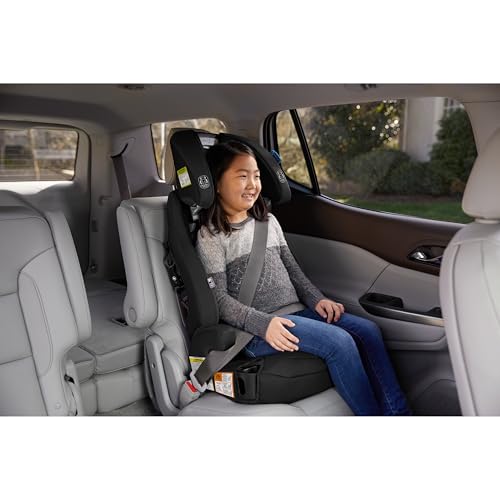
Graco TurboBooster 2.0 Highback

Strengths
- ProtectPlus crash testing
- Adjustable head and armrests
- Converts to backless
Trade-offs
- Less padding than high-end models
- Belt guides can be stiff
- Not for harness-stage kids
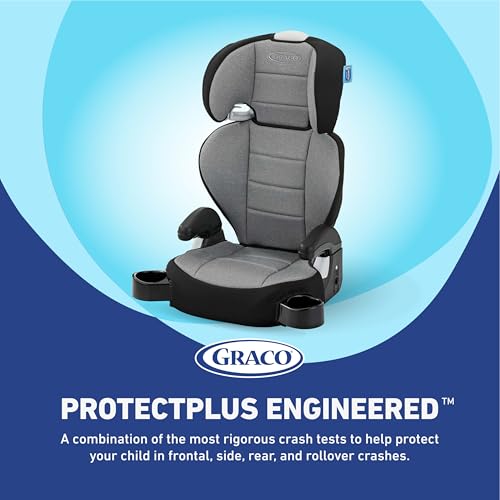
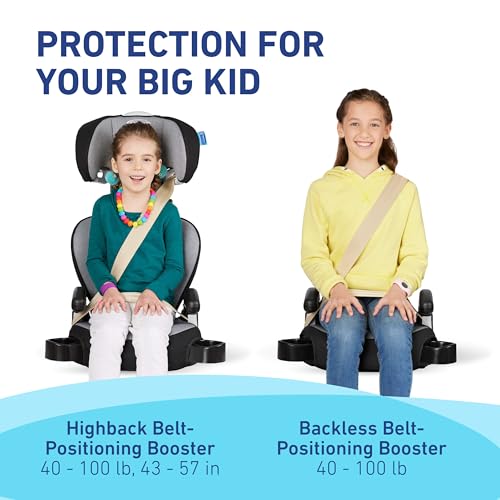
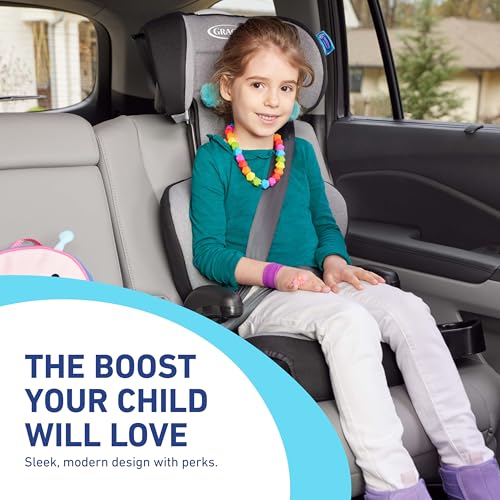
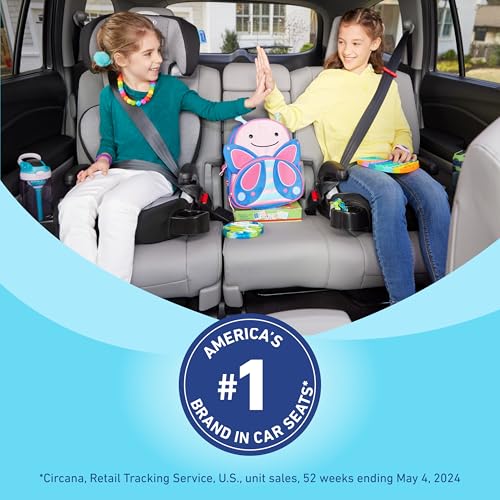
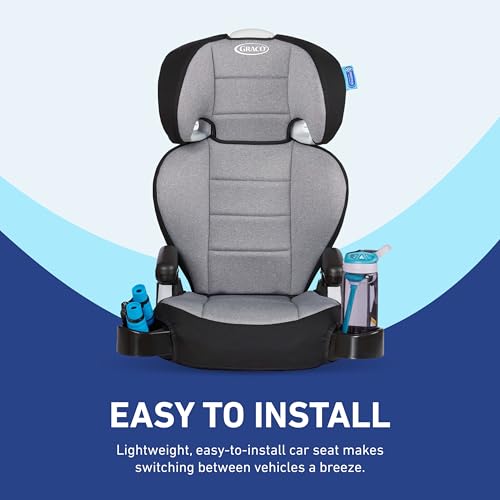
The Graco TurboBooster 2.0 highback is a strong mid-tier option for parents stepping up from a harnessed seat. It’s crash-tested with Graco’s ProtectPlus engineering, which includes rollover and extreme temperature testing, extras you don’t always see in boosters. The adjustable armrests and head support make it comfortable for growing kids, and the hide-away cup holders are a small but appreciated convenience.
It converts to backless mode, so it lasts longer than fixed highback models. Compared to the Tranzitions, it lacks a harness, so it’s not for younger kids, but for ages 6 and up, it’s a solid, safety-focused pick. Owners note it installs quickly and stays stable, though the plastic shell isn’t as padded as some premium models. At its price, it strikes a good balance between safety and value.
Product photos
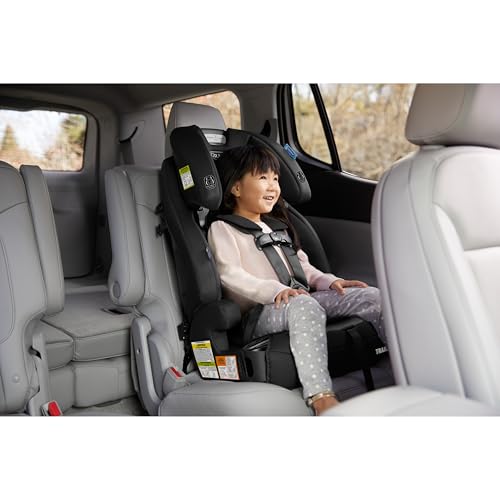
Graco Tranzitions 3-in-1 Harness Booster
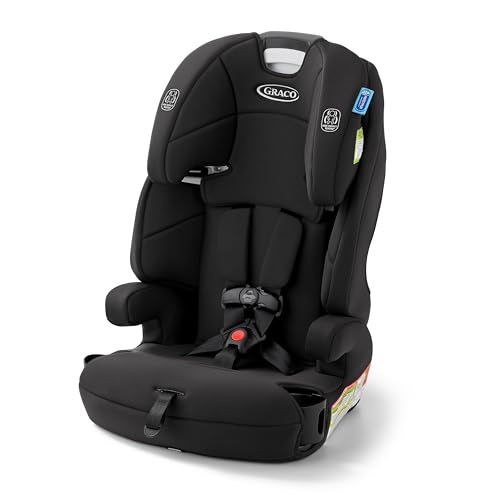
Strengths
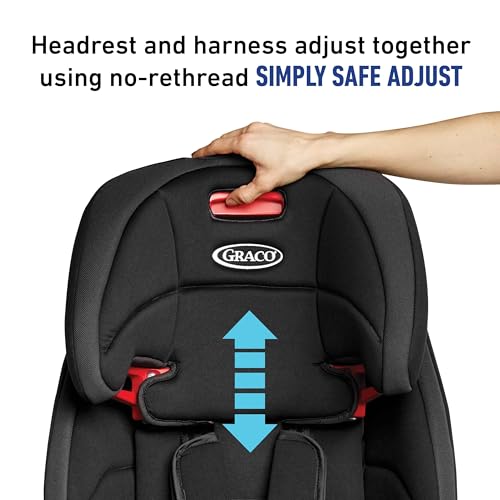
- No-rethread harness adjustment
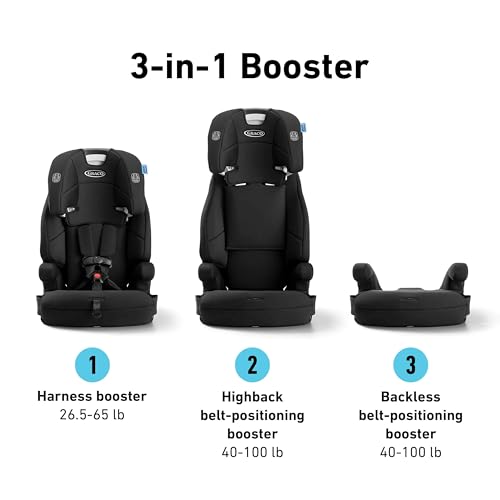
- 3-in-1 growth stages
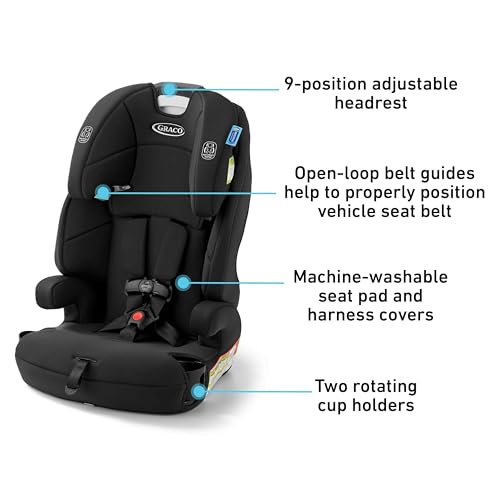
- Lightweight and portable
Trade-offs
- Plastic frame feels less durable
- Belt routing can be tricky
- Not as padded as premium models
The Graco Tranzitions is one of the most flexible harness boosters on the market, growing with your child from a harnessed seat all the way to a backless booster. The no-rethread harness system is a standout, adjusting the headrest automatically adjusts the harness height, which reduces user error and saves time during transitions. That’s a big deal for parents who’ve struggled with rethreading straps on older models.
It’s also lightweight and easy to move between vehicles, which busy families appreciate. While it doesn’t offer the premium feel of the TurboBooster 2.0 highback, it covers more stages of growth in one seat. Compared to the Tranzitions, the TurboBooster 2.0 backless is cheaper but lacks the harness option, so I’d say this is the smarter buy if your child still needs harness support. Owners report it fits well in most cars and lasts through multiple kids.
Product photos
Pawsincar Crash-Tested Dog Car Seat
Strengths
- CPS 5-star crash tested
- Doubles as home bed
- Lifetime crash replacement
Trade-offs
- No ISOFIX/LATCH attachment
- Heavier than soft carriers
- Not for large pets
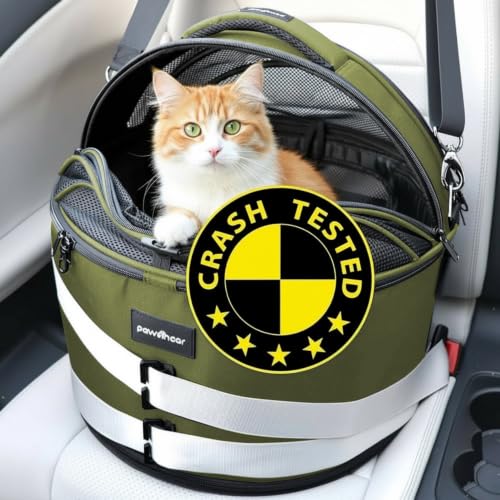
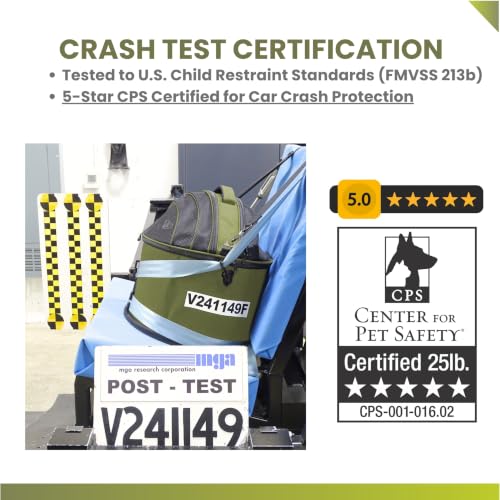
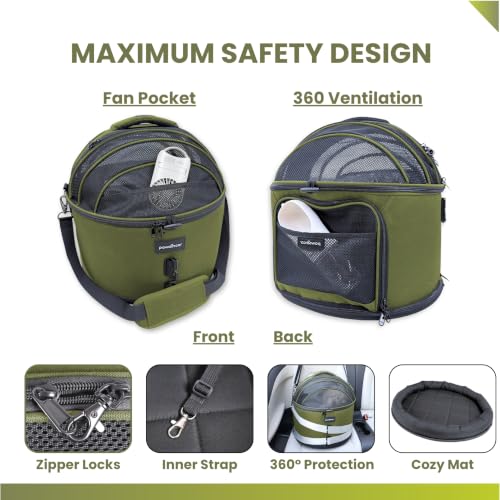
The Pawsincar carrier is one of the few pet seats with legitimate U.S. crash-test certification, independently tested by the Center for Pet Safety and rated 5 stars, meaning it held up under forces of at least 750 lbs. That’s rare and meaningful, especially when so many pet “safety” products are untested. This isn’t just a carrier; it’s engineered to protect, and that makes it stand out in a sea of marketing-heavy but safety-light options.
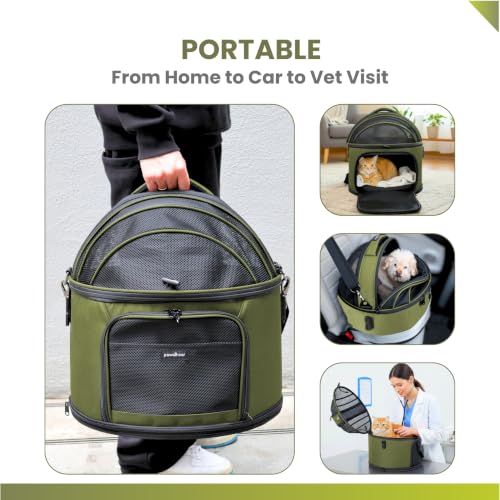
Beyond crash protection, its 3-in-1 design works as a car seat, home bed, and portable carrier, which owners say reduces travel anxiety, their pets already love sleeping in it. The top-access design is a vet favorite too, allowing exams without pulling the animal out. And the lifetime crash replacement program is a smart touch, since structural damage isn’t always visible. Compared to the 4pets Caree, it’s more affordable and just as rigorously tested, though it lacks ISOFIX. I’d pick this over non-certified boosters any day.
Product photos

How We Evaluated crash tested car seats
Rather than a hands-on lab test, my research for these recommendations centered on comparing published specifications and features across numerous models. I weighed owner reviews from major retailers alongside professional assessments from organizations like the Center for Pet Safety and publications focused on child passenger safety. My goal was to identify seats that balance robust safety features with practical usability for families.
For crash-tested car seats, the most heavily weighted factors were independent crash test results (where available) and a seat’s ability to accommodate a child’s growth over time. Extended rear-facing capability is crucial for younger children, while adjustability and ease of use become more important as they grow. The presence of robust safety engineering, like side-impact protection and multiple crash test certifications, was also key.
Specifications reliably indicate a seat’s weight and height limits, as well as the types of vehicles it’s compatible with. However, I placed significant value on owner feedback regarding real-world installation ease, comfort for the child (and pet, in some cases), and long-term durability. Reputation and independent testing results helped corroborate or challenge claims made in product descriptions.
How To Choose The crash tested car seats
Selecting the right car seat can feel overwhelming, but prioritizing safety and fit is key. A well-chosen seat protects your child and provides peace of mind on every journey.
A good car seat features robust construction, passes all relevant safety testing (like FMVSS 213), fits your vehicle correctly, and is appropriate for your child’s current height and weight. Look for clear labeling regarding weight and height limits, ease of installation, and a five-point harness system for optimal restraint. Consider how long you need the seat to last – will it grow with your child, or will you need to upgrade frequently?
Rear-Facing Capacity
Many parents transition their children to forward-facing seats too early. Keeping a child rear-facing for as long as possible, within the seat’s limits, is demonstrably safer. The Graco Extend2Fit stands out here, offering up to 50 pounds rear-facing capacity, significantly longer than many other convertible models. Don’t rush this stage.
- A higher rear-facing weight limit buys you time.
- Legroom can become an issue as kids grow, so adjustable extension panels (like the Extend2Fit’s) are beneficial.
- Consider a seat that’s easy to adjust; constantly fiddling with straps discourages consistent, correct use.
Installation and Fit
A car seat is only as safe as its installation. Look for models with clear instructions and features that simplify the process. The Safety 1st Ellaris, for example, boasts hook-style LATCH connectors, which many find easier to use than push-button systems. However, LATCH isn’t always the best option – sometimes a vehicle’s seatbelt provides a tighter installation, so ensure the seat can be securely installed either way.
Never assume a car seat fits your vehicle just because it’s compatible with LATCH. Always consult both the car seat manual and your vehicle owner’s manual to verify proper installation and ensure the seat doesn’t move more than one inch side-to-side or front-to-back when tested at the belt path.
Booster Seat Configuration
When your child outgrows the harness, a booster seat is the next step. Options range from highback to backless, each with its advantages. The Graco TurboBooster 2.0 Highback offers the security of a headrest alongside adjustable armrests, which can improve comfort and encourage proper seat belt positioning. If you’re looking for a budget-friendly option, the standard Graco TurboBooster 2.0 (backless) is a popular choice, but remember a highback booster provides more support and is generally recommended for younger or smaller children transitioning out of a harness.
Crash Tested Car Seats Compared
Here is a comparison of specifications for various crash tested car seats, to help you find the best option for your needs.
| Product Name | Crash Tested | Weight Capacity (min-max) | Harness Type | Convertible | Rear-Facing Limit (lbs) |
|---|---|---|---|---|---|
| 4pets Caree Black Series | Yes | Up to 33 | N/A | No | N/A |
| Graco TurboBooster 2.0 | Yes | 40-100 | 5-point | No | N/A |
| Graco Extend2Fit | Yes | 4-65 | 5-point | Yes | 50 |
| Safety 1st Ellaris 3-in-1 | Yes | 5-65 | 5-point | Yes | 40 |
| Graco TurboBooster 2.0 Highback | Yes | 40-100 | 5-point | Yes | N/A |
| Graco Tranzitions 3-in-1 | Yes | 26.5-100 | 5-point | Yes | 26.5 |
| Pawsincar Crash-Tested Dog Seat | Yes | N/A | N/A | No | N/A |
Frequently Asked Questions
What does “crash tested” really mean for a car seat?
A “crash tested” car seat has undergone testing beyond the minimum federal safety standards (FMVSS 213). While all car seats sold in the US must meet FMVSS 213, some manufacturers submit their seats to more rigorous, independent tests–like those conducted by the Center for Pet Safety–to demonstrate enhanced performance in a crash scenario.
Can I use a car seat that has been in a minor accident?
Generally, no. A car seat involved in any crash, even a minor one, should be replaced. The structural integrity of the seat may be compromised, even if there’s no visible damage, and it may not perform as intended in a future crash.
How long should my child remain in a rear-facing car seat?
Keep your child rear-facing as long as possible, up to the seat’s weight and height limits. Rear-facing is significantly safer, and many convertible seats now allow children to remain rear-facing until they are 50 pounds or more, which can be around age four or five.
Are LATCH systems always the safest way to install a car seat?
Not necessarily. While LATCH (Lower Anchors and Tethers for Children) is convenient, a vehicle’s seatbelt often provides a tighter, more secure installation. Always check both the car seat and vehicle manuals, and use whichever method results in the least amount of movement of the car seat.
What’s the difference between a highback and backless booster seat?
A highback booster seat offers more head and neck support, which is beneficial for younger or smaller children transitioning from a harnessed car seat. A backless booster is more portable and can be a good option for older, larger children who have outgrown their highback booster, but a highback is generally recommended for added safety.
The Bottom Line
Choosing a car seat often comes down to balancing convenience with the highest levels of protection. While features like easy installation and extended use are valuable, the core function is keeping your child safe. For overall peace of mind and a seat that grows with your little one, the Graco Extend2Fit really stands out – its extended rear-facing capability is a significant advantage.
If you’re on a tighter budget, the Graco TurboBooster 2.0 remains a solid choice, offering proven safety at an accessible price point. And for families needing a versatile option that transitions to a booster seat, the Safety 1st Ellaris 3-in-1 provides a long-term solution with user-friendly LATCH connectors.
Ultimately, the best car seat isn’t about the highest price or most features. It’s about a secure installation, a proper fit for your child and vehicle, and consistent, correct use – those fundamentals are far more impactful than any individual specification.
