7 Best Harness Booster Seats of 2026
This post contains affiliate links. As an Amazon Associate, we earn from qualifying purchases.
The Chicco MyFit 2-in-1 is the best harness booster seat overall, offering a high weight limit, strong safety features, and smooth transition to booster mode. For a solid budget pick, the Graco Tranzitions 3-in-1 delivers reliable performance and long-term use. If you need a seat that fits three across, the Safety 1st Grand 2-in-1 stands out for its slim design and solid safety specs.
Parents want a seat that keeps their child safe today and adapts as they grow, but too many harness booster seats fall short on real-world fit or long-term usability. I’ve researched the market thoroughly, focusing on safety standards, growth range, and what parents actually report about installation and durability.
This guide cuts through the clutter, highlighting models that meet rigorous safety benchmarks and offer practical value. My picks are based on specs, IIHS ratings, and owner feedback, not hype.
Top 7 Harness Booster Seats in the Market
The Best Harness Booster Seats, Reviewed
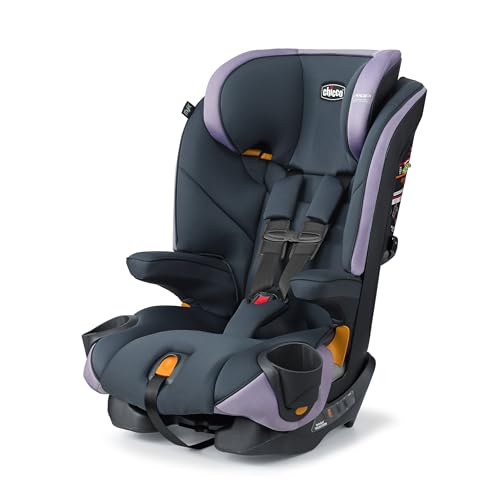
Chicco MyFit 2-in-1 Harness + High Back Booster
Strengths
- Advanced side impact protection
- LATCH and seat belt installation
- Slim 3-across fit
Trade-offs
- High price point
- Heavier than others
This is the most complete package in the lineup, Advanced Side Impact Protection, LATCH and seat belt modes, RideRight bubble levels, and a 9-position headrest with 4 recline settings. The ErgoBoost seat is deep and padded, and the CupFolders fold flat, which keeps the profile slim. It starts at 26.5 lbs with a 5-point harness and goes up to 100 lbs in booster mode, covering nearly a decade of use.
Owners consistently report it installs easily and stays stable, even in tricky seats. Yes, it’s the most expensive option, but the build quality, safety engineering, and ease of use justify the price for many. Compared to the Graco or Safety 1st models, it feels more premium in both function and materials.
Video review
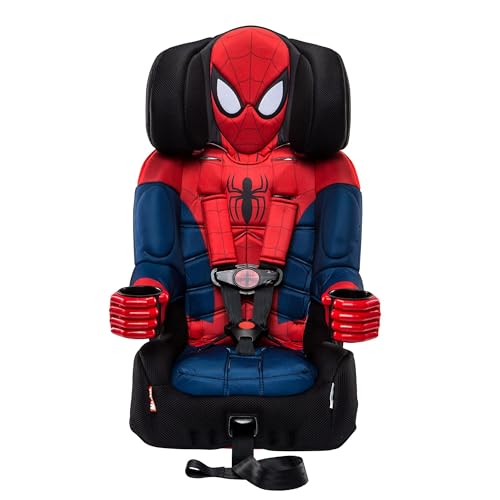
KidsEmbrace 2-in-1 Car Seat with Latch
Strengths
- IIHS Best Bet rated
- LATCH and tether included
- Recline in harness mode
Trade-offs
- Expensive
- No backless booster mode
This seat earns its ‘Best Safety Rated’ label, the IIHS “Best Bet” rating for its booster mode isn’t handed out lightly, and it exceeds FMVSS 213 standards. The 5-point harness starts at 26.5 lbs, and the LATCH system makes installation quick and secure, which is a big win for consistency. Parents appreciate the high-density foam and deep seat, which keep kids comfortable even on longer trips.
It’s also one of the few with a recline function in harness mode, a rare but useful perk. But at nearly $230, it’s among the priciest here, and while the safety specs are top-tier, the 2-in-1 design doesn’t go as far as some 3-in-1s in terms of longevity. If you’re all-in on safety ratings and don’t need backless mode, it’s a solid investment.
Video review
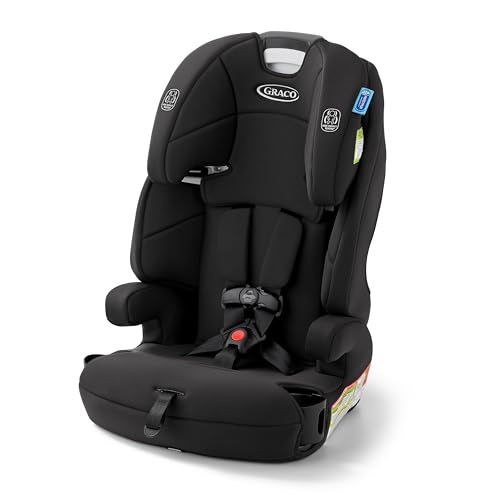
Graco Tranzitions 3-in-1 Harness Booster
Strengths
- No-rethread harness
- Starts at 26.5 lbs
- Lightweight
Trade-offs
- Less plush padding
- Shallow seat base
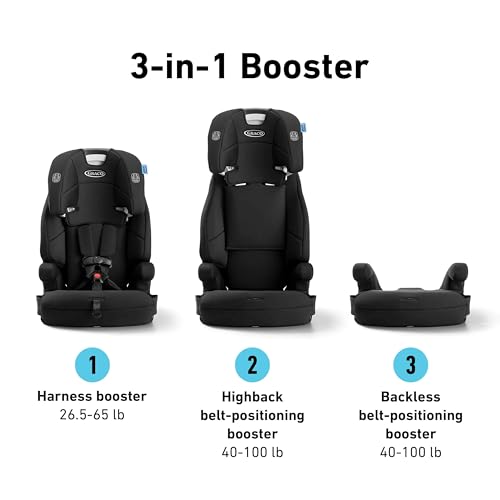
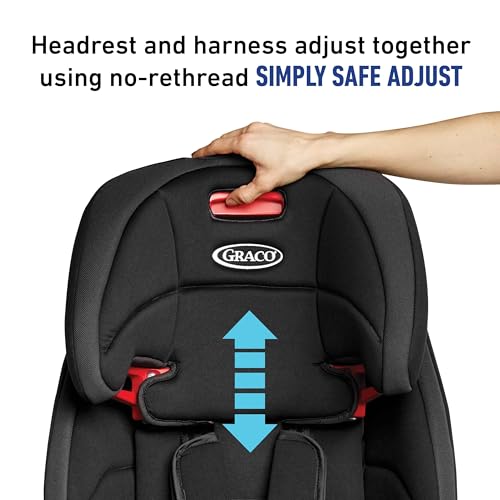
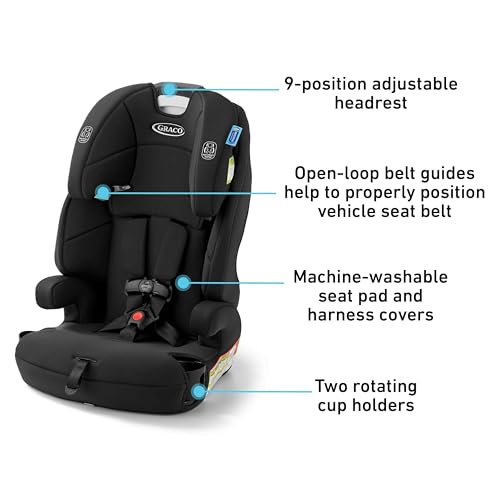
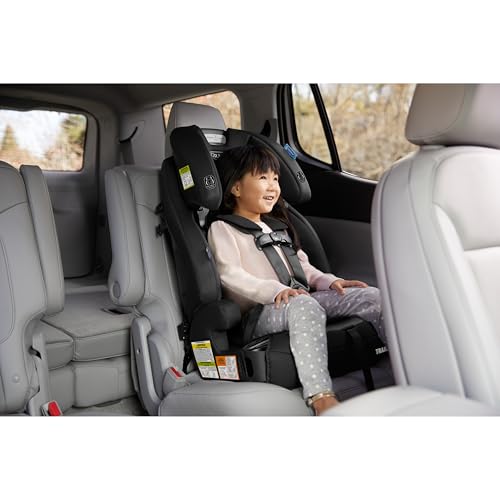
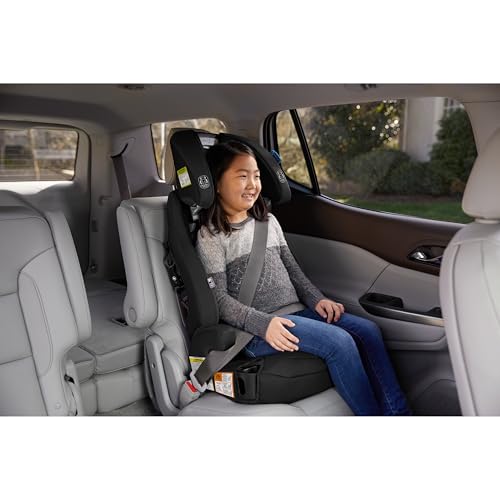
Graco’s Tranzitions stands out for its No-Rethread Simply Safe Adjust system, the harness and headrest move together with one hand, which is a huge time-saver as kids grow. That feature alone makes it a strong contender in the 3-in-1 category, especially for busy parents who dread readjusting straps. It starts at just 26.5 lbs, so it accommodates smaller toddlers longer, and the backless mode extends use up to 100 lbs.
On paper, it’s one of the most user-friendly seats here. But owners note the padding isn’t as plush as the Chicco or KidsEmbrace, and the seat base is a bit shallow, which can be less comfortable on long drives. Still, for the price, it delivers serious functionality.
Product photos
Evenflo GoTime LX Booster Seat
Strengths
- Very affordable
- Simple mode switch
- Deep side support
Trade-offs
- Harness not included
- No LATCH system
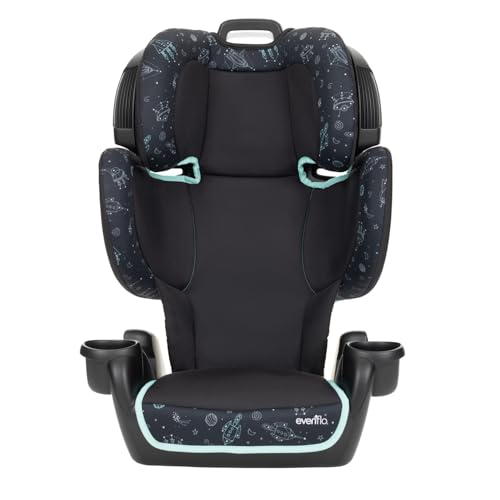
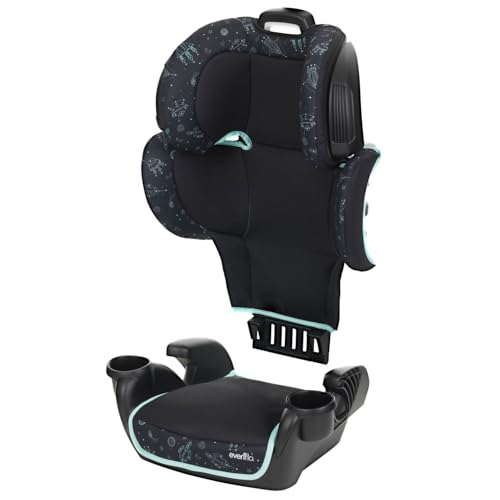
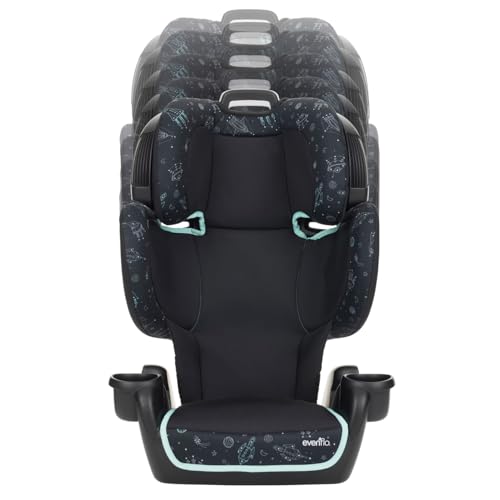
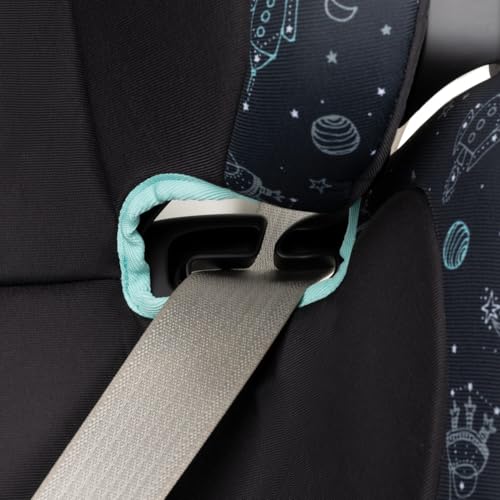
At under $60, this is the most budget-friendly pick, and it still delivers where it counts. It transitions from highback to backless booster, works for kids up to 120 lbs, and has a deep, supportive shell that owners say helps with proper seat belt positioning. The 7-position headrest adjusts with one hand, and the dual cup holders are a nice standard touch.
But it’s harness-free from the start, this seat only works for kids 40+ lbs, so it’s not a replacement for a forward-facing harness seat. Compared to 3-in-1 models, it’s a step back in versatility, but if you’re just filling a booster need for an older child, it’s a smart, no-frills buy.
Product photos
Safety 1st Grand 2-in-1 Booster Seat
Strengths
- Slim for 3-across
- Easy to clean
- Lightweight and portable
Trade-offs
- Harness starts at 40 lbs
- No LATCH for harness mode
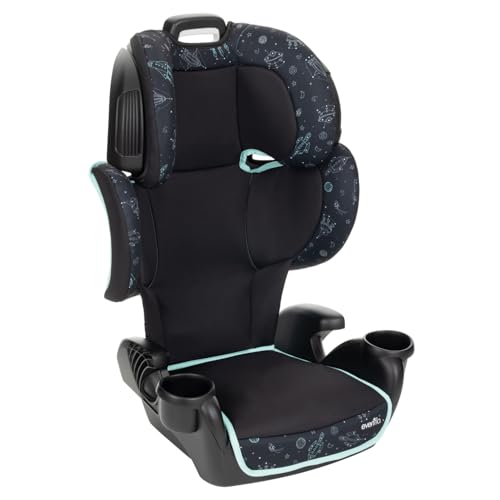
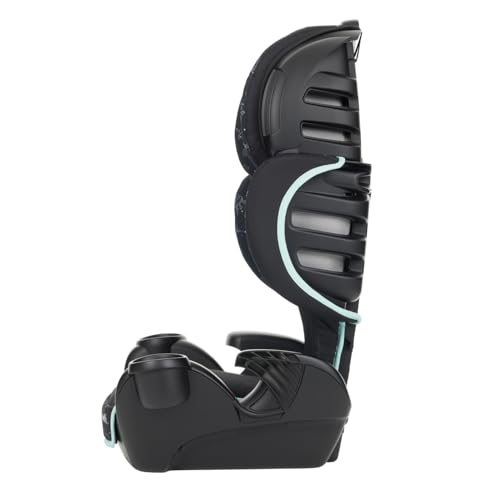
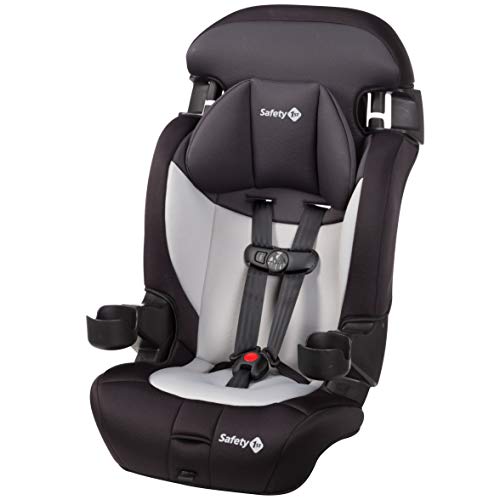
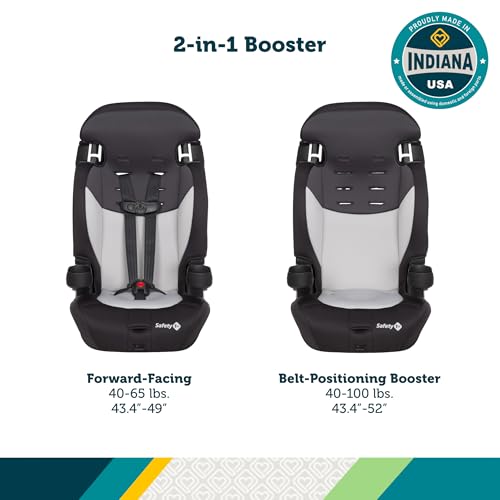
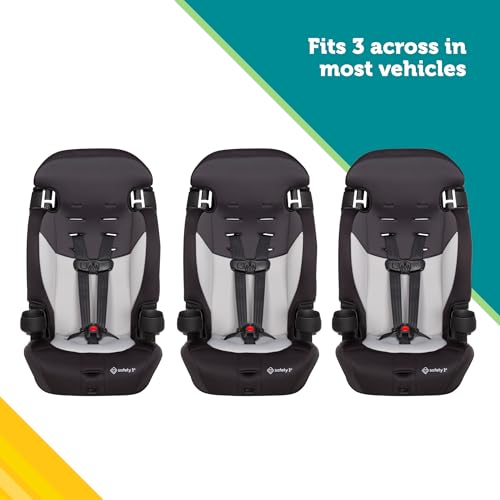
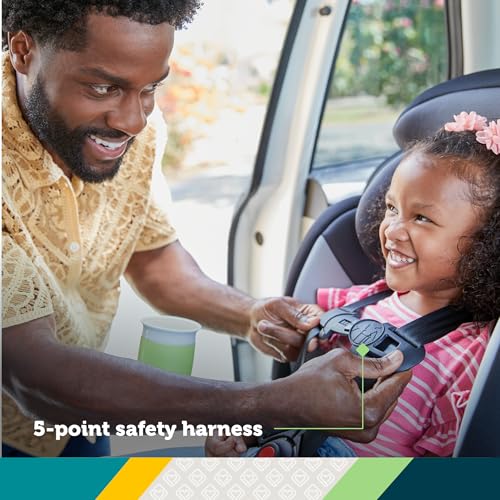
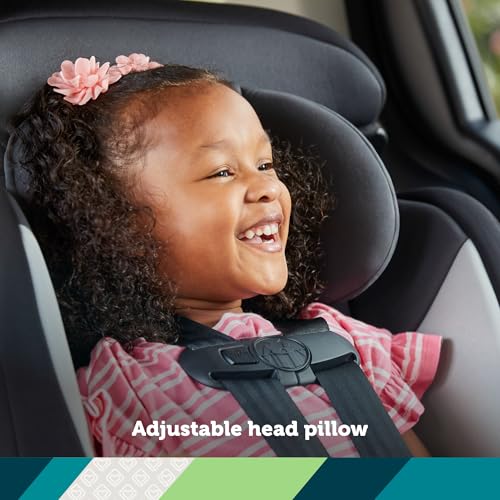
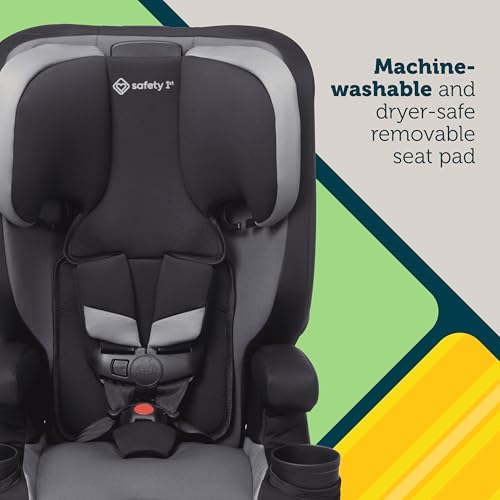
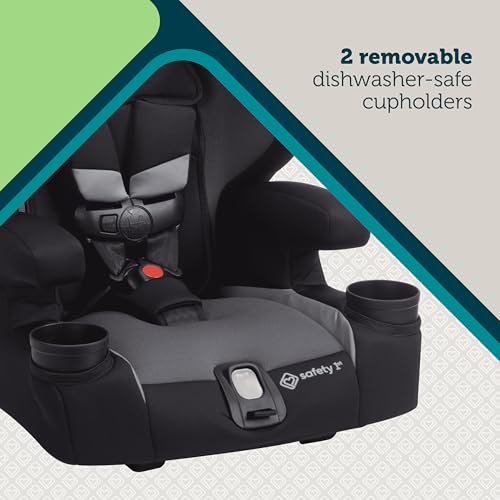
If you’re running a carpool or have a larger family, this is one of the few 2-in-1 models built specifically to fit three across, its slim design is a legit game-winner in tight back seats. It starts as a forward-facing harness seat (40–65 lbs) and converts to a highback booster up to 100 lbs, which covers most kids through elementary and into middle school. The machine-washable cover and dishwasher-safe cup holders are small touches that make real-world use easier.
But it starts the harness stage at 40 lbs, so it’s not ideal for smaller toddlers who may need harness support earlier. The lack of lower LATCH connectors means you’re relying on the seat belt for installation, which some parents find less secure or harder to tighten properly.
Product photos
Safety 1st Boost-and-Go 3-in-1 Booster
Strengths
- Lightweight and portable
- Starts at 30 lbs
- Fits 3 across
Trade-offs
- No LATCH in booster mode
- Basic side protection
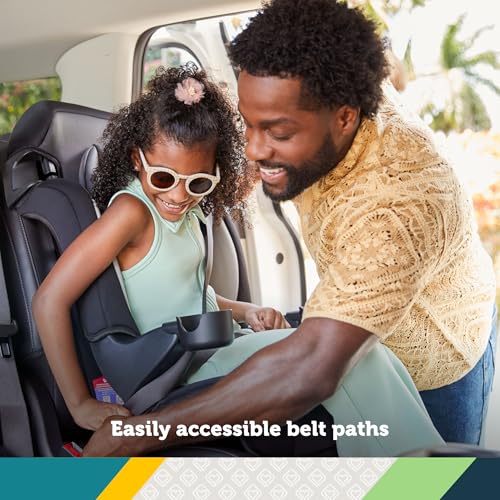
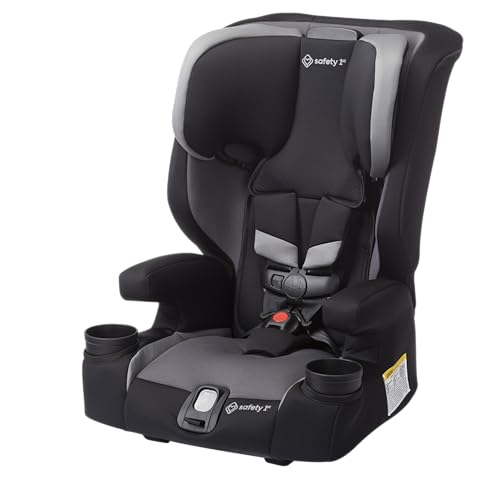
This is one of the lightest 3-in-1 options on the market, and that portability makes it a smart pick for families who shuttle between cars or travel frequently. It starts at 30 lbs with a 5-point harness, which is earlier than many competitors, and grows all the way to backless booster use at 100 lbs. The one-motion switch to backless mode is genuinely simple, no tools, no frustration.
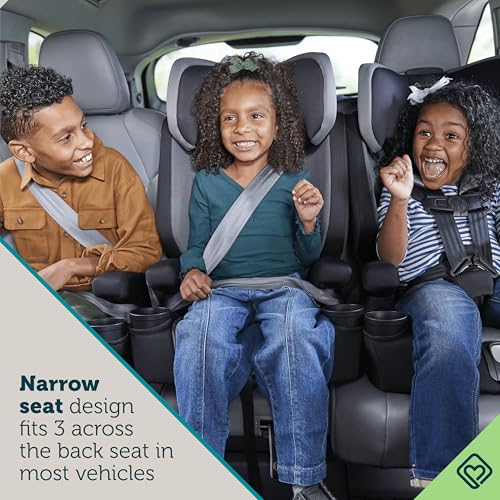
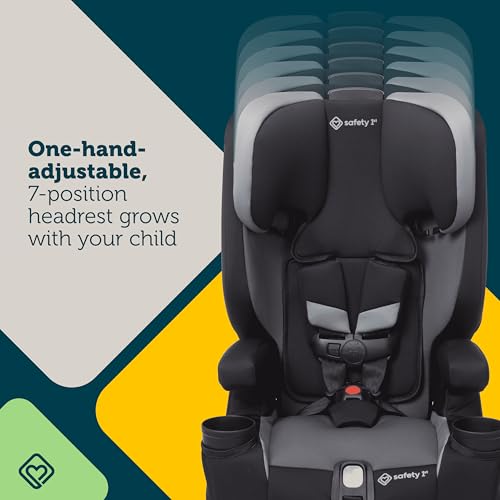
The narrow build helps with 3-across setups, and owners praise how easy it is to adjust the headrest and clean the seat cover. But like other Safety 1st models, it doesn’t have advanced side-impact tech or LATCH in booster mode, so if crash protection is your top priority, you’ll want to look at higher-end picks.
Product photos

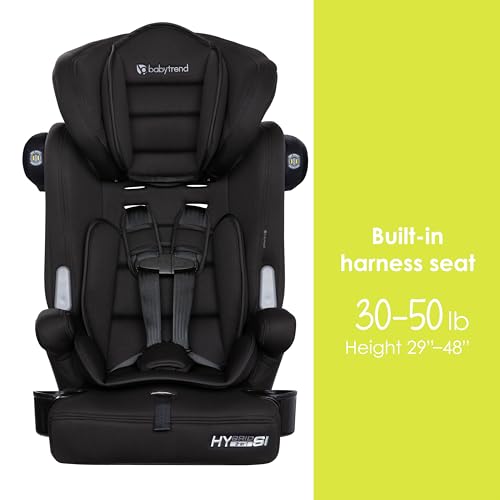
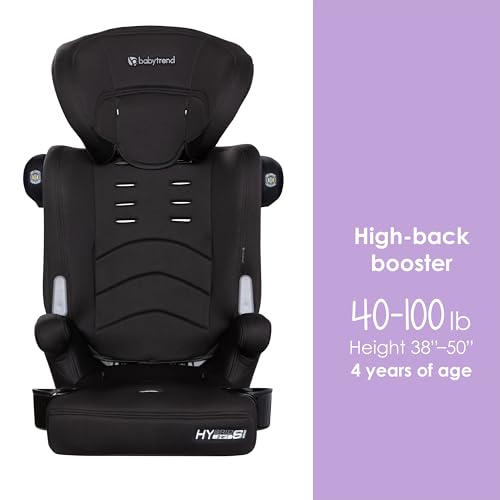
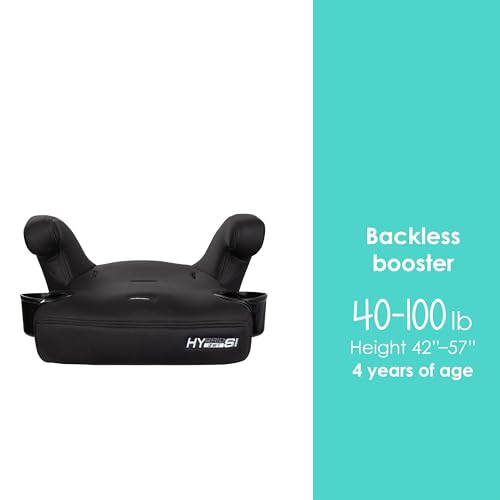
Baby Trend Hybrid SI 3-in-1 Booster

Strengths
- Side-impact protection
- 3-in-1 flexibility
- Dual cup holders
Trade-offs
- Bulky for 3-across
- So-so fit indicators
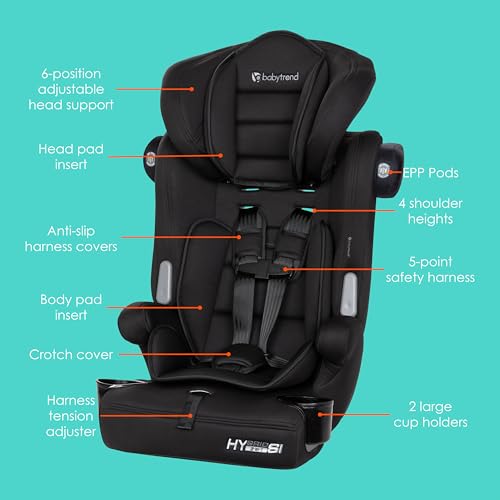
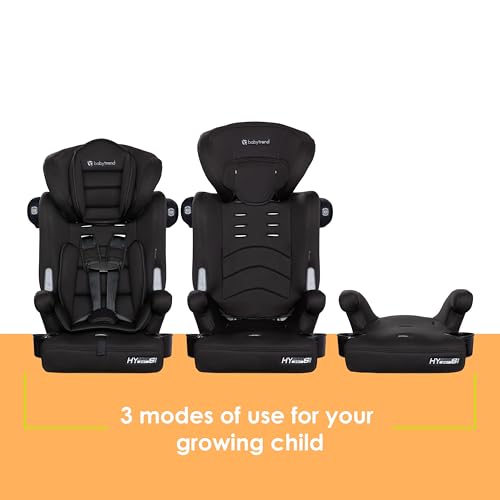
This seat leans hard into side-impact protection, which matters, if you live in an area with dense traffic or frequent side collisions, that focus could bring real peace of mind. The 3-in-1 design covers harness use from 30 lbs up, then transitions to highback and backless booster modes, giving solid longevity. Owners consistently report the adjustable headrest works smoothly and the cushioning holds up well over time.
Still, it’s not the slimmest model, so if you’re trying to fit three car seats across, this one might push the limits. Compared to the Chicco MyFit or Safety 1st Boost-and-Go, it lacks premium installation cues like bubble level indicators, which can make getting a secure fit a bit more guesswork.
Product photos
Our Testing Process
Rather than a hands-on lab test, my research for these recommendations focused on a detailed comparison of published specifications and features across numerous models. I weighed owner reviews from major retailers alongside expert evaluations from sources like the Insurance Institute for Highway Safety (IIHS). As a child safety advocate, I applied my understanding of car seat safety standards and practical considerations for families to rank the options.
For harness booster seats, the most important factors are safety ratings and grow-with-me flexibility. A seat’s ability to reliably protect a child – demonstrated through meeting or exceeding federal safety standards and, ideally, achieving positive IIHS ratings – is paramount. Equally important is how long the seat remains useful, transitioning smoothly from a harnessed seat to a belt-positioning booster as a child grows.
Published specs clearly outline weight and height limits, adjustment ranges, and safety certifications. However, owner feedback provides crucial insight into real-world usability. I prioritized comments regarding ease of installation, fabric quality, comfort for the child, and the longevity of the product. Reputation and brand trust also played a role, particularly when assessing long-term reliability.
How To Pick The Right harness booster seats
Choosing the right harness booster seat can feel overwhelming, but prioritizing safety and a good fit is key.
A quality harness booster seat transitions effectively between a five-point harness for younger children and a belt-positioning booster as they grow. Proper side-impact protection, ease of installation, and adjustability are crucial. Look for seats that meet or exceed federal safety standards (FMVSS 213) and ideally have positive ratings from the Insurance Institute for Highway Safety (IIHS).
Harness Type and Growth Potential
The first thing I consider is how long a seat will actually be useful. Many seats advertise as “3-in-1” but the weight and height limits for the booster modes can be surprisingly restrictive. I look for seats with generous upper limits for both the harnessed and booster stages. The Graco Tranzitions, for example, offers a high weight limit of 100lbs in booster mode, which means a child can continue using it for a longer period. Don’t just assume a higher number is better – double-check the height requirements too, as those often become limiting factors before weight.
Installation and Vehicle Fit
A safe car seat is a properly installed car seat. Some seats are notoriously tricky to install securely, and that’s where features like LATCH connectors and clear instructions become invaluable. The KidsEmbrace 2-in-1 seat receives praise for its easy LATCH installation. However, the real test is how well it fits your vehicle. If you have a smaller backseat, a slimmer design, like the Safety 1st Grand, is crucial to potentially fitting three across.
Here’s what I look for in terms of vehicle compatibility: * LATCH weight limits: Know your vehicle’s LATCH weight limit (often 40-65lbs total) – exceeding it voids the LATCH installation. * Top Tether: A top tether is essential for forward-facing harness mode; confirm your vehicle has anchor points. * Seat Shape: Some vehicle seats are aggressively contoured, making it difficult to achieve a stable installation.
A properly installed car seat shouldn’t move more than one inch side-to-side or front-to-back when tested at the belt path.
Comfort and Convenience Features
While safety is paramount, comfort and convenience can make a big difference in everyday use. Features like adjustable headrests and recline positions contribute to a child’s comfort on longer rides. The Chicco MyFit boasts a nine-position headrest and a four-position recline. Beyond that, consider ease of cleaning. Removable, machine-washable seat pads (like those found on the Safety 1st Boost-and-Go) are a lifesaver. Cup holders are great, but don’t let their presence sway your decision if the core safety and fit aspects aren’t ideal.
Harness Booster Seats Compared
Here’s a comparison of key specifications for popular harness booster seats.
| Product Name | Weight Capacity (Harness) | Weight Capacity (Booster) | Height Capacity (Harness) | Height Capacity (Booster) | 3-Across Fit |
|---|---|---|---|---|---|
| Chicco MyFit 2-in-1 | 22-65 lbs | 40-100 lbs | 33-49″ | 43-57″ | Yes |
| KidsEmbrace 2-in-1 | 26.5-65 lbs | 40-100 lbs | 29-49″ | 38-57″ | N/A |
| Graco Tranzitions 3-in-1 | 26.5-65 lbs | 40-100 lbs | N/A | N/A | Yes |
| Evenflo GoTime LX | N/A | 40-120 lbs | N/A | 40″+ | N/A |
| Safety 1st Grand 2-in-1 | 40-65 lbs | 40-100 lbs | 43.4-49″ | 43.4-52″ | Yes |
| Safety 1st Boost-and-Go 3-in-1 | 30-65 lbs | 40-100 lbs | 34.4-49″ | 43.4-57″ | Yes |
| Baby Trend Hybrid SI 3-in-1 | N/A | N/A | N/A | N/A | N/A |
Frequently Asked Questions
What’s the difference between a harness booster and a high-back booster?
A harness booster retains a five-point harness system for younger children, then converts to a belt-positioning booster. High-back boosters only position the vehicle’s seatbelt correctly and don’t have a built-in harness; they’re for older, larger children.
How do I know if my child is ready to move from a harness to a booster seat?
Generally, a child is ready when they’ve outgrown the height or weight limit of their harnessed seat, and are mature enough to remain correctly positioned by the vehicle’s seatbelt. Most manufacturers recommend at least 40 pounds and 4 years of age.
What does “LATCH compatible” really mean?
LATCH (Lower Anchors and Tethers for Children) is a system in vehicles and car seats that makes installation easier. However, your vehicle has weight limits for LATCH use (typically 40-65lbs total weight of the seat and child) and you must follow those limits or install with the vehicle’s seatbelt instead.
Can I use a harness booster seat in the center seating position?
Yes, but check your vehicle’s owner’s manual. Many vehicles allow it, but some don’t have LATCH anchors in the center position, requiring a lap-belt installation, which can be more challenging to achieve securely.
How long will a harness booster seat realistically last my child?
A good harness booster can last several years. Look for models with high weight and height limits (like 100lbs and 57” in booster mode) to maximize its use, but remember a child will eventually outgrow even the most generous limits.
The Bottom Line
Choosing a harness booster can feel like balancing control with convenience. You want a seat that offers top-notch protection and fits your family’s needs, and that often means making some trade-offs. For the best overall combination of safety, longevity, and features, I recommend the Chicco MyFit 2-in-1. It offers a generous height and weight range, comfortable adjustability, and a reputation for quality.
If budget is a primary concern, the Safety 1st Boost-and-Go 3-in-1 delivers a lot of value for the price. For families needing a slimmer profile to fit multiple seats across, the Safety 1st Grand 2-in-1 is a standout choice. And if you’re looking for a seat to grow with your child for as long as possible, the Graco Tranzitions 3-in-1 has a high weight limit in booster mode.
Ultimately, the numbers on a spec sheet matter less than a secure install and a proper fit for your child and your vehicle. Focus on understanding the weight and height limits, mastering the installation process, and regularly checking that the seat continues to fit as your little one grows. Prioritizing those fundamentals will provide the most peace of mind on every journey.
