5 Best Inflatable Booster Seats of 2026
This post contains affiliate links. As an Amazon Associate, we earn from qualifying purchases.
The BubbleBum Inflatable Travel Booster is the best overall inflatable booster seat, offering reliable safety certification and true portability. For budget-conscious families, the UberBoost Inflatable Booster Seat delivers solid performance at a lower price, though with less documented crash testing.
Parents often struggle to balance safety and convenience when traveling with kids. Inflatable boosters promise portability, but not all deliver equally on safety, ease of use, or real-world fit.
After researching the market and reviewing specs and owner feedback, I focused on models that meet FMVSS 213 standards, fit securely in different vehicles, and are genuinely easy to pack and inflate. This guide breaks down what actually matters when choosing one.
Top 5 Inflatable Booster Seats in the Market
The Best Inflatable Booster Seats, Reviewed
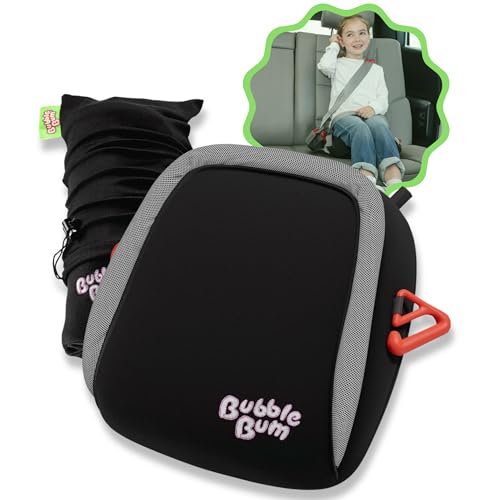
BubbleBum Inflatable Travel Booster
Strengths
- Independently crash tested
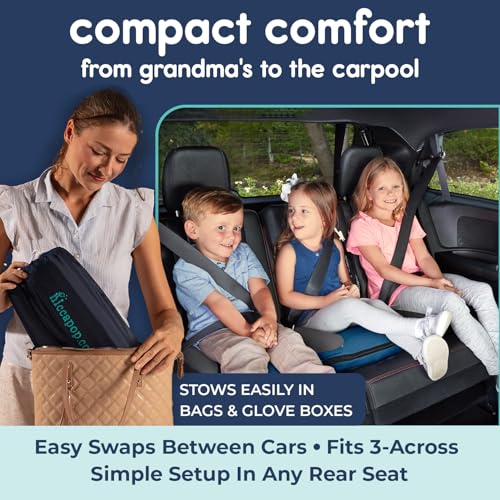
- Fits 3 across easily
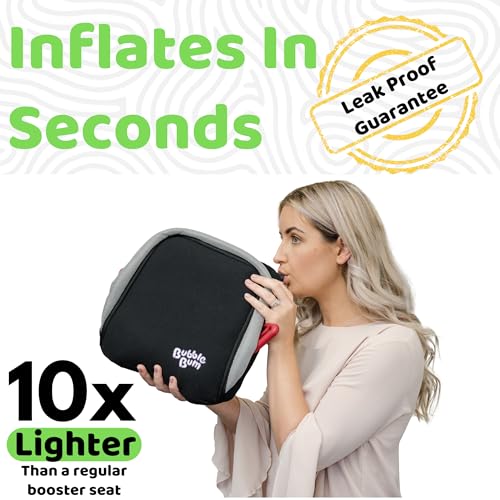
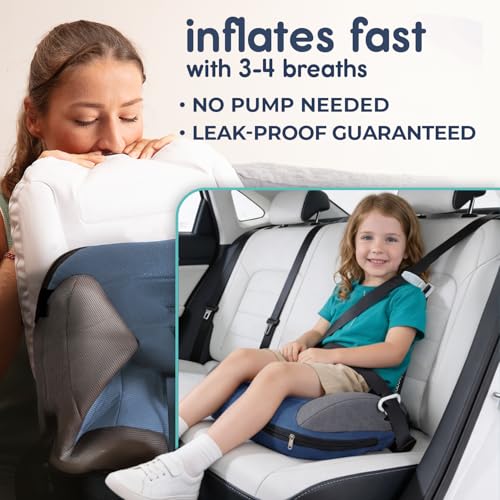
- Inflates in seconds
- Compact when deflated
- Lifetime support
Trade-offs
- Requires manual inflation
- No cup holder
I’ve spent years evaluating travel-friendly car safety gear, and the BubbleBum stands out as the most trusted name in inflatable boosters. On paper and in owner feedback, it consistently delivers what matters: real crash testing beyond basic federal standards, a compact form that actually fits in a diaper bag, and a design that keeps kids comfortable without sharp edges. The fact that it’s independently tested and certified to FMVSS 213b gives me confidence I can’t say for every inflatable on the market.
What really sets it apart is how well it balances safety and practicality. Parents report it inflates fast with just a few breaths and holds its shape reliably, even after repeated use. Compared to rigid boosters, it’s a no-brainer for travel, but unlike cheaper inflatables, it doesn’t feel like a compromise. The lifetime support and awards from JPMA and NAPPA aren’t just marketing; they reflect real design integrity.
Video review
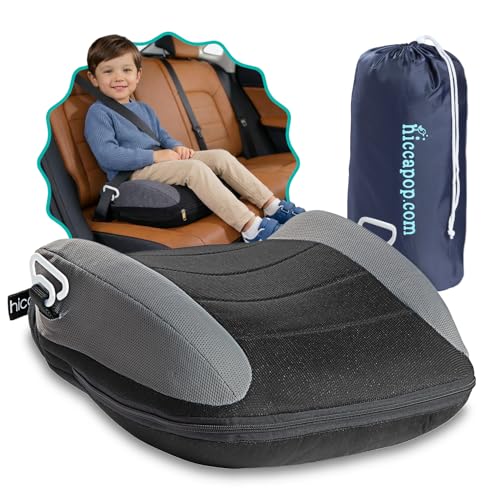
UberBoost Inflatable Booster Seat
Strengths
- Affordable and certified
- Includes travel bag
- Non-skid base
- Fits three across
- Quick inflation
Trade-offs
- Shorter warranty than BubbleBum
- Less safety verification
- No long-term durability data
This black/gray UberBoost is the most budget-friendly option on the list, and it doesn’t cut corners on the basics. It meets federal safety standards, has a non-skid base, and includes positioning clips to keep the seat belt low on the hips, critical for preventing injury. The travel bag is a nice touch, making it easy to toss in a suitcase or backpack.
But when I compare it to the BubbleBum, I see trade-offs: no independent testing beyond compliance, no lifetime guarantee, and less owner-reported longevity. That said, for a one-off trip or as a backup for a rideshare, it’s perfectly functional. Reviewers say it inflates fast and stays put, which matters most when you’re in a rental car with no other option.
Video review
BubbleBum Twin-Pack Inflatable Booster

Strengths
- Two certified boosters in one
- Saves money vs. buying separately
- Same safety standards
- Great for carpooling
- Trusted brand name
Trade-offs
- Expensive upfront cost
- Each still requires inflation
- No cup holders
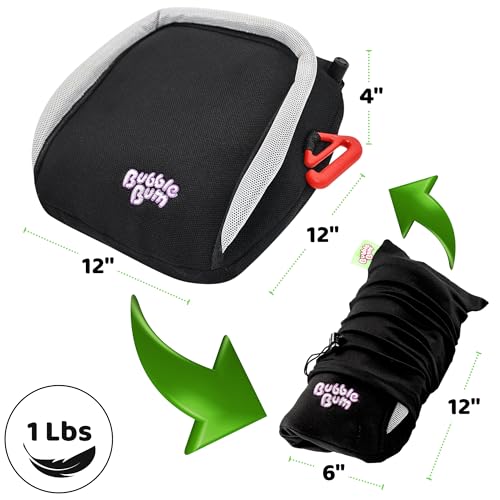
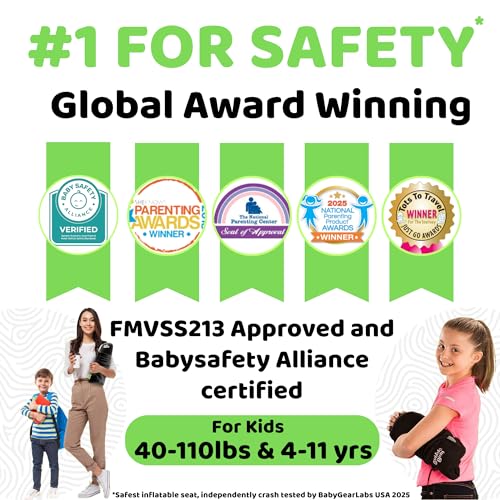
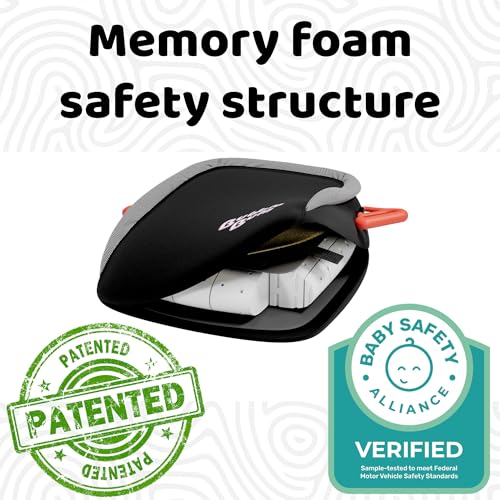
Buying two BubbleBums together makes sense if you’ve got two kids who need boosters on the go. At nearly $80, it’s not cheap, but you’re essentially getting the same trusted, crash-tested design in a bundle, each seat performs just like the single version. For families with multiple vehicles, carpooling parents, or those who travel with cousins or friends’ kids, this twin-pack removes the stress of sharing one booster.
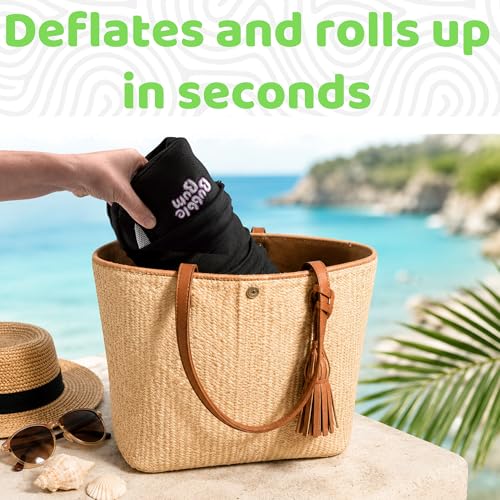
Owners love that both seats inflate quickly and store in the included carrying pouches. The 40–110 lb range covers most preschoolers through preteens, and the fact that it’s used by over a million families adds to its credibility. Compared to buying two UberBoosts, this is the smarter buy if safety track record matters more than saving a few dollars.
Product photos
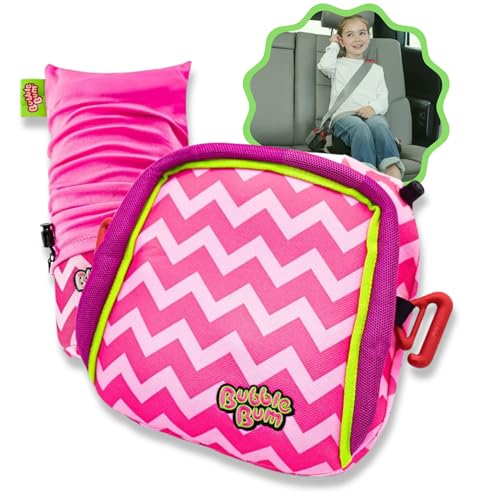
BubbleBum Inflatable Booster Pink
Strengths
- Meets all US safety standards
- Fits easily in backpacks
- Quick setup
- Lightweight and narrow
- Trusted by millions
Trade-offs
- Color doesn’t add functionality
- Manual inflation only
- No back support
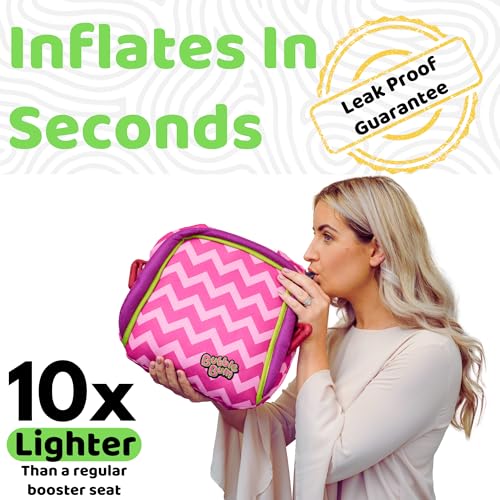
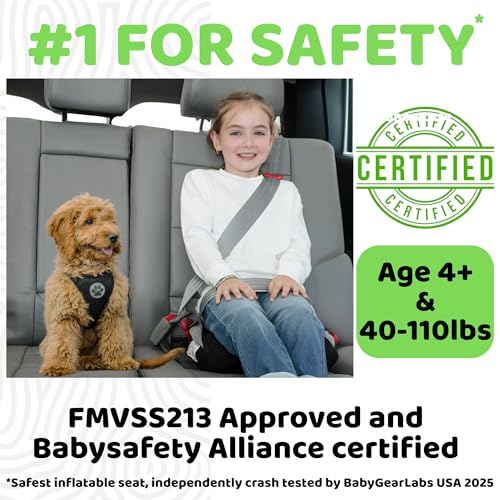
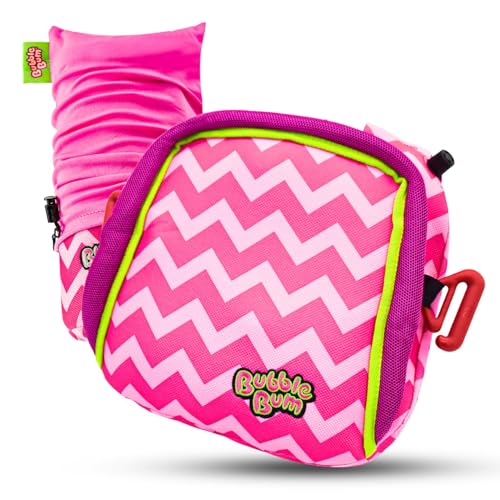
This pink version of the BubbleBum is functionally identical to the original, same safety ratings, same compact design, same reliable performance. The color is a nice touch for kids who care about personalizing their gear, but I wouldn’t pay extra just for the shade. What matters is that it still exceeds federal safety standards and is verified by the Baby Safety Alliance, which gives me confidence in its real-world performance.
Owners consistently say it’s their go-to for grandparents’ cars, rental trips, and school carpools. It’s not a replacement for a full car seat, but as a travel booster for kids 40–100 lbs, it holds up. Compared to the UberBoost, it has stronger third-party validation and a longer track record. If you already like the BubbleBum design, this is just a color option, not an upgrade.
Product photos
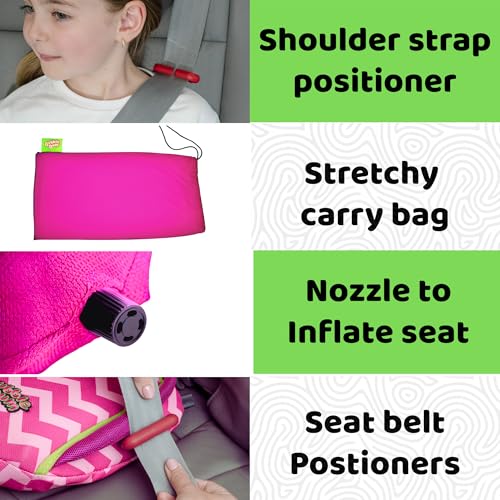

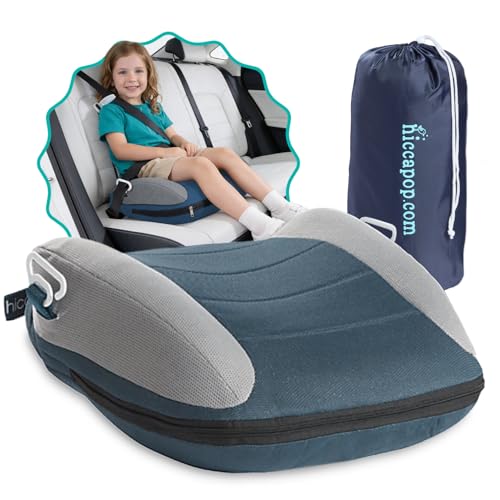
UberBoost Ocean Blue Inflatable Seat
Strengths
- Compact and portable
- Non-slip base
- Fits three across
- Affordable price
- Easy to store
Trade-offs
- Less independent safety validation
- No lifetime warranty
- Minimal brand history
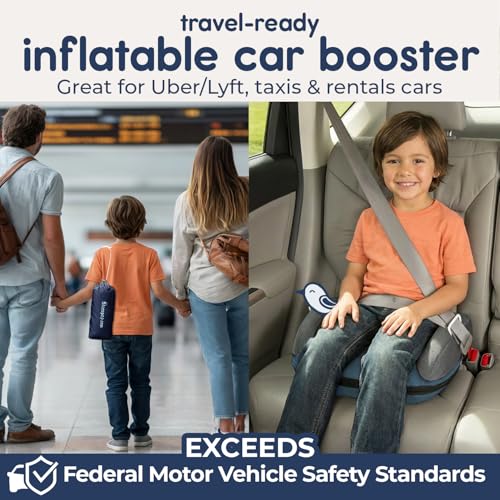
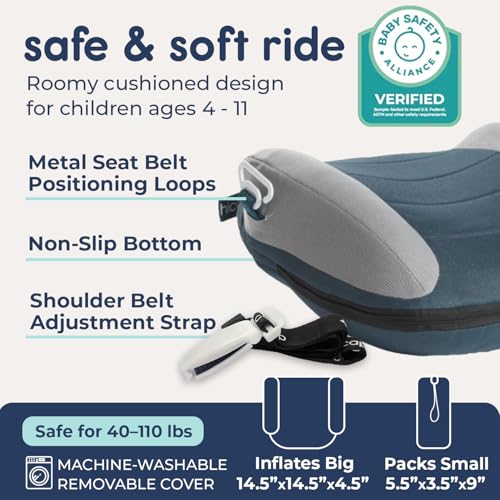
The UberBoost is clearly designed to compete with the BubbleBum, and on specs alone, it looks solid: non-slip base, adjustable belt clips, and a slim profile that fits three across. It meets FMVSS 213 standards, which is essential, but I don’t see the same depth of independent testing or long-term owner validation that BubbleBum has. That doesn’t mean it’s unsafe, but in a category where trust is everything, I’d want more proof.
It’s slightly cheaper and still packs down small, making it a reasonable pick for budget-conscious travelers. Reviewers note the cushion feels soft and the clips help position the seat belt correctly. But compared to the BubbleBum, it lacks the awards and lifetime guarantee that signal long-term reliability. I’d consider it for occasional use, but not as my primary travel booster.
Product photos
How We Evaluated inflatable booster seats
We approached evaluating inflatable booster seats by researching published specifications and features for each model. We then weighed owner reviews from major retailers alongside expert opinions found in publications focused on child passenger safety. My background in child safety advocacy informed the criteria; ultimately, we ranked seats based on a combination of safety certifications, portability, and reported ease of use. Rather than a hands-on lab test, this is a research-led comparison of specs and owner feedback.
The most important factors in this category are safety certification and portability. Inflatable boosters are chosen for travel and convenience, so a seat that doesn’t offer reassurance in crash testing or is difficult to pack isn’t very useful. A narrow profile is also key, as many parents seek these boosters specifically to fit multiple seats across a vehicle’s back row.
Specifications reliably reveal safety certifications (like FMVSS 213) and weight/height limits. However, owner feedback proved more valuable in assessing real-world usability – things like how quickly the seat inflates/deflates, how well the non-slip base performs, and whether the seat truly fits “three across” as advertised. We also considered brand reputation and the presence of features like lifetime support or awards.
How To Pick The Right inflatable booster seats
I’ve spent years researching car seat safety, and inflatable boosters represent a fascinating intersection of convenience and protection. They’re not a replacement for a properly installed rigid booster when you have the space and need, but for travel or shared-ride situations, they’re a brilliant solution.
An effective inflatable booster prioritizes independent crash testing to federal standards (FMVSS 213) for the 40-100 lb weight range. Beyond that, look for a design that balances portability with a secure fit on various vehicle seats, and considers the comfort features that will make longer trips more bearable for your child. Portability shouldn’t come at the expense of safety or usability.
Weight and Age Limits Are Paramount
It’s easy to get caught up in the portability, but the most crucial factor is whether the booster fits your child. Inflatable boosters are generally suitable for children who have outgrown their forward-facing harness seats and are within the 40-100 pound weight range. Don’t assume a single booster will cover the entire range; some are better suited for the lower end, while others accommodate larger kids more comfortably. I always advise checking the manufacturer’s specific recommendations and comparing them to your child’s current weight and height.
Assessing Crash Test Data & Certifications
Not all inflatable boosters are created equal. While many claim to meet safety standards, independently verified crash test results are what truly matter. Look for boosters that have been tested by third parties, exceeding basic FMVSS 213 requirements. The BubbleBum consistently receives high marks in this area, and the peace of mind that comes with knowing it’s been rigorously tested is significant.
- A basic “meets standards” claim is insufficient.
- Independent testing by organizations like BabyGearLab provides a more objective assessment.
- Look for documentation specifically detailing how the booster performed in various crash scenarios, not just a pass/fail result. This data can reveal subtleties in safety performance.
Practicality and Ease of Use
The biggest draw of an inflatable booster is its convenience. Consider how quickly it inflates and deflates, and how compact it becomes when stored. Some models include a pump, while others require mouth inflation (which can be tiring!). Also, think about the base. A non-slip base is essential to keep the booster securely in place on different seat materials.
A good rule of thumb: If it takes longer to inflate and deflate than it does to install a traditional booster, it defeats the purpose of choosing an inflatable model.
Inflatable Booster Seats Compared
Here’s a comparison of key specifications for popular inflatable booster seats to help you choose the right one.
| Product Name | Weight Capacity (lbs) | Inflates In Seconds | Fits 3 Across | Crash Tested | Portable/Packable |
|---|---|---|---|---|---|
| BubbleBum Inflatable Travel Booster | 40-100 | Yes | Yes | Yes | Yes |
| UberBoost Inflatable Booster Seat | N/A | Yes | Yes | Yes | Yes |
| BubbleBum Twin-Pack Inflatable Booster | 40-110 | Yes | Yes | Yes | Yes |
| BubbleBum Inflatable Booster Pink | 40-100 | Yes | Yes | Yes | Yes |
| UberBoost Ocean Blue Inflatable Seat | N/A | Yes | Yes | N/A | Yes |
Frequently Asked Questions
What happens if an inflatable booster seat doesn’t stay inflated during a trip?
A slow leak is rare with quality boosters, but it’s good to pack a small portable pump. Most models inflate quickly, so topping it off at a rest stop takes only seconds and maintains optimal safety.
Are inflatable booster seats legal for use in all states and countries?
Yes, inflatable boosters meeting FMVSS 213 standards are legally permissible in all 50 states. However, regulations vary internationally, so check local laws if traveling abroad; some countries may have stricter requirements.
How do I clean an inflatable booster seat if it gets dirty?
Most inflatable boosters have a waterproof surface and can be easily wiped clean with a damp cloth and mild soap. Avoid abrasive cleaners, which could damage the material. Always ensure it’s fully dry before storing.
Can I use an inflatable booster seat in a rideshare vehicle (like Uber or Lyft)?
Absolutely. Inflatable boosters are ideal for rideshares because they’re portable and allow you to maintain consistent car seat safety standards, regardless of the vehicle. Always ensure a proper seatbelt fit.
What is the typical lifespan of an inflatable booster seat?
With proper care, a quality inflatable booster can last for several years. However, the manufacturer’s recommendations should be followed regarding replacement after a significant impact or if the material shows signs of wear and tear that could compromise safety.
The Bottom Line
Choosing an inflatable booster seat often comes down to balancing the convenience of portability with the reassurance of robust safety features. While all the options we considered meet basic standards, the BubbleBum Inflatable Travel Booster consistently rises to the top due to its proven crash test performance and ease of use. It’s a well-rounded choice for most families needing a travel-friendly solution.
For those prioritizing multiple seats across a row, or needing a spare on hand, the BubbleBum Twin-Pack Inflatable Booster delivers exceptional value and the same safety benefits as the single version. If you’re looking for a budget-friendly option, the UberBoost Inflatable Booster Seat offers a compact design and quick inflation, though independent crash test data is less readily available.
Ultimately, the best booster is the one your child will use correctly, every time. Don’t get too caught up in minor features; focus on finding a seat that fits your child’s weight and height, has been independently tested, and offers a secure and comfortable ride. A well-fitting booster, used consistently, is far more important than any single specification.
