
Do I Need an Infant Car Seat? The Real Safety Data Answer
This post contains affiliate links. As an Amazon Associate, we earn from qualifying purchases.
You need an infant car seat if your child is under the minimum weight for a convertible seat, which is now 12 kg (26.5 lb) per the updated FMVSS No. 213 standard. This weight represents a 95th percentile one-year-old. For a typical newborn, an infant-only seat is not just convenient, it’s the only certified rear-facing restraint that fits their size and meets the legal safety standard for their first year.
That 26.5-pound threshold is the pivot. It’s printed in the Federal Register as the new minimum for forward-facing capable seats, and it reshapes the buying decision. Before that weight, a convertible seat used rear-facing is legal, but an infant-only seat is engineered for the specific proportions of a baby under nine months.
The rest of this guide walks through the three rules that mandate an infant seat, the trade-offs you actually face, and the installation mistake that shows up in 70 percent of checked seats. By the end, you’ll know whether to buy an infant carrier or start with a convertible, and which choice protects against the most common real-world failures.
Key Takeaways
- The updated federal standard (FMVSS No. 213) sets a 12 kg (26.5 lb) minimum weight for seats that can be used forward-facing, making an infant-only seat the only certified option for most newborns.
- Infant-only seats are designed for proportions, not just weight. Their smaller shell and deeper recline angle support a newborn’s airway, which a bulky convertible seat often cannot match.
- Misuse rates hover near 70 percent. The most frequent error is a loose harness; you should not be able to pinch any slack in the strap at the child’s shoulder.
- A travel system with a compatible stroller is a legitimate benefit for urban parents, but it’s not a safety feature. The safety is in the fit and the install.
- If you accept a used seat, you must know its full crash history, have all original parts, and verify it has never been recalled. Missing one item voids its safety certification.
The 3 Mandatory Rules That Answer “Do I Need One?”
Legally, you need a child restraint system. Practically, the type is dictated by three overlapping rules: the law, the engineering, and the statistics on how real people fail.
First, the law. The federal motor vehicle safety standard 213 (49 CFR § 571.213) is the baseline. It states every child under a certain size must be in a certified restraint. The 2023 update to this standard is critical: it raised the minimum weight for forward-facing capable seats to 12 kg (26.5 lb). This weight was chosen because it matches a 95th percentile one-year-old. For any child below that mark, the only seats certified for their use are those designed exclusively for rear-facing infants.
Second, the engineering. An infant seat isn’t a small adult chair. Its shell is contoured to cradle a baby’s back and support their head, which lacks neck muscle control. The recline angle is precise, usually between 30 and 45 degrees, to keep the airway open. A convertible seat set to its rear-facing recline often cannot achieve this same angle for a 7-pound newborn, leaving the child’s chin resting on their chest.
A 2012 review in Pediatrics & Child Health noted that even proper recline can cause oxygen desaturation in preterm infants, leading hospitals to conduct “car seat challenge” tests before discharge. The wrong angle is a medical risk, not just an inconvenience.
Third, the failure statistics. A Manitoba study found a 70 percent incorrect use rate. American studies put it above 80 percent. The most common mistakes? Loose harness straps, incorrect recline, and using both the seat belt and lower anchors simultaneously. These aren’t minor errors. They turn a $300 safety device into a projectile risk.
| Common Installation Error | What It Looks Like | The Specific Consequence |
|---|---|---|
| Loose Harness | You can pinch slack at the shoulder | The child can be ejected from the seat in a side-impact crash. |
| Wrong Recline Angle | Child’s chin touches chest | Airway can become restricted, leading to positional asphyxia. |
| Using LATCH & Seat Belt | Both systems are engaged | Neither system can properly manage crash forces; the seat may rotate violently. |
| Incorrect Chest Clip Position | Clip is at belly or neck | In a crash, internal organs or the trachea bear the force instead of the sternum. |
Your need for an infant seat is confirmed if your child weighs less than 26.5 pounds and you value engineering that matches their physiology. The official child restraint recommendations from NHTSA are clear: rear-facing from the first ride home.
Infant-Only vs. Convertible Seat: The Real Trade-Offs
This is the core purchase decision. Do you buy a dedicated infant carrier or start with a convertible? The answer isn’t about money. It’s about lifestyle and risk tolerance.
An infant-only seat, like the Chicco KeyFit 35 or the Graco SnugRide SnugLock 35, has one job. It’s a rear-facing capsule for babies roughly 4 to 35 pounds. Its benefits are specificity and portability. * The fit is guaranteed for a newborn. The harness slots are lower, the insert is built-in, and the recline indicator is foolproof. * Portability means you don’t wake the baby. You can click the carrier from a base in your car to a stroller frame. This is the main selling point of a travel system. * The downside is obsolescence. Your child will outgrow it by height or weight, usually around 12-18 months, forcing a second seat purchase.
A convertible seat, like the Britax One4Life or the Graco 4Ever DLX, is a multi-mode seat. It runs rear-facing, then forward-facing with a harness, then becomes a booster. It’s a long-term investment. * The single-purchase appeal is strong. You buy it once and use it for years. * The newborn fit is a compromise. Even with an infant insert, the shell is large. In a small car, getting the correct 45-degree reangle can be impossible without pressing against the front seat. * It stays in the car. You must unbuckle and lift the child out every time. In rain, cold, or with a sleeping baby, this becomes a genuine burden.
Where this goes sideways: Choosing a convertible to save money, then finding it doesn’t install correctly at the newborn recline angle in your vehicle. You’re now forced to buy an infant seat anyway, having wasted time and still needing a safe solution.
The winner depends on your daily reality. For a family with one primary car and a garage, a convertible might work. For parents who use taxis, public transit, or make multiple daycare drop-offs, the portability of an infant car seat stroller combo is a non-negotiable logistical tool. It’s not a luxury; it’s how you function.
The Hidden Dangers: What “Safe Use” Actually Requires
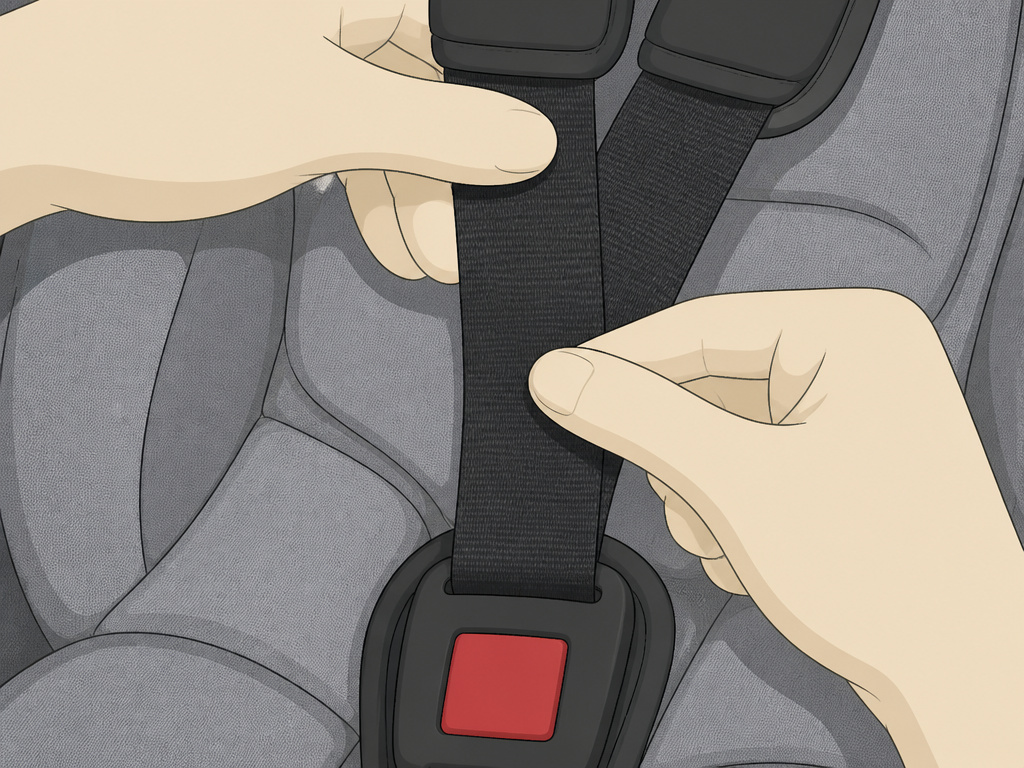
Safety doesn’t end at the purchase. It begins with the install. The peer-reviewed child car seat study from PMC highlights that misuse is the norm, not the exception. Understanding these dangers is how you become part of the 30 percent who get it right.
The Harness. This is the number one failure point. After buckling your baby in, pull the strap at the shoulder. If you can pinch a horizontal fold of webbing between your fingers, it’s too loose. The strap should be snug enough that you can only pinch the vertical thickness. This simple test prevents ejection.
The Base Installation. An infant seat uses a base that stays in the car. You must use either the vehicle’s LATCH system (lower anchors) or the seat belt, never both. Check the base’s recline indicator. A ball or level must sit within the marked zone. An incorrect angle compromises the baby’s airway and the seat’s crash performance.
The Carrier Itself. Never add aftermarket products not sold with the seat. This includes head support pillows, strap covers, or bunting bags that go behind the child. These items were not crash-tested with the seat and can interfere with the harness’s ability to restrain the child, creating dangerous slack.
| Symptom | Likely Cause | Immediate Fix |
|---|---|---|
| Seat moves >1 inch side-to-side at the belt path | LATCH anchors not tight or seat belt not locked | Reinstall, putting your full weight into the seat while tightening. Use a locking clip if your seat belt is a sliding latchplate. |
| Baby’s head slumps forward | Seat is too upright | Adjust the recline angle until the indicator shows correct level. Use a rolled towel under the base if your vehicle seat is sloped. |
| Harness straps are twisted | Webbing wasn’t straightened during buckling | Unbuckle, straighten each strap completely from the back to the buckle, then re-thread and tighten. |
Heat is a silent hazard. The study also noted cases of burns from hot car seat materials after a long drive in the sun. Always cover the seat with a blanket or a specialized shade when parked, and feel the harness buckles and metal parts before placing your child inside.
Your Practical Checklist Before You Buy
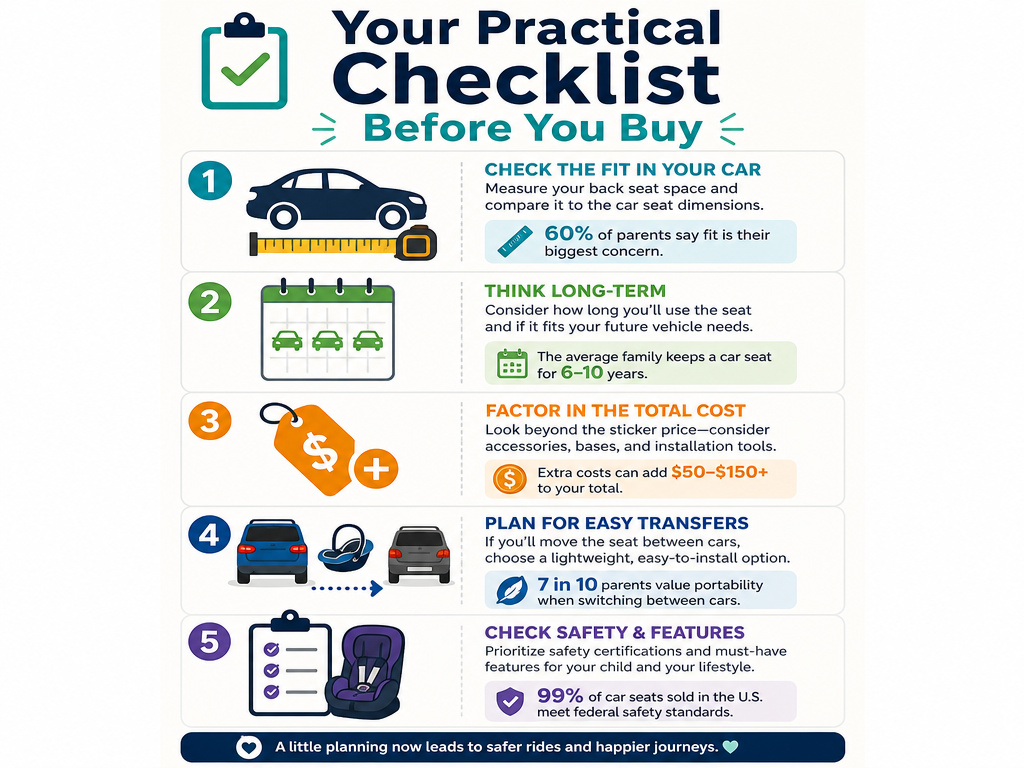
Decision time. Walk through this list. Your answers will point to the right seat for your life, not just the right seat on paper.
- What is your primary vehicle? Measure the back seat. Can it accommodate a rear-facing convertible seat installed at the proper angle without forcing the front passenger seat all the way forward? If no, an infant carrier is your only viable first step.
- What is your daily routine? Count how many times you get in and out of the car on a typical day. More than three trips? The convenience of a carrier starts to outweigh its cost. A lightweight infant car seat like the Chicco KeyFit 30 makes this easier.
- What is your budget for the full journey? Price out two scenarios: a) Infant seat + convertible seat later. B) A convertible seat now. Remember, the convertible may not fit your newborn, forcing you into scenario (a) anyway. Factor in the cost of a stroller that works with your choice.
- Will the seat be used in other cars? If grandparents will drive the baby, you need a seat for their car or a base for each vehicle. An infant seat with multiple bases (like the Graco SnugLock) simplifies this. A convertible seat is harder to move and reinstall correctly.
- Have you verified compatibility? This is the step everyone skips. Check the manufacturer’s vehicle compatibility list for your specific car model and year. Some seats simply do not install well in certain vehicles, regardless of claims.
If your checklist points to an infant seat, focus on the safest infant car seats that also fit your lifestyle. The UPPAbaby Mesa is known for its rigid LATCH installation, while the Britax B-Safe Gen2 has patented anti-rebound stability. These are real differences that matter in a crash.
If you are considering a used car seat, your checklist is longer. You must know the seat’s full history, have the original manual and labels, check for recalls, and inspect for any cracks or frayed webbing. Missing one piece of this puzzle means the seat’s safety certification is void.
Frequently Asked Questions
Can I just start with a convertible car seat?
Yes, legally. Practically, it’s a gamble. Convertible seats are large. Many do not fit newborns well, even with inserts, because the lowest harness slots are still too high and the required recline angle is hard to achieve in smaller cars. You might buy it and immediately find you need an infant seat anyway.
How long will my baby actually use an infant seat?
Most babies outgrow their infant seat by height before weight. The rule is when there is less than one inch of shell above the top of the baby’s head. For many models, this happens between 9 and 15 months. They will hit the 35-pound weight limit much later, if at all.
Are travel systems worth the money?
They are worth the convenience, not necessarily the money. A travel system, an infant seat that clicks into a stroller, is invaluable for urban living, running errands, or parents who want to avoid waking a sleeping baby. However, you can often buy a seat and a compatible stroller separately for less than a bundled system. Research the best infant car seat travel systems to see which stroller features you’ll actually use.
What’s more important, the seat or the installation?
The installation. A mid-range seat installed perfectly is safer than the most expensive seat installed poorly. The NHTSA car seat safety guidelines emphasize that correct use is the critical factor. Find a certified Child Passenger Safety Technician near you for a free inspection.
Do I need a new car seat for every child?
No, but you need to be certain about its history. You can reuse a seat for a sibling if it has never been in a moderate or severe crash, all parts are present and undamaged, and it has not expired (check the label for a manufacture date; most seats expire 6-10 years later). Never use a seat that’s been in a crash or is past its expiration date.
Before You Go
You need an infant car seat if your child is under 26.5 pounds and you want a restraint designed for their body. The updated federal standard makes that the clear line. The choice between an infant-only seat and a convertible comes down to your car’s size, your daily routine, and your tolerance for the very real risk of installation error.
For most new parents, especially those in cities or with multiple cars, the dedicated infant carrier is the right first step. It guarantees a safe fit from day one and provides logistical freedom. Start with a model from our list of best infant car seats, install it with obsessive attention to tightness and angle, and get it checked. That’s how you move from wondering what you need to knowing your child is secure.
