
Guide: Installing European Infant Car Seat Without a Base
This post contains affiliate links. As an Amazon Associate, we earn from qualifying purchases.
To install an infant car seat without a base using the European belt path, you need a vehicle seat with a 3-point Retractor Safety Belt. The lap belt goes into the side guides, the diagonal belt goes into the rear guide, and the carrier’s level line must be parallel to the ground after you pull the belt tight. This method yields a secure installation in about 95% of vehicles worldwide.
The lap belt part is non-negotiable. Every manual for a seat with a European belt path. Nuna PIPA next, Joie i-Snug 2, Nuna PIPA icon, Joie juva, opens the “Installation without Base” section with the same warning in all caps. Seats with only lap belts are out. So are seats where the vehicle’s own buckle is too long to lock securely against the carrier shell.
What follows is the sequence that actually works, pulled from those same manuals, plus the one field measurement that decides whether your car is compatible before you even start.
Key Takeaways
- The European belt path requires a 3-point seat belt; lap-only belts will not work and are explicitly prohibited by all manufacturers.
- A vehicle seat belt buckle that extends more than an inch from its stalk may be too long to anchor the carrier securely, a specific callout in the Joie juva and Nuna PIPA icon manuals.
- The carrier must be level front-to-back after installation, verified by a line molded into the plastic shell.
- This method is significantly more reliable than the American belt path, securing properly in about 95% of vehicles globally versus 20% in the US.
- Always tension the vehicle belt “as much as possible,” checking for twists, before securing your child.
What You Need Before You Start
You need three things: the car seat carrier, the vehicle manual, and about five minutes of focused time. The carrier is the bucket part that detaches from the base. The vehicle manual tells you if your chosen seating position has a 3-point belt and whether the airbag can be deactivated.
The third item is your own two hands. You will be pulling the vehicle seat belt until it has no more slack. If you have arthritis or a recent injury, get help. A loose installation is worse than no installation.
Before you start: Check your vehicle seat belt buckle length. If the metal female buckle end sticks out more than an inch from its stalk or the seat bight, it may be too long to lock securely against the car seat shell. The Joie juva and Nuna PIPA icon manuals explicitly warn that the restraint “cannot be used” in this case.
You also need to know your car seat’s exact model. The steps are specific to the brand and sometimes the generation. A Nuna PIPA next routes the belt differently than a Chicco KeyFit 30. This guide covers the European-belt-path seats common to Nuna and Joie models.
The One Belt Type That Works (And the One That Doesn’t)
All European-belt-path infant seats require a 3-point Retractor Safety Belt. This is the standard lap-and-shoulder belt found in the outboard seats of most modern cars. The retractor is the mechanism that spools the belt in and out, and it has a locking feature for car seats.
The lap belt is the part that goes across your hips. The diagonal belt goes across your chest. Both are required.
Lap-only belts, the kind sometimes found in the center seat of older trucks or in the third row of some SUVs, are explicitly forbidden. The Nuna PIPA next manual states it in bold: “DO NOT install this infant carrier module on vehicle seats with Lap Belts.” The Joie i-Snug 2, juva, and i-Gemm 2 manuals say the same. A lap belt cannot secure the top of the carrier, so the seat can rotate forward in a crash.
| Belt Type | Found In | Works With European Path? | Risk If Used |
|---|---|---|---|
| 3-Point Retractor | Outboard seats in most cars post-1996 | Yes | None — this is the designed method. |
| Lap-Only Belt | Center seats in older vehicles, some third rows | No | Carrier can rotate forward, ejecting the child. |
| 2-Point Belt (Airplane) | Aircraft seats | Yes, but with different rules | Must follow airline-specific instructions. |
If your vehicle only has lap belts where you need to put the seat, you cannot use the European belt path. You need a different car seat or a different vehicle.
The European Belt Path Step-by-Step
The process is the same for a Nuna PIPA next, a Joie i-Snug 2, and most other European-certified carriers. The names for the parts, side guides, rear guide, are printed in the manuals.
Place the carrier on the vehicle seat, rear-facing. Pull the vehicle safety belt out fully to engage the retractor’s locking mode. For belts that lock at the buckle, consult your vehicle manual.
Step 1: Route the lap belt. Find the side guides on the carrier. These are usually slots or channels near where the baby’s hips would be. Slide the lap portion of the vehicle belt, the part that goes across your lap, into these guides. The belt should lie flat, not twisted.
Step 2: Route the diagonal belt. Locate the rear guide. This is often a plastic hook or channel on the back of the carrier shell, near the top. Slide the diagonal shoulder portion of the vehicle belt into this rear guide. This step is what defines the European path; it routes the belt over the top of the shell, not around the sides.
Step 3: Buckle and tension. Insert the male buckle tongue into the female buckle on the other side of the seat. Now pull the shoulder belt tight. You are not just taking out slack; you are pulling until the carrier cannot move side-to-side or front-to-back more than an inch at the belt path. The Nuna manual says “tension the vehicle safety belt as much as possible, checking that it is not loose or twisted.” Put your weight into it, press down on the carrier with your knee or hand while you pull the belt tail.
Step 4: Check the level line. Look at the side of the carrier shell. You will see a small line or a set of lines molded into the plastic. This is the level indicator. It must be parallel to the ground. If it’s tilted up or down, the installation angle is wrong. Recline the vehicle seat back or add a rolled towel under the foot of the carrier (only if the manual allows) to achieve level.
Step 5: Final security check. Grab the carrier at the belt path and try to move it vigorously side-to-side and front-to-back. It should not shift more than an inch. If it does, unbuckle, re-route to remove twists, and pull tighter.
Where this goes sideways: Not pulling the belt tight enough. A belt you can pinch at the shoulder is a belt with slack. That slack turns into dangerous forward travel in a crash. Pull until the retractor stops you.
What About the American Belt Path?
The American belt path is the other way to install a carrier without a base. Instead of routing the diagonal belt over the top through a rear guide, you route it around the back of the carrier, often through a handle. You then lock the seat belt using its built-in locking retractor (standard in US/Canada vehicles since 1996) or a locking clip.
The Car Seat Lady, a certified child passenger safety technician, notes a stark difference in success rates. “The European belt path will yield a secure installation in about 95% of vehicles anywhere in the world… while the American belt path will yield a secure installation in only about 20% of cars in the US.”
The reason is physics. The European path uses up more of the vehicle belt webbing, creating friction that helps hold the seat tight even before the belt locks in a crash. The American path relies almost entirely on the belt’s locking mechanism. If the vehicle seat shape or belt geometry doesn’t cooperate, you get a loose seat.
For travel outside the US and Canada, the European path is often the only viable option. Many foreign vehicles lack the automatic locking retractors required for the American method.
The Buckle-Length Problem Nobody Mentions
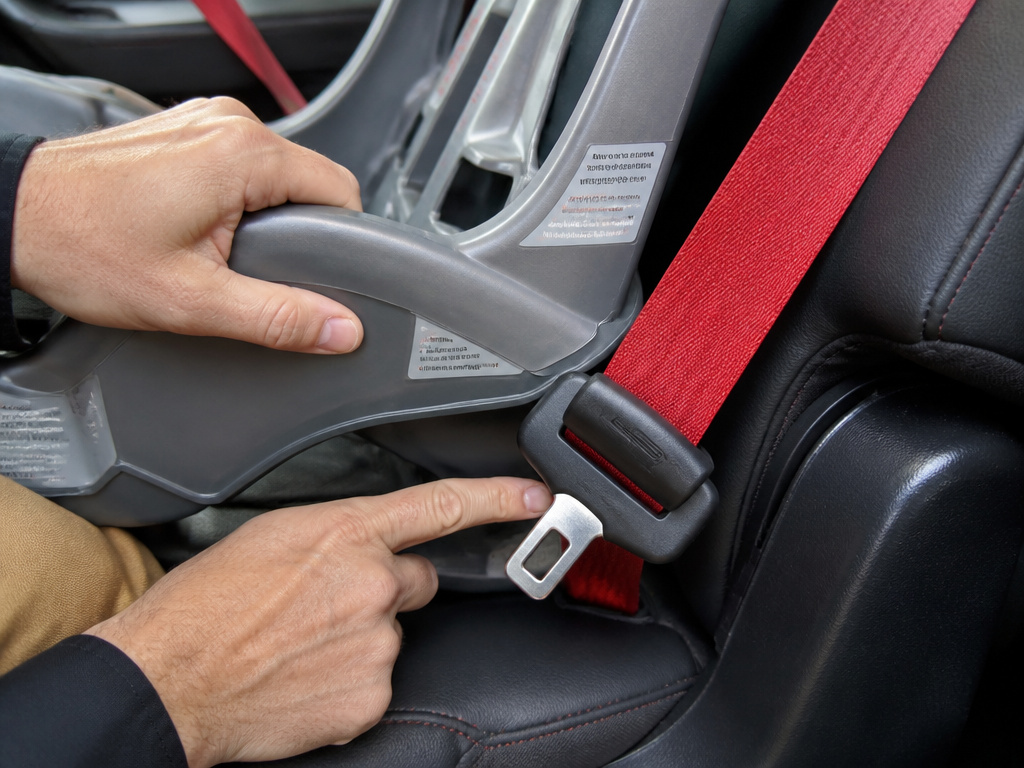
The Joie juva and Nuna PIPA icon manuals contain a specific, easily missed warning: “The infant child restraint cannot be used if the vehicle safety belt buckle (female buckle end) is too long to anchor the infant child restraint securely.”
If the buckle stalk is long or floppy, the buckle itself can sit up against the car seat shell instead of locking flat. When you tension the belt, the buckle can pivot, creating a point of failure. You can feel it, the belt seems tight, but the buckle has play.
The fix is to try a different seating position in the car. If all buckles in the back seat are too long, you cannot safely use that carrier in that vehicle with the European belt path. This is a compatibility dead end that no amount of pulling will solve.
Common Installation Mistakes and How to Avoid Them

Twisted belts. A single twist in the webbing reduces the belt’s effective strength. Lay the belt flat in the guides. Run your fingers along its entire path before you buckle.
Wrong recline angle. The level line is not a suggestion. A seat tilted too upright can slump an infant’s head forward, compromising their airway. Too reclined, and the crash forces are wrong. Use the line.
Forgetting the lock-off. Some models, like the Joie juva, have a plastic lock-off device near the belt path. You open it, route the belt through, then close it over the belt to prevent slippage. Skipping this step is like skipping the buckle.
Using the wrong seat position. Always install in a rear-facing position. Never place a rear-facing seat in front of an active airbag. Check your vehicle manual to confirm which seating positions are approved for car seat installation.
When the European Path Isn’t an Option
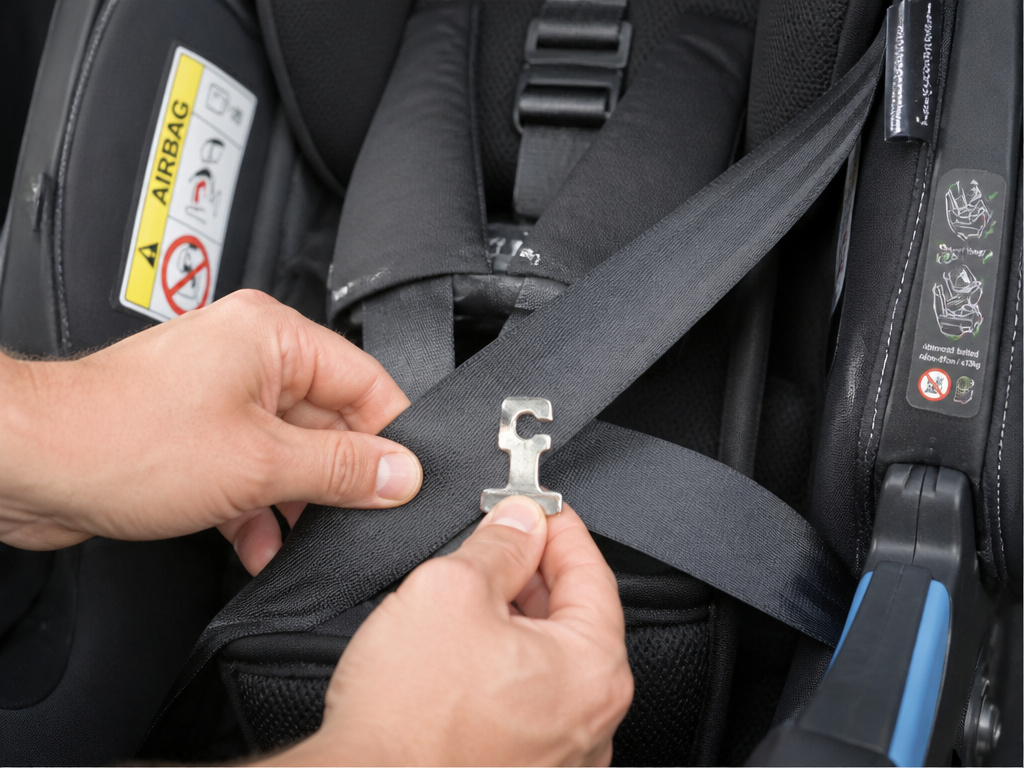
The European belt path isn’t universal. Some US-market seats, like certain Graco and Evenflo models, only have an American belt path. If your seat’s manual doesn’t show a rear guide for the diagonal belt, you don’t have this option.
In that case, you must use the American path with a locking clip if your vehicle belts don’t lock automatically. That’s a separate, fiddlier process with a high misuse rate.
Your other option is to use the base. If you’re in your primary vehicle, the base is the most convenient and often the most secure method. The debate between installing without a base and using the base isn’t about safety when both are done correctly, it’s about context.
Frequently Asked Questions
Can I use the European belt path in an airplane seat?
Yes, but the rules change. Airplane seats have lap-only belts. The manuals for seats like the Joie juva specify that the carrier “can only be installed using a lap belt if being used in an aircraft without the base.” You route the airplane lap belt through the same side guides, but you ignore the rear guide because there’s no diagonal belt. The level line rule still applies.
My car has those seat belts that retract automatically. Is that okay?
Yes. The “3-point Retractor Safety Belt” specified in the manuals includes both switchable locking retractors (common in older cars) and emergency locking retractors (ELRs, standard in newer cars). As long as it’s a lap-and-shoulder belt that locks when fully extended, it’s compatible.
How do I know if my car seat has a European belt path?
Check the manual. Look for diagrams or instructions for “installation without base.” If it shows the diagonal belt going into a guide on the back of the carrier shell, that’s the European path. If it shows the belt going around the back of the carrier or through the handle, that’s the American path.
Is it safe to use a car seat without the base?
Yes, when installed correctly using the approved method. European or American belt path, a carrier alone is as safe as one installed with a base. The base is a convenience feature, not a safety requirement. The real safety factor is a secure installation every single time.
What if my seat doesn’t have a level line?
Some older or budget models may not have a physical level line. In that case, you must follow the angle indicator in the manual, which often shows a picture of the seat at the correct recline. When in doubt, a 45-degree angle is a common safe starting point for newborns.
Before You Go
The European belt path is the more reliable method for a reason. It uses the vehicle’s own geometry to lock the seat in place. Your job is to follow the manual for your specific seat. Nuna, Joie, or otherwise, to the letter. Check for the 3-point belt. Check the buckle length. Route the belt through the guides, not around them. Pull until you cannot pull anymore. Verify the level line.
Then place your child in the seat, buckle the harness snugly, you should not be able to pinch any harness webbing at the shoulder, and you’re set. For taxis, rental cars, or grandma’s car, this is the way. The base stays in your main car. The carrier and this knowledge go everywhere.
