
When Should You Take the Newborn Insert Out of Cybex Seat?
This post contains affiliate links. As an Amazon Associate, we earn from qualifying purchases.
Take out the Cybex newborn insert when your baby reaches about 11 pounds (5 kg) or is roughly 3 months old. For most Cybex models, this is the official cutoff. The one major exception is the Cybex Aton 2, which has two inserts: a Newborn Inlay (remove at 11 lbs) and an Infant Insert (remove at 22 lbs). Using any insert beyond these limits pushes your baby’s head forward and compromises the harness fit, which is a direct violation of the seat’s safety certification.
That weight and age guideline is printed in the manual, but it’s the starting point, not the finish line. The real answer lives in the gap between the seat shell and your child’s back.
Look at the space behind your baby’s shoulders when they’re strapped in. If you can fit more than two fingers between the seat back and their spine, the insert has done its job. The harness straps should sit at or just below their shoulders without the padding lifting them. If the chest clip sits above the armpits or the baby’s head slumps forward onto their chest, the insert is now a hazard. This isn’t about comfort. It’s about crash geometry.
Key Takeaways
- Remove the standard Cybex newborn insert at 11 pounds (5 kg) or 3 months, whichever comes first. The Cybex Aton 2’s Infant Insert stays until 22 pounds (10 kg).
- The Cybex Aton 2 has a unique two-part system: a removable EPS foam Newborn Inlay under the seat cover (for infants under 11 lbs) and a soft fabric Infant Insert (for infants up to 22 lbs).
- Never use aftermarket inserts, pillows, or head positioners. They alter the seat’s engineered safety profile and can cause positional asphyxiation in a crash.
- For premature infants under 5 lbs (2.26 kg), Cybex mandates a 90–120 minute hospital observation before the first car trip, per American Academy of Pediatrics guidelines.
- The insert’s job is to position small infants so the harness fits correctly. Once it creates a gap or forces the head forward, it’s time to remove it.
Why Cybex Has Two Different Inserts
Most car seat brands use one term: infant insert. Cybex manuals use two, and confusing them is how parents end up using padding long after it’s safe. The Newborn Inlay is a slab of EPS foam hidden under the seat fabric. The Infant Insert is the soft, padded fabric piece you snap around the harness straps.
The Newborn Inlay is a specially designed EPS foam component located in the bottom of the Infant Carrier underneath the Seat Cover. The Inlay helps to position smaller babies properly in the Aton 2 during their first few months. We recommend using the Newborn Inlay until your child is 11 lb (5 kg) (about 3 months old).. Cybex Aton 2 Manual
That foam inlay is not optional padding. It’s part of the seat’s structural shell, designed to fill the space a tiny newborn can’t. Its removal is a single, permanent step, you take it out and store it. The soft Infant Insert, however, is adjustable. You can fold its lower portion under the baby to boost them for a better harness fit as they grow, then remove it entirely when they reach the 22-pound limit.
Which Cybex Models Have Which Inserts?
Cybex doesn’t standardize this across its line. The manual for your specific model is the only source of truth. Here’s the breakdown direct from the owner’s manuals.
| Cybex Model | Insert Name | Remove At | Notes |
|---|---|---|---|
| Cloud G / Cloud G Lux | Infant Insert | 11 lbs (5 kg) or ~3 months | Side wings can be folded in for a better fit on smaller babies. |
| Cloud G Pro | Infant Insert | 11 lbs (5 kg) or ~3 months | Same guidelines as Cloud G. |
| Aton G2 | Infant Insert | 11 lbs (5 kg) or ~3 months | Follows the standard single-insert rule. |
| Cloud T | Infant Insert | 11 lbs (5 kg) or ~3 months | Standard single-insert system. |
| Aton 2 | Newborn Inlay (EPS foam) | 11 lbs (5 kg) or ~3 months | Located under seat cover; remove and store. |
| Aton 2 | Infant Insert (fabric) | 22 lbs (10 kg) or when child needs room | Can be folded under child for better harness fit. |
| Sirona M | Newborn Insert | ONLY between 5–11 lbs (2.3–5 kg) | This is a convertible seat, not an infant carrier. Use is strictly weight-range limited. |
The Sirona M convertible seat is the outlier. Its manual states the Newborn Insert is for use only when the child weighs between 5 and 11 pounds. Outside that range, using it is unsafe. This highlights a critical principle: an insert is a temporary positioning tool, not permanent comfort padding.
Common mistake: Treating the insert like a permanent pillow. It’s a spacer for a small body. Once the body fills the shell, the spacer becomes a wedge that mispositions the harness.
The Physical Signs Your Baby Has Outgrown the Insert
Manuals give you numbers. Your baby gives you signals. Watch for these three physical signs that the insert is now working against you.
The head slump. This is the biggest red flag. In a properly fitted car seat, a baby’s head should rest back against the shell. If the insert is too bulky for their current size, it pushes their torso forward, causing their chin to drop to their chest. This can restrict their airway. If you see this, remove the insert immediately, even if they haven’t hit the weight limit.
The harness gap. The insert’s job is to position the baby so the harness straps lie flat and snug. An outgrown insert creates a void. Buckle your baby in, tighten the harness properly (you shouldn’t be able to pinch any slack at the shoulder), then check the space behind their back. Slide your hand between the seat shell and their spine. If you can fit more than two fingers stacked, the insert is no longer filling the gap it was designed for. The harness is now holding the child away from the seat, which reduces its effectiveness in a crash.
The chest clip creep. The chest clip must be level with your baby’s armpits. An insert that’s too thick lifts the child, causing the clip to ride up toward the neck. If you constantly have to readjust the clip down after a snug harness tighten, the insert is the culprit.
How to Actually Remove the Cybex Insert (Step-by-Step)
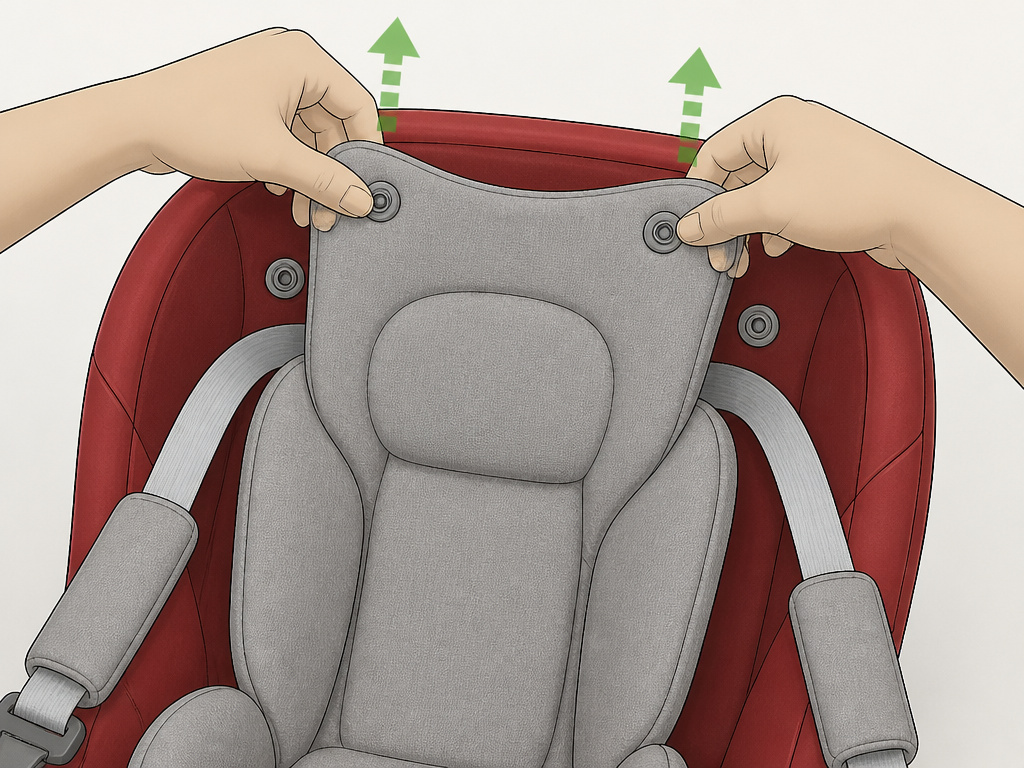
Removing the insert is straightforward, but doing it wrong can leave behind padding that still interferes. Follow these steps for a clean removal.
- Unbuckle and fully loosen the harness. You need complete slack to work. Pull the adjustment strap at the front of the seat until the shoulder straps are loose.
- Open the chest clip and unhook the harness tongues. Lay the harness straps out to the sides.
- Lift your child out. Place them in a safe spot.
- For a standard Infant Insert (Cloud G, G Pro, G Lux, Aton G2, Cloud T): Unsnap the insert from the seat shell. It’s usually attached with plastic snaps near the head and crotch areas. Lift it straight out.
- For the Cybex Aton 2 Newborn Inlay (EPS foam): Find the opening in the seat cover at the bottom of the seat bucket. Reach in, lift up, and pull the foam slab out. Store it.
- For the Cybex Aton 2 Infant Insert (fabric): Unsnap it from the shell. If you’ve been folding the bottom portion under the child, unfold it first.
- Re-seat your child and reassess the fit. Before buckling, ensure no part of the removed insert is still tucked under the child or the seat cover. Re-thread the harness straps through the correct slots (at or just below the shoulders). Buckle, tighten, and perform the pinch test.
Where this goes sideways: Leaving the EPS foam Newborn Inlay in the Aton 2 after 11 pounds. The manual says to remove it, but it’s hidden under the cover. Parents forget it’s there, and the child ends up sitting on a slope, altering the recline angle and harness path.
What to Do With the Insert Once It’s Out
Store it. Do not throw it away. If you have another child, you’ll need it again. If you sell or donate the seat, the insert must go with it, the seat is not certified for use without its original parts. Tuck it into the storage pocket on the bottom of the carrier or keep it with the manual.
Never use it as a lounger pillow or crib padding. It hasn’t been tested for those uses and could pose a suffocation risk.
The 5-Pound Preemie Rule No One Talks About
The manuals for the Cybex Cloud G, Cloud G Pro, Aton G2, and Cloud T all contain a specific, non-negotiable directive for premature or low-birth-weight infants.
CYBEX requires that the evaluation recommended by the AAP be conducted for all infants born earlier than 37 weeks and all newborn infants who weigh less than 5 lb (2.26 kg) at birth before their first car trip to check for breathing difficulties or heart rate problems when traveling in a REAR-FACING Child Restraint.. Cybex Cloud G Pro Manual
This isn’t a suggestion. It’s a requirement tied to the seat’s certification. The American Academy of Pediatrics recommends a 90- to 120-minute observation in the car seat by hospital staff before discharge. This checks for apnea (breathing pauses) or bradycardia (slow heart rate), which are higher risks for preemies in a semi-reclined position.
If your baby falls into this category, the insert is the least of your immediate concerns. The hospital’s car seat challenge test comes first. Passing that test is your green light to use the seat, with the insert, for the ride home.
Why Aftermarket Inserts Are an Instant Fail
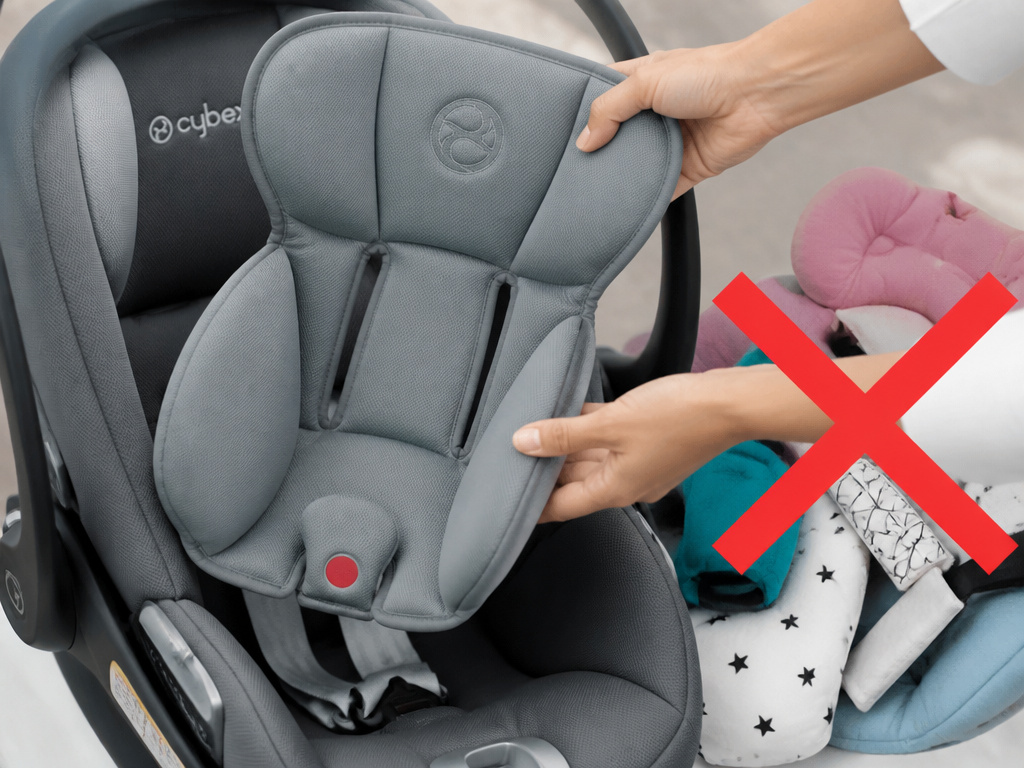
The manual for the Cybex Sirona M states it bluntly: “Do NOT use any other infant insert or pillows. Only use the one provided by CYBEX for this Child Restraint.” This rule applies to every model.
Aftermarket head supports, body pillows, and strap covers are not certified with your seat. They can change the way the harness webbing routes over your child’s body, creating slack in a crash. They can also push a child’s head forward into a chin-to-chest position, a known asphyxiation risk.
The only padding that should ever be between your child and the seat shell is what Cybex shipped in the box. If you lose the original insert, contact Cybex customer service for a replacement. Do not improvise.
The One Time You Might Fold, Not Remove
The Cybex Aton 2 manual provides a clever fit-adjustment tip for its Infant Insert. “If your child’s shoulders are below the first set of Harness Slots, you may fold the lower portion of the Infant Insert UNDER your child to boost him/her up for proper Harness fit.”
This is a temporary measure. Once the child’s shoulders reach the height of the second harness slots, you unfold the insert. When they approach 22 pounds or their head is close to the shell, you remove it entirely. This folding technique is model-specific to the Aton 2, don’t try it on a Cloud G or Cloud T insert.
Frequently Asked Questions
Can I use the Cybex newborn insert longer than 3 months if my baby is small?
No. The 3-month guideline aligns with developmental milestones like head control, not just weight. A baby’s torso length and muscle tone change by 3 months, even if weight gain is slow. An insert that props up a 4-month-old can force their chin to their chest. Follow the manual: remove at 11 pounds or 3 months.
My Cybex insert seems thin. Do I really need to take it out?
Yes. Its thinness is deliberate. It’s designed to be a precise spacer, not a plush pillow. Even a quarter-inch of extra padding changes the harness geometry and the child’s position relative to the seat’s impact-absorbing structure. That’s enough to fail safety testing.
What’s the difference between the Cybex Newborn Inlay and Infant Insert?
The Newborn Inlay is a firm EPS foam pad under the seat cover. It modifies the seat shell’s shape for very small infants. The Infant Insert is a soft fabric pad that snaps onto the shell and around the harness straps for comfort and fit. The Aton 2 uses both; most other Cybex models use only the soft Infant Insert.
Is it unsafe to use the car seat without any insert for a newborn?
For a baby under 5-6 pounds, yes. Without the insert, a newborn will slump down, the harness straps will be too high on their shoulders, and the crotch buckle will be too far forward. This can cause breathing problems and reduces crash protection. Use the insert until they hit the removal criteria, then take it out.
How do I clean the Cybex infant insert?
Check your model’s manual. Most Cybex inserts have removable covers that are machine washable on gentle cold and air-dried. Never put the foam or structured parts in the dryer, and never use bleach. Never use the seat without the insert cover reinstalled.
Before You Go
The rule is simple: 11 pounds or 3 months for most Cybex inserts. For the Aton 2, it’s 11 pounds for the foam inlay, 22 pounds for the soft insert. But your eyes are the final judge. If the harness doesn’t fit right, or your baby’s head slumps, the insert comes out today. Store it safely for the next child, and never replace it with anything Cybex didn’t make. That manual in your storage pocket isn’t just paperwork, it’s the blueprint that keeps the seat’s safety promise. Follow it.
