
Newborn Car Seat Insert: When It Must Come Out for Safety
This post contains affiliate links. As an Amazon Associate, we earn from qualifying purchases.
Remove the newborn insert from your car seat when your baby reaches 11 pounds (5 kilograms). This is the universal weight limit stated in most instruction manuals, including those for Joie, Nuna, and Cybex models. However, UPPAbaby allows continued use beyond 11 lb if the baby doesn’t slouch and the harness tightens properly, and Cybex offers an age-based guideline of about 3 months. Never use the insert forward-facing, and never substitute an aftermarket one.
That 11-pound threshold is printed in your manual for a mechanical reason. The insert’s job is to position a tiny newborn’s body so the harness straps lay correctly, at or just below the shoulders. Once a baby grows, the insert creates a dangerous gap between the child’s back and the seat shell. The harness can’t tighten snugly, and in a crash, that slack lets the child’s body move violently.
What follows is a breakdown of the universal rule, the model-specific exceptions that change it, and the physical signs your baby has outgrown the padding regardless of weight. By the end, you’ll know how to read your own seat’s manual in two minutes flat.
Key Takeaways
- The 11 lb (5 kg) weight limit is the default removal point for nearly all infant inserts.
- UPPAbaby MESA V2 manuals permit use past 11 lb if the baby doesn’t slouch and the harness tightens correctly, a rare fit-based exception.
- Cybex CLOUD G offers a dual guideline: remove at 11 lb or around 3 months of age.
- A separate SIP (Side Impact Protection) insert is different and often must stay in use up to 40 lb.
- The definitive answer is always in your product’s specific instruction manual, not in generic advice.
The Universal 11 lb (5 kg) Rule & Why It’s Not Absolute
The infant insert MUST be removed once the child reaches 11 lb (5 kg). This directive appears verbatim in the Joie Saffron SI, Nuna REVV, and Nuna EXEC instruction manuals. It is a safety threshold, not a suggestion.
That number exists because of harness geometry. A newborn’s torso is short and round. Without the insert lifting and cradling them, the shoulder harness slots are too high. The straps would ride over the ears or off the shoulders entirely.
The insert brings the baby forward, ensuring the harness webbing contacts the strong bony parts of the shoulders and pelvis. Once the baby’s body length and mass increase, the insert does the opposite. It pushes them too far forward, creating space behind their back. You pull the harness tight against the insert, not the child. That hidden slack is the danger.
Check the manual first. Every time. The 11 lb rule is so consistent because it’s based on the same crash-test dummy dimensions and engineering standards. But it is not the only rule.
Where this goes sideways: Assuming all inserts are the same. The Nuna REVV maxx has both an infant insert (for 5-11 lb) and a mandatory SIP insert for side-impact protection that stays in until 40 lb. Removing the wrong one compromises safety.
| Brand & Model | Infant Insert Weight Range | Key Removal Rule |
|---|---|---|
| Joie Saffron SI | Up to 11 lb (5 kg) | MUST be removed at 11 lb. Never use forward-facing. |
| Nuna REVV | 5–11 lb (2.3–5 kg) | MUST be removed at 11 lb. |
| Nuna EXEC | 5–11 lb (2.3–5 kg) | MUST be used within this range. DO NOT use over 11 lb. |
| UPPAbaby MESA V2 | 4–11 lb (1.8–5 kg) | Recommended 4-11 lb. May use beyond if no slouching and proper harness fit. |
| Cybex CLOUD G | Until ~11 lb (5 kg) or ~3 mos. | Remove at about 11 lb OR about 3 months of age. |
Model-Specific Rules: A Manual Is Your Only Map
General advice gets you to the driveway. Your car’s manual gets you home. It’s the same with your car seat. The table above shows the consensus, but the footnotes in the manuals are where the real decisions live.
UPPAbaby MESA V2 stands out. Its manual states the insert is “recommended” for 4-11 lb but adds: “Use may continue beyond 11 lbs if all fit criteria are met (child not slouching, room to tighten harness properly).” This is a fit-based exception you won’t find elsewhere. It acknowledges that some long, lean babies might still fit the insert’s contours past the weight mark. The test is physical: can you tighten the harness snugly with no extra material behind the baby’s back? If yes, the insert can stay. If there’s any bunching or gap, it comes out.
Cybex CLOUD G provides an alternative. Its manual recommends using the insert “until the baby weighs about 5 kg (11 lbs) or about 3 months.” The age guideline is a helpful backup for parents who don’t weigh their baby weekly. By three months, most infants have developed enough neck and torso control that the insert’s full-body support becomes restrictive.
Nuna’s SIP Insert Distinction is critical. In the REVV maxx manual, the infant insert is for 5-11 lb. The separate SIP insert “MUST be used for a child up to 40 lb (18 kg).” They are different pieces of foam with different jobs. Confusing them means either leaving a newborn unsupported or depriving a toddler of designed side-impact protection. This is why knowing what is an insert for your specific model matters.
The process for how to remove the insert is usually simple, undo snaps, pull the harness straps out, but the decision to remove it is what keeps your child safe.
Physical Signs It’s Time to Remove the Insert (Before 11 lb)
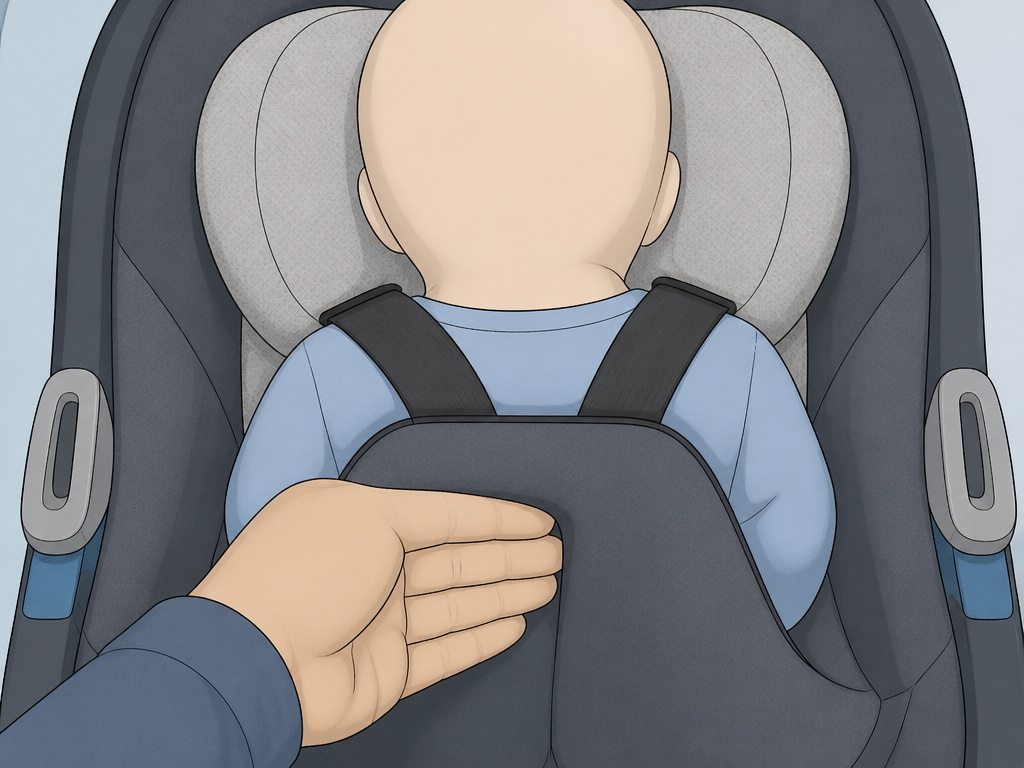
Weight and age are proxies. The body tells the truth. Check these three physical signs every time you buckle your baby in. If you see one, the insert is done regardless of the scale.
- The Harness Straps Are At or Above the Shoulders. With the insert in, the harness should route at or just below the shoulders for a rear-facing child. If the straps are now level with or creeping above the shoulders, the insert is lifting the baby too high. This misroutes crash forces.
- There’s a Visible Gap Behind the Baby’s Back. After buckling, run your hand behind your baby’s back, between them and the seat shell. If you can slide your fingers through a space, the insert is acting as a spacer. The harness is tightening against foam, not your child.
- The Baby Appears Cramped or Slouching. Their chin is tucked to their chest, or their body curves into a C-shape instead of sitting back against the seat. This is a sign of transition out of insert readiness. The insert is now too small, compressing their posture.
These signs mean the insert has switched from a safety device to a liability. It is preventing a proper harness fit. This is the core reason for the 11 lb rule, most babies hit these physical limits around that weight.
What Happens If You Leave the Insert In Too Long?
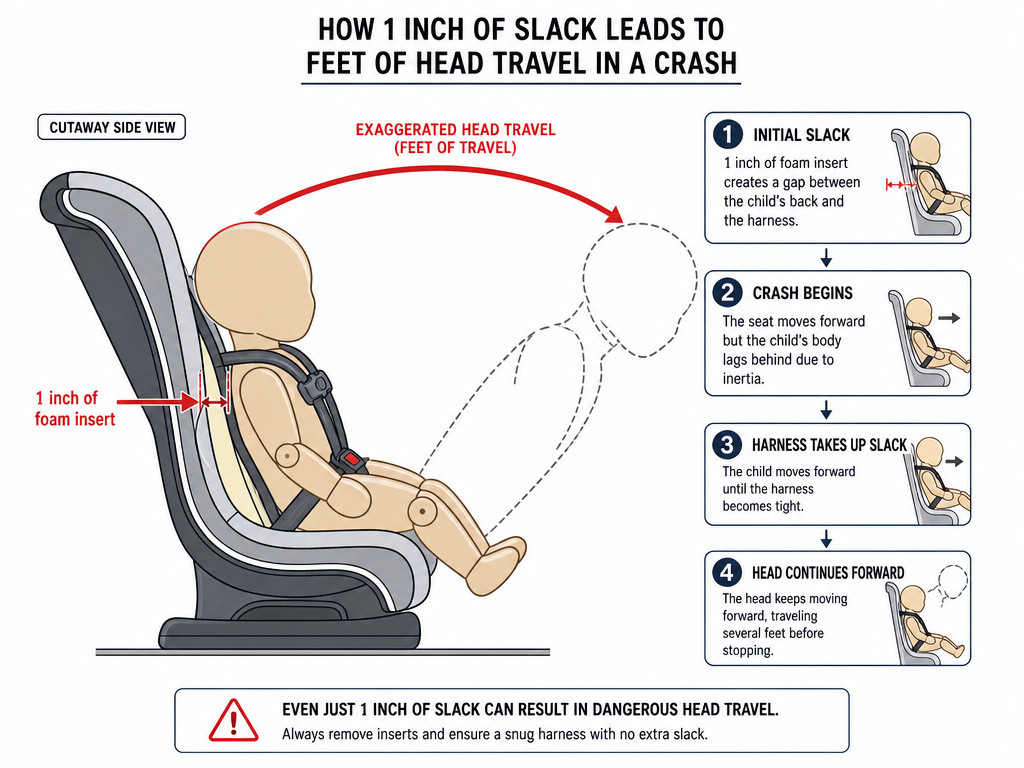
The consequence isn’t a maybe. It’s physics. In a sudden stop or crash, a loose harness allows the child’s body to move farther and faster before the restraint system engages.
The insert creates slack by taking up space. That extra inch of foam means the harness has to stretch across it before it even touches your baby. That inch translates into feet of forward travel at crash speeds. The child’s head and neck can snap forward, risking severe spinal or brain injury.
It also changes the harness angle. Straps that should lay flat over the collarbones can dig into the neck or slip off the shoulders entirely. This is why manuals for seats like the Joie car seat are absolute: “MUST be removed.” It’s not about comfort. It’s about the harness doing its one job.
The Big Danger: Aftermarket and Non-Approved Inserts
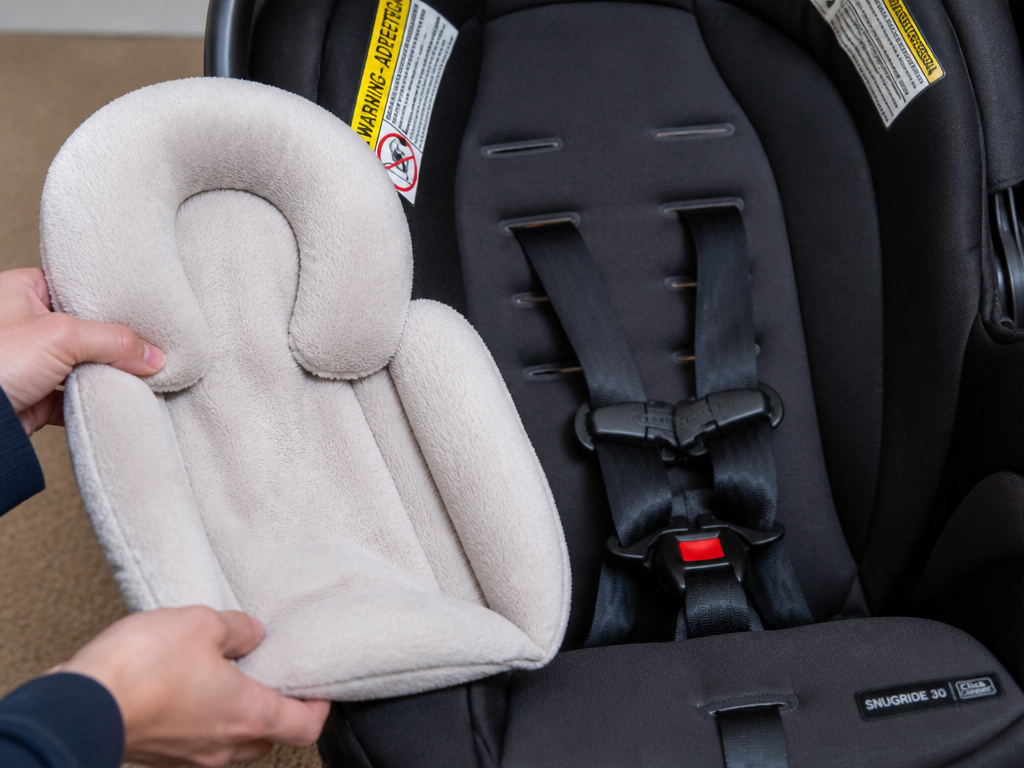
This is non-negotiable. Never use a pillow, rolled blanket, or an insert bought separately from a different brand. Do not use a hand-me-down insert from an older seat model.
Common mistake: Using a cozy-looking aftermarket head support. These products are not crash-tested with your specific seat. They can compress unpredictably, create slack, or interfere with the harness routing. Their use voids the seat’s safety certification.
Car seat manufacturers test the exact combination of shell, harness, and their own branded insert as a system. An untested aftermarket inserts changes how energy is absorbed and distributed in a crash. The results can be catastrophic. If you’ve lost your original insert, contact the manufacturer for a replacement. Do not improvise.
Frequently Asked Questions
Can I use the newborn insert for a preemie under 5 lb?
Maybe, but don’t guess. The manuals for Joie and Cybex explicitly reference American Academy of Pediatrics (AAP) guidelines for preterm or low birth weight infants. These babies often need specialized positioning and may require a car bed for safe travel. The AAP mandates a car seat tolerance test before discharge for infants born before 37 weeks or under 5 lb. Always follow your medical team’s advice, not just the seat’s weight minimum.
My baby is 12 lb but seems to still fit well in the insert. Can I leave it?
Only if you have a UPPAbaby MESA V2 and its manual’s fit criteria are met. For every other major brand. Joie, Nuna, Cybex, the 11 lb limit is a strict “must remove” command. The engineering and crash testing are based on that limit. Exceeding it means using the seat in an untested, unapproved configuration.
What’s the difference between an infant insert and the head support?
An infant insert typically supports the entire torso, back, and sometimes sides. A head support or head cushion is just that, padding around the head. Some seats, like the Nuna REVV maxx, have both. The head piece often has its own, later removal guideline. Always check which piece your manual is discussing.
Do I need to keep the insert after removing it?
Yes. Store it with the manual. If you have another child later, or sell or donate the seat, the next user will need it if their child is under 11 lb. A complete seat includes all its original parts.
Is it safe to use the insert in the stroller?
Only if the stroller is part of a travel system specifically designed for that car seat, and the insert remains installed in the car seat. Never add extra padding between the baby and the stroller’s harness. The stroller’s safety system is separate and also requires a snug fit.
Before You Go
The rule is simple on the surface: take the newborn insert out at 11 pounds. The reality requires checking your manual. For a Joie or Nuna, that’s a firm deadline. For a UPPAbaby, you get a fit check. For a Cybex, you have a three-month age option.
The constant is the harness. It must be snug, with no slack from padding, and must route at the correct height on your baby’s shoulders. When the insert prevents that, its job is over. That moment almost always arrives right around that magic 11-pound mark. Find your manual, find the page, and make the call based on your seat’s tested specifics, not a well-meaning rumor.
