
Booster Car Seat Installation: A Step-by-Step How-To Guide
This post contains affiliate links. As an Amazon Associate, we earn from qualifying purchases.
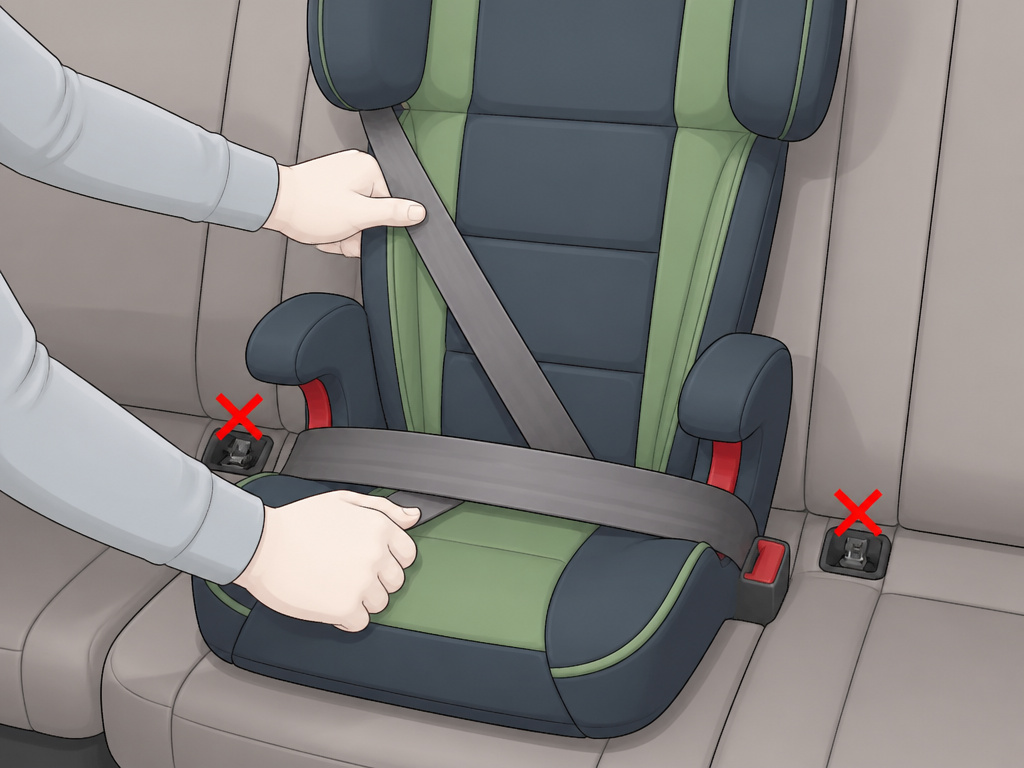
To install a booster car seat, you must use either the vehicle’s LATCH system OR the seat belt, never both. The choice depends on your child’s weight and your car’s features. For LATCH, connect the lower anchors until they click and check the indicator. For seat belt, thread it through the designated belt path, lock it, and ensure a snug, less-than-one-inch side-to-side wiggle at the belt path.
That “never both” rule is straight from the NHTSA, and it’s the line most installation guides bury in the fine print. Using both systems doesn’t make the seat safer; it creates conflicting force paths in a crash that can cause the seat to fail. Your vehicle manual and the booster’s own instruction booklet are the final authorities, if they conflict, the vehicle manual wins.
What follows: the mechanical difference between LATCH and seat belt installs, the exact weight limit that forces a switch, the visual and auditory cues that prove a secure connection, and the five-point checklist to know the seat belt fits your child, not just the seat.
Key Takeaways
- Never double up. Federal safety guidelines state you must install a booster using LATCH or the seat belt, not both systems together.
- LATCH has a weight limit. Combined child and seat weight over 65 lbs means you must stop using LATCH and switch to a seat belt installation.
- Listen for the click. A proper LATCH connection gives an audible click; models like the Peg Perego Viaggio HBB 120 require it.
- The belt must lock. If your vehicle seat belt doesn’t stay tight on its own, you must use a locking clip, booster seats don’t have built-in lock-offs.
- Fit the child, not the seat. A booster’s job is to position the vehicle seat belt correctly across the child’s hips and chest, not just to be strapped down tightly.
LATCH vs Seat Belt: The One Hard Rule
The National Highway Traffic Safety Administration (NHTSA) is unambiguous: “Every car seat needs to be installed using either the lower anchors or a seat belt to secure it in place, never both.” This isn’t a suggestion. It’s a directive based on crash-test physics.
NHTSA car seat safety guidelines explicitly prohibit using LATCH and a seat belt simultaneously. The two systems are engineered to manage crash forces independently; combining them can prevent either from working as designed, potentially allowing the seat to rotate or detach.
Why does this happen? In a collision, the LATCH anchors and the seat belt stretch and load at different rates. If both are connected, they fight each other. One system may take the initial load and snap, leaving the other to handle a sudden, catastrophic shift. The seat’s structure isn’t tested for this scenario. You’re gambling on an unproven configuration.
The rule holds whether you’re installing a high-back booster like the Chicco MyFit or a backless model. Your first step is always to pick one system. LATCH is often easier for a secure, tight fit. The seat belt is universally available and necessary once weight limits are exceeded.
How to Install a Booster Seat with LATCH
LATCH (Lower Anchors and Tethers for Children) is a standardized system in vehicles made after September 2002. You’ll find the lower anchors in the seat bight, usually marked by small symbols.
- Locate the anchors. Push aside the vehicle seat cushion to expose the rigid metal bars. Don’t confuse them with seat frame parts or cargo hooks.
- Connect the LATCH straps. Attach your booster’s LATCH connectors to these anchors. For many seats, like the Peg Perego Viaggio HBB 120, you must hear an audible click to confirm.
- Tighten and check. Pull the adjustment strap to remove all slack from the LATCH webbing. The seat should not move more than one inch side-to-side or forward at the belt path.
- Verify indicators. Some seats, such as the Joie signature i-Traver, have color-coded indicators. The connectors must show completely green when properly attached.
Where this goes sideways: Not checking for the click or the green indicator. If the connector isn’t fully engaged, a sudden stop can pop it loose. You’ll think the seat is secure when it’s actually resting on a half-latched hook.
TL;DR: LATCH = find anchors, click connectors, tighten strap, check for less than one inch of movement.
How to Install a Booster with a Seat Belt
When LATCH isn’t an option or your child has outgrown its limits, the vehicle seat belt is your system. This is the only method for backless boosters and for any install in a seating position without LATCH anchors.
- Place the booster on the vehicle seat.
- Thread the seat belt. Follow the booster’s specific belt path diagram, usually marked in red or found on the seat shell. The belt must lie flat, not twisted.
- Buckle and lock. Engage the buckle. Most modern seat belts lock at the retractor during a sudden pull. If yours doesn’t stay tight, you must use a locking clip to secure the belt.
- Remove all slack. Kneel into the booster seat, using your weight to compress the vehicle cushion, while you pull the shoulder belt tight. The belt should have no detectable slack at the lap portion.
- Test for tightness. Grasp the seat at the belt path and try to move it. Proper installation allows less than one inch of movement in any direction.
| Installation Method | Best For | Critical Checkpoint |
|---|---|---|
| LATCH System | Easier, repeatable tight fit. Vehicles with accessible anchors. | Audible click & color indicator (green). |
| Vehicle Seat Belt | Universal use. Required after LATCH weight limit is exceeded. | Belt is locked (via retractor or locking clip) and has <1″ of movement. |
| NEVER Both | — | This creates a dangerous, untested conflict of forces. |
The Hidden LATCH Weight Limit You Must Calculate
LATCH isn’t a forever solution. Vehicle and car seat manufacturers set a combined weight limit for the lower anchors, typically 65 pounds. This limit includes the weight of the child plus the weight of the car seat itself.
Once your child outgrows the vehicle or car seat manufacturer’s established limits for the lower anchors, stop using the lower anchor attachments and reinstall the car seat using the vehicle’s seat belt.
How do you know when you’ve hit it? If your booster seat manual doesn’t state a clear limit, use the NHTSA’s formula:
Lower anchor weight limit = 65 lbs – weight of the car seat.
Find the seat’s weight in its manual. If your Chicco MyFit booster weighs 18 pounds, the lower anchors can safely hold a child up to 47 pounds (65 – 18 = 47). Once your child hits 48 pounds, you must unhook the LATCH straps and switch to a seat belt installation. This is a non-negotiable safety transition that many parents miss because the seat still “fits.”
The 5-Step Seat Belt Fit Test: Is Your Child Ready?
A booster seat’s sole job is to position the adult seat belt correctly on a child’s body. The installation is just step one. Step two is ensuring the belt fits the child. Use this test every time your child gets in the seat.
- Back and Bottom: Is the child sitting all the way back against the vehicle seat, with their bottom positioned at the seat’s bend?
- Knees: Do the child’s knees bend comfortably at the edge of the booster seat?
- Lap Belt: Does the lap belt lie snugly across the upper thighs, not the stomach?
- Shoulder Belt: Does the shoulder belt lie snugly across the shoulder and chest, not crossing the neck or face?
- Staying Put: Can the child maintain this position for the entire trip, without slouching or sliding the belt behind their back?
If you answer “no” to any point, your child may not be ready for a booster. They might still need a harnessed seat, or you may need to adjust the booster’s headrest and belt guide. The Evenflo Big Kid, for example, requires the child’s ears to be below the top of the booster’s headrest.
Choosing Your Installation Spot: Back Seat is Best
The safest place for any child restraint is the back seat, away from active front airbags. Within the back, the center seat is often statistically safest, but only if you can achieve a proper install there.
Common mistake: Installing in the center seat using outboard LATCH anchors. This is almost never permitted. You must use the seat belt for a middle seat installation unless your vehicle specifically has dedicated center LATCH anchors (some do).
Whether you choose the window or center spot, the vehicle seat must be forward-facing, have a seat back that locks upright, and be free of gaps or movable parts that could compromise the booster’s stability. Always consult your vehicle manual for specific restrictions.
Frequently Asked Questions
Can you install a booster seat with both LATCH and seat belt?
No. You must use one system or the other. Using both LATCH and a seat belt together is explicitly warned against by NHTSA and all major car seat manufacturers. It creates an unapproved and potentially dangerous load path in a crash.
How tight should a booster seat be installed?
Whether using LATCH or seat belt, the seat should not move more than one inch side-to-side or forward at the belt path when you grasp it and tug firmly. For LATCH, ensure there’s no slack in the connector strap.
When do you stop using LATCH for a booster seat?
You must stop using the lower LATCH anchors when the combined weight of your child and the booster seat exceeds 65 pounds, or at the lower limit specified by your car seat manufacturer (whichever is lower). After this, you must install with a seat belt.
Do all booster seats have LATCH?
No. Many high-back boosters offer LATCH as a feature to keep the seat from becoming a projectile when unoccupied. Most backless booster seats do not have LATCH connectors. Always check your specific model’s manual.
What if my car doesn’t have LATCH anchors?
Vehicles manufactured before September 2002 likely do not have LATCH. In this case, you will always install with a seat belt. Ensure you know how to lock your vehicle’s seat belt, using either a locking latchplate, a switchable retractor, or a provided locking clip.
Before You Go
Installing a booster seat boils down to a binary choice: LATCH or seat belt. Pick one, follow the manual for that method, and achieve a rock-solid, less-than-one-inch fit. Remember the hidden 65-pound LATCH limit, it sneaks up faster than you think. Finally, the seat’s secure install is only half the battle. Run the five-point seat belt fit test on your child every single trip. The belt must cross the thighs and chest, not the belly and neck. When both the seat is tight and the belt fits, you’ve done it right.
