
7 Best Child Car Seats of 2026
This post contains affiliate links. As an Amazon Associate, we earn from qualifying purchases.
The Graco Extend2Fit stands out as the best overall child car seat for its extended rear-facing capacity and strong safety features, while the Graco Slimfit is a smart budget-friendly pick that doesn’t sacrifice safety. For families needing a 3-in-1 solution, the Graco TriRide offers solid versatility across stages.
Choosing the right car seat is one of the most important decisions a parent makes, yet it’s easy to get lost in a sea of options, conflicting advice, and technical jargon. As a mom and child safety advocate, I know how much is riding on this choice, your child’s protection, comfort, and how well the seat fits your daily life.
This guide breaks down the top options based on safety standards, real-world usability, and long-term value. I focused on models with strong crash performance, ease of installation, and features that support proper use, drawing from specs, owner feedback, and expert assessments to help you make a confident decision.
Top 7 Child Car Seats in the Market
The Best Child Car Seats, Reviewed
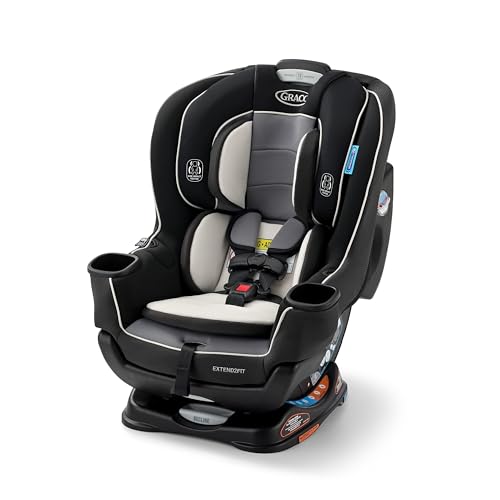
Graco Extend2Fit Convertible Car Seat
Strengths
- Extended rear-facing to 50 lb
- Adjustable legroom panel
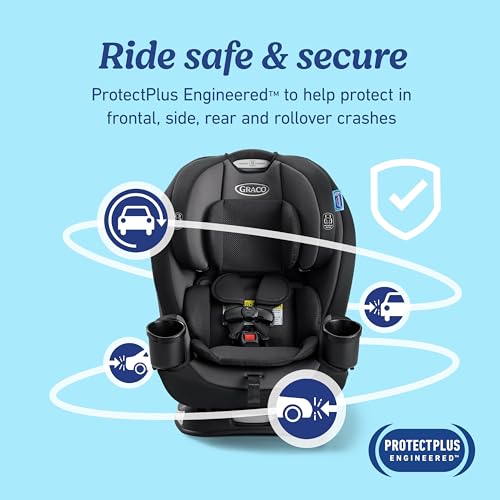
- ProtectPlus impact protection
Trade-offs
- Bulky in back seat
- Not slim for tight rows
- Heavier than average
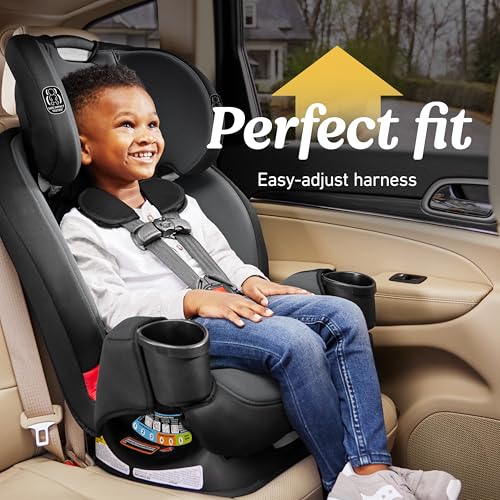
This is the seat I’d recommend most often to new parents. The Extend2Fit panel gives up to 5 inches of extra legroom, letting kids stay rear-facing safely up to 50 lbs, well beyond most models. Since rear-facing is safest for young children, that extended range is a major win. It’s a true 3-in-1 with rear-facing, forward-facing, and highback booster modes, and the Simply Safe harness system makes adjustments effortless.
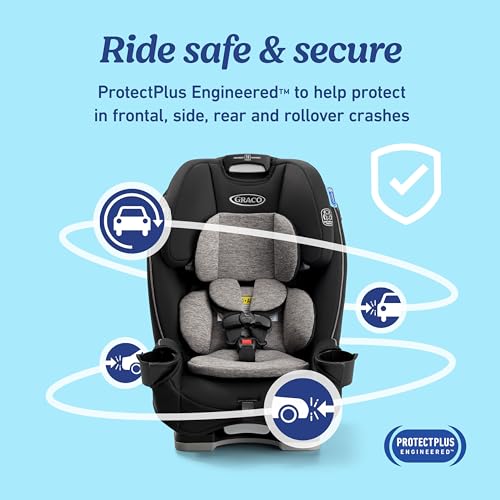
Graco’s ProtectPlus engineering covers side and frontal impacts, and owners consistently report confidence in real-world use. It’s not the slimmest, so three-across setups might be tight, but for safety and longevity, it’s unmatched. Compared to the TriRide, it wins on rear-facing capacity; compared to the Slimfit, it wins on safety extension. My recommendation for most families starting from birth.
Video review
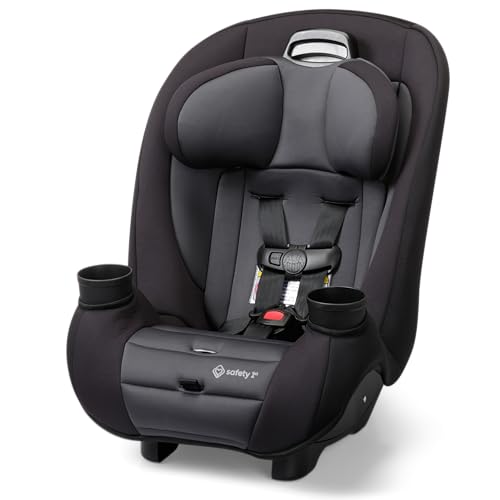
Safety 1st Ellaris 3-in-1 Car Seat
Strengths
- True 3-in-1 use
- Affordable price
- Slim, travel-friendly
Trade-offs
- Basic harness adjustment
- Less plush padding
- Shorter rear-facing limit
At this price, the Ellaris delivers a lot, especially for budget-conscious families. It’s a true 3-in-1 with rear-facing (from 5 lbs), forward-facing, and highback booster modes, which is rare under $100. The slim design is a real perk for three-across setups, and owners appreciate the airplane-friendly size and machine-washable cover. It meets federal side-impact standards, which is reassuring, though real-world crash performance isn’t as rigorously tested as some premium brands.
Still, the harness adjustment isn’t as smooth as Graco’s Simply Safe system, and the padding is thinner. It works well for occasional use or as a second car seat, but I wouldn’t rely on it for long daily commutes. For a first car seat, I’d lean toward Graco’s more refined options, but for value and versatility, the Ellaris holds its own.
Video review
Graco TurboBooster 2.0 Backless Seat

Strengths
- Extremely affordable
- ProtectPlus safety testing
- Lightweight, portable
Trade-offs
- Backless, no head support
- No harness option
- Not for younger kids
For older kids who just need a reliable, no-frills booster, the TurboBooster 2.0 is tough to beat. At well under $40, it’s one of the most affordable backless boosters that still carries Graco’s ProtectPlus engineering, which includes testing for rollovers and extreme temperatures, rare at this price. The height-adjustable armrests and hide-away cup holders are thoughtful touches families appreciate.
It’s not a harness seat or convertible, this is strictly for kids over 40 lbs who are ready for the vehicle seat belt. Owners say it’s lightweight and easy to move between cars, making it ideal for carpools or grandparents’ vehicles. Compared to highback boosters, it offers less head support, so I wouldn’t use it in vehicles with low seat backs. But for value and simplicity, it’s the clear leader.
Product photos



Graco Slimfit 3-in-1 Car Seat

Strengths
- Space-saving slim design
- 10-position headrest
- ProtectPlus engineering
Trade-offs
- Higher price point
- Fewer recline options
- Heavier than some
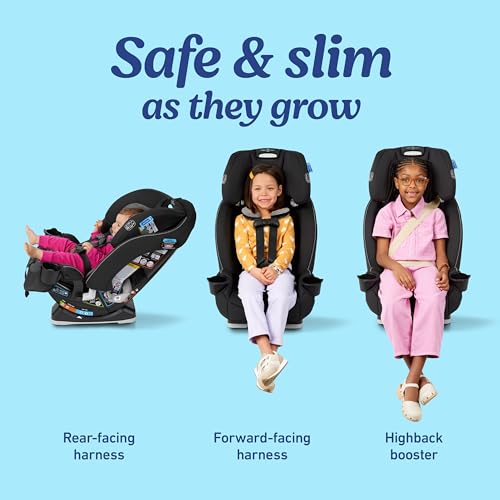
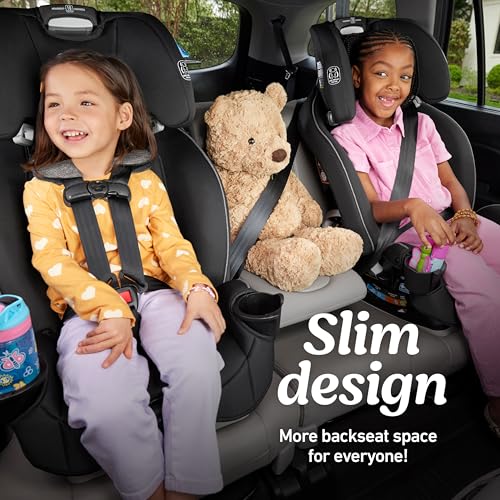
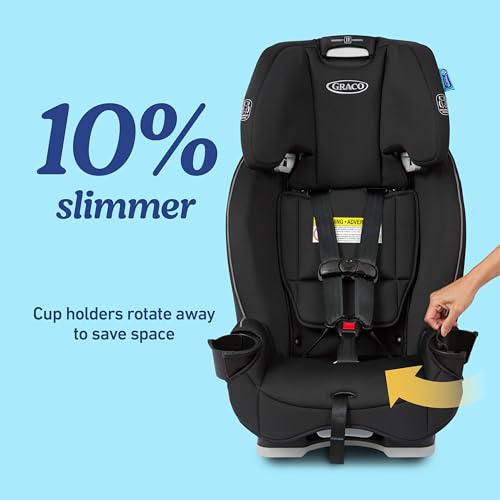
The Slimfit earns its name, it’s 10% narrower than standard models, which is a standout in tight back seats. For families juggling three kids or driving compact SUVs, that space-saving design makes installation and seating far more manageable. It’s a full 3-in-1 with rear-facing (5–40 lbs), forward-facing, and highback booster modes, and the 10-position headrest gives a precise fit as kids grow.
Graco’s ProtectPlus engineering adds confidence, and owners report solid crash test performance. The rotating cup holders are a small but smart touch. Yes, it’s one of the pricier options, but the build quality and adjustability justify it for many. Compared to the TriRide, it’s slimmer but has less recline, so comfort on long naps isn’t quite as strong.
Product photos

Graco TriRide 3-in-1 Car Seat
Strengths
- 6-position recline
- Full 3-in-1 use
- Comfortable padding
Trade-offs
- Wider footprint
- No legroom extension
- Heavier build
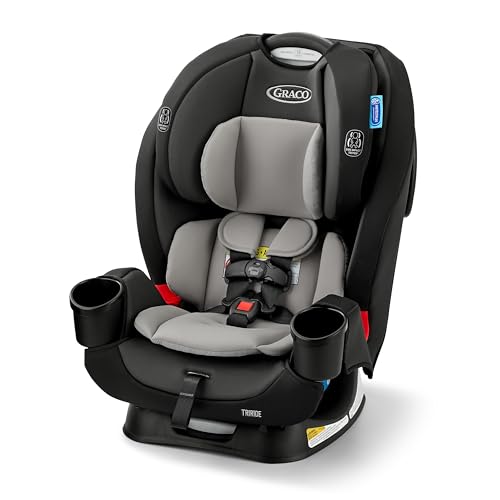
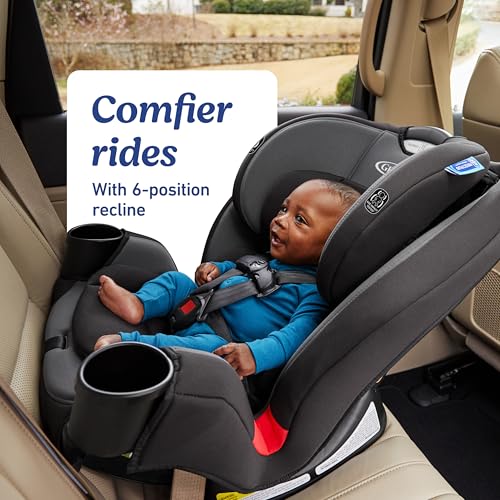
The TriRide is built for comfort over distance, and the 6-position recline proves it. For families who regularly face long drives or road trips, that extra recline makes a real difference in helping kids sleep. It’s a full 3-in-1 seat with rear-facing from 5 lbs, so it works from day one, and it grows all the way to highback booster use. The 10-position headrest and ProtectPlus safety system match Graco’s top-tier standards.
Owners note it’s a bit wider than the Slimfit, so it may not fit three across easily. But for a single-car family or road warriors, that trade-off is worth it. I’d pick this over the Slimfit if comfort on extended rides is the priority. It doesn’t have the Extend2Fit legroom, so rear-facing space isn’t maximized, but for most kids, it’s still plenty.
Product photos

Baby Trend Hybrid SI Booster

Strengths
- Side-impact protection
- 3-in-1 flexibility
- Dual cup holders
Trade-offs
- No rear-facing mode
- Thinner padding
- Less growth range
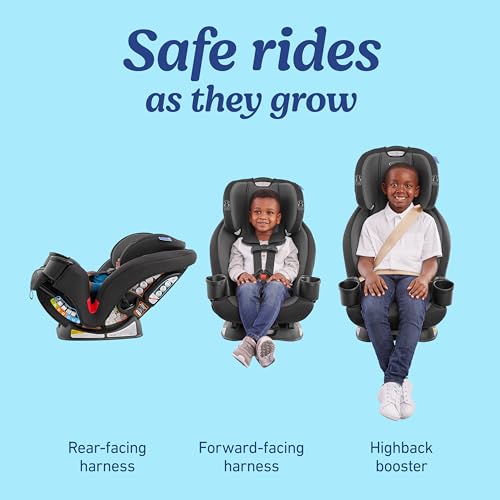
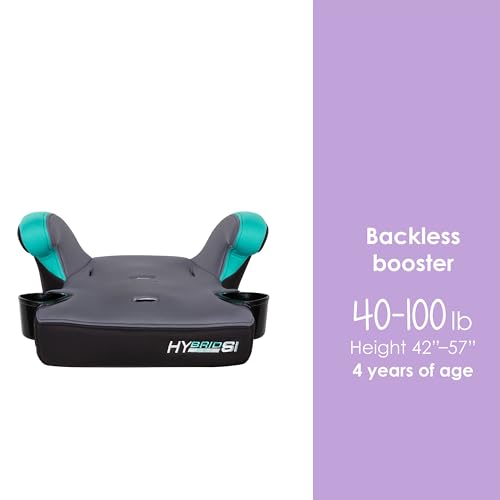
This 3-in-1 booster gets points for prioritizing side-impact protection, which is a smart focus given how many crashes happen at intersections. On paper, it’s built to support kids from harness use through booster stages, and owners consistently report it’s a solid step-up from infant seats, especially for families who want extra reassurance in side impacts. The dual cup holders and adjustable headrest add convenience, though the padding isn’t as plush as pricier models.
Still, it’s a booster-first design, so it doesn’t support rear-facing, a critical limitation for younger kids who benefit most from extended rear-facing. I’d recommend this only for older toddlers or preschoolers already ready for forward-facing use. Compared to Graco’s broader-use models, it’s more niche but could make sense as a second car seat for older siblings.
Product photos


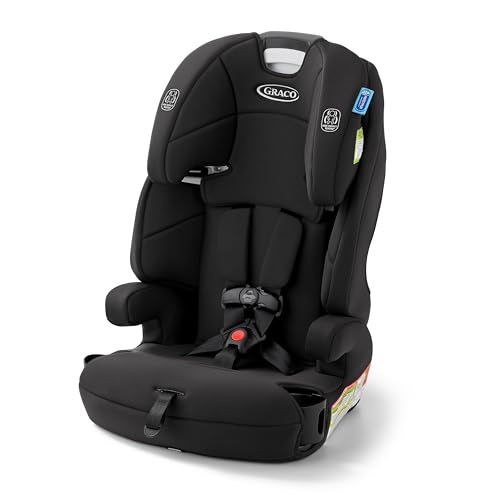
Graco Tranzitions 3-in-1 Booster
Strengths
- No-rethread harness
- Long weight range
- Lightweight design
Trade-offs
- No rear-facing mode
- Backless mode less supportive
- Narrow fit for broader kids
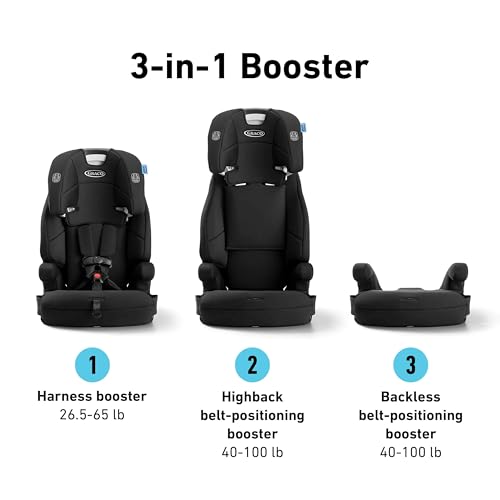
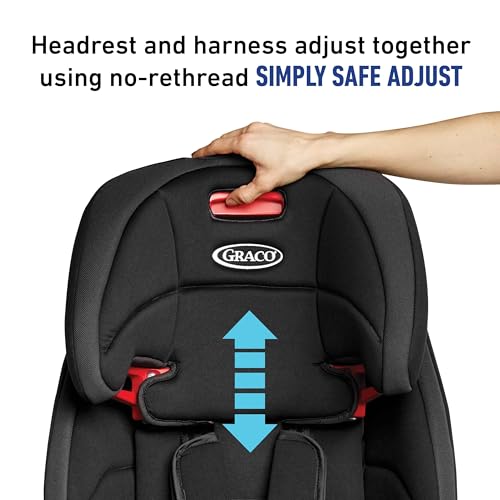
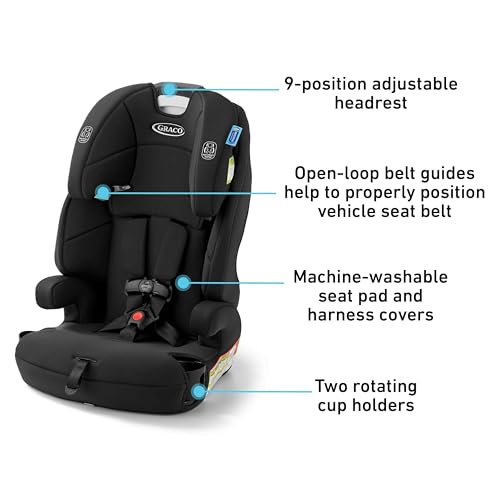
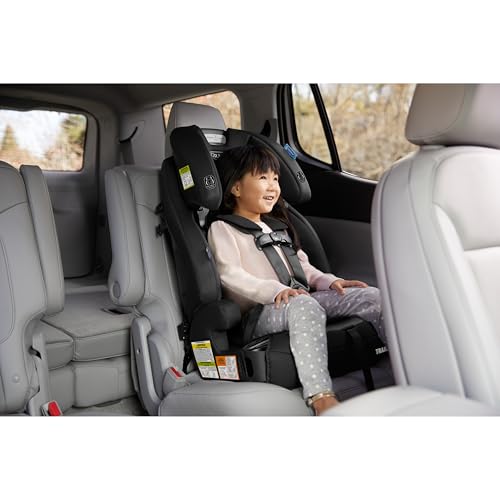
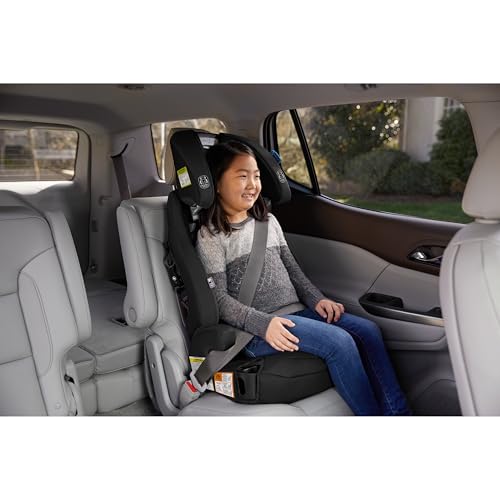
If you’re prioritizing a smooth shift from harness to booster, the Tranzitions stands out. The No-Rethread Simply Safe Adjust system is a real time-saver, owners love that the headrest and harness move together without disassembling straps. It covers a wide weight range, starting at 26.5 lbs in forward-facing harness mode and going all the way to backless booster use at 100 lbs. That kind of longevity is hard to beat.
But it doesn’t support rear-facing, so it’s not a birth-to-booster seat. That makes it better as a second seat or for families with older kids. I’d pick the Extend2Fit over this if rear-facing is still needed, but for a harness-to-backless journey, this is one of the smarter buys. The lightweight build also helps for carpool swaps or travel.
Product photos
How We Tested child car seats
Rather than a hands-on lab test, my research for these recommendations involved a detailed comparison of published specifications and features across numerous models. I weighed owner reviews from major retailers alongside assessments from trusted consumer safety organizations and parenting publications. This informed a ranking based on how well each car seat met key criteria for safety, usability, and value.
For child car seats, the most important factors are undoubtedly safety engineering and how long a seat can be used effectively. I prioritized models with advanced side-impact protection features and those engineered to meet or exceed federal safety standards. Equally crucial is the weight and height limits – a seat that allows a child to remain rear-facing longer, or transitions smoothly to booster mode, offers better long-term value.
Specifications reliably indicate a car seat’s weight and height capacity, as well as the presence of specific safety technologies. However, owner feedback provided critical insight into real-world usability – how easy the seat is to install, adjust, and clean. Reputation, based on expert reviews and consistent positive owner experiences, played a significant role in determining overall confidence in each model.
Choosing The Right child car seats
Choosing a car seat feels overwhelming, but focusing on fit and longevity will make the process much easier.
A good car seat prioritizes a secure installation, appropriate weight and height limits for each stage, and a design that accommodates a growing child without requiring frequent upgrades. Look for seats that meet or exceed federal safety standards and offer features like easy-to-adjust harnesses and clear installation guides.
Rear-Facing Length & Weight Limits
I always tell parents that longer rear-facing is safer. The longer a child remains rear-facing, the better protected their head and neck are in a crash. Don’t rush the transition to forward-facing. Look for convertible models like the Graco Extend2Fit that offer higher rear-facing weight and height limits (up to 50 pounds and beyond is ideal). Some parents mistakenly think they need to switch sooner, but delaying that switch provides significantly more protection.
Harness Adjustability & Ease of Use
A car seat is only as good as its installation and how consistently it’s used correctly. This is where harness adjustability comes in. The “no-rethread” systems, found in many Graco models, are fantastic. They allow you to adjust both the headrest and harness height simultaneously, which is a huge time-saver and reduces the chance of error.
Here’s what I recommend considering when evaluating adjustability: * Headrest Positions: More positions mean a better fit. * Harness Buckle Height: Ensure the buckle placement can be adjusted to be at or just at shoulder level. * Harness Tightening: A smooth, easy-to-tighten harness is critical for a snug fit, especially with a wiggly child.
“Don’t buy a car seat you won’t use correctly, every time. The most expensive seat isn’t always the safest if it’s too complicated for consistent, proper installation.”
Slim Design & Vehicle Compatibility
Many modern vehicles have limited backseat space, or you may have multiple car seats to fit side-by-side. A slim design, like that of the Graco Slimfit, can be a lifesaver. It’s not just about width, though. Consider the seat’s overall profile – how far it protrudes – and whether it will obstruct access to LATCH anchors or interfere with other seats. Don’t assume a seat will fit; check dimensions and, if possible, try a test fit in your vehicle before purchasing.
Child Car Seats Compared
The following table provides a specification overview of the discussed child car seats, to aid in direct comparison.
| Product Name | Rear-Facing Min. Weight (lb) | Rear-Facing Max. Weight (lb) | Forward-Facing Min. Weight (lb) | Forward-Facing Max. Weight (lb) | Booster Weight (lb) |
|---|---|---|---|---|---|
| Graco Extend2Fit | 4 | 50 | 26.5 | 65 | N/A |
| Safety 1st Ellaris | 5 | 40 | 30 | 65 | N/A |
| Graco TurboBooster 2.0 | N/A | N/A | N/A | N/A | 40-100 |
| Graco Slimfit | 5 | 40 | 26.5 | 65 | 40-100 |
| Graco TriRide | 5 | 40 | 26.5 | 65 | 40-100 |
| Baby Trend Hybrid SI | N/A | N/A | N/A | N/A | N/A |
| Graco Tranzitions | N/A | N/A | 26.5 | 65 | 40-100 |
Frequently Asked Questions
What does “convertible” mean when describing a car seat?
A convertible car seat transitions from being rear-facing for infants and toddlers to forward-facing as the child grows. This eliminates the need to buy separate seats for each stage, offering long-term value and convenience.
Are car seats with higher weight limits actually safer?
Generally, yes. A higher rear-facing weight limit allows you to keep your child rear-facing for a longer period, which is the safest position. Similarly, a higher combined weight limit for forward-facing and booster modes extends the seat’s usability and delays the need for replacement.
How important is LATCH system compatibility?
LATCH (Lower Anchors and Tethers for Children) provides an alternative to using the vehicle’s seatbelt for installation. While LATCH can be convenient, it’s not necessarily safer than a properly installed seatbelt installation, and some vehicles have lower LATCH weight limits.
What’s the difference between a harnessed booster and a high-back booster?
A harnessed booster still uses a five-point harness to secure the child, while a high-back booster uses the vehicle’s seatbelt instead. Harnessed boosters are generally suitable for children who have outgrown the height or weight limits of a traditional forward-facing car seat but aren’t yet ready for a seatbelt alone.
How often should I replace a car seat?
Replace a car seat immediately after any crash, even a minor one. Also, check the expiration date printed on the seat (usually 6-10 years from the date of manufacture) as the plastic can degrade over time, compromising safety.
The Bottom Line
Choosing a car seat often comes down to balancing ease of use with a long-term investment. While features and price points vary, the Graco Extend2Fit stands out as the strongest overall choice; its extended rear-facing capabilities provide the best safety margin for young children, and it offers good value for the price.
For parents on a tighter budget, the Safety 1st Ellaris delivers solid safety features at a very accessible price. If you anticipate needing a versatile seat that will grow with your child for many years, the Graco Slimfit is an excellent option, particularly if you’re managing limited vehicle space or multiple car seats.
Ultimately, the most important thing isn’t a specific weight limit or fancy feature. Prioritize a car seat you’ll install correctly every time, and one that keeps your child securely positioned as they grow. A properly used, appropriately sized seat is far more valuable than any top-of-the-line model used incorrectly.
