
Can You Secure a Car Seat Without the Base: A Safety Guide
This post contains affiliate links. As an Amazon Associate, we earn from qualifying purchases.
Yes, you can secure an infant car seat without its base. The vehicle’s seat belt threads through designated slots on the car seat carrier itself, locking the seat directly to the vehicle. This method is certified by manufacturers for specific models like the Peg Perego Primo Viaggio 4-35 and Evenflo Litemax NXT, but it comes with a strict set of rules: the seat must not move more than 2.5 cm (1 inch) side-to-side or front-to-back at the belt path, and a level indicator line on the seat’s shell must be parallel to the ground.
That 2.5 cm tolerance isn’t a suggestion. It’s the pass/fail line from the manufacturer’s manual, and missing it means the seat won’t hold in a crash. The process hinges on your specific car seat’s belt path design and your vehicle’s seat belt type, get either wrong, and the whole install is unsafe.
What follows is the full walkthrough, from checking your car seat manual for baseless approval to routing the belt correctly for short webbing, and the one tool you must have if your seat belt lacks a built-in lock.
Key Takeaways
- Check your car seat manual first. Not all seats are certified for baseless use, and approved models like the Peg Perego Primo Viaggio 4-35 have a lower weight limit (22 lbs) without the base.
- The level line on the seat’s shell, not the base’s recline indicator, is your guide. It must be parallel to the ground.
- You need a locking clip if your vehicle’s seat belt only has an emergency locking retractor (ELR). Using an ELR belt without a clip is a direct violation of the manual.
- Perform the 2.5 cm (1 inch) movement test at the belt path, not the top of the seat. More movement means a failed install.
- This is a secondary method for travel or spare vehicles. Manufacturers like Peg Perego state the base makes installation “easier and therefore safer.”
Before you start:
> Never install a car seat in a front seat with an active airbag. The force of deployment can kill a child. A lap-only belt that locks only in an emergency (ELR) cannot secure a car seat, find a different seating position or consult a Child Passenger Safety Technician. Always thread the seat belt through the correct path marked on the car seat, not around the handle.
Is Your Car Seat Even Approved for Baseless Use?
Open the manual. This isn’t a general rule. Your specific model must be certified by its manufacturer for installation without the base. The Peg Perego Primo Viaggio 4-35 Urban Mobility manual explicitly states it is “certified for use with or without the base.” The Evenflo Litemax NXT Sensory Soothe manual has a dedicated section titled “Installation WITHOUT the Base.”
If your manual lacks those words, assume it’s not approved. Using a seat in a way not covered by its certification voids any safety promise.
Common mistake: Assuming all infant seats work the same way. The Graco SnugRide Click Connect 35 also allows a baseless install, but its belt path and level indicator are in different spots. You follow the manual for your model, not a generic video.
More critically, the approved weight limit often drops. The Peg Perego Primo Viaggio 4-35 Urban Mobility holds a child up to 35 pounds with its base, but only 22 pounds when installed without it. Miss that shift, and you’re using the seat outside its tested limits.
| Car Seat Model | Weight Limit With Base | Weight Limit Without Base | Source |
|---|---|---|---|
| Peg Perego Primo Viaggio 4-35 Urban Mobility | 4 – 35 lbs | 4 – 22 lbs | Peg Perego Manual |
| Evenflo Litemax NXT Sensory Soothe | 3 – 35 lbs | 3 – 35 lbs | Evenflo Manual |
| Graco SnugRide Click Connect 35 | 4 – 35 lbs | 4 – 35 lbs | Graco Manual |
The takeaway is simple. Your first step is never the car. It’s the booklet that came in the box.
How to Install a Car Seat Without the Base
The steps are consistent across brands, but the physical details, where the belt path is, what the level line looks like, change. Here’s the universal sequence.
- Secure your child in the carrier first. Buckle the 5-point harness snugly against the child before you handle the seat. You should not be able to pinch any slack in the shoulder straps.
- Place the carrier rear-facing on the vehicle seat. The handle must be in a locked carrying position, not in the recline or swing-down mode.
- Find the belt path. This is usually a set of slots on the carrier’s handle or shell. On the Peg Perego, you thread the lap belt through slots on the handle. On the Evenflo Litemax NXT, the shoulder belt routes through a guide at the rear of the restraint.
- Thread and buckle the seat belt. For a lap/shoulder belt, feed the lap portion through the path and click the buckle. Then pull the shoulder belt around the back of the seat and through any rear guide.
- Kneel into the seat and tighten. Put your full weight into the car seat with one knee while pulling the seat belt tail tight. This removes slack from the vehicle seat cushion.
- Check the level line. An arrow or line on the seat’s shell must be parallel to the ground. If it’s not, you may need to place a tightly rolled towel under the front edge of the carrier at the vehicle seat crease to adjust the angle.
- Lock the seat belt. If your belt has a switchable retractor (ALR), pull it all the way out until it clicks and ratchets back. If it has a free-sliding latch plate, you must use a locking clip.
The Peg Perego manual includes a critical note for short seat belts: “If the vehicle belt is not long enough, the restraint can be installed threading only the lap portion of the belt in the handle slots.” This is a last-resort method, and you must still ensure the seat cannot rotate forward.
The 2.5 cm (1 Inch) Rule for a Safe Install
Once the belt is tight and locked, you test. Push and pull the car seat firmly at the belt path, where the seat belt goes through the car seat, not up at the headrest. According to the Evenflo Litemax NXT manual, a properly installed seat “MUST NOT move more than 2.5 cm (1 in.) from side-to-side or from front-to-back.”
That’s the tolerance. More movement means the seat can gain dangerous momentum in a crash.
Where this goes sideways: Testing at the top of the seat. The carrier will naturally flex a little above the belt path. You must push and pull right where the metal latch plate or webbing passes through the plastic shell. If it shifts more than your thumb’s width, start over.
This is the standard for a correct installation, with or without a base. It’s the non-negotiable finish line. If you can’t achieve it in your vehicle, you cannot use that seating position. Try the center seat or another row.
When You Absolutely Need a Locking Clip
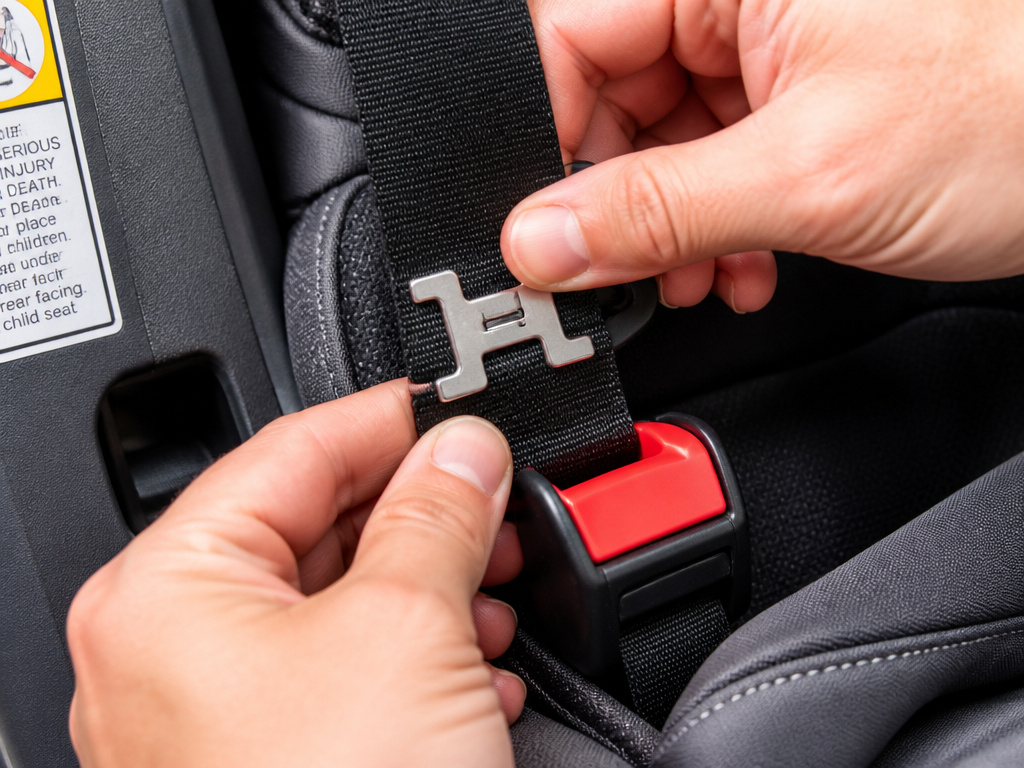
Your vehicle’s seat belt type decides this. There are three common kinds, and only one lets you proceed without an extra tool.
- Automatic Locking Retractor (ALR): Pull the belt all the way out until it clicks, then let it retract. It will now lock and not extend further. This is ideal.
- Locking Latch Plate: The buckle tongue has a built-in mechanism that locks the belt when fastened. No clip needed.
- Emergency Locking Retractor (ELR) with Free-Sliding Latch Plate: This is the problem. The belt only locks during a sudden stop or crash. For a car seat, it will never stay tight on its own.
The Peg Perego manual is unambiguous: “A locking clip may be required when the child seat is used without base.” If you have an ELR belt with a latch plate that slides freely, you need the clip. It’s a small, H-shaped metal piece that comes with most car seats.
To use it, buckle the seat belt, then slide the locking clip onto the belt webbing within 2.5 cm (1 inch) of the latch plate. This prevents the latch plate from sliding. Never use a locking clip with an ALR belt or a locking latch plate. It can cause excessive force on the webbing.
If your vehicle has only a lap-only ELR belt (no shoulder portion), the manual is even stricter: “do not use it to secure this car seat.” You must find a different seating position with a lap/shoulder belt or consult a certified Child Passenger Safety Technician.
The One Step Nobody Skips (And Why You Shouldn’t Either)
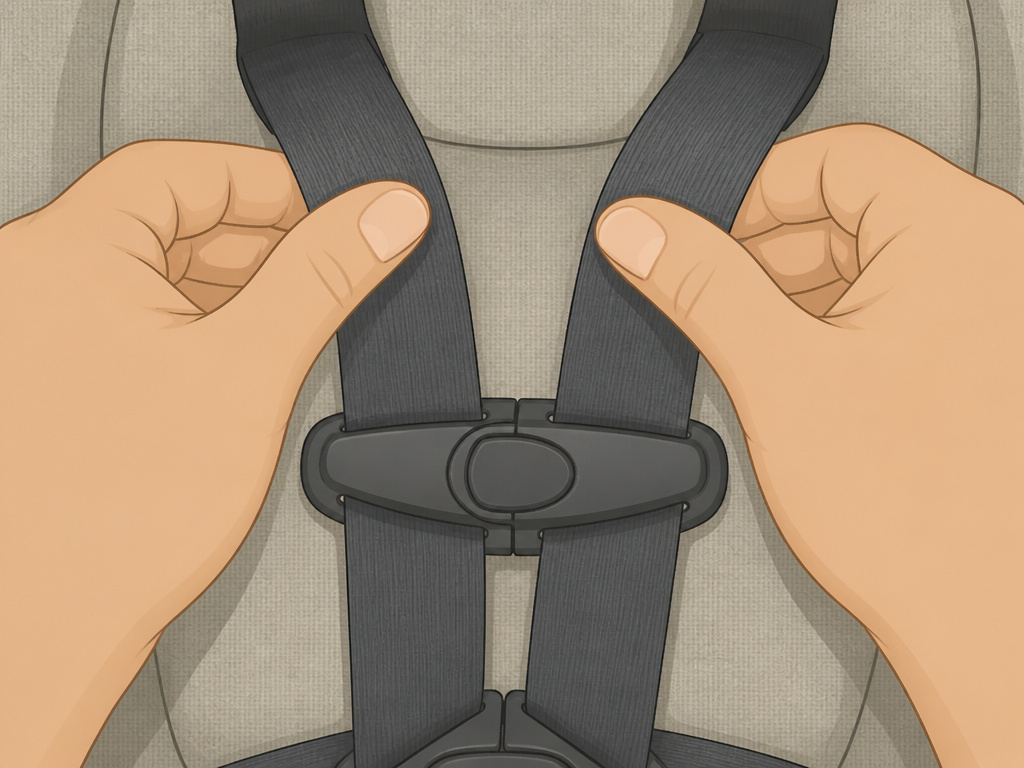
After the seat is tight, level, and passes the inch test, you must check the harness on your child again. A loose car seat with a tight child is just as dangerous as a tight seat with a loose child.
Re-pinch the shoulder straps. Make sure the chest clip is at armpit level. Ensure the child’s back and bottom are flat against the seat back. This is the final gate before you drive.
Skipping this because the seat feels solid is how a wiggly infant works a shoulder strap loose over a 30-minute drive. The first sudden stop shows you the gap.
Baseless vs. With Base: What Actually Changes?
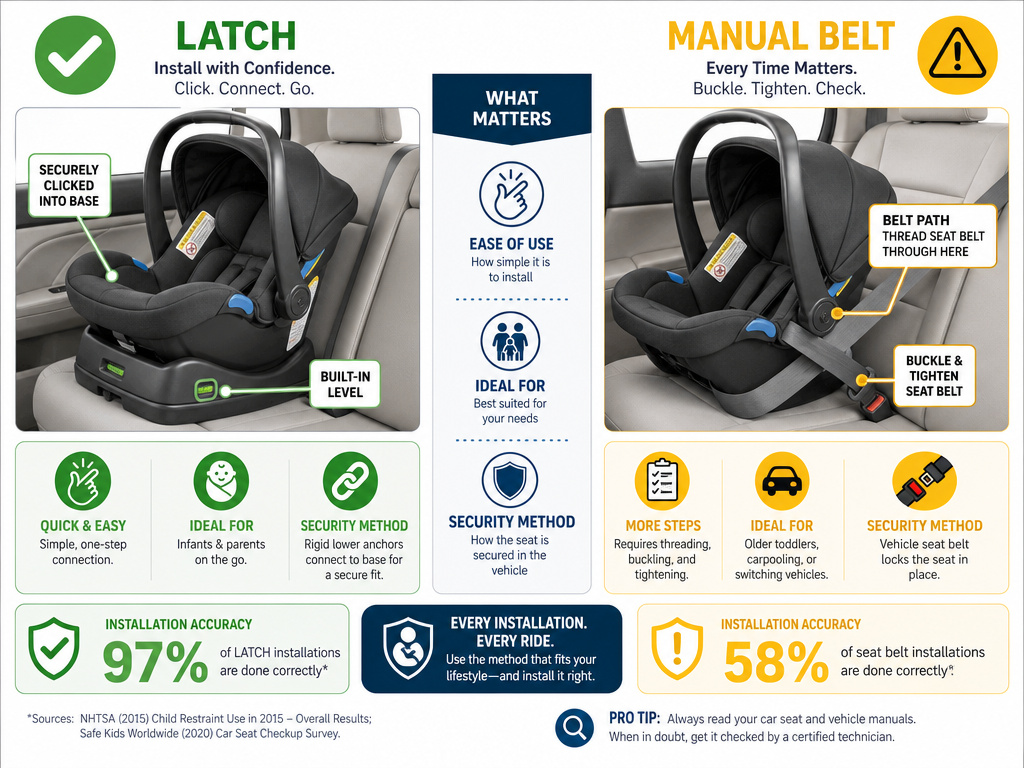
Manufacturers aren’t subtle about their preference. The Peg Perego Primo Viaggio 4-35 Lounge manual states, “Use of the base is highly recommended because it makes installation easier and therefore safer.” The base gives you a stable, semi-permanent platform with built-in leveling indicators and often a simpler LATCH connection.
Installing without the base is a manual, belt-by-belt process you must verify every single time. It’s for taxis, rental cars, grandparents’ vehicles, and airplanes, situations where the base isn’t practical.
| Factor | Installation With Base | Installation Without Base |
|---|---|---|
| Primary Securement | LATCH system or seat belt through base | Seat belt directly through car seat |
| Recline Guidance | Base’s visual indicator (often color-coded) | Level line on car seat shell |
| Ease of Use | Generally easier, more consistent | Manual, requires verification each time |
| Ideal For | Primary vehicle | Travel, secondary vehicles, ride-shares |
| Weight Limit | Usually full infant range (up to 35 lbs) | May be reduced (e.g., Peg Perego: 22 lbs) |
The safety of a baseless car seat installation, when done exactly to manual spec, is certified. But the margin for error is smaller. The base removes variables.
Frequently Asked Questions
Is it safe to use a car seat without the base?
Yes, if and only if your specific car seat model is certified for baseless use by its manufacturer, you follow the manual to the letter, and you achieve a rock-solid install that moves less than 2.5 cm (1 inch) at the belt path. It’s a secondary, manual method that requires careful checking each time.
How do I know if my car seat can be installed without a base?
Check the printed manual that came in the box or download the PDF from the manufacturer’s website. Look for a section titled “Installation Without Base” or “Using Vehicle Belt.” If it’s not there, the seat is not tested or certified for that use.
Do I need a locking clip to install without a base?
You need a locking clip if your vehicle has a seat belt with an emergency locking retractor (ELR) and a free-sliding latch plate. This belt only locks in a crash, so the clip is required to keep it tight during normal driving. Most car seats include one in the box.
Can I use LATCH to install without the base?
No. LATCH (Lower Anchors and Tethers for Children) is a system built into the car seat base. When you install a car seat without a base, you are using the vehicle’s seat belt as the sole restraint. The car seat’s LATCH connectors are not accessible or usable in this configuration.
Why does the weight limit change when I don’t use the base?
The seat’s structure is tested with different force distributions when secured directly by the belt versus through the base. The 22-pound limit for the Peg Perego Primo Viaggio 4-35 without its base is a result of that specific certification testing. Exceeding it means using the seat outside its proven safety parameters.
Before You Go
You can secure a car seat without the base, but it’s a precision task. Find your manual, identify your belt type, and have a locking clip ready if you need one. The level line on the seat shell is your true guide, and the 2.5 cm movement test at the belt path is your final exam.
For your primary vehicle, the base is almost always the better choice, it’s what the engineers designed for first. Reserve the baseless installation for when you truly need it, and triple-check your work every single time.
