
Is a Baseless Car Seat Safe? The Standards and Trade-Offs
This post contains affiliate links. As an Amazon Associate, we earn from qualifying purchases.
A baseless car seat is safe when you install it correctly using one of two approved methods: your vehicle’s lower LATCH anchors or its seat belt. You must never use both systems at the same time. The seat must be certified to the relevant safety standard (FMVSS 213 in the U.S. Or ECE R129/00 in Europe) and installed according to both the seat’s manual and your vehicle’s manual, with the child properly harnessed.
That’s the technical answer. It’s correct, but it’s incomplete. The real question isn’t about a checkmark on a box. It’s about what happens in your specific car, with your specific seat, on a Tuesday afternoon when you’re tired and the rain is coming down.
The distinction between “certified safe” and “actually safe in your hands” is where most parents get tripped up. A baseless seat removes one piece of hardware, the base, and shifts the entire burden of a correct installation onto you every single time you put it in the car. That changes the stakes. The following sections break down the standards, the methods, the hidden limits, and the practical trade-offs that define real-world safety.
Key Takeaways
- Use one system, never both. A baseless car seat is installed with either the vehicle’s LATCH anchors or the seat belt. Using both simultaneously is not approved and can compromise the seat’s performance in a crash.
- Rigid LATCH isn’t immovable. Seats with rigid LATCH connectors (like the Nuna PIPA urbn) may slide slightly side-to-side on the anchor bars when manually pushed. This is normal and expected, not a safety issue.
- Collision replacement rules still apply. Any car seat, baseless or not, must be replaced after a moderate or severe crash. The BeSafe manual specifies replacement after any collision at 10 km/h (about 6 mph) or above.
- Material aging is a real limit. Manufacturers like BeSafe state their seats should not be used for longer than 15 years due to plastic degradation, regardless of visible condition.
- The manual is non-negotiable. Your seat’s specific height, weight, and installation instructions override any general advice. An incorrect harness height or loose installation voids the safety certification.
The Two Approved Installation Methods
Forget the base. A baseless infant carrier secures directly to your car’s seat. You have exactly two paths, and the cardinal rule is that you pick one.
Before you start: Never install a rear-facing seat in front of an active airbag. The back seat is safest. Read both your car seat manual and your vehicle owner’s manual before you touch a buckle. Using non-approved accessories like aftermarket car seat protectors can affect the installation angle and grip.
LATCH (Lower Anchors and Tethers for Children)
This is the system of metal anchor bars built into your vehicle’s seat crease. In Europe, it’s called ISOFIX. The NHTSA car seat safety guidelines state that 2003 and newer U.S. Vehicles are required to have them.
There are two connector types on baseless seats: * Rigid LATCH: Two solid arms that click directly onto the anchor bars. It’s fast and minimizes user error in tightening. The Nuna PIPA urbn uses this. * Flexible LATCH: Connectors on a strap of webbing that you must individually hook on and then pull tight to remove slack.
The critical detail most people miss is that rigid LATCH connectors are designed with a tiny amount of play. If you grab an installed seat and try to wiggle it, it might slide an inch side-to-side on the anchor bars. That’s intentional. The connectors are slightly narrower than the bars to account for manufacturing variances across millions of cars. The seat won’t shift in a crash. If you can move it more than an inch at the belt path, recheck the connection.
Vehicle Seat Belt
This is the universal fallback. You route the lap belt (and sometimes the shoulder belt, for “European routing”) through a designated path on the seat shell. You must lock the seat belt, typically by pulling it all the way out and letting it retract, to cinch it tight.
| Installation Method | Best For | Critical Check |
|---|---|---|
| LATCH (Rigid) | Quick swaps, consistent positioning | Confirm green “locked” indicators; accept slight side-play. |
| LATCH (Flexible) | Older vehicles, center seats (if allowed) | Pull strap until less than 1 inch of movement at the belt path. |
| Seat Belt | Travel, taxis, older cars without LATCH | Belt must be locked and threaded through the correct path. |
You cannot mix these. The seat is crash-tested with each system independently. Threading a seat belt through a seat that’s already latched with LATCH creates unknown stress points. The official booster seat recommendations are clear: use one or the other.
What “Certified Safe” Actually Means
A safety certification is a contract. The manufacturer says, “If you use this seat exactly as we instruct, it will perform to this specific standard in a crash.” There are two major standards, and the label on your seat is your proof of the contract.
FMVSS 213 is the U.S. Federal Motor Vehicle Safety Standard. The Britax B-SAFE 35 manual states its seat “conforms to all applicable Federal Motor Vehicle Safety Standards.” This means it passed a series of dynamic crash tests simulating a 30-mph frontal impact and a 30-mph side impact. The tests measure forces on a crash-test dummy and mandate certain structural integrity.
ECE R129/00 (often called i-Size) is the European standard. It’s generally more stringent on side-impact protection and requires testing with a more advanced dummy. The Britax BabySafe iSize Base manual notes its certification to this standard, marked by an orange label with an “E” in a circle.
These aren’t marketing terms. They are verification that the seat’s design, its shell, its energy-absorbing foam, its harness, has been validated in a lab. Your job is to uphold your end of the contract: correct installation and proper harness use. Deviating from the manual, like using an unapproved car seat insert, breaks the contract.
What Changes When You Ditch the Base
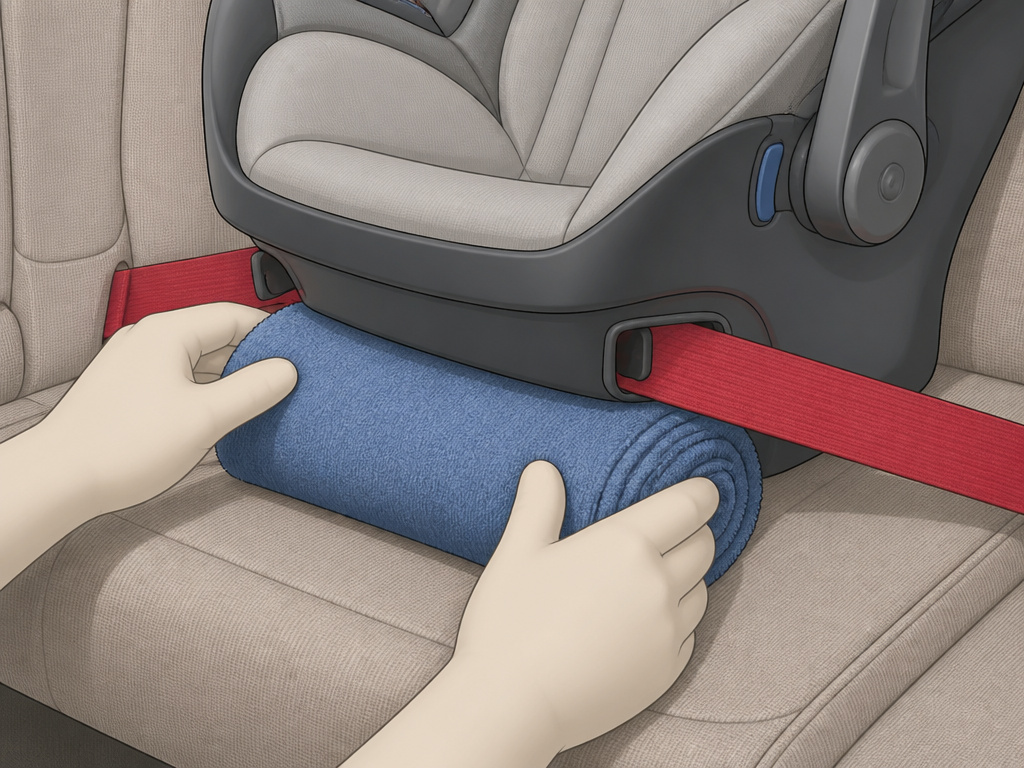
Removing the base isn’t just about convenience. It changes three practical things: your installation routine, the seat’s stability when unoccupied, and how you manage recline.
First, you lose the “set-it-and-forget-it” advantage of a permanent base. Every installation is a fresh procedure. This increases the chance of making a mistake, especially when you’re rushed. The process for determining car seat safety starts anew each time.
Second, a baseless carrier is lighter and can be more prone to tipping when empty on a vehicle seat. Always secure it with a seat belt or LATCH even when your child isn’t in it. An unsecured seat becomes a projectile in a sudden stop.
Third, adjusting the recline angle is manual. With a base, you often adjust a lever. With a baseless seat, you use rolled towels or a pool noodle under the foot of the carrier (only if the manual permits) to achieve the correct angle, usually around 45 degrees for a newborn. An incorrect angle can let an infant’s head fall forward, risking airway obstruction.
The Hidden Limits and Non-Negotiable Rules
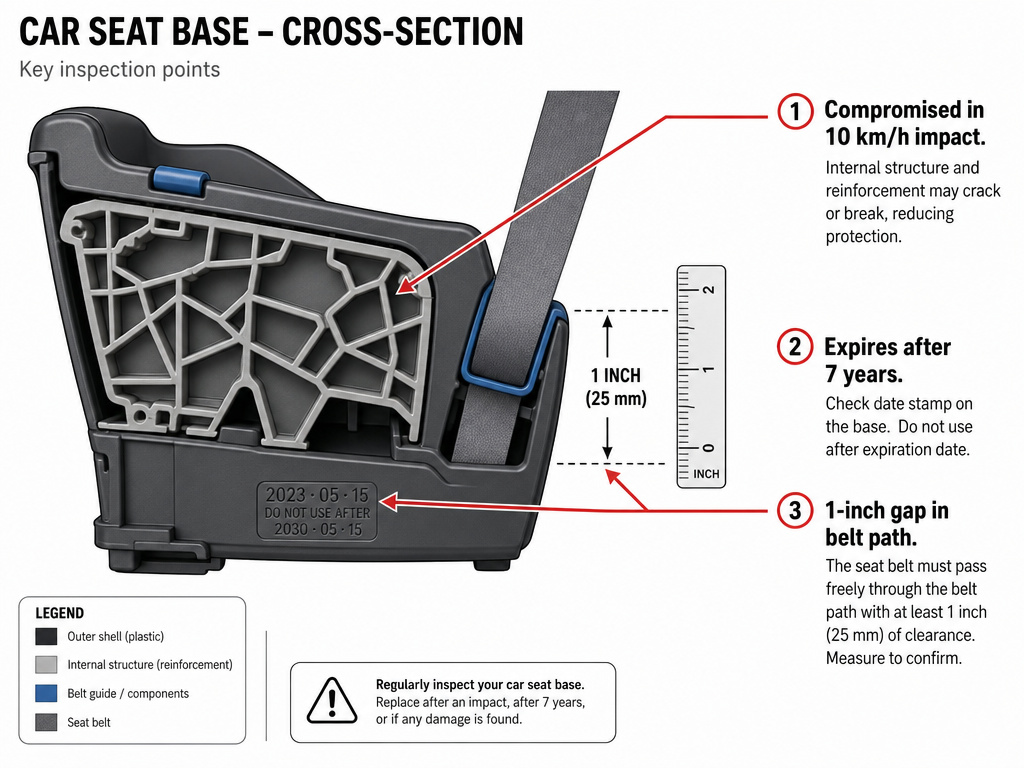
The safety contract has fine print. These are the clauses that don’t fit on the box but are just as binding.
The Collision Replacement Rule
This is the most misunderstood rule. It’s not about visible damage.
Replace the product if it has been in a collision where the speed was 10 km/h and above or if there is a suspicion that the seat has been damaged. That quote is verbatim from the BeSafe Beyond Base manual. Ten kilometers per hour is about six miles per hour, a fender-bender in a parking lot. The internal structure can be compromised without a single scratch. This rule applies universally. If you’re evaluating a car seat after an accident, the default answer is replacement.
The Expiration Date
Plastics and composites degrade with heat, cold, and UV exposure. The BeSafe manual explicitly says, “Do not use the product for longer than 15 years.” Others, like Graco, recommend discarding a base seven years after its manufacture date. This is non-negotiable. A used car seat of unknown age is a gamble with expired materials.
The “One Inch” Test
After installation, grab the seat at the belt path (where the seat belt or LATCH strap goes through). Try to move it side-to-side and front-to-back. It should not move more than one inch in any direction. More movement means it’s not tight enough. This test is your final exam for every single installation.
Baseless Car Seat vs. System with Base
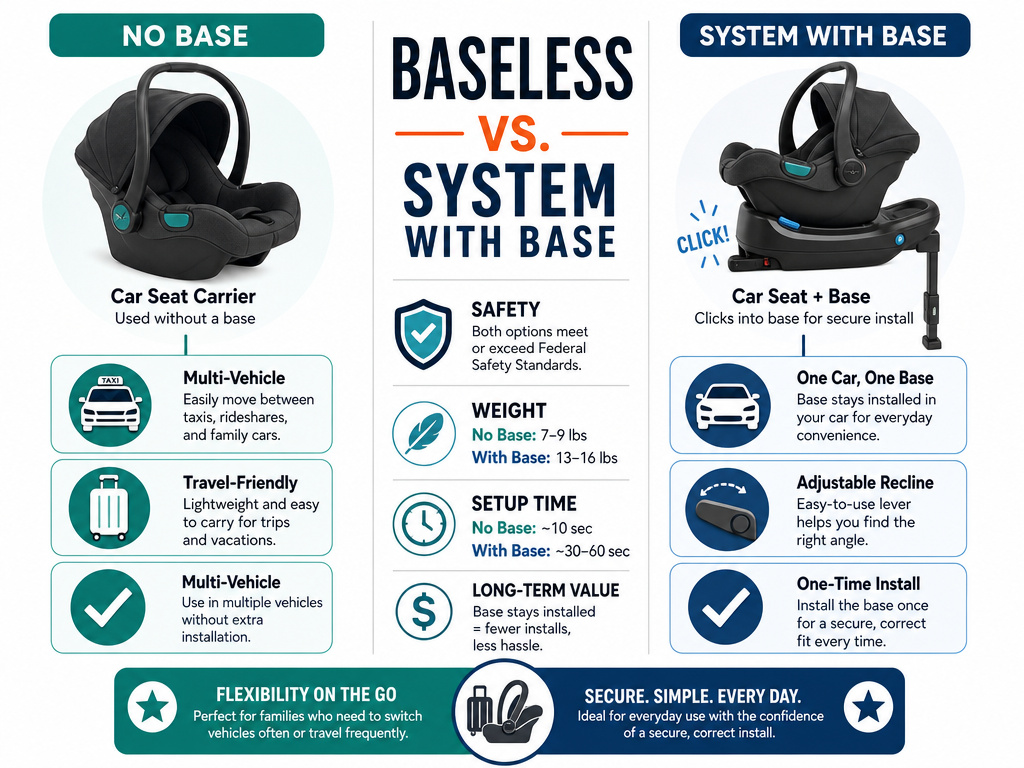
Is one inherently safer? No. When installed correctly, both meet the same crash standards. The difference is in usability and error-proofing.
| Consideration | Baseless Car Seat | Seat with Dedicated Base |
|---|---|---|
| Installation Frequency | Every time you use it. | Once for the base; seat clicks in/out. |
| Recline Adjustment | Manual (towels/noodle per manual). | Often built into the base with a lever. |
| Multi-Vehicle Use | Excellent. Easily moved between cars. | Requires a base in each car or re-installation. |
| Risk of Installation Error | Higher. Fresh procedure each time. | Lower for daily use; base must be installed correctly once. |
| Best For | Families using multiple vehicles, frequent travel, ride-shares. | Families with one primary vehicle who want a simplified daily routine. |
For city dwellers who often use taxis or ride-shares, a baseless seat like the Nuna PIPA urbn is a logical choice. For a family that almost always uses the same minivan, a system with a base left installed might reduce daily friction and the chance of a rushed, incorrect baseless car seat installation.
Frequently Asked Questions
Does a baseless car seat pass the same crash tests?
Yes. A baseless infant carrier is crash-tested as a complete unit installed with LATCH or seat belt. It must pass the same dynamic testing (FMVSS 213 or ECE R129) as a seat that uses a base. The certification label on the seat shell is your proof.
Can I use both LATCH and a seat belt for extra safety?
No. This is explicitly prohibited in every car seat manual. Using both systems together can create conflicting force paths in a crash, potentially causing the seat or anchors to fail. The systems are designed to be used independently. Pick one method and install it tightly.
How do I get the right recline angle without a base?
Check your seat’s manual. Most permit using a tightly rolled towel or a certified pool noodle placed under the foot of the carrier (the end near the vehicle’s seat back) to achieve the proper angle. Many seats also have a built-in angle indicator. The correct angle is critical for a newborn’s airway, which is why proper car seat positioning for newborns is its own detailed topic.
Are baseless seats safe for preemies or low-birth-weight babies?
You must consult your pediatrician. The Joie manual specifically recommends a medical evaluation for infants born before 37 weeks or weighing less than 5 lbs (2.3 kg) to check for breathing concerns in a semi-reclined position. The seat itself may be safe, but the child’s physiology needs individual assessment.
My seat with rigid LATCH moves a little side-to-side. Is that broken?
Probably not. A small amount of lateral play (about an inch) on the anchor bars is normal for rigid LATCH systems. The connectors are slightly narrower than the bars. The seat should not, however, move forward or backward at the belt path. If the green “locked” indicators are showing, the installation is likely correct.
The Bottom Line
A baseless car seat is a safe, legitimate choice when you commit to its rules. The safety doesn’t come from the product alone, it comes from the precision of your actions every time you use it. You are the guarantee.
The data is clear: proper use reduces injury risk by over 70%. The gap between that lab-proven safety and your reality is filled by the one-inch test, the 10 km/h rule, and the wear on the pages of your manual. Choose the seat that fits your life, but then fit your habits to the seat’s requirements. That’s how safety works.
