
Traveling: Do You Bring Car Seat Base? A Complete Answer
This post contains affiliate links. As an Amazon Associate, we earn from qualifying purchases.
You do not bring a car seat base when traveling if your seat’s manual explicitly prohibits it for aircraft use, which many do. For air travel, install the infant seat directly onto the airplane seat using the lap belt routed through the carrier-only belt path. The base stays behind or gets checked as luggage.
That rule is printed in the manual, but the real question is why. The reason is certification. A base certified for a car under FMVSS 213 is not automatically certified for the different forces of an aircraft seat. Using an uncertified base voids its safety rating.
What follows: the model-specific fine print from two major brands, the physical reason a seven-year-old base fails, and the one-step seat belt method that replaces the base entirely for taxis, shuttles, and planes.
Key Takeaways
- Check your manual first. The Cybex Cloud T manual says “DO NOT use the Convenience Base” on an aircraft. The Graco SnugRide SnugFit 35 base manual states it is “NOT certified for use in aircraft.”
- The base has an expiration date. Most bases must be discontinued 7 years from manufacture. The plastic degrades, and a brittle base can shatter on impact.
- Installation without a base is one motion. Route the vehicle or airplane lap belt through the seat’s designated carrier-only belt path, buckle, and tighten. No clips, no extra gadgets.
- Gate-check the base if you need it later. If you’re renting a car at your destination, pack the base in a padded travel bag and gate-check it with your stroller. Never check it as regular baggage unprotected.
- Skip the base for ride-shares. Installing an infant seat with just the seat belt takes under a minute. Dragging a base in and out of an Uber is the hassle you can avoid.
The Short Answer: It Depends on Your Car Seat Model
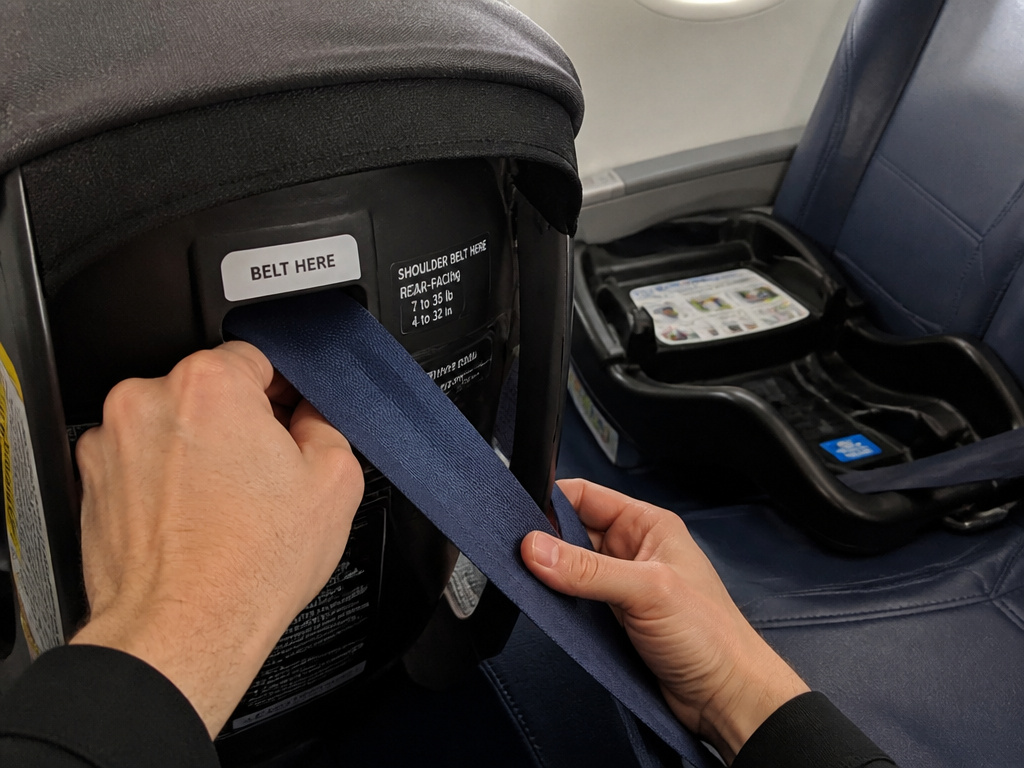
For aircraft installation, route the lap belt through both carrier-only belt path openings on the infant seat, buckle, and tighten. The base is not used. The FAA recommends children up to 18 kg (40 lbs) use a certified, harnessed child seat on an airplane, and the seat itself must be aircraft-certified.
The word “certified” does the heavy lifting here. Your car seat is certified under Federal Motor Vehicle Safety Standard (FMVSS) 213 for use in vehicles. That certification includes two installation methods: with the base using LATCH or a seat belt, and without the base using the seat belt alone.
Aircraft certification is a separate stamp. It applies to the car seat carrier itself, not the base. When a manual says the base is not certified for aircraft use, it means the testing lab did not validate that the base-and-seat combination would perform correctly under airplane crash dynamics. Using it anyway is a guess.
The carrier-only belt path is the key. It’s a set of slots or guides on the back or bottom of the infant seat designed for a single lap belt. You’ll find it in your manual. That path positions the seat correctly on the curved airplane seat so the belt doesn’t ride up.
What the Car Seat Manuals Actually Say
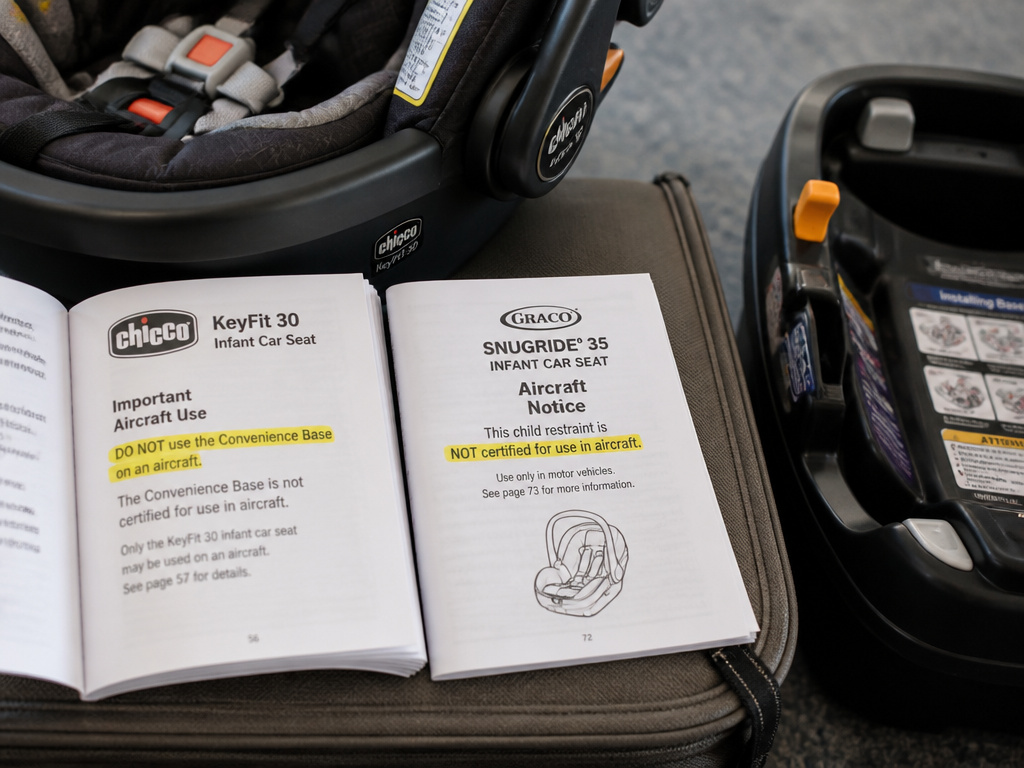
You own the manual. You probably haven’t read page 68. Here’s what you’re missing from two popular models.
The Cybex Cloud T Infant Car Seat manual is direct. Page 68 states: “THIS RESTRAINT IS CERTIFIED FOR USE IN AIRCRAFT. When used in aircraft, DO NOT use the Convenience Base when installing this Child Restraint.” It adds that you should gate-check the base or check it as luggage for your destination, and to always inspect it for damage before use in a car. The seat itself gets the green light.
The Graco SnugRide SnugFit 35 Infant Car Seat Base manual is even blunter. The first page of the base manual includes this line: “This child restraint’s base is NOT certified for use in aircraft.” It’s a declaration, not a suggestion. The seat carrier may be fine, but the base is out.
These are not recommendations. They are the conditions of the product’s safety certification. Ignoring them means you are using the seat outside its tested parameters. In the insurance and liability world, that’s called misuse.
Why would brands do this? Cost and complexity. Certifying a base for aircraft use requires separate, expensive dynamic testing with the specific seat on aircraft seat benches. Most brands test only the carrier, knowing that’s how the vast majority of parents will use it on a plane. The base is a car-only accessory.
The Real Reasons to Leave the Base Behind
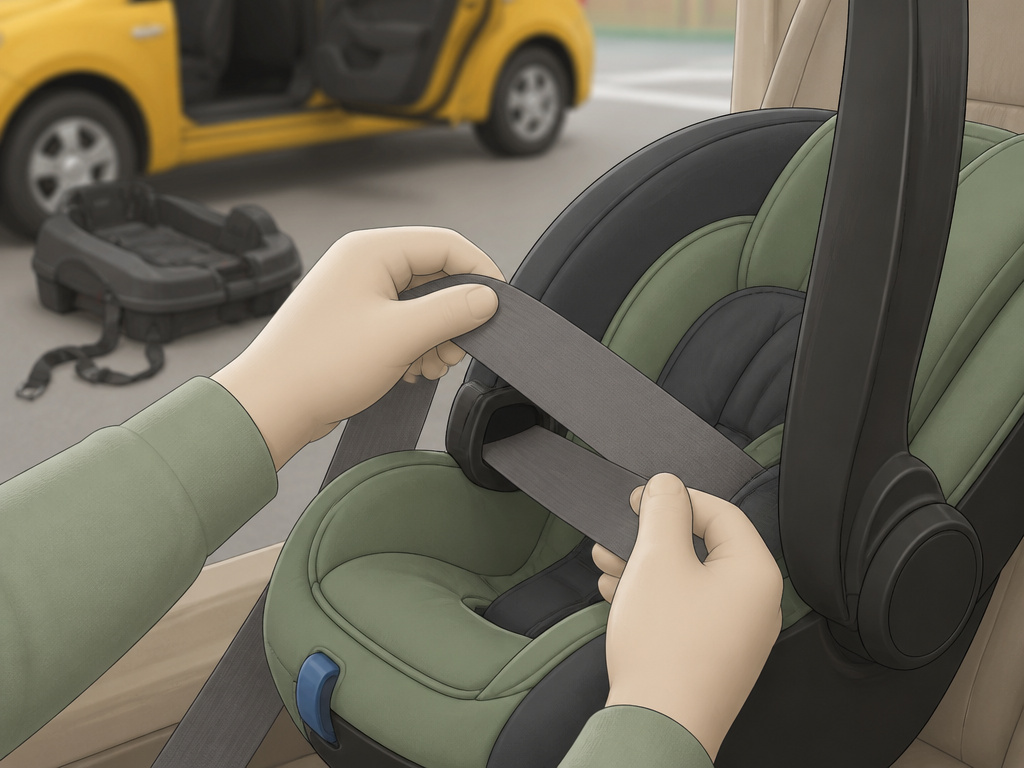
Beyond the manual, the physics of travel make a strong case.
Weight and Bulk. A typical base adds 6 to 10 pounds to your load. You’re already carrying a baby, a diaper bag, a stroller, and a car seat. That base is the least useful item in the airport. One parent on a forum put it plainly: “It’s designed to be safe without the base and it was so much heavier to carry around until we gate checked it. She always sat on our laps because we can never afford a third ticket.”
Installation Speed. In a taxi line at 1 a.m., fumbling with a base is misery. Installing the seat directly with the seat belt is often faster. You lift the seat, thread the belt, buckle, and pull tight. The base requires you to first secure it to the vehicle seat, which often means wrestling with the LATCH straps or a locked seat belt, then clicking the seat in. The difference is two minutes versus thirty seconds.
Universal Compatibility. Your base is designed for your car’s back seat contour. A taxi, shuttle, or rental car has a different seat shape. The base might not sit flush, creating a dangerous rocking motion. A direct seat belt install conforms to any seat. This is why the car seat installation without base method is the traveler’s default.
When Bringing the Base Makes Sense (And How to Do It)
There is one scenario: you are renting a car at your destination and will be driving daily. The convenience of click-in, click-out outweighs the travel hassle. If you go this route, follow a protocol.
Pack it for gate-check. Use a padded car seat travel bag. Do not check the base as regular baggage. Baggage handling is not gentle, and a cracked base is a useless base. The bag also keeps it clean. Gate-check it with your stroller so it’s one of the last items on and first off the plane.
Inspect it before use. After any flight, take the base out of the bag and look for cracks, deep scuffs, or bent components. Check that the LATCH connectors move freely and the lock-off mechanisms still click. If anything looks off, do not use it. Call the rental company and request a car seat.
Have a backup plan. Know how to install your car seat without a base with just a seat belt. Practice at home once. If the base is damaged in transit, your trip isn’t ruined. You can still strap the car seat in without base in the rental car safely.
Where this goes sideways: Assuming all taxis or shuttles will have a base-compatible back seat. Most won’t. You’ll end up holding the base on your lap during the ride, which is both unsafe and absurd.
The 7-Year Expiration Clock You Can’t Ignore
That base in your attic from your first child? It’s likely expired. The Graco SnugRide SnugFit 35 base manual states: “DISCONTINUE USE of this child restraint base after 7 years from the manufacture date.”
This is not a marketing ploy. It’s polymer science. The plastics and foam used in car seat bases undergo stress from temperature swings in your car. Over years, they become brittle. A brittle base may not absorb crash forces as designed; it can crack or shatter, transferring too much energy to the seat—and your child.
| Component | Why It Degrades | Visible Sign |
|---|---|---|
| Plastic Shell | UV exposure, thermal cycling | Fading color, small hairline cracks |
| Energy-Absorbing Foam | Compression set, moisture | Feels crumbly, doesn’t spring back |
| LATCH Strap Webbing | Friction, UV light | Fraying edges, stiff texture |
| Metal LATCH Connectors | Corrosion, repeated stress | Rust spots, difficult to unlatch |
The manufacture date is stamped on the base, usually on the bottom. It’s a month and year. Add seven years. If that date has passed, the base is a liability, not a safety device. This rule applies even if the base looks fine. You wouldn’t drive on seven-year-old tires; don’t use a seven-year-old base.
This is a primary reason to avoid second-hand bases. You rarely know its true age or storage history. As the NHTSA car seat safety guidelines state, if you don’t know the full history of a seat or base, don’t use it.
How to Install Without the Base: The Traveler’s Method
This is the skill that makes the base optional. It’s one procedure for airplanes, taxis, and rental cars.
Step 1: Find the belt path. On your infant seat, locate the “carrier-only” or “seat belt” path. It’s often marked by gray arrows or a different colored plastic. Consult your seat’s manual if you’re unsure—this is the single most important part.
Step 2: Position the seat. Place the infant seat rear-facing on the vehicle or airplane seat. Push it firmly back into the seat cushion. The foot of the car seat should be touching the back of the vehicle seat.
Step 3: Route and buckle. Pull the vehicle’s lap belt (and shoulder belt, if present) through the belt path. Buckle it. For airplanes, use only the lap belt.
Step 4: Tighten. Put your weight on the car seat and pull the seat belt tight. The seat should not move more than one inch side-to-side or front-to-back at the belt path. If you can easily shift it, it’s not tight enough.
Common mistake: Using both LATCH and a seat belt on the base. This is called “double-clipping” and is explicitly warned against in every manual. It puts conflicting forces on the seat in a crash. You secure the base with LATCH or the seat belt. Never both.
The process for a Doona without base is similar, though its integrated design makes the belt path unique. The principle is identical: belt through the guides, buckle, tighten.
The Airport & Airline Logistics
Navigating the airport with baby gear is a test. Your strategy matters.
At Check-in: You will check your luggage. The stroller and car seat (and base, if you brought it) are “special items.” You can choose to gate-check them or check them at the counter. Gate-checking is almost always better. You use the stroller through the airport, and the gear suffers less handling.
At Security: You must take the baby out of the carrier or stroller. The car seat and stroller go through the X-ray machine. If they don’t fit, they get a hand inspection. Allow extra time. Know that you can bring your car seat and stroller on plane as long as you follow the airline’s size policies.
At the Gate: Tell the gate agent you wish to gate-check the stroller and base. They will tag them. You will leave them in the jet bridge just before you board. You carry the infant seat onto the plane.
On the Plane: Install the seat in a window seat. Aisle seats are not permitted for car seats, as they block emergency egress. Use the lap belt method described above. The flight attendants are used to this and can help if you’re struggling.
Frequently Asked Questions
Is it safe to use a car seat without the base?
Yes, when done correctly. Car seats are rigorously tested and certified for installation both with the base and without it using the vehicle seat belt. The car seat safety without base is equivalent, provided you follow the manual’s instructions for the seat belt path and achieve a tight install.
Do I need a car seat base for everyday use?
For everyday use in your personal vehicle, the base is a tremendous convenience. It allows for a quicker, more consistent install and easy in-and-out. However, you do not need a car seat base for safety. The seat belt installation is equally safe.
Can you install any car seat on a plane without a base?
No. Only car seats that are explicitly labeled as “certified for aircraft use” can be used on a plane. Most infant seats have this certification, but many convertible and booster seats do not. Always check the label on the side of your seat or the manual before flying.
What’s the biggest risk of bringing the base?
Damage in transit is the largest practical risk. A compromised base is unsafe to use. The other risk is finding yourself in a vehicle where the base cannot be installed tightly due to odd seat contours, leaving you to secure the car seat with seat belt anyway after dragging the base through an airport.
Before You Go
Skip the base for air travel. Your arms will thank you. The manuals from Cybex and Graco give you a clear pass to leave it behind, and the direct seat belt install is simpler than wrestling with a base in a cramped cabin or taxi.
If you’re driving at your destination, gate-check the base in a protective bag. Inspect it like a mechanic before clicking your child in. And mark your calendar for that seven-year expiration—plastic doesn’t last forever.
Your infant seat is a safety device, not a luggage set. Use it as tested: on the plane without the base, in the car with or without it. That’s the line that keeps certification valid and your child protected. Everything else is just extra weight.
