
Grocery Shopping with an Infant Car Seat: A Safe Guide
This post contains affiliate links. As an Amazon Associate, we earn from qualifying purchases.
To grocery shop with an infant car seat, place the entire seat inside the main basket of the shopping cart, never on the child seat or a cart-top holder. The handle must be locked in the down or carrying position, and your baby must be fully buckled into the seat’s harness. This is the only method endorsed by safety advocates to prevent the cart from tipping and the seat from falling.
The 23,000 annual ER visit statistic from the American Academy of Pediatrics represents the predictable outcome of a heavy, top-heavy object, your baby in their car seat, perched on an unstable platform. The cart’s center of gravity shifts, a wheel hits a crack, and the whole thing goes over.The basket is the only location that keeps the weight low and contained.
What follows is the breakdown of why that rule is non-negotiable, the exact steps to do it right, and five real-world alternatives for when the basket just isn’t an option. You’ll also get a clear comparison of tools like travel systems versus wagons, so you can pick the method that fits your actual shopping style.
Key Takeaways
- The only safe cart placement is inside the main basket with the seat handle down. Using the child seat area or a cart-top holder dramatically increases tip-over risk.
- Your baby must be fully harnessed in the car seat at all times. A loose strap or unbuckled chest clip offers zero protection if the cart tips.
- A travel system stroller is the most seamless alternative, letting you shop hands-free while your baby remains securely in their car seat.
- Babywearing is a highly effective, low-gear option that keeps your baby secure and your hands free for pushing a cart.
- Always check your car seat manual for specific warnings; brands like Peg Perego explicitly prohibit use on shopping carts.
The Only Safe Way to Place a Car Seat in a Cart
This issue is defined by physics and documented injury data. The American Academy of Pediatrics cites 23,000 shopping-cart-related ER visits for children every year, with head and neck injuries being common.The mechanism is simple: a standard infant car seat and child can weigh 20-25 pounds. Placing that weight high up on the cart’s folding child seat or a plastic holder turns the cart into a wobbly, top-heavy lever.
The AAP shopping cart injury data points to a single, preventable cause: improper placement. A car seat belongs in the basket, where its weight is centered low between the wheels, not on the seat or a holder where it turns the cart into an unstable pendulum.
The safety protocol is specific. First, lock the car seat’s carry handle in the position recommended for travel, usually fully down or in the carry position. Never leave it in the upright “cuddle” mode. Second, lift the seat into the cart’s main basket, centering it as best you can. The seat should sit flat on the basket floor. Finally, and this is the step people fudge, ensure your baby is snugly buckled into the seat’s five-point harness. The chest clip should be at armpit level, and you should not be able to pinch any horizontal slack in the shoulder straps.
If you need the cart space for groceries, you work around the seat. Place lighter items around it and heavier, denser items on the lower rack beneath the basket. Overloading the cart, especially with heavy items in the top basket, defeats the purpose of placing the seat low. The goal is to keep the overall center of gravity as low as possible.
What Your Car Seat Manual Says (And Why It Matters)
Manufacturer warnings are the result of specific dynamic testing the seat was not designed to pass. Your car seat is a child restraint system engineered for vehicle installation, not for balancing on a shopping cart.
Open the manual for your specific model. For example, the Peg Perego Primo Viaggio manual states clearly: “Do not use in the seating area or across the top of shopping carts.” The Chicco OneFit manual emphasizes the seat is “not intended for use outside of the vehicle.” These are hard stops. If you use a cart-top holder that clips onto the cart frame, you are directly violating these instructions and voiding any claim to the seat’s safety certification in that scenario.
| Car Seat Component | In-Vehicle Purpose | Risk on a Shopping Cart |
|---|---|---|
| Anti-Rebound Bar | Prevents seat rotation in a rear-end crash. | No functional benefit; can snag on cart edges. |
| Lock-Offs / Belt Path | Secures seat to vehicle seat belt or LATCH. | Unused; seat is free to slide or fall. |
| Carry Handle | For carrying seat; often has crash positions. | If not locked correctly, it can collapse. |
| Five-Point Harness | Restrains child during vehicle collision forces. | Only line of defense if the cart tips over. |
Ignoring the manual has a clear consequence timeline. A seat perched on a cart-top holder is one sudden stop, one turned corner, or one bumped aisle away from sliding off. The plastic holders can also fail, cracking under the repeated stress of the seat’s weight. When that happens, the seat, and your baby, falls straight to the hard floor.
Five Practical Alternatives to the Cart
The basket method is safest, but it’s not always practical for a big weekly shop. You have legitimate, safer options that don’t involve balancing acts.
1. Use a Travel System Stroller. This is the most efficient gear-based solution. A travel system pairs your infant car seat with a compatible stroller frame. You click the seat directly onto the stroller, and you have a secure, maneuverable shopping cart. The best infant car seat and stroller combinations are designed for this, with large under-seat baskets for groceries. It’s a hands-free, stable walk through the store.
2. Babywear. A soft-structured carrier, wrap, or ring sling keeps your baby snug against your chest, leaving both hands free to push a cart. It’s zero extra gear to haul, and most babies settle quickly from the motion and closeness. Ensure you follow the AAP car seat safety guide for proper babywearing positioning to protect their airway.
3. Use a Wagon with an Adapter. Brands like Wonderfold and Baby Trend make wagons with infant car seat adapters. It’s like a heavy-duty stroller with a massive cargo bay. This is a significant investment, but it’s a game-changer for families who do large grocery hauls or have multiple small children. The wagon is stable, hard to tip, and holds everything.
4. Utilize Store Pickup or Delivery. This is the safest option of all. You order online, pull up, and load bags into your car with your baby still securely in their seat base. No cart, no crowd, no stress. It eliminates the risk entirely.
5. Bring a Second Adult. Simple, low-tech, and effective. One adult manages the baby in the seat (either carried or in a stroller), while the other pushes the cart and shops. This is often the most pleasant method, turning a chore into a shared task.
Where this goes sideways: Choosing a cart-top holder because it’s convenient. Those plastic clips are not crash-tested with your specific seat model. A sudden jolt can pop them open, and the seat hits the ground before you can react.
The Gear That Makes It Easier (And What to Skip)
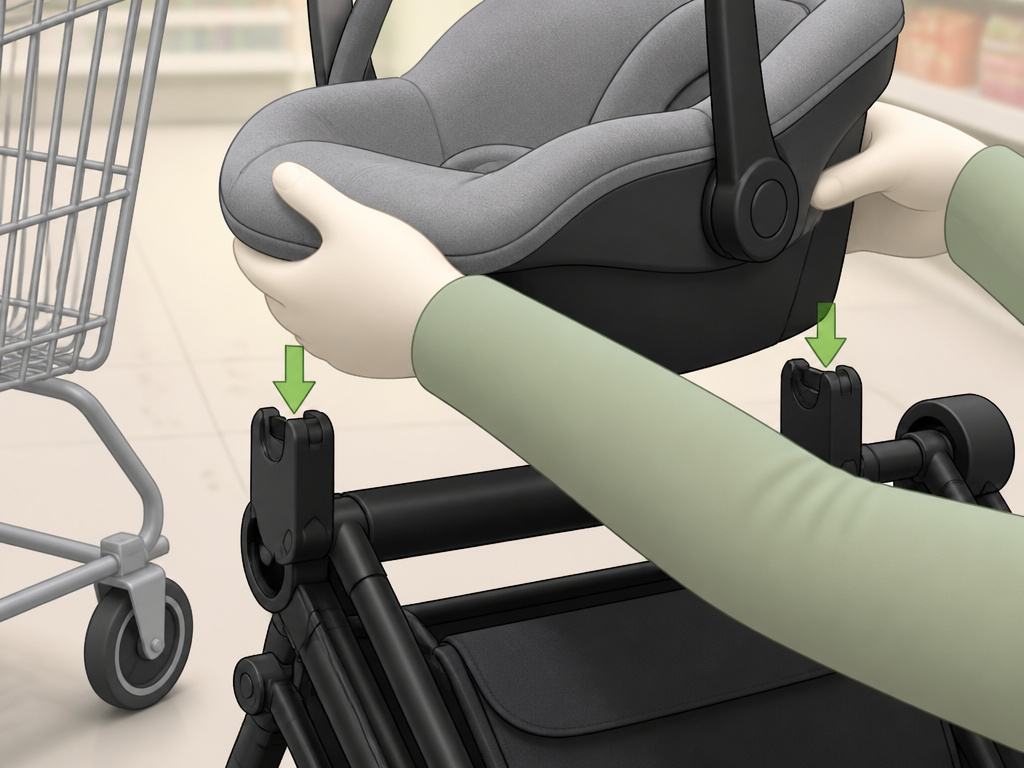 Your choice of primary baby gear dictates your grocery shopping workflow. Think about this before you buy your car seat.
A travel system is the default recommendation for active families. The Graco SnugRide SnugFit 35 DLX clicks into a matching Graco Modes Pramette, for example. You never have to unbuckle the baby. You lift the seat from car to stroller to cart basket and back. The stroller’s basket handles your groceries. The downside is bulk; you’re maneuvering a stroller through crowded stores.
A lightweight stroller frame is a cheaper, more minimalist cousin. It’s a folding frame with wheels and an adapter bar for your specific infant seat. It has a small storage basket but is easier to push and load into the car than a full-size stroller. The Baby Jogger City Tour 2 is a standout here.
Babywearing gear requires no storage space in your car. A well-fitting carrier like the Ergobaby Omni 360 or a simple ring sling lives in your diaper bag. You park, put the carrier on, secure your baby, and go. Your hands are completely free for a cart. The limitation is your own comfort and your baby’s tolerance for being worn.
Skip the universal cart covers and hammocks. They create a soft, plush nest in the cart’s child seat area, which is exactly where you don’t want your baby to be if they’re not in their hard-shell car seat. They offer no structural protection and can be a suffocation hazard for young infants. For an older baby who can sit upright, the cart’s own built-in belt is safer than any aftermarket fabric contraption.
How to Travel with Your Car Seat for Errands
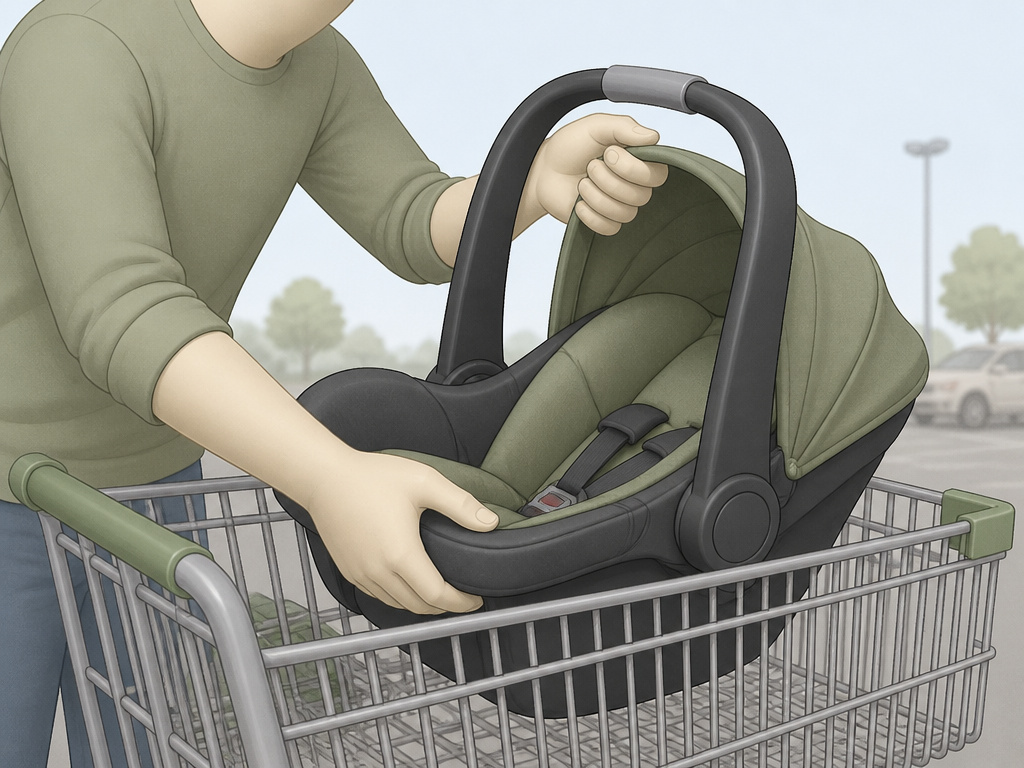 Grocery shopping is just one trip. The principle of secure, contained travel applies to all your errands. Whether you’re running to the post office or the pharmacy, have a plan that doesn’t involve precarious perching.
The sequence is key. When you arrive, put the car in park and set the parking brake. Unbuckle yourself, then deal with the baby. If you’re using a stroller, unfold it and lock the wheels before you take the baby out of the car. Click the seat onto the stroller, then proceed. If you’re using the basket method, get the cart first. Bring the cart to your car, place the seat inside it, then load your other items. This keeps the baby in a secure, supervised location at all times.
For longer outings with multiple stops, a travel system is less physically taxing than lifting the carrier in and out of a cart basket repeatedly. If you’re travel with car seat on a longer trip, a protective travel bag is essential for gate-checking, but for the grocery store, simplicity wins.
Always keep a hand on the stroller or cart. Never step away to grab an item, even if you’re “just over there.” A child’s movement can shift the weight. And remember the NHTSA car seat safety guidelines: your seat is designed for crash forces in a vehicle, not as a general-purpose carrier. Minimize the time it spends outside its base or a secure alternative.
Frequently Asked Questions
Can I use those clips that hold the car seat on top of the cart?
No. These cart-top holders are convenience products that directly contradict the warnings in your car seat manual and increase the risk of a tip-over. They are not tested or regulated for safety with the dynamic weight of a child in a seat.
What if my baby hates the car seat carrier?
This is common as babies get older and more aware. The alternatives become your best path. Transition to babywearing for shopping trips, or use a stroller where they can sit up and look around (once they have full head control, around 6 months). Forcing a screaming baby into the carrier for a long shop is miserable for everyone.
When can my baby just sit in the cart seat?
When they can sit upright completely unassisted and have strong head and neck control, typically around 6 to 7 months. Always use the cart’s built-in safety strap. It’s there for a reason. Even then, never leave the cart unattended or out of arm’s reach.
Is it safe to put groceries in the cart with the car seat?
Yes, but you must load strategically. Place lighter, soft items like bread or chips around the seat. Put heavy items like milk, juice, or cans on the lower rack of the cart. This maintains a low center of gravity. Never overload the top basket to the point where items are stacked high or could fall on the baby.
What’s the best infant car seat for easy shopping?
Look for a seat that is part of a well-regarded travel system. The Chicco KeyFit 35 and Graco SnugRide SnugFit are consistently top-rated because they click securely into a wide range of stroller frames. A lighter seat also helps; the Cybex Aton 2 is notably lightweight without sacrificing safety ratings.
Before You Go
Grocery shopping with an infant car seat boils down to one non-negotiable rule: the seat goes in the cart basket, handle down, baby buckled. Every other method, the child seat, the cart-top holder, balancing it on the side, gambles with the 23,000-injury statistic. Your best daily solution is a travel system stroller. It’s the closest thing to a designated, safe shopping cart for your baby. When that’s not possible, babywearing or store pickup are your next safest bets. Choose the method that keeps the weight low, the containment hard, and your hands on the controls.
