
How to Know If a Coat Is Car Seat Safe | The Real Test
This post contains affiliate links. As an Amazon Associate, we earn from qualifying purchases.
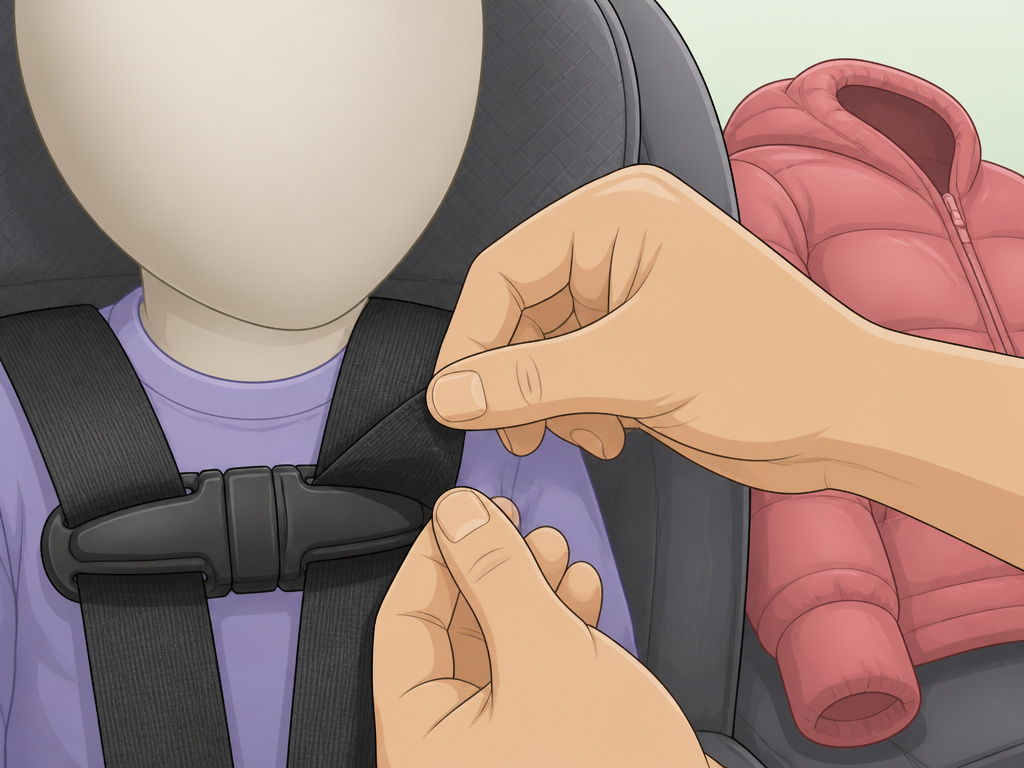
A coat is car seat safe if you can buckle the harness snugly over it and still pass the pinch test. After buckling, try to pinch the harness strap at the child’s shoulder. If you can gather any material, the coat is too bulky and creates dangerous slack that can lead to ejection in a crash. The only reliable method is to test the actual coat on your child in their specific seat.
That test is the whole game. It turns a vague worry into a yes-or-no answer you can get in two minutes. Federal standards like FMVSS No. 213 certify the child restraint system itself, not the coats or covers you add later. The safety risk isn’t about warmth, it’s about physics. A crash forces compressible material, instantly creating inches of slack in a harness that seemed tight.
What follows is the breakdown of why compression matters, how to run the definitive test, and what to use instead when your child’s favorite puffy jacket fails. We’ll cover the official NHTSA car seat safety guidelines, the real-world failure mode, and the specific products that solve the problem without guesswork.
Key Takeaways
- The pinch test is the only reliable check: buckle the coat, tighten the harness, then try to pinch the strap at the shoulder. If you can pinch any webbing, the coat fails.
- No federal safety standard directly regulates aftermarket coats or seat covers for flammability or performance when installed by a consumer.
- Harness slack from compression is the real danger. In a crash, fluffy material compresses, creating slack that can lead to partial ejection or increased head injury.
- Car seat ponchos and thin fleece jackets are the safest alternatives. They provide warmth without going under the harness, preserving a secure fit.
- Always check the car seat manual. Some manufacturers explicitly prohibit any aftermarket products not sold with the seat, which can void the warranty and liability coverage.
The 2-Minute Pinch Test (The Only One That Matters)
Forget looking at a coat on a hanger. The only way to know is to test it under the conditions that matter: with your child in the seat and the harness buckled.
First, put the coat on your child and sit them in the car seat. Buckle the harness as you normally would, pulling it snug. You should not be able to pinch any vertical webbing at the child’s shoulder. If the coat is thin enough, you won’t.
Now, take the coat off. Without moving the child, buckle the harness again over just their clothes. Tighten it until you pass the same pinch test. Remember how much tighter you had to pull the harness to get it snug without the coat? That extra length is the slack the puffy material would have created in a crash.
Common mistake: Thinking a tight harness over a coat is safe. Your strength can compress the coat initially, but crash forces compress it further. The NHTSA child seat cover interpretation warns that excessive padding “can compress in a crash and introduce slack into the belt system, which can result in a greater likelihood of head impact or ejection.”
That warning is about seat covers, but the physics are identical for a coat. The harness must contact the child’s body, not a layer of compressible air.
Why the “Fist Test” and Other Shortcuts Fail
You might see advice to make a fist inside the coat. If it’s roomy, the coat fails. This is better than nothing, but it’s indirect. It doesn’t account for how your specific car seat harness adjusts or how the coat behaves under lateral force.
The pinch test is direct. It uses the actual harness system as the measuring tool. It answers the only question that matters: does this coat prevent me from achieving a proper, non-compressible fit?
The Official Rules: What NHTSA Actually Says About Coats and Covers
The federal framework is specific but often misunderstood. It regulates the child restraint system (CRS), not the accessories you add later.
FMVSS No. 213 is the standard that all car seats sold in the U.S. Must meet. It covers design, performance in crash testing, labeling, and flammability. S5.7 of that standard requires all materials in the CRS to meet the flammability resistance of FMVSS No. 302.
Here’s the critical distinction for parents: these rules apply to the car seat as manufactured. According to the NHTSA regulatory interpretation letter, “The standard does not apply to accessory items, such as a cover that is used with a child restraint system, which is sold to consumers to install on their child restraints.”
| Entity | What It Regulates | Does It Apply to My Kid’s Winter Coat? |
|---|---|---|
| FMVSS No. 213 | The child restraint system (car seat) itself. | No. The coat is an aftermarket accessory, not part of the certified seat. |
| FMVSS No. 302 | Flammability of materials in the car seat. | Only if a manufacturer/dealer installs the cover. A consumer adding it does not violate this. |
| 49 U.S.C. 30118-30121 | Recall of motor vehicle equipment with safety defects. | Yes. If a coat is found to have a safety-related defect, the manufacturer must recall it. |
This means there is no federal certification label to look for on a car seat safe coat. The safety is determined by its use, not its manufacture. A manufacturer, dealer, or repair shop could be fined for installing a cover that degrades flammability, but that prohibition does not extend to parents.
The agency’s guidance is therefore a recommendation, not a regulation: avoid anything that interferes with the belt system or adds compressible padding.
What Happens in a Crash? The Physics of Compression
A winter coat works by trapping body heat in pockets of air. Those same air pockets are the problem under crash forces.
Think of the harness webbing as a rope. In a proper fit, the rope is tight against a solid object, your child’s body. When you place a puffy coat between the rope and the body, you’re inserting a spring. You can tighten the rope enough to compress the spring initially. But in a 30-mph crash, the spring compresses much, much further.
Where this goes sideways: A 2020 study in the Journal of Safety Research (modeling based on previous sled tests) estimated that a moderately puffy coat could introduce over 4 inches of slack in a harness during a crash. For a toddler, that’s enough for their head to strike the vehicle seat in front of them or for partial ejection.
The harness must not move more than an inch at the shoulder. The pinch test is a proxy for this. If you can pinch webbing after tightening, you’ve already lost the battle before the crash even happens.
Safer Alternatives When the Puffy Coat Fails
Your child still needs to stay warm. The solution is to provide warmth around the harness, not under it.
1. The Car Seat Poncho
This is the single best alternative. A poncho drapes over the child and the already-buckled harness. It leaves the harness path completely unobstructed. You can find safe car seat ponchos specifically designed with a split in the back for the harness to pass through or with a full back that tucks behind the child.
2. Thin Fleece or Wool Layers
Fleece jackets and wool sweaters are warm but minimally compressible. They are often thin enough to pass the pinch test. Layer these under a blanket or poncho for added warmth.
3. Blankets Over the Buckled Harness
After your child is securely buckled in a thin layer, tuck a blanket over them. For older kids, a wearable blanket or sleep sack that zips up the front (and goes over the harness) works well. Always check guidelines for car seat blanket safety to ensure they don’t interfere with the buckle or straps.
4. Pre-Warm the Car
A few minutes with the heater on before you load up can make a world of difference. A warm cabin reduces the need for extreme outerwear.
| Alternative | How It Works | Best For | Risk If Skipped |
|---|---|---|---|
| Car Seat Poncho | Worn over child & harness; harness passes through slit or under poncho. | All ages, especially rear-facing infants. | A poorly designed poncho can bunch under the child or cover the harness buckle. |
| Fleece Jacket | Worn under harness; minimal compression. | Toddlers & older kids who can wear layers. | Can still be too thick if it’s a “fleece-lined puffy” hybrid. Must pass pinch test. |
| Blanket Over Top | Placed over secured child after buckling. | Quick trips, adding warmth to any layer. | Can become a projectile if not secured or tucked. May be kicked off. |
| Pre-Warmed Vehicle | Eliminates need for heavy outerwear at the start of the trip. | Anyone with a remote start or a few minutes to spare. | Child is cold during walk to car, leading to rushed, improper buckling. |
What about snow pants? The same rule applies. Bulky snow pants can lift the child up in the seat, altering the harness geometry and creating slack at the hips. If they’re worn, they must be part of the pinch test.
The 4-Step Safety Checklist Before Every Winter Trip
Turn this knowledge into a routine. This checklist takes less than a minute.
- Start Inside. Put your child in their thin base layer (fleece, sweater) inside the warm house. Put their coat or poncho in the car.
- Bucket Test. If using a coat, perform the pinch test. If it fails, switch to the poncho or blanket waiting in the car.
- Harness Check. Buckle and tighten. Perform the final pinch test at the shoulder. No pinching allowed.
- Add Warmth. Once the harness is secure, add the poncho or tuck a blanket over your child’s lap and chest.
This routine prevents the parking-lot struggle of trying to buckle a wiggly toddler into a puffy coat while you’re both cold. It makes safety the default.
Easy to miss: The chest clip position. A bulky coat can cause you to place the chest clip too low. It must be at armpit level, resting on the sternum, regardless of what the child is wearing.
Frequently Asked Questions
Can I use a car seat cover instead of dealing with coats?
Maybe, but with major caveats. A winter car seat cover that goes over the entire seat (like a shower-cap style) is generally safe as it doesn’t interfere with the harness. However, any cover that goes under the child or between the child and the harness, like a fluffy insert or bunting bag, suffers from the same compression risk as a coat. Always verify that any aftermarket product doesn’t conflict with your seat’s manual, as using one can void the manufacturer’s warranty.
Are there any brands that make officially “car seat safe” coats?
No brand can claim federal certification for a coat as a car seat safety device, because no such standard exists. Some brands market coats as “car seat friendly” because they are made of thinner, less compressible material. These may pass the pinch test, but you must still test them yourself. Don’t trust marketing over the physical test with your child and seat.
My child’s coat just barely fails the pinch test. Is it okay for short trips?
No. Crash forces don’t care about trip length. A crash at the end of your driveway is as dangerous as one on the highway. The compression risk is present anytime the vehicle is moving. If the coat fails the test, it is not safe for any trip in the car seat.
What about for booster seats?
The principle changes but remains critical. In a booster, the vehicle’s seat belt must fit the child properly. A puffy coat can prevent the lap belt from lying low and snug across the hips, causing it to ride up onto the soft abdomen. It can also push the shoulder belt away from the neck and across the shoulder. The coat should not prevent a proper seat belt fit. The same rule applies: test the fit with and without the coat.
The Bottom Line
Knowing if a coat is car seat safe isn’t about labels or brand promises. It’s about a simple, physical test you control. The pinch test with the harness is the only answer that matters. When the puffy coat fails, and most will, reach for a car seat poncho, a thin fleece, and a blanket. Your goal is warmth without compromise, because a snug harness is the single most important factor in keeping your child safe in a crash. Make the test, then make the switch.
