
Safety Guide: Are Winter Car Seat Covers Actually Safe to Use?
This post contains affiliate links. As an Amazon Associate, we earn from qualifying purchases.
Winter car seat covers are only safe if they go OVER the seat shell after the child is buckled, never underneath. Any cover, blanket, or bunting that sits between your child and the harness straps or the seat shell is unsafe because it compresses in a crash, creating deadly slack. The NHTSA has no direct federal standard for these aftermarket accessories, creating a legal loophole where flammability rules only bind professional installers, not consumers.
That gap in the law is where most of the risk lives. A manufacturer can sell you a cover made from fabric that doesn’t meet federal flammability standards, and if you install it yourself, it’s technically legal. If a repair shop installs that same cover, they’ve broken the law. The safety outcome is identical, but the liability isn’t.
What follows is a breakdown of the three non-negotiable safety lines: the flammability and compressibility rule straight from a 2006 NHTSA interpretation letter, the documented interference with side airbags from Toyota and Chrysler service bulletins, and the specific products that work within those limits without voiding your car seat’s warranty.
Key Takeaways
- No layers between child and harness. Any cover that goes under your baby or between them and the straps can compress, creating slack and increasing injury risk. This is the NHTSA’s primary warning.
- Flammability rules have a loophole. Federal flammability standards (FMVSS No. 302) only legally apply if a business installs the cover. Consumers can install non-compliant covers, but the NHTSA considers it “rendering inoperative” the seat’s original safety.
- Side airbags change everything. Toyota and FCA (Chrysler, Jeep, Dodge, RAM) explicitly warn that non-OEM seat covers can impede side airbag deployment, leading to severe injury. This applies to vehicle seats, not child seats.
- Warranties are voided. Using a non-approved cover, like one not made by Britax for a Britax seat, automatically voids the manufacturer’s warranty.
- Safe options exist outside. The only universally safe winter covers are “shower-cap” styles that fit over the entire infant carrier after the child is buckled, or car seat-safe outerwear worn by the child.
The Critical Flammability & Compressibility Rule
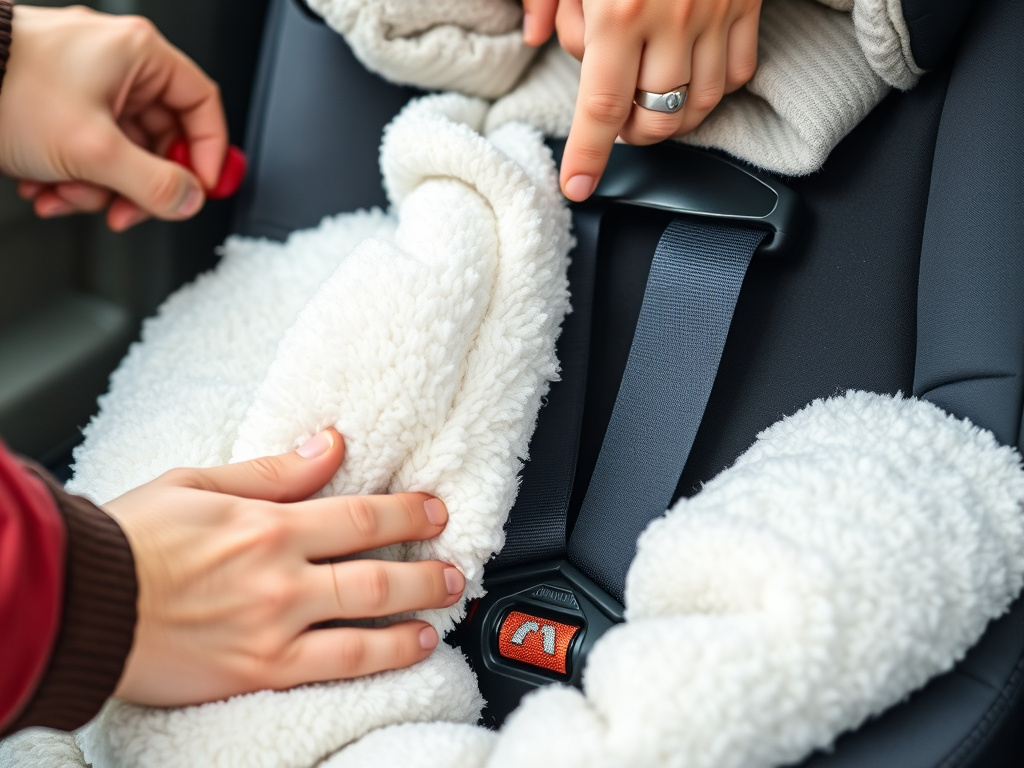
Look at the product description. If it says the cover tucks under the baby or has slots for the harness to thread through, stop. That design fails the single most important test from the NHTSA child seat cover interpretation.
The cover should not have excessive padding or other material that can compress in a crash and introduce slack into the belt system, which can result in a greater likelihood of head impact or ejection.
That’s not a suggestion. It’s the agency’s stated safety consideration for manufacturers. In a crash, fluffy padding flattens. What felt like a snug harness at the start of the trip suddenly has inches of slack. That slack allows the child’s body to move violently before the restraint system can manage the crash forces.
The federal rulebook itself, FMVSS No. 213, doesn’t directly govern these aftermarket accessories. But it does require the child restraint itself to meet flammability standards (FMVSS No. 302). Here’s the loophole: if you buy a cover and put it on the seat yourself, no federal flammability standard legally applies to that cover. If a store, dealership, or repair shop installs it for you, that cover must comply. The NHTSA calls adding a non-compliant cover “rendering inoperative” the original seat’s safety.
| Who Installs the Cover? | Must Meet FMVSS No. 302 Flammability Standard? | NHTSA’s Stance on Safety |
|---|---|---|
| Consumer (Parent) | No legal requirement. | “Urges” voluntary compliance. Considers it rendering the original safety inoperative. |
| Business (Dealer, Repair Shop) | Yes, legally required. | Installing a non-compliant cover is a violation of federal law. |
This creates a bizarre two-tier system. The same hazardous cover is illegal if installed by a pro, but you can buy it and install it yourself. Your decision point shouldn’t be the loophole. It should be the compressibility warning from 2006. Any product that adds bulk under the harness fails.
The Side Airbag Problem You Can’t See
This risk has nothing to do with your child’s car seat and everything to do with your vehicle’s front seats. If your car has seat-mounted side airbags, an aftermarket seat cover on that vehicle seat is a documented hazard.
Toyota and FCA US LLC (Chrysler, Jeep, Dodge, RAM, Fiat) have published technical service bulletins stating this plainly. These side airbags deploy through a specially designed seam in the seat’s original upholstery. A non-OEM cover can alter the material’s strength, stitch pattern, or seam placement.
Where this goes sideways: A cover that’s too strong or has a misaligned seam can block the airbag. One that’s too weak can tear improperly, directing the deploying bag into the occupant’s body instead of positioning it correctly for protection. Both outcomes can cause serious injury.
Toyota’s bulletin lists models from 1998 to 2014 and says they “strongly advise against” aftermarket covers. FCA’s bulletin, which superseded an earlier 2011 version, states that only their Authentic Mopar parts are engineered and tested for this purpose. The takeaway is absolute: if you have side airbags in your car seats, do not use a universal aftermarket cover on those seats. This is a separate concern from general car seat cover safety guidelines for the child’s own restraint.
What About “Car Seat Safe” Winter Coats and Ponchos?
This is where the conversation shifts from covers you put on the seat to outerwear you put on the child. The principle is the same: no compressible bulk under the harness. A true car seat safe coat is thin and flexible enough to pass the “pinch test” even when the child is wearing it.
The safe method is layers. Start with a thin, warm base layer. Then add a fleece jacket or sweater. Finally, use a blanket or poncho that goes over the already-secured harness. A car seat poncho is essentially a blanket with a headhole; it drapes over the child and harness, adding warmth without interference.
| Safe Winter Gear | How It Works | Risk If Used Wrong |
|---|---|---|
| Thin Fleece Jacket | Worn under harness; minimal compression. | None if it passes the pinch test. |
| Car Seat Poncho | Drapes over child & harness after buckling. | If tucked under child or straps, it becomes a compressible layer. |
| Over-the-Seat “Shower Cap” Cover | Fits over entire infant carrier shell. | Can overheat baby if left closed in a warm car. |
| Snow Pants | Worn under harness; check for bulk at back. | Thick, padded snow pants create a gap between child and seatback. |
For dressing baby for car seat safety, fleece is your best friend. It’s warm but compresses almost completely. Avoid puffy snowsuits or buntings that go under the harness. For a deeper check, use the practical coat safety test for car seats: buckle your child in with the coat on, tighten the harness properly, then remove the coat without loosening the straps. Re-buckle the child without the coat. If the harness is now obviously loose, the coat is too bulky.
The Only Covers Experts Actually Recommend
Given the risks, the list of truly safe options is short. It consists of products that add warmth without ever coming between the child and the safety system of their seat.
For infant carriers, the 7AM Enfant Nido is the classic “shower-cap” style. It fits over the entire seat with an elastic rim, blocking wind and snow. The key is that the baby is already securely buckled inside before you put the cover on. The Nido doesn’t touch the harness. The downside is it can create a greenhouse effect; you must open or remove it once the car is warm to prevent overheating.
For toddlers and older kids in convertible seats, outerwear is the solution. The Road Coat and the OneKid Road Coat Snowsuit are designed specifically for this. They are thin, down-filled layers that open fully in the front. You buckle the harness directly against the child’s thin base layers, then close the coat or suit over the secured harness. This is the gold standard for safe winter warmth.
Skip universal aftermarket inserts and headhuggers that didn’t come with your seat. As the American Academy of Pediatrics guide notes, if it didn’t come with the seat, it wasn’t crash-tested with it. Using them can void your warranty, as Britax explicitly states.
Frequently Asked Questions
Are the covers that go under the baby and have harness slots safe?
No. Any cover that positions material between your child and the seat shell or harness straps is unsafe. These “bunting bag” styles are compressible and will create dangerous slack in a crash, exactly as the NHTSA warns.
Do car seat covers void warranties?
Yes, often. Britax’s warranty is voided by using any non-Britax cover, insert, or accessory. Most other major brands have similar clauses. They cannot guarantee the performance of a system that has been altered with untested components.
What about lightweight, stretchy fleece covers?
Thin, stretchy fleece cover that fits over the seat shell (like a shower cap) is generally safe, as it doesn’t interfere with the harness. A fleece cover that goes under the baby is not safe, as it still adds a compressible layer. The rule is about placement, not just material.
How can I tell if my vehicle seat covers are blocking side airbags?
If your vehicle has seat-mounted side airbags (check your manual), and you have aftermarket covers not specifically approved by your vehicle’s manufacturer (like Mopar for Chrysler brands), they are likely a risk. The only way to be sure is to remove them. The vehicle manufacturer’s warnings are clear and based on testing.
Are car seat blankets safe?
Car seat blankets are safe only if placed over the child after they are fully and tightly buckled in. They must never be tucked under the child, behind their back, or between them and the harness straps.
The Bottom Line
Winter car seat safety isn’t about finding a clever cover. It’s about strict adherence to one principle: the harness system must fit snugly against the child’s body with nothing compressible in between. The federal regulations have a gap that puts the burden of choice squarely on you.
Use thin, tight-fitting layers under the harness. Add warmth on top with blankets, ponchos, or seat-shell covers. For your vehicle’s own seats with side airbags, avoid aftermarket covers unless they are OEM-approved. The right choice isn’t the coziest-looking one. It’s the one that disappears in a crash, leaving only the tested safety system to do its job.
