
The Ultimate Safety Guide for Using a Second Hand Car Seat
This post contains affiliate links. As an Amazon Associate, we earn from qualifying purchases.
A second hand car seat is safe only if you can verify three things: a known, accident-free history; a current expiry date printed on the seat; and the presence of all original parts with an intact manual. Missing any one of these voids the seat’s safety rating. The expiry date is the most common deal-breaker—a Britax seat lasts six years from its manufacture date, a Combi seat seven. Past that, the plastic degrades and the harness webbing loses its certified tensile strength, a failure you cannot see.
That date on the sticker isn’t a suggestion. It’s the manufacturer’s final verdict on the seat’s structural integrity after years of temperature swings, UV exposure, and the stress of daily use. A seat that’s been in a crash, even a minor one, is scrap metal regardless of its age—the forces can fracture the plastic shell in ways invisible to the eye. The labels themselves fade over time, making the seat’s age and certification status impossible to verify. This guide walks you through the three checks you must perform, the one mistake that voids all warranties, and what to do if a seat passes inspection.
Key Takeaways
- Never accept a seat without a legible expiry date stamped on the shell. For common brands, that’s six years for Britax, seven for Combi.
- A seat involved in any vehicle collision is permanently unsafe, even if the child wasn’t in it. Insurance often covers replacement.
- All original parts, including the manual, must be present. Aftermarket accessories like head supports or strap covers can compromise the harness system.
- Sellers of non-compliant seats in Canada can be held liable under the Canada Consumer Product Safety Act.
- If any doubt remains after inspection, the only safe move is to buy new.
The Three Non-Negotiable Checks
You need three documents of proof: a clean bill of health from the previous owner, a current expiry date from the manufacturer, and a complete set of parts from the original box. Skip one, and the seat fails.
First, get the history. This isn’t a casual chat. You need a verbal confirmation backed by a believable story. Ask directly: “Has this seat ever been in a vehicle during a collision, even a fender-bender in a parking lot?” The answer must be “no,” without hesitation. There is no grey area here.
Common mistake: Trusting a seat from an online marketplace without a verifiable owner. You’re relying on a stranger’s word against your child’s safety.
Second, find the expiry date. It’s stamped or molded into the plastic shell, often on the back or bottom. Wipe it clean. If the date is faded, scratched off, or missing, walk away. The seat is unusable. If it’s legible but passed, the seat is scrap.
Manufacturers set these dates because plastics and textiles degrade. Sunlight, temperature changes, and spilled liquids break down the materials over time. The harness webbing loses a documented percentage of its strength. The shell becomes brittle. These changes aren’t always visible.
| Brand (Example) | Useful Life | Where the clock starts |
|---|---|---|
| Britax | 6 years | Date of manufacture |
| Combi | 7 years | Date of manufacture |
| Most other brands | 6–10 years | Check the seat’s label |
Third, verify every part. Lay out the seat and compare it to the instruction manual. Every strap, buckle, chest clip, and cover must be the original equipment. No substitutions.
Where This Goes Sideways
Most second hand seat deals die on the expiry date. People forget. Labels fade. A seat stored in a garage for a few years looks new but is already years into its lifespan.
The second killer is the unseen crash. A minor collision can stress the plastic shell or the internal metal frame. You won’t see the microfractures. Insurance companies know this—that’s why they often cover a full replacement after any accident where the seat was in the vehicle. If the seller mentions insurance covered a new seat, that’s your red flag. That seat is trash.
The third is missing pieces. A harness strap cut to remove a twist. A lost buckle tongue. A manual that’s long gone. Without the manual, you don’t know the torque specs for installation, the proper recline angles, or the weight limits. You’re guessing.
I won’t recommend a second hand seat from a thrift store or a bulk online listing. You’re buying a mystery. The few dollars saved aren’t worth the lifetime of “what if” that follows a close call.
What the Regulators Say
Official guidance is unanimous and blunt. Transport Canada states all seats sold in Canada must display the National Safety Mark, proving they meet current standards. A used seat without that mark is illegal to sell. The Australian Product Safety Commission guide flatly says not to use or buy a second-hand seat if you’re unsure of its history, condition, or age.
The legal risk isn’t just for the buyer. In Canada, a person selling a non-compliant used seat could face liability under the Canada Consumer Product Safety Act. This isn’t scare talk. It’s the predictable outcome of selling a safety device that fails because it was expired or damaged.
Their stance comes down to verifiability. Can you, as a buyer, be 100% sure? If the answer isn’t an absolute yes, the answer is no.
The One Check You Can’t Do Yourself
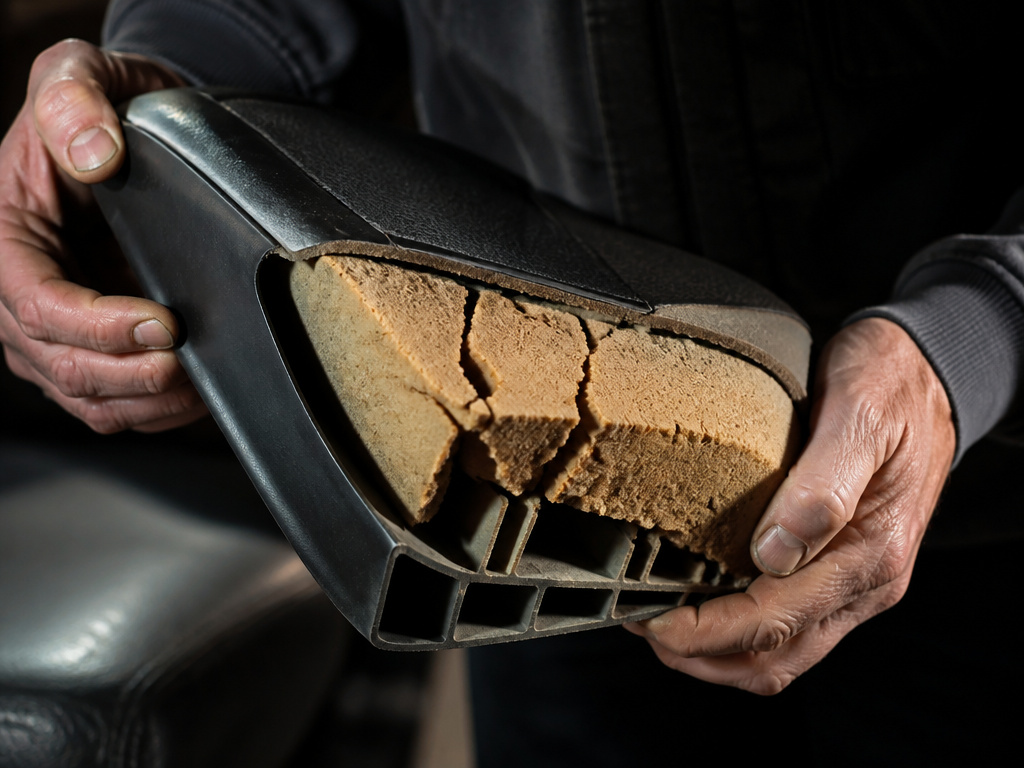
You can inspect a harness for fraying. You can check the buckle for smooth operation. You cannot assess the integrity of the plastic shell or the internal energy-absorbing foam. That requires destructive testing.
This is why manufacturers and regulators rely on the expiry date. It’s a conservative estimate of when those hidden materials could fall below the safety standard. The Consumer Reports used car seat safety analysis emphasizes this point: “As a buyer, you usually can’t be 100 percent sure of a secondhand car seat’s history.”
When you buy new, that testing burden stays with the manufacturer. When you buy used, you inherit it.
When a Used Seat Might Be Okay (And How to Vet It)

There is one narrow path: acquiring a seat from someone you know and trust implicitly—a close family member or friend whose child just outgrew it. Even then, the three checks apply.
- Get the full story. You need to have witnessed the seat’s entire life in the vehicle. No gaps.
- Perform the physical inspection. This is a hands-on, 20-minute process.
- Examine every inch of the harness webbing for cuts, frays, or fading.
- Work the buckle and chest clip dozens of times. They must click smoothly every time.
- Inspect the plastic shell for any cracks, deep scratches, or discolored, brittle spots.
- Confirm all parts match the manual.
- Verify it’s not expired. Check the date against the current year.
- Confirm no recalls. Search the seat’s model number and manufacture date on Transport Canada’s recall database.
If you’re missing the manual, contact the manufacturer. Some will email you a PDF. If they can’t, the seat fails.
Worth knowing before you start: Aftermarket accessories are a hard no. The ACCC explicitly warns against adding items like head supports or strap covers, as they can interfere with the harness system and increase injury risk. The seat must be used exactly as certified.
The Step-by-Step Inspection You Must Do

Assume nothing. Verify everything.
Step 1: The Label Hunt. Find the expiry date and the National Safety Mark. No mark, no sale. A faded date is an expired seat. * Skip this: The deal ends. There is no workaround.
Step 2: The Harness Test. Thread the harness straps through the buckle and pull tight. Do they move freely without catching? Release the buckle. Does it open easily? A sticky buckle is a failed buckle. * Skip this: A jammed buckle could trap your child in the seat during an emergency.
Step 3: The Shell Scan. Run your fingers along every edge and curve of the plastic shell, especially around the belt path and anchor points. Feel for hairline cracks or rough, brittle patches. * Skip this: A cracked shell can shatter on impact, offering no containment.
Step 4: The Manual Match. Lay every piece next to the manual’s parts diagram. Is anything missing, replaced, or added? This includes the infant insert for a convertible seat. * Skip this: A missing part means the seat hasn’t been tested as a complete system.
Step 5: The Recall Search. Go to Transport Canada’s website and search the model number. Do this with the seller present. * Skip this: You could be installing a seat with a known, deadly flaw.
If any step fails, thank the seller and leave. The inspection is a pass/fail test.
Why Expiry Dates Are Not a Marketing Gimmick
Plastic gets brittle. It’s a fact of polymer science. Exposure to ultraviolet light from the sun and thermal cycling from hot summers and cold winters accelerates the process. The seat’s shell and internal structure are designed to flex and absorb energy in a crash. Brittle plastic cracks instead.
The harness webbing is nylon or polyester. It loses tensile strength over time due to friction, sunlight, and exposure to chemicals like spilled juice or sunscreen. A 10% loss might not be visible, but it’s the difference between holding and snapping.
Car seat standards evolve. A seat made six years ago lacks the side-impact protection or anti-rebound features of today’s models. The expiry date ensures seats too old to meet current safety science are taken off the road.
Your Other Options When a Used Seat Fails
If a second hand seat doesn’t pass, you still have routes that don’t involve full retail price.
Buy a new seat on sale. Major retailers have clear-out sales when new models arrive. Sign up for price alerts on sites like CamelCamelCamel for Amazon.
Consider a certified refurbished seat. A few manufacturers and specialized retailers sell seats that were returned, fully inspected, and re-certified. They come with a new warranty and a new expiry date. This is not the same as buying used.
Look for trade-in programs. Some stores offer discounts on a new seat when you bring in an old one, which they then recycle responsibly.
Check for subsidy programs. Local community organizations or government agencies sometimes offer assistance for families in need.
The goal is a safe seat, not necessarily a free seat.
Frequently Asked Questions
Can you reuse a car seat for a second baby?
You can reuse a car seat for a second child if it has never been in a crash, is not expired, and all original parts are present and functional. You must also ensure it is the correct type and size for the new child’s age, weight, and height. This is different from buying a used seat of unknown history.
Is a car seat safe after a minor accident?
No. Transport Canada, Health Canada, and all major manufacturers state that a car seat must be replaced after any collision, regardless of severity. The forces involved can cause invisible damage to the plastic shell and internal components, compromising its ability to protect in a future crash.
How can you tell if a used car seat is safe?
You must verify three things: a known, crash-free history; a legible expiry date that hasn’t passed; and all original parts with an intact manual. You then must perform a thorough physical inspection for damage and check for any open recalls. If you cannot confirm all three, the seat is not safe.
What about a second hand car seat base?
The same rules apply. A car seat base is a structural component that absorbs crash forces. If the vehicle it was in was in a collision, the base is compromised and must be replaced alongside the seat. Always check its condition and ensure it’s compatible with your specific seat model.
Are aftermarket car seat covers safe?
Most are not. Products like car seat covers or inserts that did not come with the seat or are not sold by the manufacturer can interfere with the harness system, alter the fit of the seat, or introduce flammable materials. The ACCC specifically warns against them. Only use accessories approved by the seat’s manufacturer.
The Bottom Line
A second hand car seat is a calculated risk. The calculation only works if you have perfect information—the seat’s full history, its in-date certification, and its complete, unaltered parts. Most of the time, you don’t.
The safe default is new. When that’s not possible, the narrow path is a seat from a trusted source, inspected against the three non-negotiable checks with zero compromises. If a single question mark remains, walk away. Your child’s safety is the one area where “probably okay” is never good enough.
