Get a Free Car Seat and Stroller: A Complete Guide to Programs
This post contains affiliate links. As an Amazon Associate, we earn from qualifying purchases.
Free car seats and strollers are available through government assistance, health insurance plans like BCCHP, and non-profit programs, but the catch is timing: you must enroll in the first trimester or within 42 days of joining the plan. The gear is new and certified, but you still must verify its model against current recall lists and check its physical condition, a used seat from a friend needs the same scrutiny as a free one from a program.
That 42-day window is the hinge. Miss it, and the free crib or seat offer vanishes. These programs exist to get safe sleep and travel gear to families who need it most, but the application deadlines are strict because they’re tied to early prenatal care metrics. The rest of this guide walks the eligibility maze. Medicaid, WIC, hospital programs, and then gives you the seven-point safety audit you must run on any gear, free or hand-me-down, before you put a child in it.
What follows: the specific forms, phone numbers, and model-number lookups you need, plus the one field test that spots a harness defect in seconds.
Key Takeaways
- The most reliable free gear comes from your health insurer or state Medicaid program if you apply during the first trimester or within 42 days of enrollment.
- Every car seat has an expiration date stamped into the plastic, typically 6–10 years from manufacture; a seat past this date is unsafe regardless of its appearance.
- Federal safety standards for strollers became mandatory on September 10, 2015; any stroller made before that date fails modern stability and harness integrity tests.
- You can, and must, check for recalls using the model number and manufacture date, even for brand-new, program-issued seats.
- If you receive a used seat and cannot verify its history, destroy it with a sledgehammer and mark it “Do Not Use” before disposal.
Who Qualifies for a Free Car Seat or Stroller?
Your path depends on where you live and what kind of insurance you have. The programs aren’t hidden, but their deadlines are.
State Medicaid and Special Beginnings programs are the first stop. For example, Illinois’ Blue Cross Community Health Plans (BCCHP) runs a “Special Beginnings” maternity program that provides a free car seat or portable crib. The catch, and it’s a big one, is that you must have your first prenatal visit in your first trimester or within the first 42 days of enrolling in BCCHP. Your provider faxes the form to a dedicated number, and a non-profit handles delivery. The phone number for enrollment is 1-877-860-2837; the fax line for the completed form is 1-312-309-0520.
Common mistake: Assuming the free gear offer is open-ended. These programs use the early prenatal visit as a proxy for engagement. Miss that window, and the offer closes.
The Women, Infants, and Children (WIC) program in many states partners with local health departments or non-profits to offer car seats, often after completing a safety education class. You don’t always need to be on WIC food benefits to qualify for the class, call your local WIC office and ask.
Hospital-based programs and fire department initiatives exist, but they are hyper-local and inventory-dependent. Your best bet is to ask your obstetrician or pediatrician’s office; they usually have a list of active resources in your county.
Non-profit organizations like Safe Kids Worldwide coalitions often host car seat check events where they may provide seats to families in need. These are not guaranteed giveaways, but showing up with a demonstrated need can work.
The thread connecting all these paths? Proof of need and proof of action. You must often be enrolled in a qualifying assistance program, and you must complete a step, a class, an appointment, a form, to get the gear.
The 7-Step Checklist for Any Free Gear
A free seat is not a safe seat until you vet it. This checklist applies to a brand-new seat from a program, a hand-me-down from a cousin, or a secondhand find.
- Find the model name and number. Look on a label on the side of the car seat shell or the underside of the stroller frame. It’s a mix of letters and numbers, like “IC337” or “IN0800NA00S013DX13”. Write it down.
- Find the manufacture date. It’s on the same label, formatted as YYYY/MM/DD. A car seat made more than 10 years ago is expired. A stroller made before September 10, 2015, does not meet mandatory federal safety standards for harness integrity and stability.
- Check for recalls. Go to the NHTSA car seat safety guide and use their lookup tool, or search the manufacturer’s name and model number together. Recalls are common; a 2024 recall of the popular Nuna Rava convertible seat, for example, was issued because debris could jam the front harness adjuster.
- Inspect the physical shell. Run your hands over the plastic. Look for cracks, especially near harness path holes or where the seat bends. Feel for any brittleness or faded color, which indicates plastic degradation from sun and heat.
- Test every moving part. Buckle and unbuckle the harness 10 times. Adjust the headrest up and down. Recline the seat. On a stroller, open and close it, test the brakes, and ensure the wheels spin freely. Stiffness or hesitation is a red flag.
- Verify all parts are present. Compare what you have to the instruction manual’s parts diagram. Missing a buckle tongue or a LATCH strap clip makes the seat unusable.
- Register the product. If it’s new, use the registration card or the manufacturer’s website. If it’s used, you likely can’t register it, which means you won’t get recall notices directly. This makes step #3 your ongoing responsibility.
Where this goes sideways: Assuming a free, new-from-a-program seat is automatically recall-free. Manufacturers issue recalls all the time. The Dorel Juvenile Group recalled certain Maxi-Cosi Pria models because they failed federal safety standards when used with a lap-only belt for a child over 65 pounds. The free remedy kit included a revised manual lowering the weight limit. You must check.
| Checkpoint | What to Look For | Pass/Fail Outcome |
|---|---|---|
| Model & Date Label | Clear, legible stamp on plastic shell or frame. | PASS: Label present and readable. FAIL: Label missing, scratched off, or expired. |
| Recall Status | Zero open recalls for the exact model and date range. | PASS: Clear on NHTSA database. FAIL: Active recall (e.g., Nuna Rava 2016-2023). |
| Shell Integrity | No cracks, deep scratches, or faded/brittle plastic. | PASS: Shell is firm, color is even. FAIL: Any crack or noticeable flex. |
| Harness & Buckle | Smooth operation, no fraying on straps, buckle tongues present. | PASS: Adjusts easily, clicks firmly. FAIL: Sticky, frayed, or missing parts. |
| Instruction Manual | Complete, legible, matches the model. | PASS: Manual in hand. FAIL: No manual, or it’s for a different model. |
If the seat fails any of these checks, especially a recall or an expired date, do not use it. The next section covers what to do instead.
What If the Free Seat Fails Your Inspection?
You have a car seat that is recalled, expired, or damaged. The instinct is to donate it or trash it. Both are wrong.
Donating a unsafe seat passes the problem to another family. Throwing a whole seat in the trash risks someone retrieving it. The only responsible end for a failed seat is destruction.
The child restraint recall list from safety organizations is clear: if a seat cannot be fixed and must be taken out of service, you should “break it with a sledgehammer, crush it, or take it completely apart and mark it ‘not for use as a safety seat’ before throwing it away wrapped securely in a heavy trash bag.”
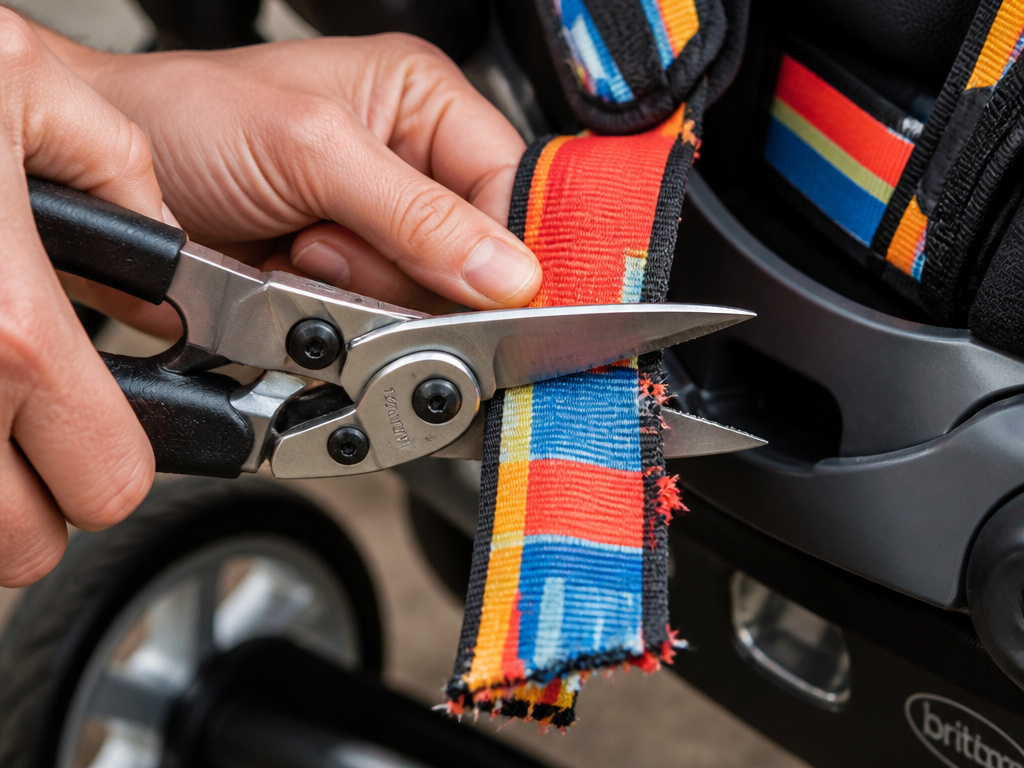
The process is physical. Cut the harness straps with heavy-duty shears. Use a drill or saw to cut through the plastic shell in multiple places. Remove the foam padding. Write “DO NOT USE – UNSAFE” in permanent marker on the largest pieces. Then bag it.
Why go this far? Because a intact, expired seat left on the curb looks like a gift to a parent in a tough spot. Destroying it removes that temptation completely.
For a stroller that fails inspection, say, a frame crack or a brake failure, the same principle applies: render it unusable before disposal.
The Stakes of Getting This Wrong
The consequences of using recalled or expired gear aren’t theoretical. They are documented in injury data and recall notices.
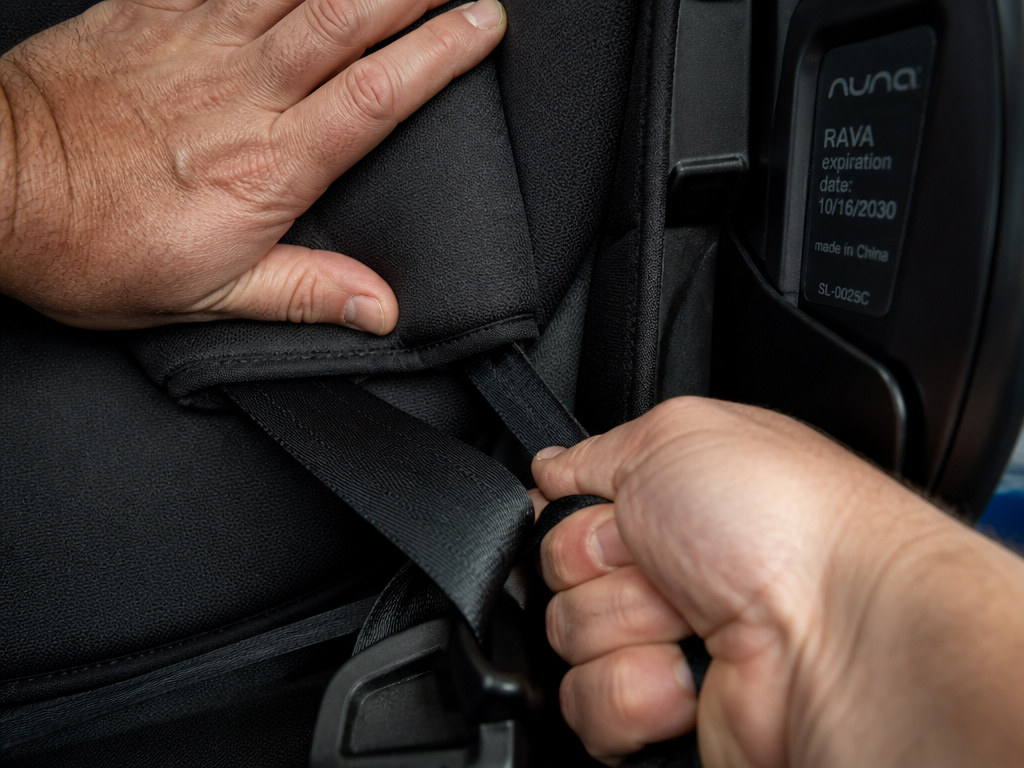
A loose harness is a direct failure. The 2024 Nuna Rava recall states that debris entering the front harness adjuster can cause the harness to loosen during a crash. The test is simple: push on the seatback with one hand while pulling the harness straps with the other. If the harness lengthens, stop using the seat immediately. That specific defect led to a national recall covering seats made over a seven-year period.
An inclined sleeper bassinet that violates the federal Safe Sleep for Babies Act carries a suffocation risk. A 2023 recall of Peg Perego YPSI and Z4 bassinets cited exactly this: an incline greater than 10 degrees, plus a lack of a stable stand. The recall offered a $50 cash incentive for owners to disengage the backrest and stop using it.
Expired plastic fails predictably. Most car seat plastics are designed for a 6- to 10-year service life. After that, UV exposure and temperature cycles make the shell brittle. In a crash, it can crack instead of flexing, transferring more force to the child. The date is stamped into the plastic for a reason.
The part nobody mentions: A stroller made before the September 10, 2015, federal safety standard deadline may tip over with a diaper bag on the handles, or have a harness that slips too easily. That date isn’t a suggestion; it’s the line between “might be okay” and “doesn’t meet code.”
The Consumer Reports used car seat guide puts it bluntly: an older seat won’t provide the same level of protection. Their interactive decision chart leads with one question: “Can you confirm the seat’s full history?” If the answer is no, the recommendation is to not use it.
Free Gear for Travel: Airlines and Beyond
Getting free gear for home is one thing. Getting it to your destination is another layer.
All major U.S. Airlines allow you to check a car seat and stroller for free as part of your baggage allowance. They don’t count toward your limit. You can gate-check the stroller and car seat, which usually means less rough handling, or check them at the ticket counter.
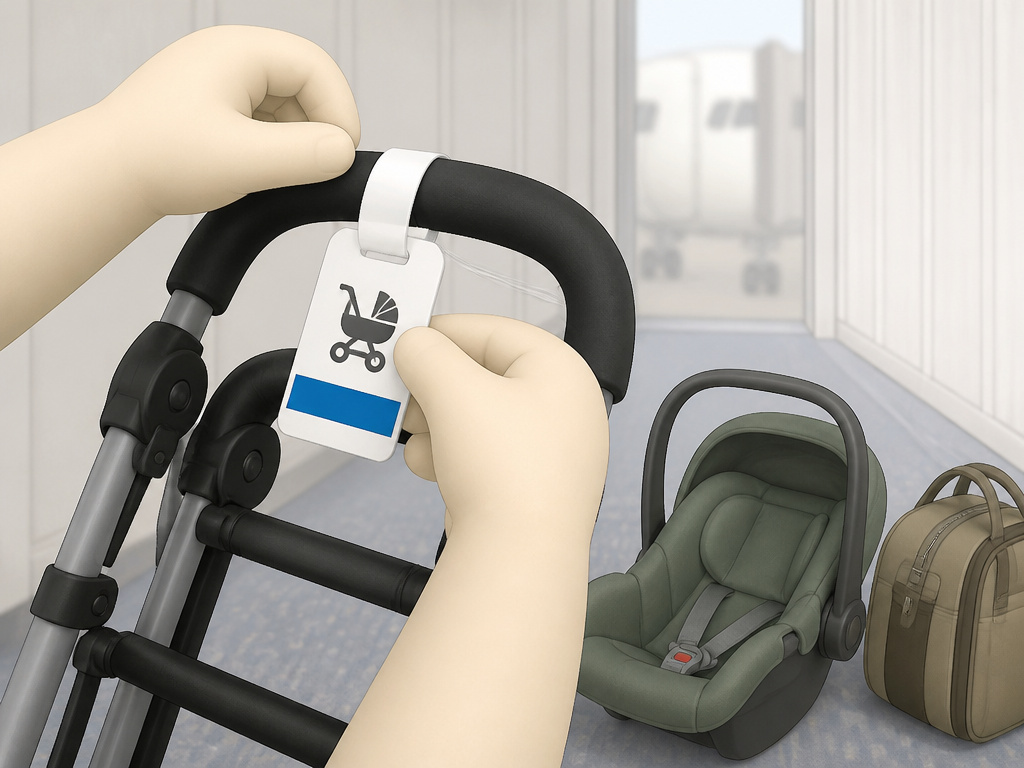
The real trick is the “travel system” hack. If you have an infant car seat that clicks into a stroller frame, you can often travel with car seat and stroller through the airport by wearing the baby, carrying the seat, and rolling the empty stroller frame right to the gate. The airline staff will tag it at the jet bridge.
Some airports have loaner gear programs, but these are rare and not something to rely on. Your own inspected, airline-checked seat is the safer bet.
| Travel Scenario | Best Practice | Risk If Skipped |
|---|---|---|
| Flying with an infant seat & stroller frame | Gate-check both. Use a travel bag for the seat. | Baggage system damage to the seat’s shell or internal components. |
| Flying with a convertible car seat | Check it in a padded travel bag. Use it on the plane if you buy a seat. | Airlines may refuse a damaged seat at your destination, leaving you without. |
| Using a rental car company’s car seat | Inspect it like your own: model, date, recall check, physical inspection. | You get an expired, dirty, or recalled seat with an unknown crash history. |
| Relying on a hotel’s crib | Ask for the model and check it before use. Bring your own fitted sheet. | Crib may not meet current safety standards (slat spacing, mattress firmness). |
The rule is the same on the ground or in the air: verification before use. A free rental car seat is only a benefit if it passes the same seven-point check.
How to Pick Safe Gear When You Have a Choice
When a program offers a choice, or if you’re supplementing free gear with a purchase, your criteria shift from cost to safety and compatibility.
First, match the seat to the child’s current height and weight, not their age. Infant seats are outgrown fast. A convertible seat that works rear-facing and then forward-facing lasts years longer. The NHTSA child restraint standards provide the baseline, but look for seats that exceed them in ease-of-use ratings.
Second, match the seat to your vehicle. Not all seats install well in all cars. A seat that fits in a SUV might not fit in a compact sedan. The LATCH system has lower anchor weight limits, usually 65 pounds total, including the child and the seat. After that, you must switch to the seat belt installation.
Third, match the stroller to your life. A heavy, full-featured travel system is overkill for city dwellers who need to collapse it on a bus. A lightweight umbrella stroller won’t handle gravel paths.
Easy to miss: The stroller’s manufacture date is more critical than its features. Any stroller made before September 10, 2015, lacks the mandatory federal standards for stability, harness strength, and braking. It doesn’t matter if it was top-of-the-line then; it’s not up to code now.
When you pick a car seat and stroller, the goal is a combination you will use correctly every time. A seat that’s a struggle to install will be installed loosely. A stroller that’s a pain to fold will be left behind.
Frequently Asked Questions
Is it safe to use a secondhand car seat from a friend?
Maybe, but only if you can confirm its full history. You need the model number, manufacture date, and a guarantee it was never in a crash. You also need the full instruction manual to verify all parts are present and to install it correctly. If any part of that history is unknown, treat the seat as unsafe and destroy it.
How do I find the manufacture date on a car seat?
Look for a sticker or text molded directly into the plastic shell, usually on the back or bottom. It will list the model number and a date in YYYY/MM/DD format. If the sticker is missing or unreadable, assume the seat is expired and do not use it.
What if the free car seat I receive is recalled?
Contact the manufacturer immediately using the phone number on the recall notice. They are legally required to provide a free remedy, which is usually a replacement part or an updated instruction manual. In some cases, like the Dorel Pria recall, they may offer a different seat (like a Maxi Cosi Rodi Sport Booster) if your child has outgrown the limits of the recalled one.
Can I get a free stroller without a car seat?
Yes, but it’s less common. Programs like BCCHP’s Special Beginnings often offer a portable crib or a car seat. Non-profits and hospital programs may have standalone strollers, but the car seat is usually the higher priority for safety organizations. Your best chance is to ask specifically at a local WIC office or a community health center.
Before You Go
Free baby gear is real, but it comes with strings: strict eligibility windows and a non-negotiable safety audit. The BCCHP program’s 42-day deadline is the model, act early in pregnancy or right after enrollment. The seven-point check is your shield against recalls, expiration, and hidden damage. A free seat that fails inspection is a liability, not an asset; destroy it completely.
For most families navigating assistance programs, the path is a phone call to Member Services at 1-877-860-2837, a fax from your provider, and then a wait for a delivery. Once the box arrives, your job starts, check the date, check for recalls, and test every buckle. That’s how a free seat becomes a safe seat.
