
How to Keep Baby Warm in Car Seat in Winter | Safety Guide
This post contains affiliate links. As an Amazon Associate, we earn from qualifying purchases.
To keep a baby warm in a car seat in winter, use thin, compressible layers under the harness and place all bulky insulation, blankets, coats, or buntings, over the secured straps. The American Academy of Pediatrics warns that fluffy padding flattens instantly in a crash, creating deadly slack under the harness. Stick to materials under 1/4 inch thick between the child and the seat.
That flattening action is the mechanical failure mode most parents don’t picture. A puffy coat’s bulk comes from its function as an air trap. The force of a collision compresses that air out, and the coat’s thickness can drop by half in milliseconds.The harness, tightened over the now-flattened coat, suddenly has inches of slack. The child can submarine under the lap belt or be ejected.
What follows is the system that replaces guesswork: three non-negotiable rules from car seat manuals, the exact thickness limit for any added material, and the short list of products certified to work within those limits. By the last section, you’ll know how to read any winter gear’s label and immediately see whether it belongs under the harness or over it.
Key Takeaways
- Never put a winter coat, snowsuit, or any thick, puffy layer under the car seat harness. The Graco SnugRide manual states this warning explicitly.
- Any material placed between the child and the seat or harness must be thinner than 1/4 inch when compressed. This is the universal accessory safety limit.
- Use thin, tight-fitting base layers (like fleece pajamas), then buckle the harness snugly over them. Add warmth after buckling with a blanket, poncho, or a coat worn backwards.
- Only use car seat covers that do not have a layer under the baby. “Shower cap” style covers block seat belt paths and are impractical for taxi or rideshare use.
- For infants, store the carrier indoors before travel to keep the seat material from leaching the child’s body heat during the first critical minutes.
Why a Winter Coat in a Car Seat is a Life-or-Death Error
The coat itself is not the issue; the air inside it is.
In a car crash, fluffy padding in a coat immediately flattens out from the force, leaving extra space under the harness. A child can then slip through the straps and be thrown from the seat.
This warning from the American Academy of Pediatrics frames the entire issue. Parents tighten the harness until it feels snug against the coat’s outer surface. They pass the “pinch test.” But in a 30-mph crash, that coat compresses. What was four inches of puff becomes two. Or one. The harness, now loose, cannot restrain the child’s body. The outcome is ejection or severe internal injury from the loose belt loading.
Car seat manuals are unequivocal. The Graco SnugRide SnugLock 35 LX manual reads: “WARNING! In cold weather, do not put snowsuits or bulky garments on your child when placing them in the car seat. Bulky clothing can prevent the harness straps from being tightened properly.” The Chicco Fit360 guide is just as direct: “Clothing, such as bulky winter coats that interfere with the proper placement or adjustment of the Harness system should never be used.”
The harness must lie flat on the child’s shoulders and chest, compressing the clothing underneath. You cannot compress a puffy winter coat. The only safe approach is to treat the coat as an outer shell, not a base layer. This is the core principle of all safe winter clothing strategies.
The 1/4-Inch Rule: What Can Go Between Baby and Harness?
If you can’t use a coat, what can you use? The answer is defined by a specific measurement.
Thick, soft, or other compressible material in excess of 1/4 inch thick should not be placed behind or under the child or between the child and harness straps.
This 1/4-inch thickness limit is the industry standard for any aftermarket car seat accessory, positioners, head supports, seat liners. It applies directly to winter layering. A thin fleece onesie compresses to well under a quarter-inch. A wool sweater might be close to the limit. A puffy coat or a thick, plush bunting bag exceeds it immediately.
| Material | Typical Thickness | Safe Under Harness? | Why |
|---|---|---|---|
| Thin cotton or fleece pajamas | < 1/8 inch | Yes | Compresses nearly flat, allowing proper harness tightening. |
| Thick knit sweater | ~1/4 inch | Borderline | May pass if very tight; better used as a mid-layer under a coat worn backwards. |
| Puffy winter coat | 1–3 inches | No | Cannot be compressed adequately; creates fatal slack in a crash. |
| Car seat bunting bag (under baby) | 1/2–1 inch | No | Exceeds the thickness limit; must be used over the secured harness. |
| Aftermarket seat liner | Varies | Check spec | Only if manufacturer-certified and under 1/4 inch thick when compressed. |
This rule turns winter dressing into a simple check. Before buckling, look at what’s directly under the harness straps. If it looks plush or puffy, it’s wrong. The goal is a smooth, nearly flat surface that the harness webbing can grip directly. For more on selecting appropriate layers, see our guide on safe winter clothing.
The Step-by-Step Layering System That Actually Works

Forget the coat. Follow this sequence instead.
- Start with a thin, tight base layer. Cotton or fleece footed pajamas are ideal. For older children, tight-fitting leggings and a long-sleeve thermal shirt work. This layer is all that touches the seat under the harness.
- Add thin mid-layers for insulation. A close-fitting fleece jacket or vest is acceptable, provided it’s not puffy. Remember the pinch test: you should be able to pinch the harness strap itself, not a thick layer of fabric.
- Secure the child in the seat. Buckle the harness and tighten it until you cannot pinch any vertical slack in the straps at the child’s collarbone. The straps should be straight, not sagging.
- Add the warm layer over the harness. This is the critical step. Place a blanket over the child and tuck it around them. Or, use the backwards coat method endorsed by the National CPS certification: put the child’s own winter coat on backwards, arms through the sleeves, after they are buckled in.
- Use a car seat-safe outer product. A car seat poncho or a car seat bunting designed to go over the harness is the most secure option. These products are engineered for this exact purpose.
Where this goes sideways: Putting the coat on first, then trying to tighten the harness over it. Your hands feel resistance, so you stop tightening. That resistance is the coat’s padding, and it’s the very thing that will compress away. The harness must be tight against the child’s body, not their outerwear.
This system keeps the child warm from the inside out, using their own body heat trapped under the final layer. It also allows you to easily remove layers if the car gets too warm, preventing overheating, a risk the AAP winter car seat safety guide specifically mentions.
Safe Products vs. Unsafe Shortcuts
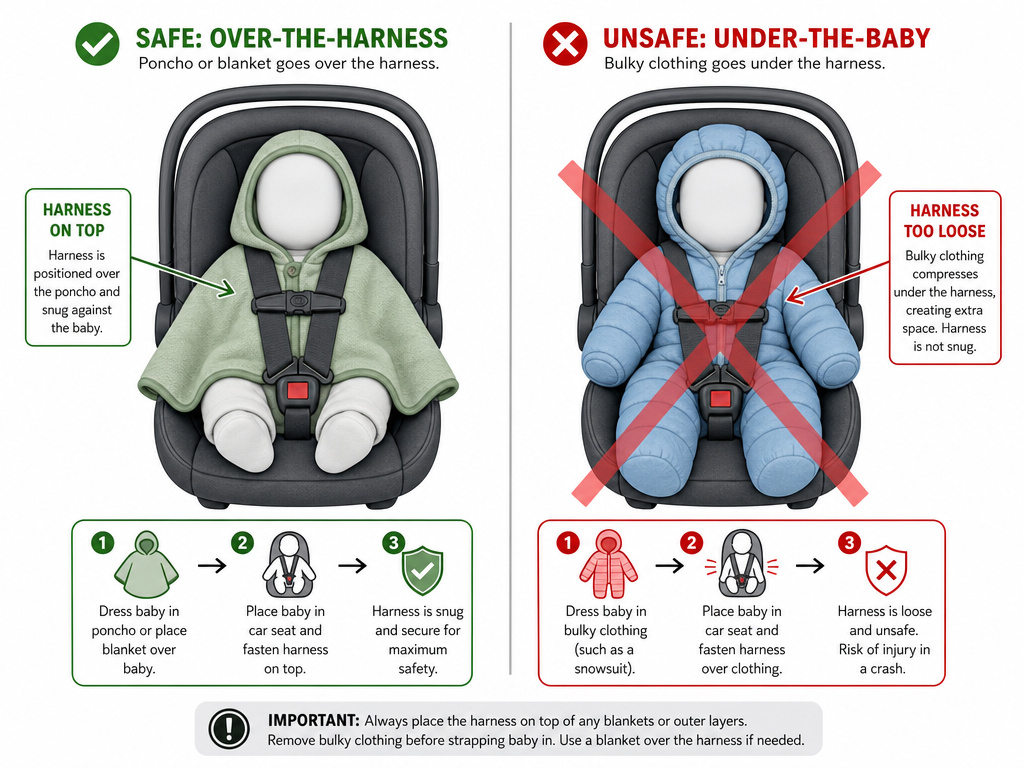
The market is full of products claiming to solve the winter car seat dilemma. Only a few categories are genuinely safe.
Safe: Over-the-Harness Insulation
These products are designed with a clear rule: nothing goes between the child and the harness. * Car Seat Ponchos: A poncho drapes over the child’s head and rests on their shoulders, outside the harness. The 7AM Enfant Nido is a quilted, poncho-style sack that is widely recommended. * Wearable Blankets/Buntings: A car seat bunting like the JJ Cole Arctic is a zip-up sack with a back opening for the harness. The child wears it like a sleeping bag, and the harness threads through the opening to secure directly to their body. * Car Seat-Safe Coats: These are safe winter coats specifically designed to be thin and compressible. The Road Coat brand uses down insulation that compresses to under 1/4 inch, allowing it to be worn under the harness safely, a rare exception.
Unsafe or Impractical: Under-the-Baby Layers
- Thick Bunting Bags: Any bunting that places material under the child violates the 1/4-inch rule. It acts like a snowsuit.
- “Shower Cap” Style Covers: These infant car seat cover domes are popular but problematic. They attach to the carrier’s handle and drape over the seat. While they don’t go under the baby, they cover the seat belt path. This makes installing the carrier without its base in a taxi or Uber impossible without first removing the cover, which defeats its purpose in cold weather. They also create a large air gap, offering less warmth than a proper over-the-harness product.
For a detailed comparison of cover types and their safety profiles, our article on the safety of covers breaks down the risks and proper use.
Special Considerations for Infants and Toddlers

Smaller children lose heat faster and have fewer communication skills. Their needs shift the strategy slightly.
For Infants (0-12 months):
- Pre-Warm the Seat: Store the infant carrier indoors. A seat that starts at room temperature won’t pull as much heat from the baby during the first ten minutes of the drive.
- Use a Cap and Mittens: A huge amount of body heat escapes from the head and extremities. A tight-fitting cap (not hooded) and mittens are essential. For thumb-suckers, use mittens with open fingers or half-gloves, wet fabric from sucking makes them colder.
- Select the Right Blanket: A car seat blanket designed for security is best. Many have slots for the harness to pass through or wrap-around designs that stay put. A standard blanket can be tucked in, but it often falls off.
For Toddlers (1-3 years):
- The Backwards Coat Mastery: This age group benefits most from the backwards coat method. They can wear their favorite coat, and it becomes a safe, warm top layer. Practice at home so the process isn’t a struggle in a cold parking lot.
- Leg Warmers and Boots: Instead of bulky snow pants, use fleece leggings or leg warmers. Combine with boots that you put on after buckling. This keeps legs warm without adding dangerous bulk under the harness at the hips and thighs.
- Layer Removability: Whether using a winter blanket or a poncho, ensure the top layer can be easily removed or opened once the car is warm. Overheating is a real comfort and safety issue.
Frequently Asked Questions
Can I use a car seat cover that goes under the baby?
No. Any cover, liner, or pad that goes under the child must be specifically approved by your car seat’s manufacturer and must be thinner than 1/4 inch when compressed. Most generic, plush winter car seat cover products exceed this limit and are not approved. They can interfere with the harness system and the seat’s crash performance.
Are fleece pajamas safe under the harness?
Yes. Tight-fitting fleece is one of the best materials for cold-weather car travel. It compresses to a thin layer, provides good insulation, and allows the harness to be tightened properly. It’s a cornerstone of layering for the car.
What about the coats sold as “car seat safe”?
Few brands, like Road Coat, engineer coats designed for car seat safety. They use high-loft down that compresses dramatically under pressure, theoretically staying within the safe thickness limit. If you choose one, you must still perform the pinch test on the harness itself, not the coat, to ensure no slack.
How do I know if my child’s coat is too bulky?
Perform the “coat test.” Buckle your child in the seat wearing the coat. Tighten the harness as you normally would. Without loosening the straps, unbuckle the coat, remove the child, and take the coat off. Put the child back in the seat wearing only their base layers and re-buckle. If you can now pinch extra webbing at the shoulder, the coat was too bulky. That extra slack is what would appear in a crash.
Is it safe to put blankets over the baby?
Yes, but only after the child is securely buckled. A blanket for winter should be tucked around the child and the seat to prevent it from sliding off and becoming a distraction or hazard. Never tuck a blanket under the child or behind their back after they are buckled.
The Bottom Line
Winter car seat safety focuses on redirecting warmth, not banning it. The harness must make direct contact with the child’s body through thin, compressible layers.Every single ounce of puff, plush, or padding belongs in a layer that goes on top, after the click of the buckle.
Stick to the 1/4-inch rule for anything under the harness. Master the backwards coat. Invest in a poncho or a certified-safe coat. Your baby will be toasty, and you’ll have the cold, hard physics of crash safety squarely on your side. For further parenting guide for cold weather travel, resources like the Lamaze winter car seat safety post can provide additional community-tested tips.
