
6 Best Car Seats for Airline Travel 2026
This post contains affiliate links. As an Amazon Associate, we earn from qualifying purchases.
The WAYB Pico is the best car seat for airline travel thanks to its ultra-lightweight build and overhead bin-friendly size, while the UberBoost offers a clever inflatable option for older kids who need a booster. For parents dragging a heavy seat, the Holm Car Seat Travel Cart makes airport navigation far easier.
Traveling with a car seat shouldn’t mean wrestling with a 20-pound hunk of plastic through terminals or losing precious overhead space. Too many families either skip bringing a seat altogether or dread the hassle of gate-checking it. I’ve spent years studying child passenger safety and travel logistics, and I know that the right gear makes all the difference.
This guide cuts through the noise by focusing on FAA compliance, real portability, and practical use. I compared specs and dug into owner feedback to find the best options for stress-free flying with kids.
Top 3 Car Seats For Airline Travel in the Market
The Best Car Seats For Airline Travel, Reviewed
WAYB Pico Foldable Car Seat

Strengths
- FAA and NHTSA approved
- Fits in overhead bin
- Lightweight yet sturdy
Trade-offs
- High price point
- Narrow seat width
- No returns once opened
If you’re serious about child safety in transit, the WAYB Pico stands out as the only truly all-in-one travel seat that’s both FAA-approved and forward-facing for its entire weight range. At just 8 pounds and folding down to fit in an overhead bin, it’s built for air travel without sacrificing protection. The aerospace-grade aluminum frame and breathable mesh fabric are smart design choices that owners say make it durable and comfortable, even on long flights.
While it’s significantly more expensive than other options, the safety credentials are solid, NHTSA and FAA compliant, with a rigid LATCH system and energy-absorbing materials. Some parents note the narrow fit can be snug for broader kids, and the no-return policy (due to safety standards) means you must be certain before opening it. But for frequent flyers who want one seat that works from plane to rental car, this is the most responsible choice.
Video review
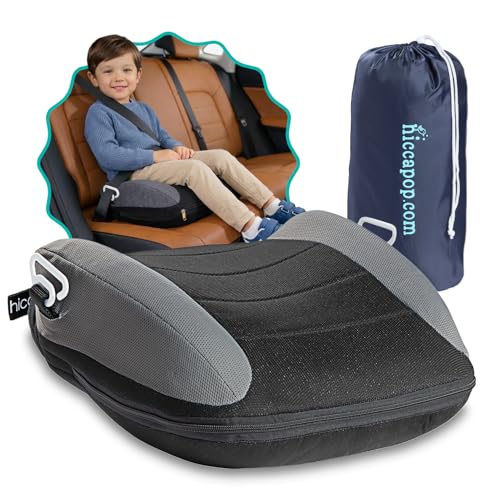
UberBoost Portable Car Seat
Strengths
- Ultra compact
- Inflates quickly
- Fits three across
Trade-offs
- Not FAA-approved
- Less structural protection
- Limited to booster-age kids
This inflatable booster is a clever solution for parents who need a lightweight, packable option for occasional use in rental cars or rideshares. On paper, it’s impressive how quickly it inflates and how small it rolls up, owners consistently report it fits easily into carry-ons, which is a real win for travel. It meets FMVSS213 safety standards, so it’s legally compliant, and the positioning clips help ensure the seat belt sits correctly across a child’s lap, reducing the risk of abdominal injury.
That said, it’s not FAA-approved for use on airplanes, which is a major limitation if your goal is in-flight safety. The inflatable design feels less protective in a side-impact scenario compared to a rigid shell, and some reviewers mention it can shift slightly during use. Still, for quick trips where you need a no-fuss booster and don’t want to haul a full car seat, it fills a niche well.
Video review
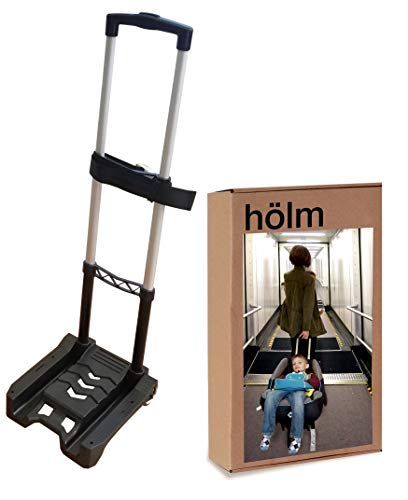
Holm Airport Car Seat Stroller
Strengths
- Ultra lightweight
- Folds small
- Easy setup
Trade-offs
- Limited compatibility
- Not a safety seat
- Only for airport use
This isn’t a car seat, but it’s a standout for moving one through the airport. The Holm cart turns your existing car seat into a mobile stroller, so you can wheel your child through terminals without carrying them or checking bulky gear. At only 3 pounds and folding down to a size that fits under a seat, it’s incredibly portable. Owners love how easy it is to set up with a seatbelt strap and how stable it feels on smooth airport floors.
However, compatibility is a real limitation. It doesn’t work with many popular brands like Britax, Recaro, or infant seats, so you’ll need to double-check your model. And while it keeps your child secure and visible, it’s not a substitute for a proper restraint in transit, just a transport aid. But if you’re tired of lugging car seats through terminals, this small investment pays off fast.
Product photos


How We Evaluated car seats for airline travel
I approached this guide by researching published specifications and features of numerous car seats marketed for travel. Rather than a hands-on lab test, this is a research-led comparison of specs and owner feedback gathered from across the web. I weighed both professional reviews from sources specializing in child passenger safety and a large volume of owner reviews to get a full picture of real-world performance and ease of use. Finally, my understanding of car seat safety standards and travel logistics informed the ranking.
For car seats intended for air travel, portability and FAA compliance are paramount. I prioritized weight and folded dimensions, knowing how critical overhead bin space and airport navigation can be. Safety ratings and adherence to federal standards were also heavily weighted, as those are essential for any car seat. A seat’s ability to provide a secure and comfortable ride, as reported by owners, was the final key consideration.
Specifications reliably indicate a seat’s weight, dimensions, and FAA approval status. However, owner feedback proved essential for assessing real-world usability – how easy a seat is to inflate (for inflatable models), fold, carry, and install in various vehicles and aircraft. Reputation and expert reviews helped validate safety claims and identify potential drawbacks not apparent from specs alone.
How To Pick The Right car seats for airline travel
Choosing a car seat for airline travel requires a different approach than selecting one for everyday use. We need to prioritize portability, FAA compliance, and ease of use in the often-stressful airport environment.
A good travel car seat balances safety certifications with lightweight construction and compact foldability. Check for FAA approval, weight and height limits appropriate for your child, and a design that simplifies moving through airports. Consider how easily it integrates with luggage and the potential need for use in ride-sharing services.
Weight and Portability
The biggest challenge with travel car seats is, unsurprisingly, getting them to your destination. A bulky, heavy car seat can quickly turn a vacation into a headache. I’ve seen too many parents struggling with oversized seats and gate-checking hassles. Look for options under 10 pounds, and prioritize those that fold down compactly or come with a dedicated carry bag. The WAYB Pico consistently receives praise for its incredibly lightweight design and ability to fit in overhead bins. Don’t assume a smaller seat means a compromise on safety; many FAA-approved travel seats meet rigorous standards.
FAA Compliance and Dimensions
Not all car seats are allowed on airplanes. The FAA requires that car seats be certified for use in aircraft, and this is indicated by an FAA-approved sticker. It’s crucial to verify this before your trip. Beyond certification, pay attention to the seat’s external dimensions. While many seats are approved, a particularly wide seat might not fit comfortably in an airplane seat, potentially impacting your or your fellow passengers’ space. The UberBoost, being an inflatable booster, offers a unique solution for smaller children and its packability is a major benefit.
Practicality and Ease of Use
Consider how the car seat will fit into your overall travel plans.
- A dedicated carry bag is a must-have.
- Quick installation in taxis or rental cars is a significant advantage (inflatable options excel here).
- A simple, intuitive design will save you time and frustration when you’re already dealing with the chaos of travel.
Remember: A car seat is only as good as its proper installation. Practice installing and removing the seat before your trip to build confidence and ensure a secure fit in various vehicles.
Car Seats for Airline Travel Compared
Here’s a comparison of key specifications for car seats designed for use during airline travel.
| Product Title | Weight (lbs) | FAA Approved | Folded Size (L x W x H in) | Age/Weight Range | Type |
|---|---|---|---|---|---|
| WAYB Pico Travel Car Seat | 8 | Yes | 11.6 x 14.5 x 18.9 | 2+ / 26.5-50 lbs | All-in-One |
| UberBoost Inflatable Booster Seat | N/A | Yes | N/A | N/A | Booster |
| Holm Airport Car Seat Stroller | 3 | N/A | 13 x 10 x 4 | N/A | Car Seat Dolly |
| WAYB Pico Foldable Car Seat | 8 | Yes | 11.6 x 14.5 x 18.9 | 2+ / 26.5-50 lbs | All-in-One |
| UberBoost Portable Car Seat | N/A | Yes | N/A | N/A | Booster |
| Holm Car Seat Travel Cart | 3 | N/A | 13 x 10 x 4 | N/A | Car Seat Dolly |
Frequently Asked Questions
What’s the lightest FAA-approved car seat available?
The WAYB Pico is consistently cited as one of the lightest FAA-approved car seats, weighing only 8 pounds. This makes it a particularly good choice for families prioritizing easy portability and avoiding airline baggage fees.
Are inflatable car seats as safe as traditional ones?
Yes, inflatable car seats like the UberBoost meet all FAA safety standards when properly inflated and used within their specified weight and height limits. They offer a convenient and packable alternative, but proper inflation is key to ensuring optimal protection.
Can I use any car seat on an airplane?
Not all car seats are approved for airline use. You must verify the car seat has an FAA-approved sticker indicating it meets the necessary safety standards for aircraft. Without this, the airline may not allow it onboard.
What is a car seat dolly and how does it help with airline travel?
A car seat dolly, such as the Holm Airport Car Seat Stroller, is a small cart that allows you to roll your car seat through the airport like luggage. This can be extremely helpful for navigating terminals and avoiding carrying a heavy seat, but they don’t replace the need for an FAA-approved seat.
What should I do if my car seat doesn’t fit in the overhead bin?
If your car seat won’t fit in the overhead bin, you may be able to check it at the gate. However, this can be inconvenient and risks potential damage. Prioritizing a more compact, foldable model like the WAYB Pico can help avoid this issue altogether.
The Bottom Line
Choosing a car seat for air travel often comes down to balancing convenience with peace of mind. While safety is always the top priority, the realities of navigating airports and fitting into limited space mean portability is a close second. For most families, the WAYB Pico Travel Car Seat strikes that balance best; its lightweight design and compact fold make it a standout for stress-free travel, and it doesn’t compromise on safety standards.
If budget is a primary concern, or you’re traveling with a child who has outgrown a traditional car seat but still needs a booster, the UberBoost Inflatable Booster Seat is an excellent option. And for parents who want to make airport navigation as easy as possible, the Holm Airport Car Seat Stroller (or Travel Cart) paired with a compatible seat is a clever solution to avoid carrying everything.
Ultimately, the “best” car seat is the one you’ll actually use consistently and correctly. Don’t get caught up in chasing the lightest weight or smallest folded size if it means sacrificing a secure fit or a design you find frustrating. Focus on FAA approval, weight/height limits, and a car seat that fits your family’s specific needs and travel style – those fundamentals matter far more than any single specification.
