
How to Safely Install an Infant Car Seat in a Truck | Guide
This post contains affiliate links. As an Amazon Associate, we earn from qualifying purchases.
Yes, you can install an infant car seat in a truck, but only if the seat’s manual explicitly states it’s certified for use in “passenger trucks” or “trucks,” your specific truck model has rear seats with locking seatbacks, and the seat base does not overhang the vehicle seat by more than 3 inches. Ignoring any of these three points can void the seat’s safety certification and put your child at risk.
That certification line in the manual is the legal and mechanical gate. A seat certified only for “passenger vehicles” is not rated for the different crash dynamics and seat structures of a truck cab. The Peg Perego Primo Viaggio All in One manual, for example, explicitly lists “passenger trucks” as a compatible vehicle class but bans use in “cargo trucks.” The Britax B-SAFE 35 states it’s for use in “motor vehicles,” a broad category that typically includes pickup trucks with rear seats. You have to check your specific seat’s manual—the answer isn’t universal.
What follows is the three-step verification: decoding the manual’s vehicle class language, confirming your truck’s seat structure, and executing an installation that doesn’t compromise the seat’s geometry. Miss one step, and you’re trusting a safety system that was never validated for your vehicle.
Key Takeaways
- Check your car seat manual for the words “passenger truck” or “truck” under “Vehicle Classes” or “Certified Use.” A seat listed only for “passenger vehicles” may not be truck-compatible.
- A truck’s rear seat must have a back that locks upright. A folding or floppy seatback can’t properly secure a rear-facing seat, leading to catastrophic movement in a crash.
- The car seat base cannot overhang the truck’s seat cushion by more than 3 inches (7.6 cm). More overhang creates a lever arm that multiplies crash forces.
- Preterm or low-birth-weight infants (under 37 weeks or 5 lbs) require a 90–120 minute hospital observation before their first car trip, even in a truck.
- Always use the center rear seating position if possible; it’s statistically the safest spot and often provides the flattest, most supportive base.
The Three Manuals You Must Read
You need three documents open: your infant car seat manual, your truck’s owner’s manual, and the installation instructions for your specific seat model. The car seat manual dictates the rules; the truck manual reveals the constraints; the installation guide provides the method. Skipping any one is like assembling furniture with two out of three pages of the instructions.
First, find the “Vehicle Classes” or “Certified Use” section in your car seat manual. This is where manufacturers list where their product is legally tested and approved. Look for the terms “passenger truck,” “truck,” or “multi-purpose passenger vehicle.” These are the green lights.
Common mistake: Assuming “motor vehicle” means any truck. Some manuals, like the Britax B-SAFE 35, use that term broadly. Others, like the Peg Perego Primo Viaggio All in One, are surgical: “passenger trucks” are allowed, “cargo trucks” and “buses” are banned. If your manual doesn’t explicitly list trucks, the safe assumption is no.
The Cybex CLOUD G PRO and CLOUD T manuals state certification for use in “motor vehicles, buses, and trucks equipped with Lap/Shoulder Belt systems.” That’s a clear yes for most modern pickups. The Evenflo Triumph™ manual says it’s for “passenger and multi-purpose passenger motor vehicles, buses, and trucks.” Again, a clear yes.
Second, your truck’s owner’s manual. Turn to the child restraint section. You’re looking for two things: whether the rear seatbacks lock in position, and the location of the LATCH anchors or seat belt paths. A seatback that folds or reclines easily cannot properly support a rear-facing seat. In a crash, that seat can pivot violently.
Third, the specific installation guide for your seat—using the base, or without the base, with LATCH or seat belt. These steps are the validated procedure that matches the crash-test certification.
Truck Seat vs. Car Seat: The Structural Mismatch
A truck rear seat is not just a smaller car seat. The cab’s shorter depth, the higher ride height, and the seat’s own construction create unique challenges. The two biggest are seatback angle and cushion overhang.
Most rear-facing infant seats require a specific recline angle, often indicated by a level line or bubble on the seat itself. A truck seat’s natural rake might be too upright or too flat. You might need a tightly rolled towel or a manufacturer-approved angle adjuster under the foot of the base to achieve the correct angle. The Britax B-SAFE 35 base, for instance, has a built-in recline adjustment lever for this reason.
Overhang is the silent killer of a proper install. The base of the child seat must rest completely flat on the vehicle seat. The Britax manual is explicit: up to 3 inches (7.6 cm) of overhang is permissible. Go beyond that, and the base is partially unsupported. In a frontal crash, that overhanging section can act as a fulcrum, bending or breaking the base. The force isn’t distributed; it’s concentrated on a tiny area.
| Truck Seat Feature | Risk If Ignored | The Fix |
|---|---|---|
| Non-locking seatback | Seatback folds forward on impact, allowing the car seat to rotate into the front seats. | Consult truck manual. If no lock, seat cannot be used. |
| Excessive seat rake (too angled) | Infant’s head falls forward, risking airway obstruction (positional asphyxia). | Use rolled towel or approved angle adjuster under base front. |
| Base overhang > 3 inches | Creates a stress point; base can fracture under crash loads. | Move seat to a different position or try a different car seat model with a smaller footprint. |
| Soft or uneven cushion | Car seat sinks in, changing the recline angle and compromising harness geometry. | Use a firm, non-compressible base (like the seat’s own) or a manufacturer-approved mat. |
Your truck might have rear seats that are narrower, softer, or shaped differently than a car’s bench. That’s why the manual check is non-negotiable. A seat certified for a “passenger truck” has been tested on those surfaces. One that isn’t, hasn’t.
The 1-Inch Rule Every Installer Forgets
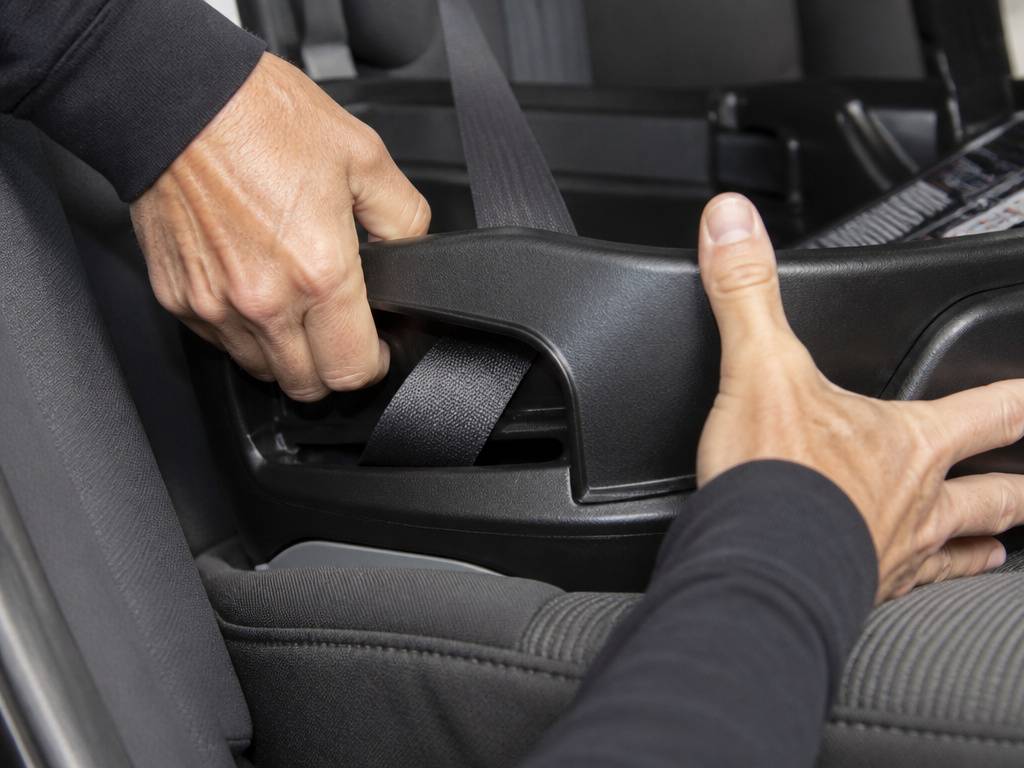
The car seat shouldn’t move more than 1 inch (2.5 cm) side-to-side or front-to-back at the belt path. You’ve probably heard this. You test it by grabbing the seat at the belt path, not the top or the comfortable-looking handle. You push and pull hard. If it shifts more than an inch, it is too loose.
Where this goes sideways: Tightening the seat belt or LATCH strap until the seat base distorts. You’re fighting the vehicle seat cushion, not securing the seat. The base should be flat and level, not twisted or lifted at one corner.
The real trick isn’t strength; it’s technique. For a seat belt install, you often need to lock the retractor. For a LATCH install, you need to press your weight into the seat while pulling the strap tight. Some seats have a built-in tensioning system—the Evenflo Triumph uses a TensionRight™ knob you turn to tighten.
The belt path is the key. On an infant seat base, it’s usually a clear tunnel or guide near the bottom. Threading the belt or LATCH strap through the wrong path is a common, critical error. Your manual has a diagram. Follow it.
After you think it’s tight, kneel in the seat. Put your full weight into it, then retighten. The cushion compresses, taking up the last bit of slack. Then do the one-inch test again. It should feel solid, like part of the truck itself.
Premature and Low-Birth-Weight Infants: The Extra Step
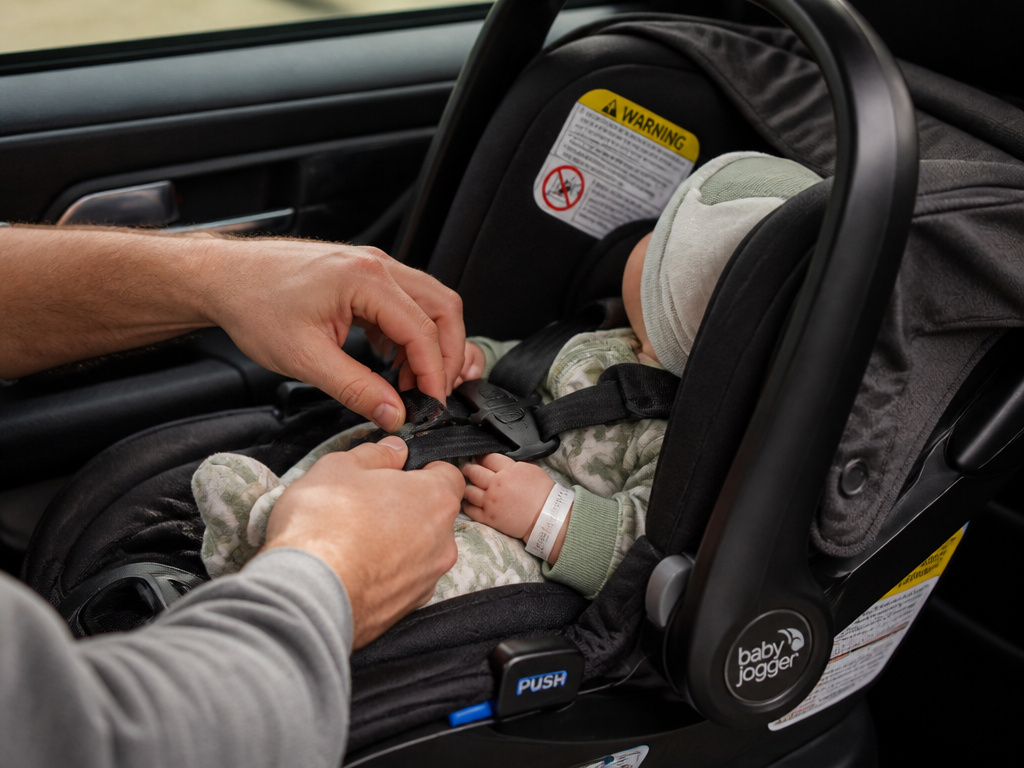
If your infant was born earlier than 37 weeks or weighed less than 5 pounds at birth, the rulebook changes. The American Academy of Pediatrics mandates a 90–120 minute observation period in the car seat before the first trip home. This isn’t a suggestion from your pediatrician; it’s a requirement printed in the manuals of seats like the Cybex CLOUD G PRO and Evenflo Triumph.
The reason is positional apnea. A premature infant’s airway can collapse if their chin falls to their chest in a semi-reclined position. A car seat’s angle, even when correct, can trigger this. Hospital staff will monitor the infant’s oxygen levels and heart rate while they’re secured in the seat at the approved vehicle angle.
The part nobody mentions: This observation is for the duration of travel or 90–120 minutes, whichever is longer. If your drive home from the hospital is three hours, the observation should be three hours. The number of trips and time in the seat should be minimized afterward, with a caregiver riding in back to monitor.
This protocol applies regardless of vehicle type—truck, car, or SUV. The seat’s certification covers the crash protection; the observation covers the physiological risk. Skipping it because “the truck is safe” misses half the point.
LATCH vs. Seat Belt: Which is Safer in a Truck?
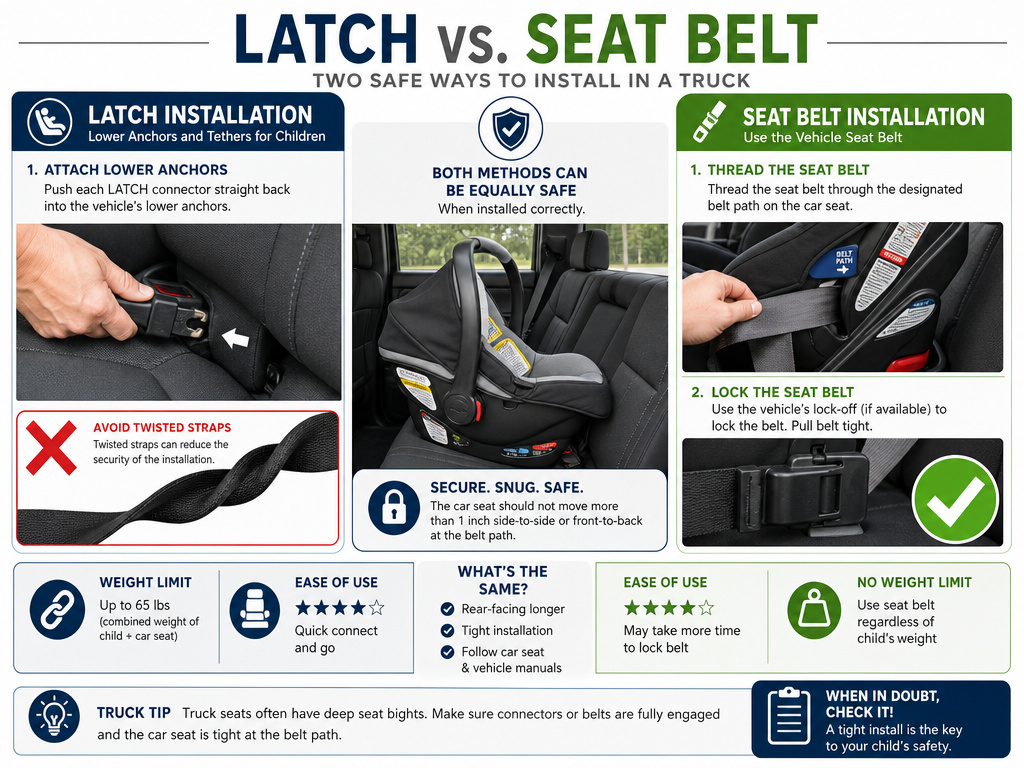
Both systems, when installed correctly, are equally safe. The National Highway Traffic Safety Administration (NHTSA) states that. The choice in a truck often comes down to accessibility and fit.
The LATCH system (Lower Anchors and Tethers for Children) uses standardized metal anchors between the seat cushion and back. In a truck, these can be buried deep in the seat bight, especially if the rear seats are sculpted or have fold-out storage. Your knuckles will know.
| Installation Method | Best For Trucks When… | Risk If Chosen Wrong |
|---|---|---|
| LATCH | The anchors are easily accessible and the seat base sits flush without overhang. | Connectors aren’t fully latched (no audible click), or the strap is twisted. |
| Seat Belt | The LATCH anchors are obstructed, or the seat position is center-rear (many trucks lack center LATCH). | The belt isn’t locked (switchable retractor not engaged), or it’s routed incorrectly through the belt path. |
| Either | You achieve a solid, less-than-1-inch movement install and the base is fully supported. | Using both simultaneously (unless the manual explicitly allows it). This can over-stress the seat structure. |
The seat belt method is often simpler in a truck. You thread the lap-shoulder belt through the seat’s belt path, buckle it, and lock the retractor. Many modern vehicles have switchable retractors that lock the belt when fully extended. Check your truck’s manual.
Some infant seat bases, like those for the Britax B-SAFE 35, have built-in lock-offs that clamp the seat belt, making a locking retractor unnecessary. This is a huge advantage in older trucks.
The bottom line: use whichever method gives you a rock-solid, level install with no more than 3 inches of overhang. Don’t force LATCH if it’s a struggle; the seat belt is just as safe.
The Special Case of Single-Row Trucks (No Back Seat)
This is the hardest no in child passenger safety. Installing a rear-facing infant seat in the front seat of any vehicle with an active passenger airbag is prohibited in every manual for a reason. The force of the airbag deploying can strike the seat with enough energy to cause serious or fatal injuries.
The Mayo Clinic and NHTSA are unequivocal: the back seat is the safest place for children under 13. If your truck only has one row of seats, you have only one legal and safe option: you must have the airbag disabled by an authorized dealer or repair shop, following a formal approval from NHTSA.
This formal modification must be documented and is not a simple on/off switch. Most parents of newborns avoid regular-cab trucks for this exact reason.An extended cab or crew cab with a rear seat isn’t just a convenience; it’s a non-negotiable safety requirement for transporting an infant.
If you’re in this situation, your only real choice is a different vehicle. The risk isn’t worth the compromise.
Frequently Asked Questions
Can I use any infant car seat in my truck?
No. You must check the car seat owner’s manual under “Vehicle Classes” or “Certified Use.” It must explicitly list “passenger trucks” or “trucks.” Many seats only list “passenger vehicles,” which may not cover pickup truck crash dynamics and seat structures.
Is it safe to put a car seat in the middle of a truck’s back seat?
Yes, if the seat fits and the vehicle seat is flat enough. The center is statistically the safest position in a crash. However, many trucks do not have LATCH anchors in the center position, so you’ll need to use the seat belt installation method.
My truck’s back seat seems small. Will the car seat fit?
You must check the base overhang. No more than 3 inches of the car seat base can hang over the edge of the vehicle seat cushion. If your chosen position creates more overhang, try the other side or the center. If no position works, that car seat is not compatible with your truck.
Can I use both LATCH and the seat belt at the same time for extra safety?
Almost never. Unless the car seat manual explicitly states that using both systems together is approved, you must choose one or the other. Using both can create conflicting forces on the seat and may cause it to perform incorrectly in a crash.
How do I know if my truck’s seatback is locked?
Consult your truck’s owner’s manual. Many rear seats have a lever or button that locks the seatback upright. With the seatback locked, push on it firmly. It should not recline or fold forward. If it moves, it’s not locked and is unsafe for a rear-facing installation.
Before You Go
The question isn’t just can you, but how you do it safely. The answer lives in three places: the words “passenger truck” in your car seat manual, a locked and supportive seatback in your truck, and a base that doesn’t overhang the cushion. Ignore the 3-inch overhang limit, and you’ve built a lever. Skip the manual check, and you’re assuming a certification that may not exist.
For most crew cab and extended cab pickups, a seat like the Cybex CLOUD G PRO, Britax B-SAFE 35, or Evenflo Triumph will work, provided you follow their specific install an infant car seat instructions to the letter. The Peg Perego Primo Viaggio All in One is also a strong contender, as its manual explicitly includes “passenger trucks.” Start with your manual, then move to the truck car seat installation steps. Get the base flat, get it tight, and always double-check that the seatback is locked. That’s what turns a “maybe” into a secure yes.
