
Rules for Gate Checking a Car Seat and Stroller on Your Flight
This post contains affiliate links. As an Amazon Associate, we earn from qualifying purchases.
Yes, you can typically gate check both a car seat and a stroller for free, but airlines usually limit you to one item at the gate if you have both. The heavier item, or any stroller over 20 pounds on carriers like American Airlines, must be checked at the ticket counter. Your car seat must also be FAA-certified for aircraft use, and not all stroller and car seat combinations are safe to use together.
That “one at the gate” policy is the first surprise for most families. The second is the 20-pound stroller limit, which turns a quick gate drop into a ticket-counter trip. This isn’t about convenience; it’s about baggage handler safety and equipment limits in the jet bridge.
What follows: the exact weight and compatibility specs from manufacturer manuals, the FAA’s stance on in-cabin use, and a decision tree for navigating the ticket counter versus the gate. By the end, you’ll know which of your two items gets tagged at the gate and which gets a luggage claim ticket.
Key Takeaways
- Airlines typically allow one gate-checked item per child traveling with both a car seat and stroller; the second must be checked at the ticket counter.
- American Airlines requires strollers over 20 lbs to be checked at the ticket counter, not the gate, a hard limit many compact strollers exceed.
- FAA certification for aircraft use is mandatory for any car seat used on a plane; look for the label on the seat shell.
- Stroller and car seat compatibility is not guaranteed; using an incompatible pair can dislodge and cause injury, per Cybex and Joie manuals.
- Gate-checked items are usually returned at the jet bridge, but some airlines send them to baggage claim, always verify before you board.
The Gate Check Rulebook: Weight, Compatibility, and Retrieval
Gate checking isn’t a single policy. It’s three separate airline decisions layered on top of manufacturer safety rules. Get one wrong and you’re dragging a car seat through the terminal or waiting at baggage claim.
The core rule is simple: if you’re traveling with a child, you can usually check a stroller and a car seat for free. The complication is where you check them. Most carriers allow one baby item as a gate check and the second as a standard checked bag at the ticket counter. You don’t pay, but you do lose the convenience of having both items waiting at the jet bridge.
Common mistake: Assuming both items can go to the gate. If you have a car seat and a stroller, the airline agent at the ticket counter will ask which one you want to gate-check. Choose the stroller. You’ll need it to get your child to the gate.
American Airlines draws a hard line at 20 pounds. Any stroller heavier than that cannot be gate-checked, it must be checked at the ticket counter. This rule exists because oversized or heavy items can jam baggage elevators and pose a risk to ground crew. The UPPAbaby Cruz V3, for example, has a maximum weight capacity of 50 lbs for the child, but the stroller itself weighs about 25 pounds. That’s five pounds over American’s gate-check limit.
| Airline Policy Factor | Typical Rule | Consequence If Ignored |
|---|---|---|
| Number of Gate-Checked Items | One per child (if traveling with both car seat & stroller) | Second item sent to baggage claim, not jet bridge |
| Stroller Weight Limit | Varies; American Airlines: 20 lbs max for gate check | Heavy stroller refused at gate, must return to ticket counter |
| Car Seat FAA Certification | Required for any aircraft use (in-cabin or checked) | Seat may be refused at boarding if label is missing or illegible |
| Retrieval Location | Usually jet bridge; sometimes baggage claim | Waiting at wrong location delays exit, risks missing connections |
Where you get your gear back is the final variable. Most of the time, gate-checked items are returned at the jet bridge right after you land. But some airlines, especially on smaller regional jets or at certain airports, send all gate-checked items to the main baggage claim carousel. You won’t know unless you ask. The moment you get your gate check tag, ask the agent, “Will this come back at the jet bridge or at baggage claim?” Write the answer on the tag with a pen.
TL;DR: Pick the stroller for gate check, verify its weight, and confirm the retrieval spot. The car seat gets a luggage tag.
Stroller and Car Seat Compatibility Isn’t Optional
A travel system is a convenience, not a universal guarantee. The assumption that any infant car seat will click into any stroller frame is how accidents happen before you even reach the airport.
Manufacturer manuals are blunt on this. The Cybex Eos manual states: “This stroller is ONLY designed for use with CYBEX infant car seats. To use of this stroller with an incompatible infant car seat may dislodge and cause serious injury to your child.” Joie repeats the warning for its i-Snug 2 and i-Gemm 2 seats, advising parents to “make sure your stroller can fit the infant carrier module before purchasing it.”
Where this goes sideways: Using a car seat adapter from a different brand. An UPPAbaby adapter is engineered for the MESA seat’s specific attachment points and weight distribution. A generic adapter might hold the seat, but it won’t secure it against the jolts and twists of curb cuts and airport corridors. The seat can rock, twist, or even detach.
Compatibility is about more than a click. It’s about the seat’s center of gravity matching the stroller’s frame geometry. A mismatched pair makes the stroller tippy. You’ll feel it the first time you hang a diaper bag on the handle. For airport travel, where you’re also managing a carry-on, this instability is a real hazard.
| Travel System | Compatible Car Seat(s) | Critical Check Before Travel |
|---|---|---|
| UPPAbaby Vista/Cruz | UPPAbaby MESA (Vista V2, Cruz V2, etc. With adapters for Ridge/Minu) | Audible click when attaching; pull up firmly on seat handle to test lock. |
| Cybex Eos | CYBEX infant car seats (specific models listed in manual) | Seat must click into dedicated adapters on both sides of the frame. |
| Joie i-Snug 2 | Specific Joie stroller models with “special tray, armbar or calf support” | Verify exact stroller model name against manual compatibility list. |
If you’re considering a traveling with a stroller and car seat on a plane, start with the manuals. The 10 minutes you spend verifying compatibility beats a frantic search for a rental stroller at your destination because your setup failed a safety check.
The bottom line: Your travel system is a single engineered product. Don’t mix and match critical components unless the manufacturer explicitly says you can.
The FAA’s Stance: What “Certified for Aircraft Use” Actually Means
That sticker on the side of your car seat isn’t decoration. It’s a legal certification that the seat meets Federal Aviation Administration dynamic testing standards for aircraft seats. No sticker, no fly, whether you’re using it in-cabin or checking it.
The UPPAbaby MESA V2 manual puts it clearly: “This Child Restraint is certified for aircraft use. UPPAbaby and the Federal Aviation Administration (FAA) strongly urge you to secure your child in a Child Restraint system (CRS) or device for the duration of your flight.” The FAA recommends a certified seat for any child up to 40 pounds.
This product is designed and manufactured to comply with ASTM 2050 Standard Consumer Safety Specification for Hand Held Carriers. THIS CHILD SEAT IS CERTIFIED FOR AIRCRAFT USE. UPPAbaby and The FAA recommend that a child weighing up to 40 lbs (18 kg) use a certified harnessed child seat while traveling on an aircraft.
Why does this matter for gate-checking? Because even if you’re checking the seat, the airline can ask to see the certification label. If it’s faded, torn off, or missing, they can refuse to accept it. Before any trip, find the label, usually on the plastic shell near the child’s feet or on the back, and make sure it’s legible. Take a photo with your phone as a backup.
Using the seat on the plane is the safest option. The FAA’s recommendation is based on turbulence and crash dynamics. In severe turbulence, an unsecured child becomes a projectile. A car seat belted into the aircraft seat is the only way to guarantee the same level of protection they have in the car. If you’re bringing a car seat and stroller on a plane and have a purchased seat for your child, use the car seat in it.
The certification also means the seat’s materials are tested for flammability and toxicity in an aircraft cabin environment. A non-certified seat hasn’t passed those tests.
In short: The FAA sticker is your boarding pass for the car seat. No sticker, no travel. Check it.
Gate Check vs. Ticket Counter: A Step-by-Step Decision Tree
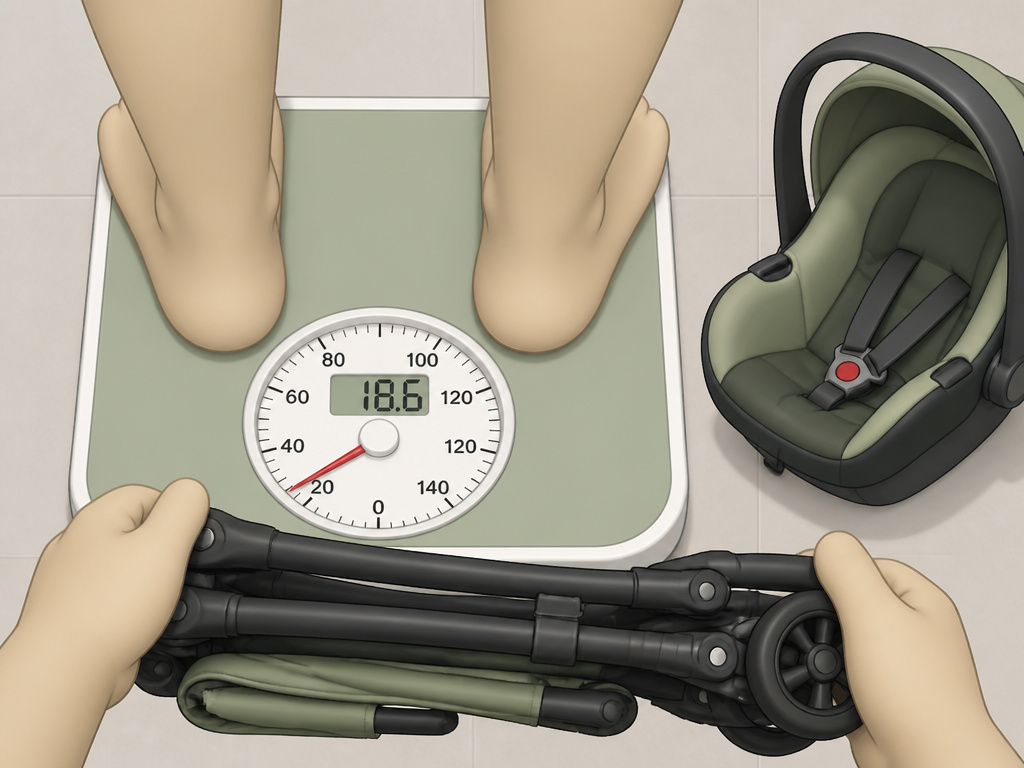
The airport is not the place to figure this out. Your decision path starts at home when you pack the car. Follow this sequence to avoid backtracking through the terminal with a tired kid.
Step 1: Weigh Your Stroller. Use a bathroom scale. Weigh yourself, then weigh yourself holding the stroller. Subtract. If the result is over 20 pounds and you’re flying American Airlines, it’s a ticket-counter check. No debate.
Step 2: Choose Your Gate-Check Item. If you have both a car seat and a stroller, the stroller gets the gate-check tag. You need it to navigate the terminal. The car seat gets checked at the ticket counter. This is the standard airline policies for free stroller and car seat checking.
Step 3: Prepare at the Ticket Counter.
- Car Seat: Request a checked bag tag for it. Use a padded travel bag to prevent grime and handle breaks. The bag won’t protect from crushing, but it keeps straps from getting caught in conveyor belts.
- Stroller (if under weight limit): Confirm it can be gate-checked. The agent will give you a tag but usually won’t take the stroller yet.
- Stroller (if over weight limit): Surrender it here. It will go with the rest of the checked luggage.
Step 4: At the Gate.
- Approach the agent before boarding begins.
- Get a gate-check tag if you didn’t get one at the counter.
- Ask the critical question: “Jet bridge or baggage claim?” Write the answer on the tag.
- Fold the stroller and leave it in the designated area, usually just outside the aircraft door.
Step 5: Post-Flight Retrieval.
- If jet bridge: It will be waiting just outside the plane door or in the jetway.
- If baggage claim: Proceed directly to the oversized luggage area. Don’t wait at the carousel.
Missing a step means wasted time. The most common error is arriving at the gate with a 25-pound stroller, only to be told to go back to the now-closed ticket counter. Weigh it first.
How to Protect Your Gear (Because Baggage Systems Are Brutal)
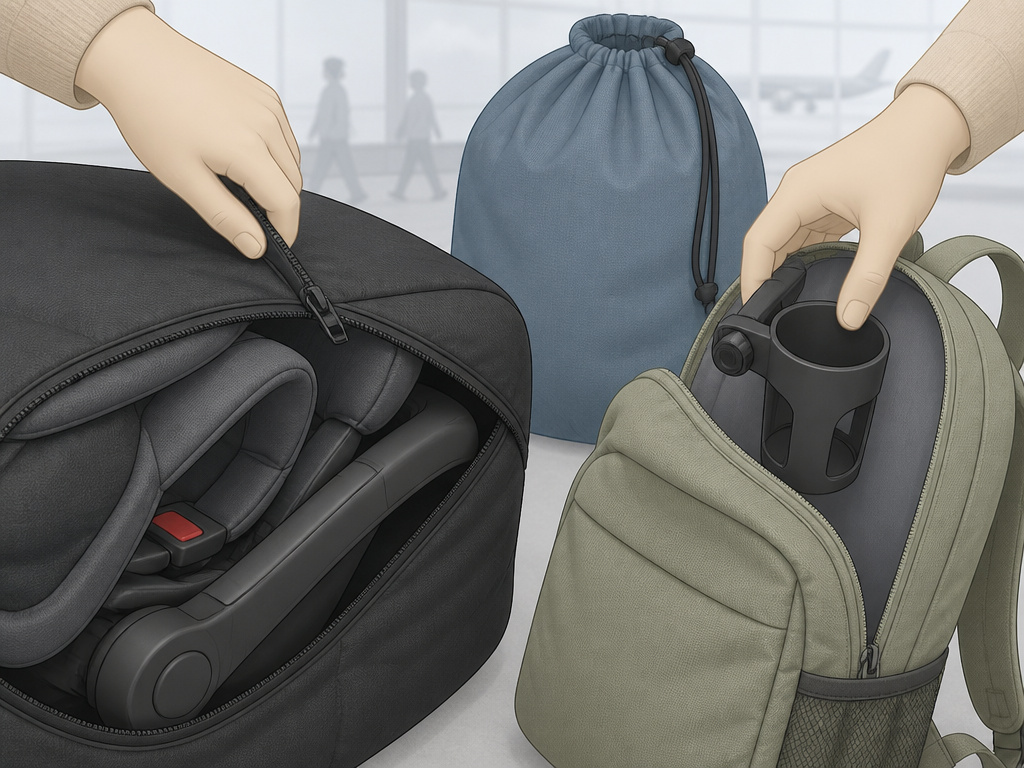
Gate-checking is gentler than the main luggage system, but it’s still industrial handling. A few preparations prevent most damage.
Use a protective bag for anything checked. A $30 padded car seat bag is cheaper than a $300 replacement seat. For strollers, a simple nylon sack keeps wheels and mechanisms clean. The UPPAbaby G-LUXE manual warns, “DO NOT fold or store the product if it is damp or wet, nor store in a damp environment.” A bag stops rain and baggage cart grime.
Remove all detachable parts. Take off the cup holder, the storage basket, and the canopy if it’s easy to detach. Stow them in your carry-on or in the car seat bag. These are the first things to snap off.
Take photos of your equipment before you check it. Document any existing scuffs or cracks. If the airline damages it, you’ll need proof it was fine before you handed it over. This is especially important for complex check-in procedures for a stroller and car seat.
Easy to miss: The expiration date. Car seats expire, typically 7 years from manufacture. The MESA V2 manual states, “Discontinue use after 7 years from the date of manufacture or after a crash.” An expired seat is not safe to use, and airlines may refuse to transport it. Check the label on the shell.
Finally, assume everything will get scuffed. The goal isn’t perfection; it’s preventing catastrophic failure. A scratched frame is fine. A broken harness buckle is not.
Frequently Asked Questions
Can I gate check a car seat and a stroller on the same trip?
Usually, yes, but typically only one of them at the gate. Airlines generally allow one gate-checked baby item per child. If you have both, you’ll need to check the second item at the ticket counter as part of your free checked baggage allowance for child gear.
What happens if my stroller is over the weight limit for gate checking?
If your stroller exceeds the airline’s weight limit for gate check (like American’s 20-pound rule), you cannot leave it at the gate. You must check it at the ticket counter with your other luggage. You’ll surrender it there and pick it up at baggage claim, not the jet bridge.
Is it safer to check the car seat or use it on the plane?
It is significantly safer to use an FAA-certified car seat on the plane, secured in a purchased seat for your child. This protects them during turbulence. The FAA strongly recommends this. Checking the seat exposes it to potential damage from baggage handling that could compromise its safety in a car crash later.
Do I need a special bag for gate-checking?
You do not need a bag for gate-checking, but a lightweight, inexpensive nylon sack is highly recommended. It keeps your stroller clean and prevents small parts from catching on equipment. For a car seat checked at the ticket counter, a padded bag is essential for protection.
How do I know if my car seat is FAA approved?
Look for a label on the car seat that says, “This restraint is certified for use in motor vehicles and aircraft.” The wording may vary, but it must explicitly mention aircraft. The label is often on the plastic shell near the child’s feet or on the back. Check your seat’s manual; the UPPAbaby MESA V2 manual, for example, prominently states its certification.
What if my gate-checked stroller doesn’t come back at the jet bridge?
First, don’t panic. Ask a flight attendant or gate agent. Some airlines automatically send all gate-checked items to the main baggage claim. If it’s truly missing, file a claim immediately with the airline’s baggage service office in the terminal. That’s why confirming the retrieval location when you get the tag is crucial.
Before You Go
Gate-checking a car seat and stroller is a logistics puzzle, not a mystery. The answer hinges on a 20-pound scale, an FAA sticker, and a single question at the gate. Choose the stroller for the gate, protect the car seat in a bag, and always verify where your gear will meet you on the other side.
The safest place for a car seat is on the plane, belted into its own seat. If that’s not an option, checking it at the ticket counter with proper protection is the standard move. Your stroller is your terminal workhorse, keep it with you until the last possible moment. Now you know the rules, you can walk past the confusion at the counter and head straight for your gate.
