
Why Does My Baby Cry in the Car Seat? Common Causes & Fixes
This post contains affiliate links. As an Amazon Associate, we earn from qualifying purchases.
Your baby cries in the car seat because their body is signaling a real problem, temperature discomfort, pressure from a poorly fitted harness, an unnatural seating angle, or a physical ailment they cannot name. The federal safety standard tests seats in a narrow 19–26°C (66–79°F) range, but a car cabin in summer sun can hit 50°C (122°F) within an hour. That gap between lab certification and real-world conditions is where most crying starts.
Crying is communication, not defiance. A baby’s nervous system is wired to protest when something feels wrong, and a car seat introduces multiple variables that can feel wrong quickly. The seat’s foam stiffness changes with temperature, a harness one slot too low pinches the shoulders, and a recline angle that’s off by a few degrees strains a developing spine. Your job is to decode the signal, not just endure the noise.
What follows is a breakdown of the mechanical, environmental, and developmental reasons behind the tears. We’ll move from the physical triggers you can measure to the behavioral cues you can interpret, ending with a clear checklist to run before you assume your baby just hates the car.
Key Takeaways
- Car seat foam stiffness (Indentation Force Deflection) changes with temperature and humidity, a fact Graco noted in NHTSA commentary. A seat that felt fine in your living room can become uncomfortably hard or soft in a hot or cold car.
- The harness must be at or below the shoulders for rear-facing seats. One slot too high creates slack and dangerous movement; one slot too low digs into the collarbone and causes immediate discomfort.
- Federal crash testing (FMVSS 213) happens in a controlled 19–26°C environment. Real cabin temperatures routinely exceed this, turning a certified-safe seat into a heat-retaining plastic shell that overheats a baby in under 20 minutes.
- Crying in a moving car with you present is not the same as “cry it out” sleep training. Your voice and eventual response provide coregulation, even if you can’t pull over instantly.
- Four specific models, the Britax Marathon, Britax Frontier, Evenflo Titan Elite, and Diono Radian R120, failed updated NHTSA head excursion tests. While still certified, it underscores that design impacts how a seat feels during normal driving, not just in a crash.
The 5 Most Common Physical Triggers (And How to Spot Them)
Most crying stems from a tangible, fixable issue. Start here before blaming temperament.
The performance tests for child restraint systems under U.S. Safety standard FMVSS 213b are conducted at ambient temperatures from 19 °C to 26 °C (66–79°F) and relative humidity from 10 percent to 70 percent. Webbing strength tests also require 24 hours of conditioning in 48-67% humidity. These are laboratory conditions. A parked car in direct sunlight can reach 50°C (122°F) in less than an hour, creating an environment the seat was never specifically certified for.
1. Temperature Dysregulation. This is the prime suspect. Babies can’t sweat efficiently. If they’re hot, they cry. If they’re cold, they cry. Feel the back of their neck and their chest, not their hands or feet. Sweaty hair at the nape of the neck or a chest that’s warm to the touch means they’re too hot. A cool chest means they’re too cold.
2. Harness Fit Problems. This has two failure modes: too tight and too loose. Too tight is obvious, you can’t fit two fingers between the strap and the collarbone. Too loose is subtler. If you can pinch a vertical fold of harness webbing at the shoulder, it’s loose. A loose harness lets the baby slump, which strains their posture and can trigger crying.
3. Incorrect Recline Angle. A rear-facing seat that’s too upright can let an infant’s head flop forward, compromising their airway. One that’s too reclined can cause an older baby to feel like they’re sliding down. Use the built-in angle indicator or a pool noodle/towel roll to get it exact. An angle off by even 10 degrees changes the pressure distribution on their back.
4. Pressure Points and Digging. Check where the harness straps emerge from the seat shell. Are they rubbing against your baby’s neck? Look for red marks after a short ride. Also, check the crotch buckle. If it’s too long and sits underneath them, it creates a hard lump they’re sitting on.
5. Underlying Illness or Discomfort. An ear infection feels worse with pressure changes during driving. Gas pains are amplified by a semi-reclined position. Teething pain is just always there. Rule out the mechanical issues first, then consider if the crying coincides with a fever, tugging at ears, or excessive drooling.
The Harness & Recline Angle: Two Settings That Change Everything
Get these wrong and nothing else you try will work.
Harness Height: The One-Slot Rule
For a rear-facing seat, the harness straps must be at or below the baby’s shoulders. This is non-negotiable. The straps should come straight out of the shell and lie flat on the shoulders. If the straps are above the shoulders, they will pull the baby down into the seat in a crash, risking spinal compression. In daily use, it makes the baby feel like they’re being pushed down.
Move the straps up one slot at a time as your baby grows. A good sign you’re behind: the straps make an obvious downward angle from the shell to the shoulder. They should be horizontal.
Common mistake: Leaving the harness in the same slot for months. For every inch your baby grows in torso height, the straps need to come up a slot. Stagnant harness height causes pinching and restricts movement.
Recline Angle: It’s Not About Comfort Alone
The angle is a safety feature for infants to protect their airway. But for an older baby with head control, a more upright position can be more comfortable. Most convertible seats allow a more upright install for toddlers.
Check your manual. Many seats have a “level line” or “indicator” that must be parallel to the ground. Use it. Guessing by eye is how you end up five degrees off. If you need to adjust, use a rolled towel or a pool noodle under the seat base (only if the manual permits). Never use aftermarket accessories not approved by the seat manufacturer.
Material Science: Why the Seat Itself Can Feel Wrong
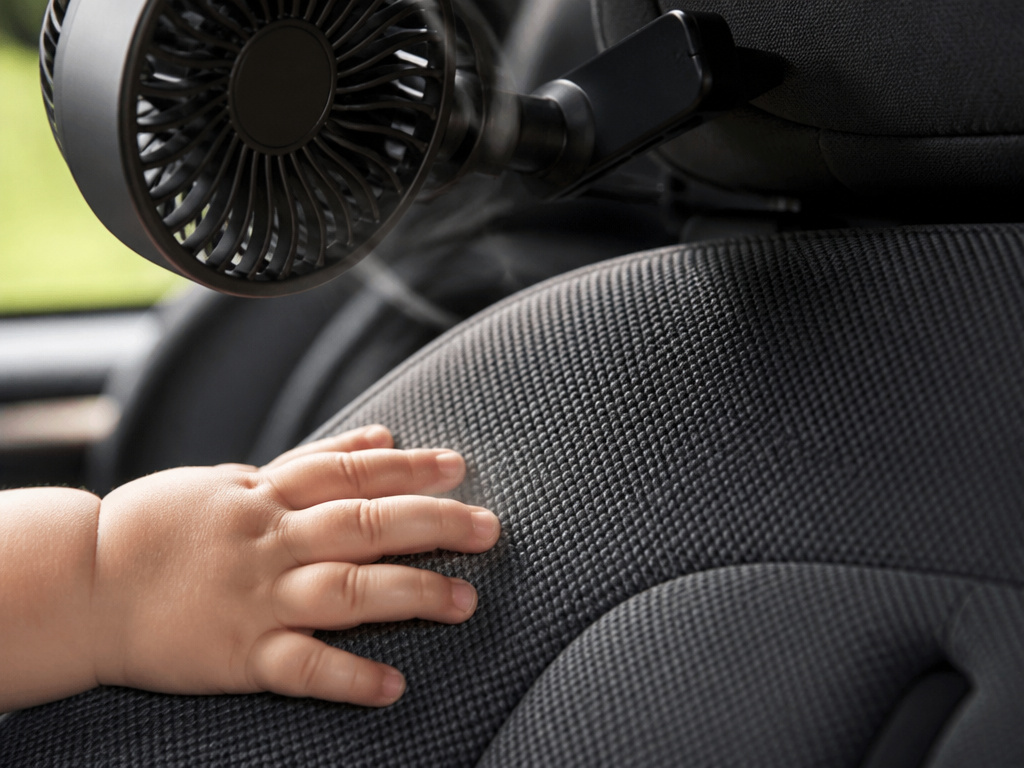
The seat is not a static piece of plastic. Its materials react to the environment in ways that affect comfort.
Graco’s commentary to NHTSA noted that Indentation Force Deflection (IFD) values for seat foam can be influenced by foam density, thickness, and temperature and humidity during storage. In plain terms, the foam’s softness or stiffness isn’t fixed. A seat stored in a cold garage will feel different on a first winter ride than one left in a hot car all summer.
| Material Factor | What It Means | Comfort Impact |
|---|---|---|
| Foam IFD Variation | Foam stiffness changes with temperature/humidity. | Seat may feel harder (cold) or softer (hot) than expected. |
| Plastic Shell | Expands/contracts slightly with temperature swings. | Can make harness adjusters stick or become looser. |
| Fabric & Padding | Non-breathable fabrics trap heat; moisture-wicking ones don’t. | Polyester blends heat up faster than cotton or mesh. |
This is why a breathable car seat liner like those from Brica or Munchkin can make a difference. It adds a layer of temperature-buffering airflow between the baby and the seat’s own materials. Don’t use memory foam or aftermarket inserts that didn’t come with the seat, they can interfere with harness fit.
For extreme heat, a car seat fan like the Brica Fold ‘n Go or a portable stroller fan clipped to the headrest is a direct intervention. It moves air over the baby’s face and chest. This isn’t a luxury. It’s a tool to bring the microclimate around your baby back toward that 19–26°C testing range where the seat is designed to perform.
Environmental & Behavioral Factors You Can Control
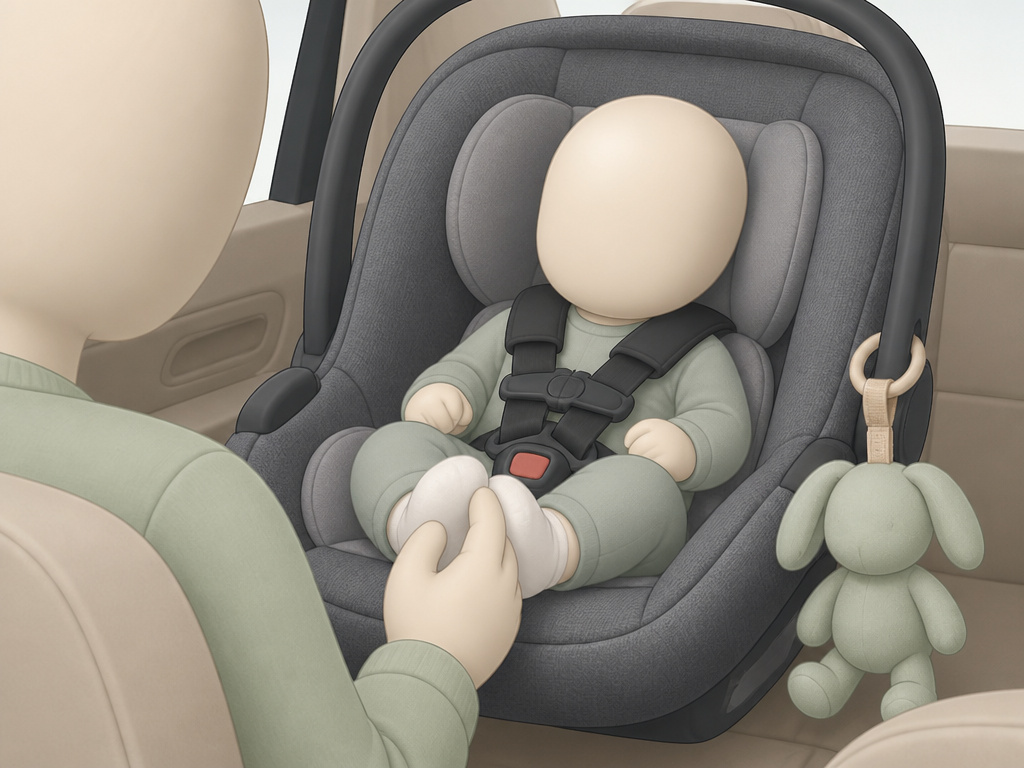
When the physical checks are clear, look at the surroundings and the schedule.
Timing the Drive. Driving right after a feeding is asking for reflux or gas pains. A baby with a full stomach jostled in a semi-reclined position often gets uncomfortable. Aim to leave 20-30 minutes after a meal. Conversely, a hungry baby will cry. A small pre-trip feed can sometimes head off the meltdown.
The Boredom Factor. For older infants and toddlers, staring at the back of a seat is profoundly boring. A safe soft toy tethered to the car seat handle or a mirror that lets them see you can provide critical distraction. Don’t hand them loose toys that become projectiles in a sudden stop.
The Alone-in-the-Back Feeling. If possible, have an adult sit next to them. Your presence is the ultimate soothing baby tool. If you’re solo driving, talk to them. Your voice provides connection. Research on managing infant car seat distress emphasizes that auditory connection reduces stress.
Motion and Sleep. Ironically, the very motion that causes nausea in some babies induces sleep in others. If you can, drive during nap time. The white noise of the road and the vibration often lead to sleep. If your baby fights sleep, the crying might be overtiredness. A dark sunshade on the window can help.
Is It Safe? Crying vs. “Cry It Out” and Known Model Issues
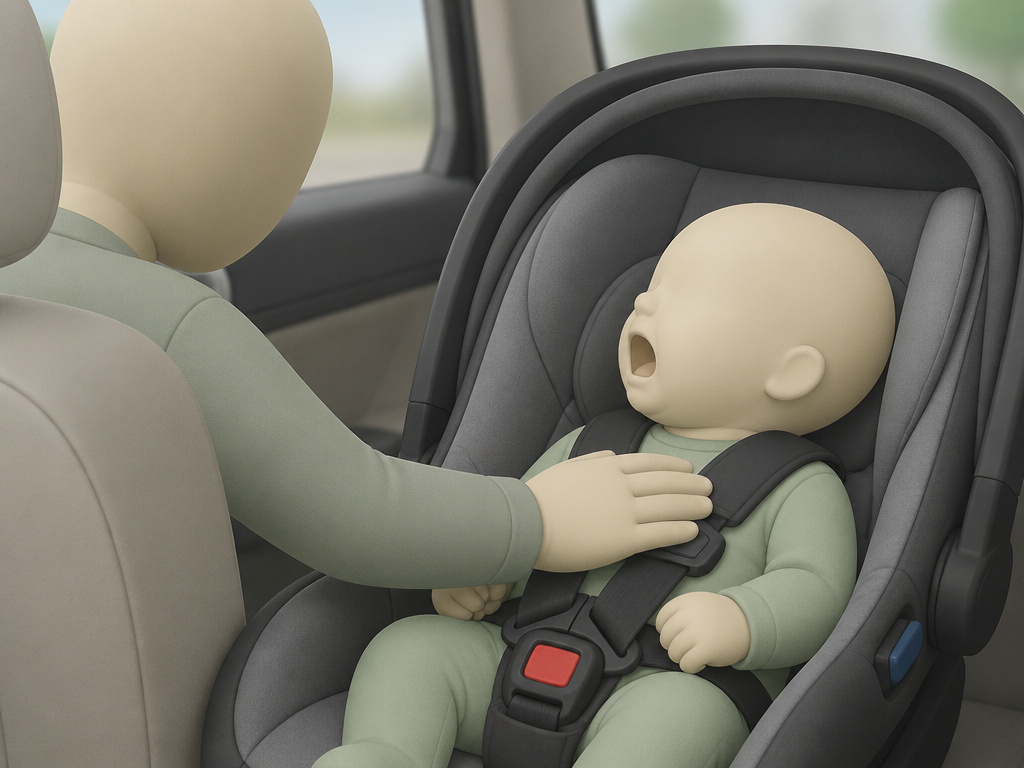
The sound is distressing, but you need to know the safety landscape.
The “Cry It Out” Distinction
Letting your baby cry while you are driving, present, and responding with your voice is not the same as sleep-training “cry it out” (CIO). CIO involves leaving a baby alone to self-soothe. In the car, you are there, providing vocal coregulation even if you can’t physically intervene immediately. The stress profile for the infant is different.
Your baby is communicating a need. You are receiving the signal and responding as soon as safely possible, by pulling over, adjusting the climate, or offering reassurance. This responsive loop matters. For a deeper look at this ethical line, see our article on the safety of letting a baby cry during travel.
Model-Specific Performance
Safety certification is a baseline. How a seat performs in real-world dynamics varies. The December 2023 Federal Register noted four models, the Britax Marathon, Britax Frontier, Evenflo Titan Elite, and Diono Radian R120, failed head excursion tests under NHTSA’s updated standard seat assembly. They remain certified under the old standard, but the finding highlights that design affects how a seat contains a child.
A seat that allows more head movement in testing might also transmit more vibration or jiggle during normal driving, which can be unsettling for a sensitive baby. When choosing a seat, look beyond crash ratings to parent reviews about comfort and help baby adjust to the car seat.
| Consideration | Safety Standard Focus | Compassion Focus |
|---|---|---|
| Crash Protection | Measured by head excursion, chest acceleration (FMVSS 213). | A seat that feels secure may reduce anxiety. |
| Harness Fit | Must restrain dummy within limits. | Should distribute pressure evenly without pinching. |
| Ease of Use | Labels must instruct correctly. | Easy adjustments mean correct fit is more likely. |
Your Action Plan: The Pre-Drive Checklist
Run through this list before you decide your baby is a “car hater.”
- Climate: Pre-cool or pre-heat the car for 5 minutes. Feel the seat fabric with your hand. Is it hot or cold? Use a sunshade.
- Harness: Pinch test at the shoulder. Two-finger test at the collarbone. Verify strap height is at/below shoulders (rear-facing).
- Clothing: Remove bulky coats or snowsuits. Dress in thin, breathable layers and use a blanket over the buckled harness if needed.
- Comfort Gear: Install a breathable car seat liner if the seat is hot, or clip a portable fan for airflow. Have a tethered toy ready.
- Timing: Is it too close to a feeding? Is it during their usual nap window? Adjust if possible.
- Position: If they’re old enough, have an adult sit nearby for the first few minutes to calm a crying baby.
Some babies have a lower threshold for the sensory experience of the car. But most crying has a physical origin you can find and fix. The federal U.S. Child seat certification standard ensures survival in a crash. Your job is to ensure comfort on the journey.
Frequently Asked Questions
Why does my baby scream the moment she’s put in the car seat?
This is often a conditioning response. If past experiences in the seat have been uncomfortable (hot, tight harness, feeling lonely), she anticipates the discomfort. Break the cycle by making the pre-ride routine positive and ensuring all physical triggers are addressed before you buckle her in. Spending a few minutes each day with her sitting in the installed seat while parked, playing and talking, can help make the car seat more appealing.
Is it bad for my baby’s lungs or brain to cry so hard in the car?
No. Prolonged, intense crying is exhausting and stressful for both of you, but it does not cause physical damage to lungs or brain development. The greater risk is the driver becoming distracted. If the crying escalates to the point you cannot focus, pull over safely and attend to your baby. Their immediate safety depends on your ability to drive.
My baby only cries in the car seat, not the stroller. Why?
The car seat is a more restrictive environment. The stroller allows more body movement and a more upright viewing position. The car seat’s semi-reclined, contained posture, combined with vehicle vibration and noise, creates a unique sensory load. The difference often comes down to degrees of freedom, the stroller simply allows more of them.
Will a different car seat model make a difference?
It might. Seats vary in their internal contour, harness strap geometry, and padding density. A seat with deeper side wings might feel more claustrophobic to one baby and more secure to another. If you’ve checked everything and the crying persists, borrowing a different model from a friend for a test drive can be revealing. Look for seats known for positive experience reviews.
How long does this phase usually last?
For many babies, the peak of car seat resistance happens between 6 weeks and 4 months, often improving as they gain better head and trunk control and can see out the window. For others, it can last until they transition to a forward-facing seat around age 2 or older, which offers a new, more engaging view. There’s no universal timeline, but increased mobility and communication skills almost always help.
The Bottom Line
Your baby’s cry in the car seat is a solvable puzzle, not a life sentence. The answer is rarely just “they hate it.” Start with the physics: temperature, harness fit, and angle. These are measurable, fixable things. Move to the material science, the seat itself is reacting to the environment in ways the future child restraint mandates are only beginning to address.
Then, address the experience. Use tools like fans and liners to bridge the gap between lab-test conditions and your real-world back seat. Your presence and voice are powerful soothing techniques. This phase will pass. Your systematic approach now builds a foundation for safer, calmer travels for years to come.
