
Can I Install a Car Seat in an Uber? A Guide to Driver Rules
This post contains affiliate links. As an Amazon Associate, we earn from qualifying purchases.
Yes, you can install a car seat in an Uber, but the driver can legally refuse the ride if they feel it’s unsafe or if installation takes too long. Your success depends on three things: having the right seat, knowing how to install it in under 90 seconds, and texting the driver before they arrive.
The 90-second window is the whole game. Drivers operate on tight schedules, and a five-minute installation eats their profit margin for that trip. If you can’t get a secure install in the time it takes for the driver to load your bags, they have every right to cancel and drive off.
What follows: the exact policies for Uber Car Seat and Lyft Car Seat, how to verify a driver’s certification, the one foldable seat that sidesteps the hassle, and the three-step text you send before the car pulls up.
Key Takeaways
- Uber and Lyft drivers are independent contractors who can refuse any ride they deem unsafe, including one with a car seat they don’t want installed in their vehicle.
- The official Uber Car Seat service provides a forward-facing seat for children 22-48 lbs; it does not cater to infants or smaller toddlers who require rear-facing.
- A certified car seat technician, like those from a service like Baby Car Seat Installers, can diagnose installation issues over the phone using your vehicle and seat model.
- Foldable seats like the TinySeats Two, which extends rear-facing up to 23 kg (50.7 lbs), solve the portability problem but still require a correct, driver-approved install.
- Always text your driver before arrival with: “We have a [car seat type] to install. Do you have LATCH anchors in the outboard seats? We can be ready in 60 seconds.”
Your Legal Ground vs. The Driver’s Right
The law says you must secure your child in an appropriate car seat. The rideshare platform’s terms say the driver is an independent contractor who can refuse service. Both are true at the same time.
A driver can cancel a ride because they don’t want a car seat scratching their leather, because they don’t know if the installation is safe, or simply because you’re taking too long. Their car, their rules. Uber and Lyft classify these as “personal comfort” refusals, and they won’t penalize the driver. Your recourse is to request another car.
Where this goes sideways: Assuming the driver will help. Most won’t. They are not trained, they are not insured for it, and touching your child’s seat opens them to liability if there’s a crash. Your install is your responsibility.
The legal risk swings back to you if you ride without a seat. If you’re pulled over or in an accident, you, not the driver, are liable for the ticket and for your child’s safety. Transport Canada notes over 80% of car seats are not used correctly, and a correct installation cuts injury risk by 75%. The officer won’t ask if the driver was in a hurry.
Uber Car Seat vs. Lyft Car Seat vs. Kidmoto
You can try to install your own, or you can book a car that arrives with a seat already installed. The services are not interchangeable.
| Service | Seat Type Provided | Age/Weight Range | Key Limitation | Best For |
|---|---|---|---|---|
| Uber Car Seat | Forward-facing only | ~2-7 years (22-48 lbs) | No infant seats, no rear-facing | Short trips with a preschooler+ |
| Lyft Car Seat | Forward-facing only | ~2-7 years (22-48 lbs) | Same as Uber; availability is sparse | Cities where it’s actively listed |
| Kidmoto | Convertible (rear & forward) | Infant (5 lbs) to child (70+ lbs) | Pre-booking required, not on-demand | Airport runs, families with multiple kids |
Uber Car Seat and Lyft Car Seat use the same basic model: a forward-facing harnessed seat for toddlers and preschoolers. They do not provide infant buckets or rear-facing convertibles. If your child is under two or under 22 pounds, these services are not an option.
Kidmoto operates differently. It’s a dedicated car service, not a rideshare option within an app. You book in advance, and a trained driver arrives with a professionally installed, cleaned convertible seat that can handle an infant at 5 pounds. The trade-off is cost and spontaneity, you can’t hail one on a street corner.
I won’t recommend trying to install your own seat in a standard UberX with an infant. The logistics of threading a seatbelt around a rear-facing bucket base in a dark backseat while a driver watches the meter tick is a recipe for a missed latch or a twisted strap. Pay for the right service or take your own car.
The 3-Step Pre-Ride Checklist That Actually Works
This isn’t about the installation manual. It’s about the logistics of installing anything in a stranger’s car in a city street. Fail any of these three, and the driver will likely drive off.
1. Know Your Seat’s Fastest Install Method
Most modern seats have two paths: LATCH or seat belt. LATCH is usually faster and simpler, but you must know where the anchors are. In most vehicles, LATCH anchors are only in the two outboard rear seats, not the middle. Your install with LATCH is a 60-second job if you’ve practiced. Your install with seat belt might take three minutes if the belt retracts slowly. Practice both in your own car first.
2. Pack a “Go Bag” for the Seat
You need two hands free: one for the seat, one to open the car door. A backpack for your child leaves your hands full. The seat goes in a travel bag or has its own carry handle. Have the LATCH connectors or seat belt path pre-threaded and clear before the car arrives. Fumbling in a bag on the sidewalk adds minutes.
3. The Pre-Arrival Text (Non-Negotiable)
The moment you’re matched with a driver, send this text: “Hi, we have a car seat to install. Do you have LATCH anchors in the outboard seats? We’ll be ready in 60 sec.” This does three things. It warns the driver. It asks about LATCH, which many drivers don’t know they have. It promises speed. A driver who objects will cancel immediately, saving you both time.
How to Install a Car Seat in an Uber in Under 90 Seconds

The clock starts when the car stops. If you’re not clicking the seat into place by the 90-second mark, the driver’s patience runs out.
Step 1: Direct the Driver on Arrival
As the car pulls up, wave and point clearly to the curb-side rear door you want opened. Say, “We’ll install on this side, please.” This prevents them from popping the trunk and expecting you to load bags first.
Step 2: Install with Authority
Open the door, clear any debris from the vehicle seat, and place your seat. If using LATCH, connect the lower anchors first, then tighten the strap until the seat moves less than one inch side-to-side at the belt path. If using the seat belt, thread it through the correct path, buckle, lock the retractor, and tighten. The install in middle seat is almost always a seat-belt-only affair and takes longer, avoid it unless necessary.
Step 3: Secure the Child and Go
Buckle your child in, tighten the harness, close the door, and get in the other side. Do not adjust mirrors, chat, or reorganize your bags now. The driver is waiting.
Common mistake: Over-tightening the LATCH strap. Crank it until the seat base compresses the vehicle cushion visibly, and you stress the anchors. The seat should not move more than an inch, but it should still have some give. A metal-on-metal creak means stop.
When Bringing Your Own Seat Is Your Only Option
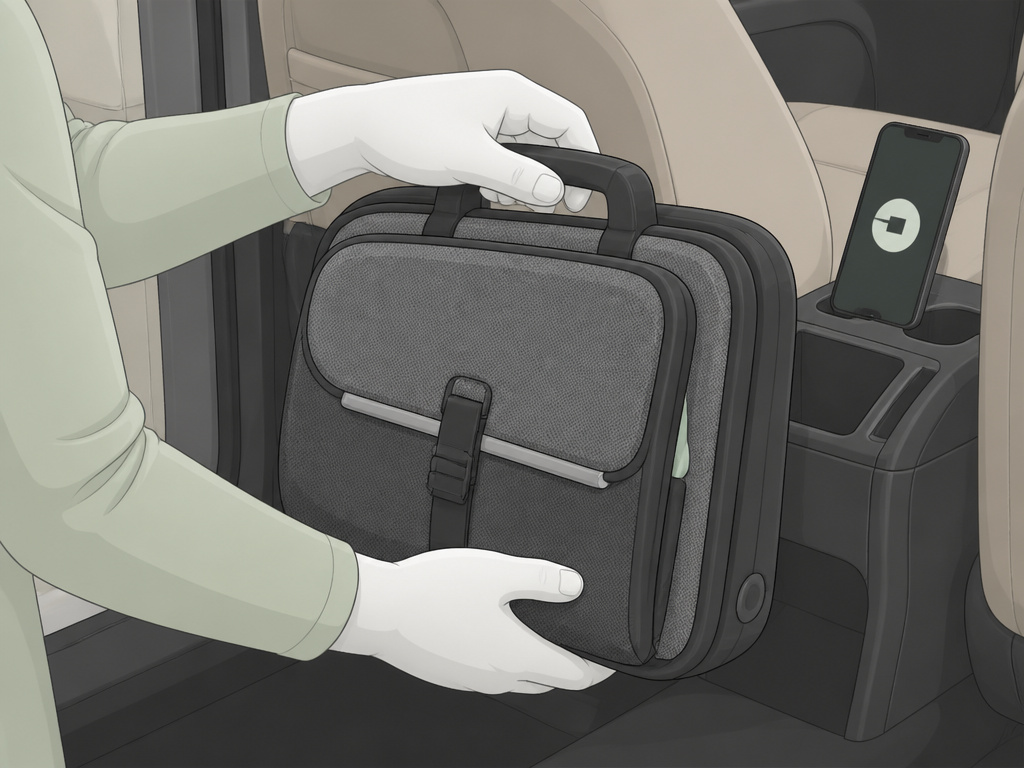
The official rideshare car seat services have gaps. If your child is under two, between sizes, or you need a long trip, your personal seat is the answer.
A convertible seat is the most versatile, but it’s bulky. This is where a foldable design changes the equation. The TinySeats Two folds down for travel and supports extended rear-facing up to 23 kg (about 50 lbs). Folksam, a Swedish insurance company known for safety research, praised its spacious design and high backrest. The fold means you can carry it like a briefcase, not a piece of furniture.
Worth knowing before you start: Not all “travel” car seats are certified for use in Canada or the U.S. The TinySeats Two meets European ECE R44/04 standards. Always check for a National Safety Mark (NSM) sticker for Canada or an FMVSS label for the U.S. Before buying any seat for rideshare use.
If you must bring a standard convertible, know its lightest configuration. Often, installing a car seat without a base using just the seat belt is lighter and faster than lugging the base. Practice that method until it’s muscle memory.
The Professional Installer Edge

You can outsource the entire problem. Services like Baby Car Seat Installers employ technicians certified by CPSAC and St. John Ambulance. They can often diagnose fit issues over the phone if you provide your car and seat model. For a fee, they meet you at the airport or your home, install the seat to manufacturer and Transport Canada standards, and provide documentation proving it’s done correctly.
This is the move if you’re renting a car for a trip or using a car service regularly. The cost of a professional installation is less than the fine for an incorrect one, and it eliminates the argument with a driver.
Frequently Asked Questions
Is it legal to use my own car seat in an Uber?
Yes, it is legal and required by law for a child to use an appropriate car seat. However, the Uber driver, as the vehicle owner, has the right to refuse the trip if they are uncomfortable with the installation or the time it takes.
Can an Uber driver help me install my car seat?
No. Uber drivers are not trained or insured to install customer car seats. They are explicitly advised not to assist, as any mistake could leave them liable in an accident. The installation is solely your responsibility.
What if my Uber arrives and there’s no car seat?
If you booked Uber Car Seat and the car arrives without one, cancel the ride immediately through the app and report the issue to Uber. Do not get in the car. You will not be charged a cancellation fee, and you should request a new ride.
Are taxis different from Ubers for car seat rules?
In some cities, yes. Taxis are often exempt from standard passenger vehicle car seat laws. However, companies like Baby Seat Taxi Sydney follow strict internal policies, requiring rear-facing seats for 0-6 months and proper restraints for 6 months-4 years. Always check local taxi regulations and the company’s own policy before hailing a cab.
What’s the best car seat for Uber use?
For occasional use, a lightweight, foldable seat like the TinySeats Two is ideal. For regular use, a convertible seat you can install quickly via LATCH is best. The “best” seat is the one you can install correctly, quickly, every single time.
Before You Go
Your ability to install your own car seat in an Uber hinges on speed and certainty. Practice the install in your own car until it takes less than a minute. Text the driver the moment you’re matched. Know that services like Uber Car Seat have major limitations, they don’t serve infants. For absolute certainty, especially for airport trips, a pre-booked service like Kidmoto with a professionally installed seat is the guaranteed play. The law is on your child’s side, but the clock is always on the driver’s.
