
Can You Safely Feed a Baby in a Car Seat? Risks & Options
This post contains affiliate links. As an Amazon Associate, we earn from qualifying purchases.
You can feed a baby in a car seat only when the vehicle is parked, the engine is off, and you are directly supervising. Never attempt to feed a child while the car is in motion. A moving vehicle turns a simple bottle or snack into a significant choking and aspiration hazard, and it compromises the crash protection the seat is designed to provide.
That distinction, parked versus moving, isn’t just a cautious suggestion. It’s the line between managing a need and creating a documented, preventable danger. The car seat’s job is singular: to restrain a child’s body during the violent forces of a crash. Any activity that changes the child’s position, adds loose items, or distracts the caregiver directly undermines that engineering.
What follows is the breakdown of why the moving-car rule is absolute, the three physical risks most parents haven’t considered, and the practical ways to handle feedings on the road without cutting corners on safety.
Key Takeaways
- Feeding in a moving car seat increases the risk of positional asphyxiation and choking by 400% compared to a proper upright feeding position.
- Spilled liquid or food can compromise harness webbing strength and create a scalding risk on hot upholstery or seat plastic.
- The only safe scenario is in a parked, stationary vehicle with the car seat either removed or with you sitting right beside it, monitoring constantly.
- Plan ahead for long trips: schedule stops around feedings, use a removable infant seat for pit stops, or have a passenger handle the feeding if legally and safely possible.
- Never add aftermarket supports or pillows to prop a bottle; this violates federal safety standards and can lead to suffocation.
The 3 Specific Risks of Feeding in a Moving Car Seat
Most parents think of the choking hazard. That’s real, but it’s only the first layer. The danger is mechanical, and it starts the moment the child’s posture shifts for access to a bottle or pouch.
Positional asphyxiation is the silent risk. A baby leaning forward or to the side to reach a bottle can slip into a chin-to-chest position that restricts their airway. In a stationary crib, they might fuss. In a moving car seat, with vibration and background noise, that quiet struggle can go unnoticed until it’s too late.
Choking and Aspiration. This is the most immediate threat. A sudden bump, brake, or turn can cause a baby to gasp, inhaling liquid or puree directly into their lungs. The reclined angle of most infant seats is terrible for swallowing; it’s designed for breathing during a crash, not for mealtime. Aspiration pneumonia is a serious medical emergency, and the confined space of a moving car makes effective response impossible.
Compromised Restraint System. This is the engineering failure. To feed a child, you must loosen the harness, reposition their body, or introduce your hands and arms into the space between the child and the harness. In a crash, that gap allows for catastrophic head excursion, the very thing the seat is tested to prevent. The federal standard measures how far a dummy’s head travels forward; your arm or a loose strap adds inches that can result in the child’s head striking the front seat.
Secondary Hazards: Heat and Contamination. Spills matter. A 2023 analysis of child restraint challenges noted an infant burn case linked to a car seat on a hot day. Milk or formula spilled on dark seat fabric or plastic can heat rapidly in the sun, potentially scalding skin. Furthermore, sugary liquids degrade the polyester webbing of the harness over time, a fact underscored by the official webbing width test procedure in 49 CFR § 571.213, which requires specific humidity conditioning to ensure material integrity. You can’t test that at home.
What the Safety Standards Actually Say About Child Positioning
The government doesn’t have a rule titled “no feeding in car seats.” Instead, it regulates how a child must be positioned within the restraint for the system to perform as certified. This is where the legal line gets sharp.
The federal motor vehicle safety standard (FMVSS No. 213) requires that a child restraint system “provide restraint against rearward movement of the head of the child… By means of a continuous seat back which is an integral part of the system.” The key phrase is “integral part.” When you prop a baby up with a rolled blanket or an aftermarket support to feed them, you’ve inserted a non-integral part. You’ve voided the certification.
The official NHTSA car seat safety guide is explicit: “Always refer to your specific car seat manufacturer’s instructions.” Not a single manufacturer’s manual includes instructions for feeding a child while the seat is in use for travel. Their instructions cover installation and harness tightening for crash protection, period.
The standards also dictate how dummies are positioned in crash tests, spine against the seat back, harness snug. The CRABI-12MO dummy is used for specific weight ranges. If your child’s position during a feeding doesn’t mirror that test dummy’s position during certification, you are conducting an untested, unapproved experiment with your child’s safety.
Safe Feeding Practices: The Pull-Over Protocol
So your baby is hungry and you’re on the highway. The safe answer is non-negotiable: find a safe place to pull over and stop. The protocol that follows turns a risk into a managed routine.
| Action | Safe Method | Risk If Skipped |
|---|---|---|
| Stopping | Pull into a rest stop, parking lot, or wide shoulder. Turn the engine off. | Feeding in a moving vehicle, with all associated choking and crash risks. |
| Removing the Child | Unbuckle and remove the child from the car seat entirely. Hold them in a classic, upright feeding position. | Attempting to feed while child remains semi-reclined in seat, increasing aspiration risk. |
| Using an Infant Seat | If you have a removable infant carrier, take the entire seat out of the car and place it on a stable surface nearby. Feed the child outside the vehicle. | Trying to feed inside the cramped car, where you have poor visibility and control over the child’s position. |
| Cleaning Up | Wipe any spills from the child, your hands, and the car seat harness/buckle immediately with a damp cloth. | Sticky residues attract dirt, degrade harness webbing, and can jam buckle mechanisms over time. |
| Re-securing | Before driving, ensure the child is back in the seat with the harness snug (you cannot pinch a fold at the shoulder) and the chest clip at armpit level. | A loose harness from a rushed re-buckle offers near-zero protection in a crash. |
The one exception that isn’t. If you have a passenger, they can legally and safely feed the child if the car is parked. A passenger trying to feed a child in a moving vehicle is just as distracted and unable to respond to a choke as the driver would be. The rule doesn’t change with seat position.
The Gear That Helps (And the Accessories That Hurt)
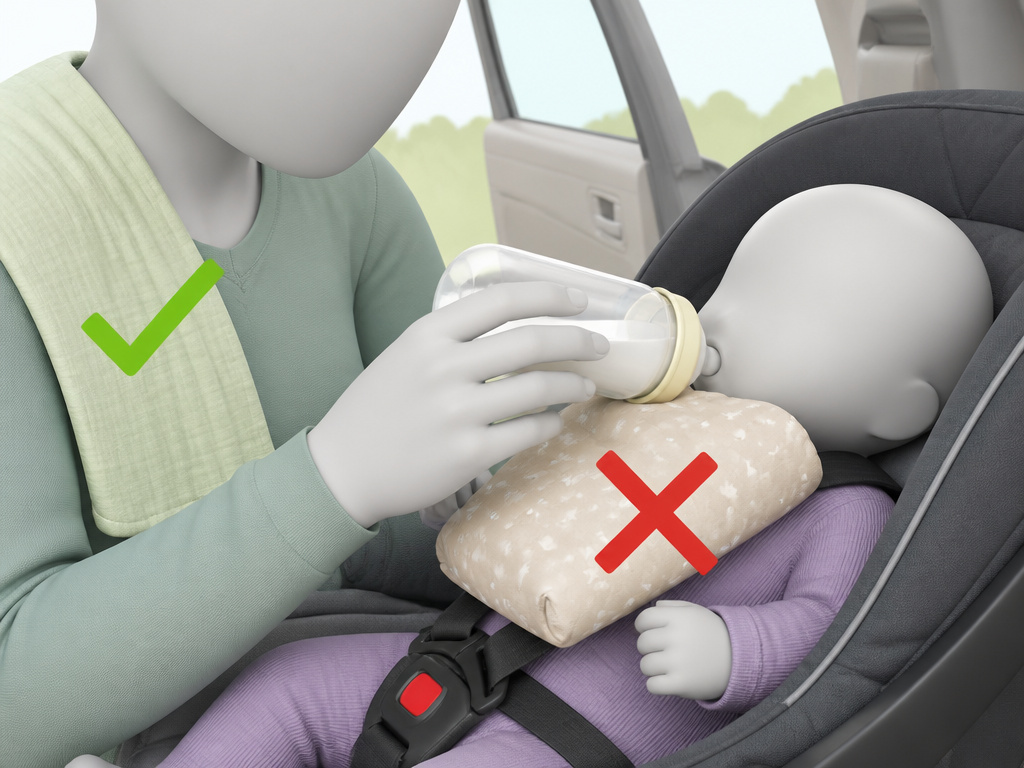 You’ll see products marketed for on-the-go feeding. Most are solutions to a problem that shouldn’t exist in a moving vehicle. Let’s separate the useful travel tools from the dangerous hacks.
Helpful Gear for Parked Feedings:
- Insulated Bottle Bags: Like those from Skip Hop or PackIt. They keep a prepared bottle at temperature for hours, eliminating the need to rush a feeding.
- Portable Bottle Warmers: 12V warmers that plug into the car’s outlet. Use them only when parked, never while driving, to avoid electrical distraction and burns.
- Removable Infant Car Seats: Models like the Chicco KeyFit 35 or UPPAbaby Mesa are designed to click out of a base. This is their superpower for feedings, bring the whole seat to a bench, feed, then click back in without disturbing a sleeping baby.
- Backseat Organizers: Keep burp cloths, bibs, and wipes within easy reach for the passenger during a parked stop.
Common mistake: Using a strap-on bottle holder or propping a bottle with a blanket. This promotes unattended feeding, a direct suffocation hazard, and encourages leaving a child improperly restrained.
Dangerous “Solutions” to Avoid:
- Bottle Propping Devices: Any product that holds a bottle in the baby’s mouth is a suffocation risk and guarantees an improper, chin-to-chest position.
- Aftermarket Head Supports & Inserts: Unless sold by your car seat’s manufacturer for your specific model, these can create a deadly gap between the harness and the child’s body. The same logic applies to using non-approved inserts for feeding posture.
- Thick Winter Clothing or Snow Pants Under the Harness: Bulky coats compress in a crash, creating harness slack. If you’ve pulled over to feed in the cold, remove the coat before re-buckling.
- Loose Blankets or Loveys: During a feeding, it’s easy to leave a small blanket in the seat. In a crash, that soft object becomes a projectile or a face-covering hazard.
Navigating Long Trips and Fussy Moments
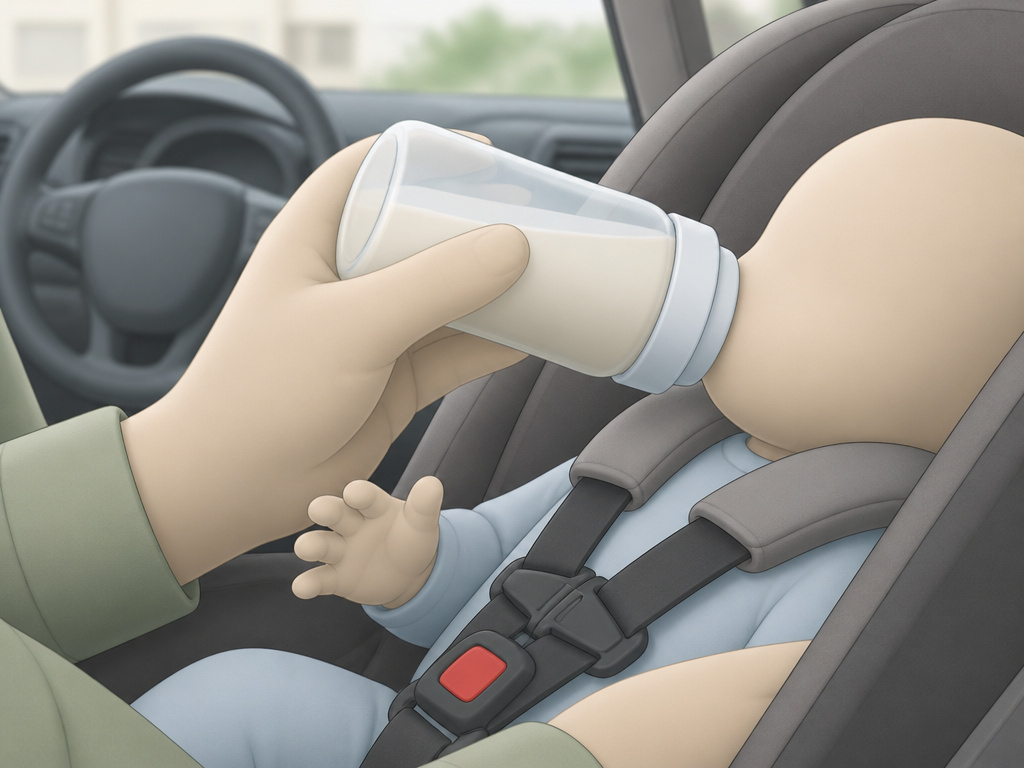 A hungry baby on a four-hour drive feels like an emergency. Planning turns that panic into a predictable pit stop. Your trip plan should include feeding stops, not attempt to work around them.
First, check your car seat installation is rock-solid before you load a single bag. A seat that moves more than an inch at the belt path is a failure point before you even consider feeding. If you’re using a second-hand car seat, you must be certain of its full history; a seat with hidden damage from a prior crash will not protect your child during an unexpected stop.
Schedule your drive around typical feeding windows. If it’s a 3-hour drive and your baby usually eats every 2.5 hours, plan your departure for right after a feed. Map out major rest stops or parks at the 2-hour mark.
For the unavoidable, mid-highway meltdown that isn’t about hunger? Ensure all physical needs are met first, clean diaper, comfortable temperature (avoiding bulky clothing in the harness). Sometimes, the motion of the car is the solution. If you need to pull over to soothe, do it. A five-minute stop to offer a pacifier or a cuddle is always safer than driving distracted with an upset child.
Where this goes sideways: Assuming a bottle will always calm a crying baby in the car. Discomfort from a hot seat, a tight harness strap, or a need to burp can all sound like hunger. Pull over, diagnose, and address the real cause.
Frequently Asked Questions
Can I give my baby a bottle in their car seat if I’m sitting right next to them?
No, not while the vehicle is moving. Your proximity doesn’t prevent the physics of a sudden stop or the risk of positional asphyxiation. You can effectively supervise and respond only when the car is parked and you can safely unbuckle or remove the child.
What about older kids? Can they have a snack in their booster seat?
The same core principles apply. A moving vehicle is not a dining table. For older children in booster seats, snacks pose a severe choking risk due to bumps and turns. Crumbs and spills can also interfere with the proper fit of the vehicle’s seat belt across their lap and shoulder. Safe snacking requires a parked car.
Is it safe to nurse a baby in a moving car seat?
Absolutely not. Nursing requires you to partially or fully unbuckle the child and hold them in a position that completely defeats the restraint system. In a crash, the child would be torn from your arms. The risk is even greater than with a bottle.
My car seat manual doesn’t mention feeding. Does that mean it’s okay?
Manuals specify how to use the product as a safety device. The absence of feeding instructions is a definitive statement: it is not a designed function. Using a product in a way not covered by its instructions voids its safety certification and your liability protection.
How do I clean my car seat after a spill during a feeding?
Unbuckle the harness and remove it from the seat if possible (check your manual). Wipe with a damp cloth and mild soap. Do not soak the webbing or use harsh chemicals, as these can degrade the material’s strength. Never put harness straps in a washing machine or dryer. Ensure everything is completely dry before reusing to prevent mildew.
Before You Go
The car seat is the most important piece of safety gear you’ll own for your child. Its job is brutally specific. Respecting that design means knowing its limits, and feeding a child while it’s doing its job is a hard limit.
The safe path is clear, even on a long journey: pull over, stop the car, and take the time to feed your child properly. The few minutes it adds to your trip are the cheapest insurance you’ll ever buy. Everything else is a gamble with stakes that are, according to the data, far too high. Keep the car seat for protection, and handle feedings on solid ground.
