
Learn When Baby Can Sit in Stroller Without a Car Seat Safely
This post contains affiliate links. As an Amazon Associate, we earn from qualifying purchases.
Your baby can sit in a stroller without a car seat when they can sit up unassisted and have firm head and neck control. Manufacturers like Safety 1st, OXO, and Britax specify this milestone typically aligns with 6 months of age, but their manuals list three additional hard limits: a maximum seated weight, a maximum child height, and a rule about your child’s head position relative to the seat top.
That “6 months” guideline is a starting point, not a guarantee. The real answer lives in your stroller’s instruction manual, and it’s built on physical stability, not calendar pages. A bassinet attachment changes everything, allowing safe use from birth in a flat, supervised sleep position.
What follows: the four manufacturer rules you must check, the one exception that lets you skip the car seat entirely, and what happens when you push past the limits printed on the frame.
Key Takeaways
- The “6 month” rule is a developmental benchmark, but your stroller’s manual sets the legal and safety limits with specific weight, height, and head-position rules.
- A stroller with a certified bassinet or lay-flat seat mode is the only way to safely transport a newborn without an infant car seat attached.
- Overloading the storage basket or hanging bags on the handle is a direct tipping hazard; the Britax B-READY manual states a 10 lb (4.5 kg) basket limit for a reason.
- Store a stroller damp, and mold grows inside the frame seams within weeks. The Chipolino manual warns this explicitly.
- Transition timing is individual. Use our linked guide on developmental milestones for car seat changes to sync stroller readiness with car seat upgrades.
The 4 Manufacturer Rules That Trump “6 Months”
Forget the generic advice. Your stroller’s manual contains a short list of non-negotiable rules. These are not suggestions; they are the conditions under which the stroller was tested and certified. Violate them, and the frame’s stability math fails.
Common mistake: Assuming “6 months” is a universal pass. The Safety 1st Gia XP manual states: “STROLLER is only for use with children up to 65 lb (29 kg), AND WHEN SEATED, the midpoint of your child’s head is at or below the top of the stroller seat.” Age is the fourth variable here, not the first.
Here are the four limits you must match, in order of importance.
1. The Head Midpoint Rule
This is the most overlooked spec. It’s not enough that your child fits in the seat. When they are sitting upright, the midpoint of their head must be at or below the top edge of the stroller seatback. If the top of their head is above the seatback, their center of gravity is too high. A sudden stop or a tilted pavement can tip the stroller backward. This rule exists independently of weight and age.
2. The Weight Limit
This is the number stamped on the frame. It’s a hard ceiling. * Safety 1st Gia XP: 65 lb (29 kg) * OXO Cubby: 50 lb (23 kg) * Britax B-READY: 55 lb (25 kg) * Chipolino KISS: 22 kg (approx. 48.5 lb) Exceeding this limit stresses the joint locks and wheel axles. On a folding frame, it can cause a joint to release while moving.
3. The Height Limit
Some manuals, like the Britax B-READY, add a height maximum—44 inches (111.8 cm). A tall, slender child can outgrow the seat by height long before they hit the weight limit. Their legs may dangle uncomfortably, or more critically, their head may violate the midpoint rule.
4. The “Sits Unassisted” Developmental Rule
This is where the 6-month typical timeline comes from. The OXO Cubby manual phrases it as “suitable for children beginning at 6 months (and when children have ample head and neck control).” This control is what prevents a floppy head from slumping forward into a breathing-restricted position during a bumpy walk. If your child still needs propping with pillows, they’re not ready.
| Stroller Model | Weight Limit | Height Limit | Age/Developmental Note |
|---|---|---|---|
| Safety 1st Gia XP | 65 lb (29 kg) | Not specified | Child must sit unassisted; head midpoint rule applies. |
| OXO Cubby | 50 lb (23 kg) | Not specified | Suitable from 6 months with head/neck control. |
| Britax B-READY | 55 lb (25 kg) | 44 in (111.8 cm) | Not for infants under 6 mos without car seat/bassinet. |
| Chipolino KISS | 22 kg (~48.5 lb) | Not specified | Sitting position only after 6 months old. |
The Bassinet Exception: Safe from Day One
There is a way to use a stroller from birth without the infant car seat clicked on top. If your stroller accepts a standalone bassinet or the seat converts to a fully lie-flat bassinet mode, that’s a green light. This isn’t a hack; it’s the method recommended by many pediatricians for extended outings.
Where this goes sideways: Using a car seat snapped onto a stroller for a long nap. The semi-reclined angle can allow a newborn’s head to fall forward, risking positional asphyxia. A flat bassinet keeps the airway open.
A bassinet attachment turns the stroller into a rolling crib. The child lies flat, supervised, and the bassinet’s own weight limits (often around 20 lb) apply. When your baby outgrows the bassinet but still can’t sit up, you transition back to using the travel system with the infant car seat attached. This is the core benefit of a well-chosen car seat stroller combo—it adapts.
How to Know Your Baby is Truly Ready
Developmental milestones trump the calendar. Look for these physical signs before ditching the car seat attachment: 1. Sitting Solo: They can sit on the floor without using their hands for support for a sustained period. 2. Head Steadiness: No head lag when you gently pull them to a sitting position from lying down. 3. Curiosity: They strain against the car seat harness to look around, a sign their neck muscles are engaging.
If you see these signs but your baby is under 6 months, consult your pediatrician. If they’re over 6 months but still wobbly, hold off. This individual timing is why a rigid “6-month rule” fails some babies. Use this readiness in tandem with our guide on signs baby is ready to leave infant car seat to make a coordinated move.
The Hidden Hazards: More Than Just Baby Weight
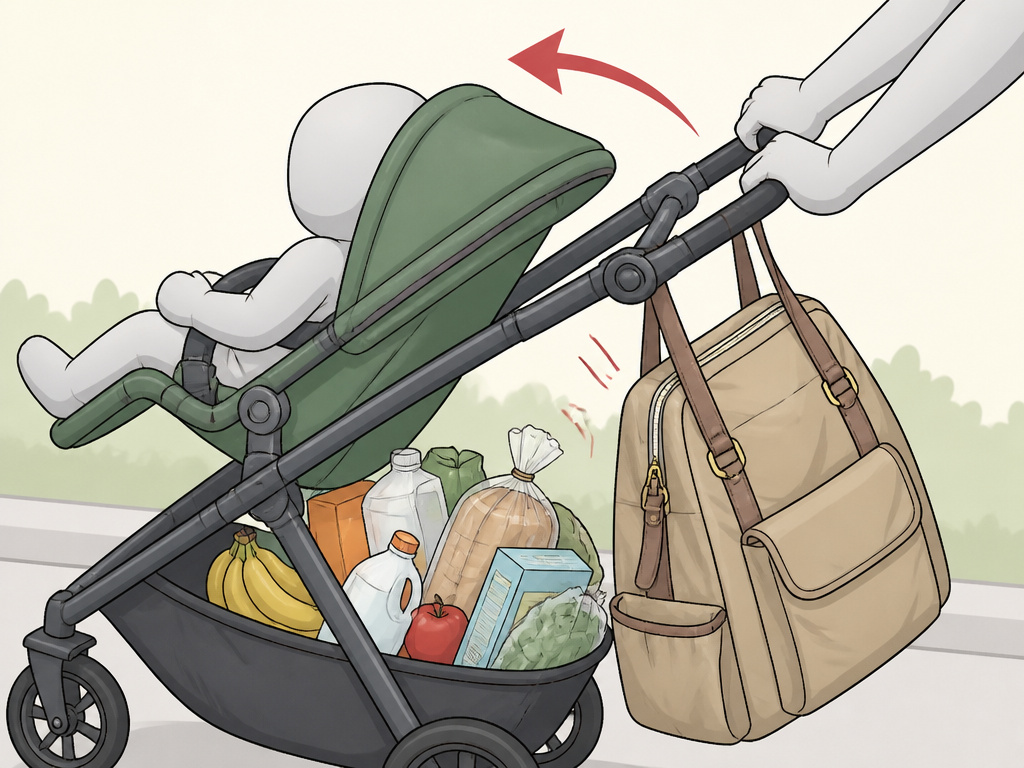
The safety rules extend beyond the child in the seat. Every manual has a section on load limits for storage, and ignoring them is a direct tipping risk.
Storage Basket Limits:
- Britax B-READY: 10 lb (4.5 kg)
- Safety 1st Gia XP: 10 lb (4.5 kg)
- Chipolino KISS: 2 kg (approx. 4.4 lb)
Pocket & Cup Holder Limits: These are shockingly low for a reason—they’re high up on the frame. The Safety 1st manual warns never to put more than 1 lb (0.5 kg) in its storage pocket or 2 lb (0.9 kg) in its cup holder. A heavy water bottle and a wallet can already push past that.
Worth knowing before you start: Hanging a diaper bag on the handlebar moves the center of gravity backward. On a slope or with a child at the weight limit, this turns a stable stroller into a seesaw. The federal car seat recommendations from NHTSA emphasize proper use of all child conveyance equipment, and that includes following these accessory limits.
The consequence isn’t a maybe. It’s a physics certainty. An overloaded basket or handle makes the stroller unstable, and a tip-over with a child strapped in can cause serious injury.
Making the Switch: A Step-by-Step Safety Check
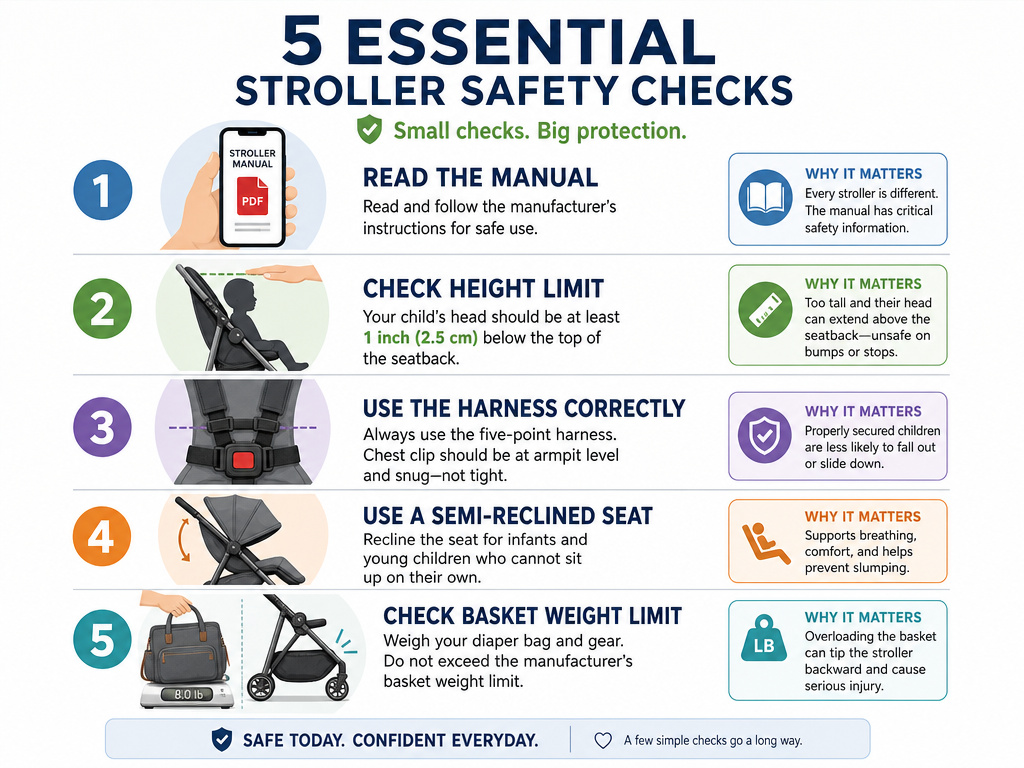
When you’re ready to move your child from the car seat to the stroller seat, follow this sequence. It takes five minutes and catches the common oversights.
- Consult the Manual. Find the exact model number on the frame. Download the PDF if you’ve lost the paper copy. Verify weight, height, and age guidelines.
- Perform the Head Test. Sit your child in the stroller and buckle the harness. Place your hand horizontally across the top of their head. Is the midpoint (the crown) below the seatback’s top edge? If not, they’ve outgrown it, regardless of age.
- Adjust the Harness. The straps should be snug, with the chest clip at armpit level. A loose harness defeats its purpose during a sudden jolt.
- Recline for Beginners. For a child just making the switch, use a semi-recline setting for the first few weeks. It offers a bit more head and back support as they adjust to the new view.
- Empty the Basket. Start fresh. Weigh what you normally carry. Does it exceed the basket limit? If so, carry it separately or use a backpack you wear.
This process ensures you’re not relying on a single checkpoint. A child might pass the weight test but fail the head-midpoint rule. Catching that prevents an accident.
Stroller Storage & Maintenance: What the Manuals Actually Say
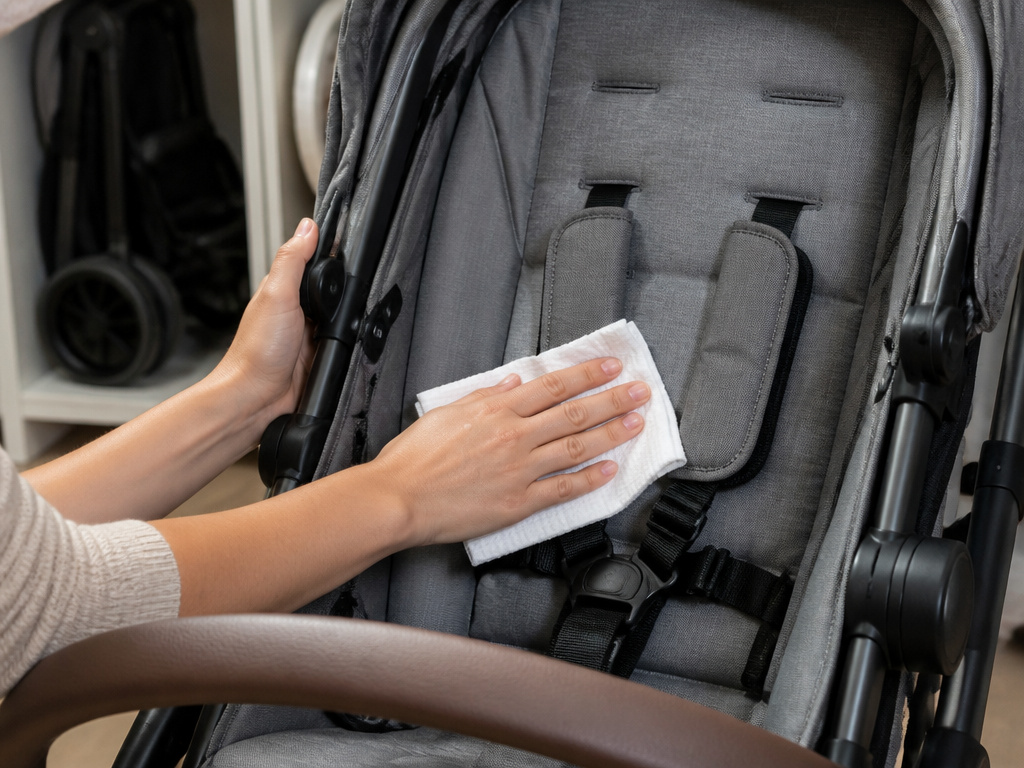
How you put the stroller away affects its safety for next time. The commodity advice is “store it dry.” The manufacturer specifics are more precise.
- OXO Cubby Manual: “Store in a cool, dry location, away from sunlight to prevent the fabrics from fading. Do not store outdoors. Store away from extreme heat to prevent damage to plastic parts.”
- Chipolino KISS Manual: “Always leave the stroller to fully dry after cleaning before you use it or store it. Mold could form if you keep your stroller moist. Always store your stroller indoors in clean and dry place.”
The takeaway is environmental. A damp stroller folded into a hot car trunk is a mold incubator. Plastic parts left in direct sun become brittle. The frame isn’t just a collection of tubes; it’s a mechanical device with plastic joints, fabric tensions, and metal springs. Treat it like one.
Frequently Asked Questions
What if my 4-month-old has great head control?
The developmental milestone is primary, but the manufacturer’s age minimum is a legal liability limit. If the OXO Cubby manual says “beginning at 6 months,” using it at 4 months voids any warranty and places you outside its certified use parameters. The risk is low if the child truly is ready, but the official stance is clear: wait.
Can I use my travel system stroller seat reclined flat for a newborn?
Only if the manual explicitly states the seat converts to a true, flat bassinet mode. Most “fully reclining” seats still have a slight angle and are not approved for safe sleep or for newborns who cannot sit up. The Chipolino manual shouts it: “FOR NEWBORN BABY USE THE MOST LYING POSITION OF THE BACKREST OF THE SEAT!” When in doubt, use the bassinet attachment or the infant car seat systems you already have.
My toddler hates the stroller but hasn’t hit the limits. What now?
This is a behavioral limit, not a safety one. You can continue using it securely. Many parents find a sit and stand stroller a useful intermediate step, offering a perch for a reluctant walker while keeping the younger child’s seat available.
How do I know when my child has outgrown the stroller entirely?
You’ll hit a limit first. Check for signs your baby has outgrown the car seat for similar logic: the head midpoint rule fails, their shoulders are above the top harness slots, or their weight exceeds the label. For the stroller, the head rule is the final gatekeeper.
Are umbrella strollers different?
Yes, and they are often stricter. They typically have lower weight limits (often 35-40 lbs) and are only for children who can sit upright without reclining support. Always check their specific manual; they are not a one-size-fits-all solution.
Before You Go
The shift from car seat to stroller seat feels like a milestone. It is. But it’s governed by your child’s body and your stroller’s engineering, not a date on the calendar. Pull the manual. Check the four rules: head midpoint, weight, height, and independent sitting. If your setup includes a bassinet, you’ve had the right tool from day one.
When you move, do it in sync with your child’s car seat stage. A transition from car seat in the stroller often aligns with moving to a next-stage convertible car seat. That’s the real system—the gear working together as your child grows, with the manual as the final word on every piece.
