
How to Clean Infant Car Seat Straps for Safety and Hygiene
This post contains affiliate links. As an Amazon Associate, we earn from qualifying purchases.
To clean infant car seat straps, you only use mild soap, warm water, and a soft cloth for spot cleaning. Never submerge the harness webbing, use harsh chemicals, or apply heat to dry. The buckle gets rinsed under warm water without soap, then air-dried and tested before reuse. Rushing the 24-hour air-dry window is the single most common mistake that compromises strap integrity.
The “mild soap” instruction is there for a mechanical reason. Harsh detergents strip the protective coating from the nylon webbing fibers. Once that coating is gone, the fibers absorb moisture and UV light directly, which weakens the tensile strength that the entire safety system depends on.
What follows is the breakdown of manufacturer-specific rules, the physical consequences of getting it wrong, and the one visual check that tells you it’s time to replace the straps, not just clean them.
Key Takeaways
- Only spot clean harness straps with a damp cloth and mild soap. Full immersion voids the safety certification.
- Clean the buckle by rinsing under warm running water and pressing the release button repeatedly. Never use soap or lubricants inside the mechanism.
- Air drying is mandatory and takes at least 24 hours. Using a hairdryer, heater, or direct sun cooks the fibers and makes them brittle.
- If straps are frayed, cut, or have been completely saturated (like in a storm), stop using the seat and contact the manufacturer for replacement parts.
- Always consult your specific car seat manual first. The Graco SnugRide Click Connect 35 and Chicco FIT3X have different, non-negotiable clauses.
The 3-Step Method for Cleaning Infant Car Seat Straps
You need three things: a bowl of warm water, a drop of mild dish soap, and a soft cloth. A toothbrush reserved for this job helps with the buckle.
The Technical Snippet: Cleaning a 5-point harness involves separate protocols for the nylon webbing and the plastic buckle. The webbing must only be spot-cleaned to prevent internal moisture damage, while the buckle requires warm-water rinsing and mechanical agitation to clear debris without introducing soap, which can impede the latch mechanism. Air drying for a minimum of 24 hours is required by all major manufacturers.
Step 1: Spot Clean the Nylon Webbing.
Dampen your cloth in the soapy water, wring it out completely, and wipe down each harness strap. Focus on the areas that touch the baby’s shoulders and chest. Go one section at a time, and immediately follow with a second cloth dampened with clean water to rinse off any soap residue. The goal is surface cleaning. If you see water beading on the strap, you’re done. If the cloth is dripping, it’s too wet. Skipping the rinse step leaves a soap film that attracts more dirt and can irritate your baby’s skin.
Step 2: Clean the Buckle and Chest Clip.
Detach the buckle from the seat if your manual allows it. Hold it under warm running water and press the red release button several times while the water flows through it. This flushes out crumbs and stickiness. Dry it immediately with a towel, then shake it vigorously to eject water from inside the mechanism. Let it air dry completely on a towel. Never, ever use soap or a lubricant like WD-40 here. Soap creates a film that gums up the spring over time. A gummed buckle might not click audibly or could release under pressure.
Step 3: Air Dry Everything. No Shortcuts.
Lay the straps out straight on a clean towel. Do not coil them or hang them, as this can cause them to dry with a twist that weakens the weave. This is the part that tests patience. The PAKIDS TRAVEL SAFE guide notes drying “may take several hours or even a day.” Graco explicitly recommends at least 24 hours. Put the car seat cover back on before the straps are bone-dry, and you trap moisture against the shell. That moisture wicks into the strap fibers you can’t see, starting a slow breakdown. The seat is not safe to use until every component is completely dry to the touch.
What NOT to Do: The Shortcuts That Void Your Warranty
The manufacturer’s manual is a legal document. Ignoring its cleaning section isn’t just a suggestion, it’s a direct path to decertifying the seat’s safety.
Common mistake: Using a steam cleaner or upholstery shampoo on the straps. The heat and forced moisture drive deep into the webbing’s core. The straps might look clean, but their internal structure is compromised from that day forward.
The table below spells out the banned actions and what they actually do to the materials.
| What You’re Tempted to Do | Why It’s Wrong | The Likely Outcome |
|---|---|---|
| Submerge the straps in a sink | Soaks the inner fibers, which may not fully dry for days. | Mold growth inside the webbing; permanent loss of tensile strength. |
| Use bleach or disinfectant wipes | Chemical breakdown of the nylon polymer and stitching thread. | Straps become brittle and snap under sudden load. |
| Machine wash the harness covers (if attached) | Agitation twists and stresses the webbing at the anchor points. | Hidden fraying begins where the strap meets the plastic adjuster. |
| Dry with a hairdryer or in direct sun | High heat removes the fiber’s elasticity. | Straps feel stiff and are more likely to crack than stretch in a collision. |
| Use baby oil or wipes with lotion | Oils break down the plastic of the buckle and chest clip over time. | The buckle plastic becomes gummy and the release mechanism fails. |
The bottom line: If the method isn’t explicitly listed in your car seat’s manual, assume it’s prohibited. Companies like Britax and Chicco design their testing around these specific care instructions. Deviating from them means the seat’s performance in a crash is no longer predictable.
When to Replace the Straps, Not Clean Them
Cleaning is maintenance. Replacement is a safety mandate. The line between them is visible.
Fraying, Cuts, or Excessive Wear.
Run your fingers along the entire length of each strap. If you feel any raised threads, snags, or see visible cuts, the strap is done. Fraying isn’t cosmetic. It indicates the internal load-bearing threads are already damaged. Most car seat harness straps are not user-replaceable for a reason. You must contact the manufacturer’s customer service with your model number and manufacture date to order official replacement parts. Using non-OEM straps is an absolute deal-breaker.
The “Soaked Straps” Rule.
Graco’s own guidance is unambiguous: if the harness straps become completely saturated, whether from a cleaning accident or a sudden downpour, you must “pause use and contact Graco Customer Care.” The same logic applies to any brand. Why? You cannot verify that the core of the webbing has dried completely. Lingering moisture leads to mildew and permanent fiber degradation. The strength rating printed on that strap is no longer valid.
Where this goes sideways: Assuming a sun-dried strap is safe. The outside feels dry and warm, but the dense inner weave can hold moisture for days. You buckle your child in, and over the next week, that trapped moisture works on the fibers. It’s an invisible failure.
How to Clean the Buckle and Hardware Correctly
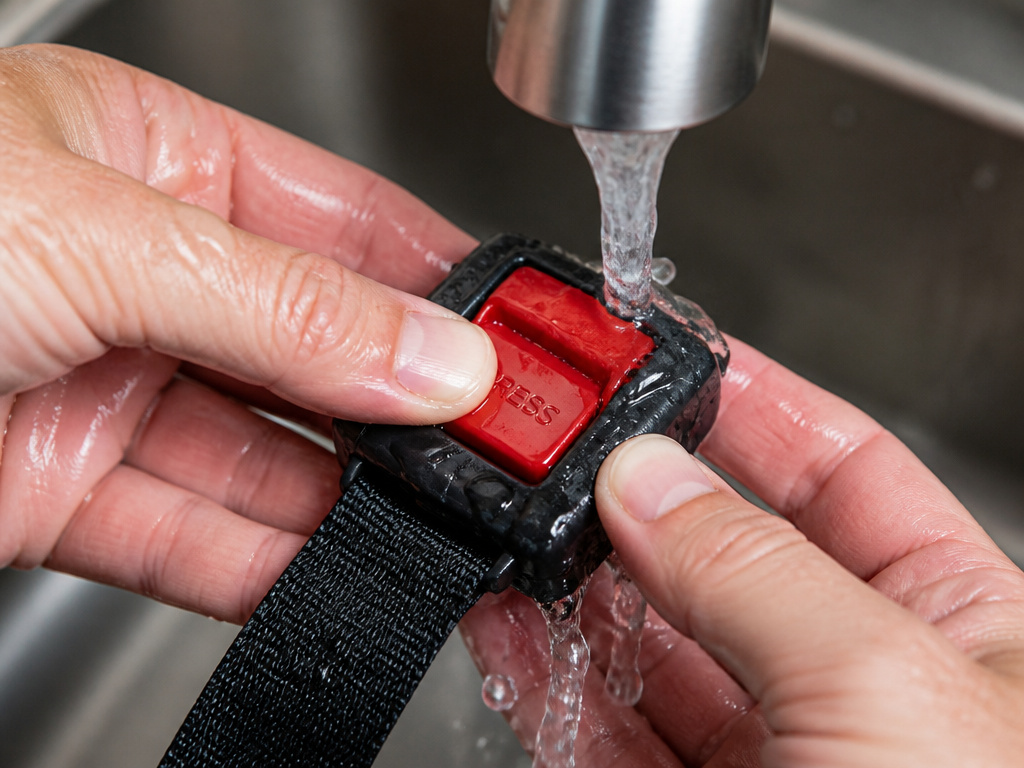
The buckle is a mechanical device, not a piece of fabric. You maintain it like a tool.
- Remove it from the seat if your manual shows how. For many seats, this involves pulling the buckle tongue through a slit in the cover.
- Rinse under warm running tap water for 30-60 seconds. While the water flows, press the red button repeatedly. This is the key, the mechanical action of the button helps flush debris from the latch assembly.
- Shake out the water and pat dry with a towel. Let it air dry completely on a counter, button-side down, so residual water can drain.
- Test it before reinstalling. Insert the metal tongues from both harness straps until you hear a definitive, sharp click. Then, press the red button. The tongues should eject smoothly and completely. If the click is muffled or the release is sticky, repeat the rinse and dry process.
Why no soap? Soap leaves a microscopic film. In the tight tolerance of the buckle’s latch, that film mixes with dust and sugar from spills to form a glue-like paste. The buckle might work fine for months, then fail on a hot day when the paste softens.
Drying Your Car Seat Straps: Timelines and Real-World Logistics
The PAKIDS TRAVEL SAFE document doesn’t mince words: “Plan Ahead: Make other arrangements for children who need to be transported during this time.” This is the most overlooked line in any cleaning guide.
Realistic Drying Times:
- Straps & Buckle: 24 hours minimum in a well-ventilated, room-temperature indoor space. In humid climates, add 12 hours.
- Seat Pad/Cover: 24-48 hours, depending on thickness. Even if the cover is dryer-safe, the heat can shrink it or damage any waterproof backing.
How to Set Up for Success:
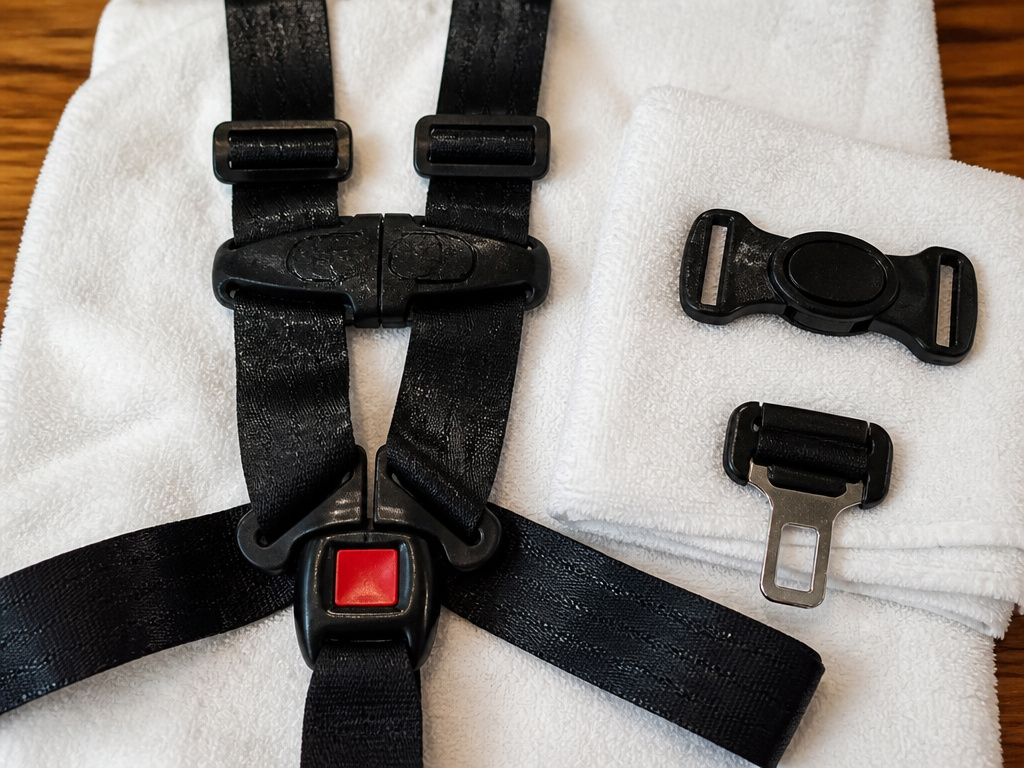
- Lay the straps straight on a dry towel on a table.
- Place the buckle and chest clip on a separate towel, button-side down.
- Keep everything away from direct heat sources (heat vents, radiators, sunny windows).
- Use a fan to circulate air in the room, but do not point it directly at the straps, as this can cause uneven drying.
If you need the seat sooner, you need a backup. That’s not an exaggeration, it’s the consequence of doing the job correctly. Rushing this step makes the entire cleaning process pointless.
Frequently Asked Questions
Can I use baby wipes to clean car seat straps?
No, you should not. Most baby wipes contain lotions, alcohols, or mild disinfectants that can degrade the nylon fibers and the plastic of the buckle over time. They are designed for skin, not technical fabrics. A cloth with water is always safer.
How often should I clean the harness straps?
Spot clean as needed for spills or obvious dirt. A full, careful clean like the one described here is only necessary a few times a year, or if the straps become sticky or smelly. Over-cleaning with any moisture increases cumulative wear.
My straps are stiff after cleaning. Did I ruin them?
Possibly. Stiffness is a classic sign of fiber damage from using a harsh cleaner, hot water, or applying heat to dry. Try wiping them down with a cloth dampened with plain water to remove any residue. If they remain stiff, contact the manufacturer. They have lost their necessary flexibility and may not perform correctly.
Can I put the car seat cover in the washing machine?
Maybe. You must check the care tag on your specific seat’s cover. Some are machine washable on gentle cold, while others are hand-wash only. Never use bleach or fabric softener. Always air dry unless the tag explicitly permits tumble drying on low heat.
What if I can’t find my car seat manual?
Go directly to the manufacturer’s website. Brands like Graco, Britax, and Chicco have downloadable PDF manuals for every model. Search using your model number, which is on a label on the seat shell. Never guess, the official car seat cleaning instructions from safety organizations always tell you to consult the manufacturer first.
The Bottom Line
Cleaning infant car seat straps isn’t about aesthetics. It’s a precise maintenance task to preserve the safety system you rely on every day. Use only water and mild soap on the straps, only water on the buckle, and give everything a full day to air dry. When the straps show wear or have been soaked, your job changes from cleaning to contacting the manufacturer for a replacement. That’s the real protocol. Everything else is just risking the integrity of the harness for a slightly faster result.
