
Can You Hose Down a Car Seat Base? | The Rust & Warranty Risk
This post contains affiliate links. As an Amazon Associate, we earn from qualifying purchases.
You cannot hose down a car seat base. The manuals for the Diono Radian 3R SafePlus, BeSafe Beyond Base, and Newell Brands base all explicitly forbid soaking, spraying with a hose, or submerging any part of the base. Water can seep into the internal mechanisms, causing rust in steel components, short-circuiting electronic sensors, and voiding the manufacturer’s warranty. The only approved method is spot cleaning with a cloth dampened with warm water and mild detergent.
The prohibition against hosing is a clause tied directly to the product’s safety certification and your legal warranty. A wet cloth and mild soap are the only tools you should reach for.
What follows is the breakdown of why water is the enemy, the precise spot-cleaning steps that won’t void your coverage, and the two scenarios where a base is done, not just dirty.
Key Takeaways
- Every major manufacturer’s manual, including Diono and BeSafe, explicitly states “DO NOT soak or spray with hose.” Internal steel components can rust, compromising structural integrity.
- Spot clean only using a cloth dampened with warm water and a drop of mild dish soap. Towel dry immediately and air dry completely before reinstalling.
- Hosing down a base voids the warranty for nearly all brands, as it constitutes misuse. Water damage is not covered.
- Bases with electronic components (load leg sensors, anti-rebound bars) are especially vulnerable; direct water can short-circuit these safety features.
- A base must be replaced after any moderate or severe crash, or if it shows cracks, faded labels, or is past its expiration date (typically 6-10 years from manufacture).
The One Rule Every Manual Agrees On
Open the manual for any car seat base made in the last decade. You’ll find the same instruction, word for word. The Diono Radian 3R SafePlus manual is blunt: “DO NOT soak or spray with hose. Internal parts could rust.” The BeSafe Beyond Base user manual warns against “aggressive cleaning products” that may harm construction materials, which includes the force and potential chemical carryover from a hose. The generic Child Restraint Base manual from Newell Brands is just as clear: “Spot clean using warm water and mild soap. Do not use any other cleaning agents or bleach.”
Common mistake: Reaching for the hose for a “deep clean.” A direct spray forces water into seams around the LATCH connector storage, under the recline adjustment lever, and into the belt path. That moisture stays trapped against the steel reinforcement bar and lock-off mechanisms.
This concerns the steel reinforcement bar inside the base’s shell. This bar is the anchor point for the lower anchor connectors (LATCH) or seat belt path.Hose water finds its way to this bar, sits against it, and starts oxidation. You won’t see the rust until it’s advanced enough to weaken the metal or stain through the plastic.
The 2025 CPS car seat cleaning guide from Safe Kids Worldwide underscores this by directing caregivers to “follow the cleaning instructions provided by the manufacturer“, a blanket statement that makes the manual’s “do not hose” clause your legal and safety instruction.
What Happens When Water Gets Inside
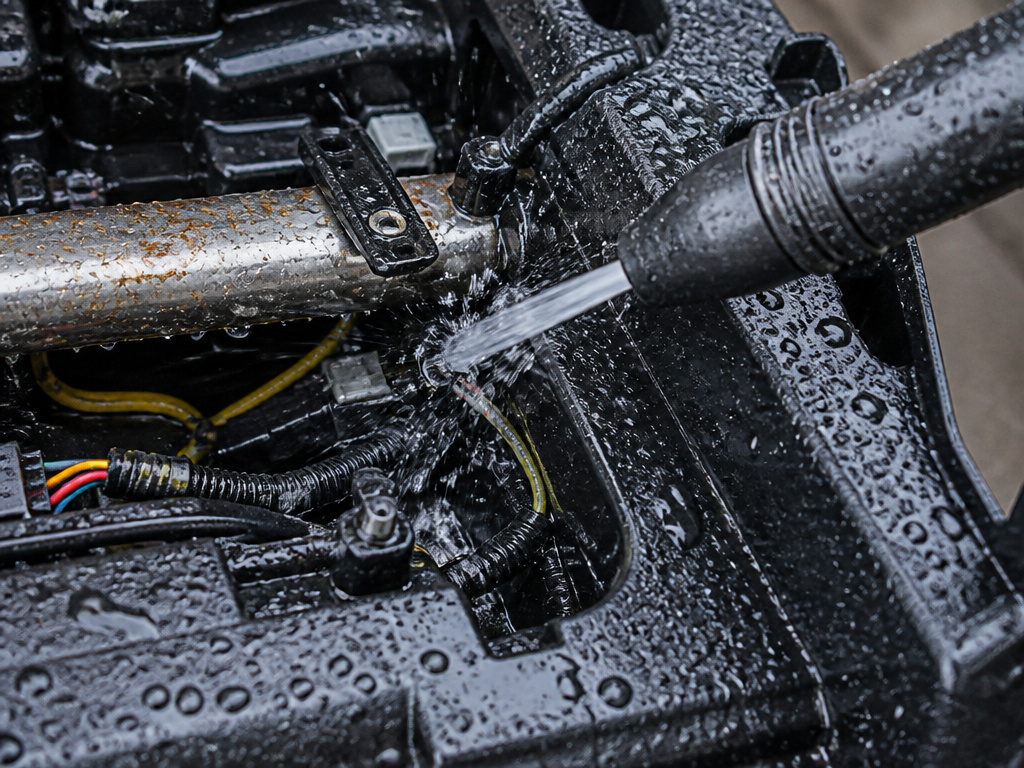
A base is a shell housing moving parts, metal components, and, in newer models, electronics.
| Component | Risk from Hosing | Timeline to Failure |
|---|---|---|
| Steel Reinforcement Bar | Rust corrosion weakens the primary structural anchor for LATCH and seat belt forces. | 6–18 months of trapped moisture |
| LATCH Connector Springs | Rust causes stiffness, preventing the red release button from functioning smoothly. | Noticeable within a few cleaning cycles |
| Recline Mechanism | Grit and soap residue wash into gears, causing grinding and preventing secure angle lock. | Immediate binding, progressive failure |
| Electronic Sensors | Short-circuiting of load leg or anti-rebound bar sensors gives false “green” or no status light. | Immediate or intermittent after drying |
Modern bases like the Clek Liing or UPPAbaby Mesa include electronic sensors for the load leg or anti-rebound bar. A direct hose stream is a guaranteed way to short those circuits. The repair isn’t a simple dry-out; it’s a full base replacement, and the warranty won’t cover “water damage due to improper cleaning.”
The consequence isn’t a maybe. If the internal steel rusts, the base may not hold during a crash. If the LATCH connectors jam, you can’t disconnect the car seat in an emergency. If the angle adjuster seizes, you can’t achieve a proper recline for your infant. Each failure point traces back to water where it doesn’t belong.
The Correct Spot-Cleaning Method (Step-by-Step)
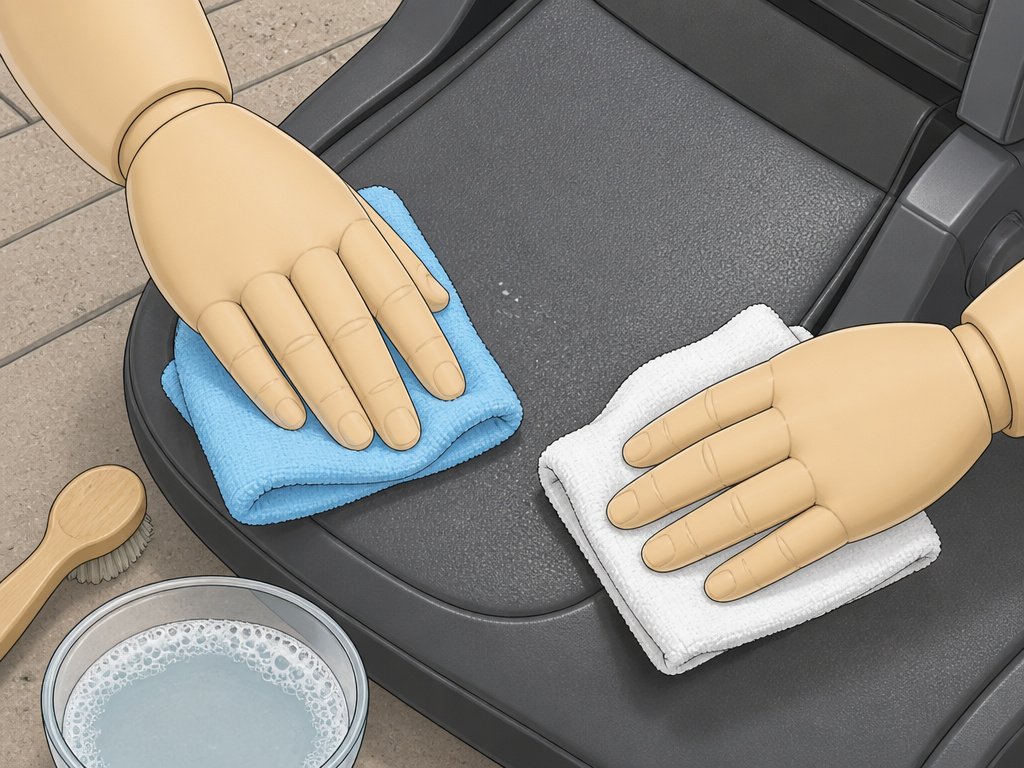
You need a clean base, not a soaked one. This process takes ten minutes and uses tools you already have.
Before you start: Unplug the base from the car’s LATCH anchors or unbuckle the seat belt. You must remove the base from the vehicle to clean it properly. Working around seat belts and upholstery is how you miss grime and spread moisture.
- Disconnect and Remove. Press the red release buttons on the LATCH connectors or unbuckle the vehicle seat belt. Lift the base out of the car. This is also the perfect time to check the vehicle seat for crumbs and spills.
- Dry Brush First. Take a soft-bristled brush (a clean paintbrush or dry toothbrush works) and knock off all loose debris, cereal dust, sand, pet hair. Do this over a trash can or outside. Brushing first keeps you from grinding grit into the plastic during the wet wash.
- Mix Your Solution. In a small bowl, mix a quart of warm (not hot) water with two drops of clear, dye-free dish soap like Dawn Free & Clear. The goal is a barely sudsy solution. Heavy detergents or cleaners leave a film that attracts more dirt.
- Dampen, Don’t Soak. Dampen a microfiber cloth in your soapy water, then wring it out until it’s just barely damp. You want the cloth moist, not dripping. This is the most important step.
- Wipe in Sections. Work on one area of the base at a time: the top surface, the sides, the belt path openings. Wipe firmly, then immediately dry the same section with a second, dry microfiber cloth. The “immediately” part is critical, it prevents water from seeping into joints.
- Clean the Belt Path. For the seat belt path channel, wrap a dry cloth around a chopstick or butter knife to reach inside. If needed, dampen the cloth corner slightly. Never pour or spray water into the channel.
- Air Dry Completely. Place the base in a well-ventilated area out of direct sunlight. Let it air dry for at least 2-3 hours, or overnight if the weather is humid. You must be able to feel no dampness anywhere, especially in the crevices around the release mechanism, before you even think about reinstalling it.
Where this goes sideways: Letting the base air dry in the sun. UV radiation degrades plastic over time, making it brittle. A shaded, breezy patio is ideal.
When “Clean” Isn’t Enough: Replacement Triggers
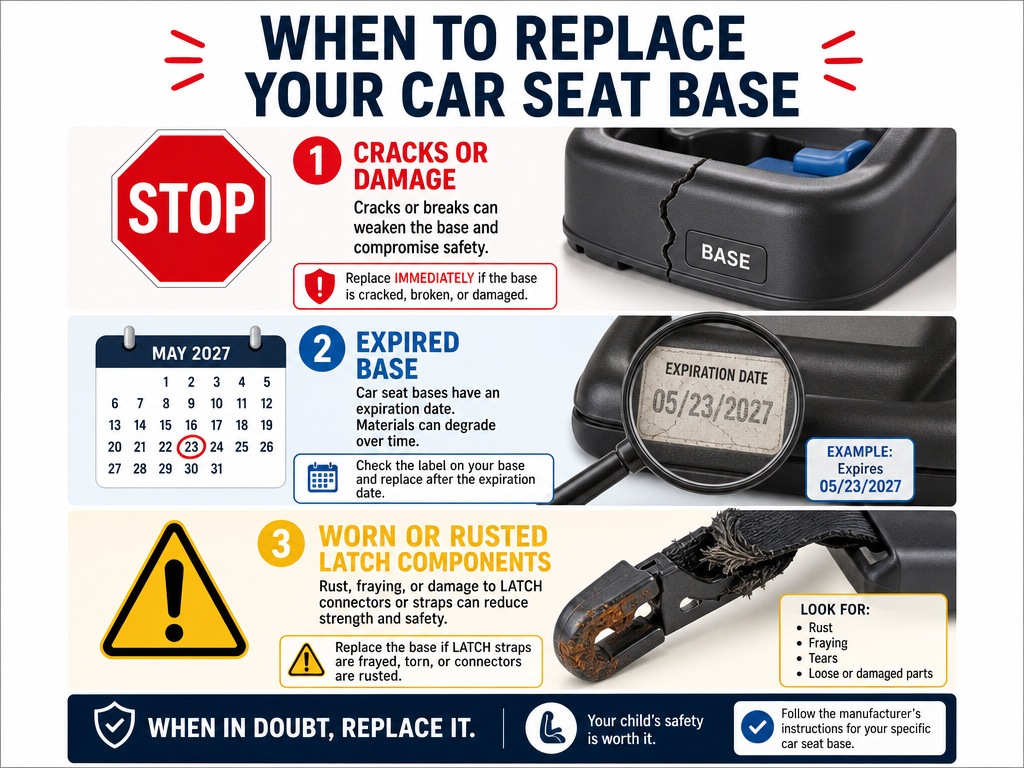
Cleaning preserves a base, but it can’t reverse damage or age. There are three non-negotiable reasons to stop using a base entirely.
First, any crash. The National Highway Traffic Safety Administration (NHTSA) says replacement after a moderate or severe crash is mandatory. For a minor crash, they don’t recommend replacement, but they add a crucial caveat: always follow the car seat manufacturer’s guidance. Brands like Britax and Clek often require replacement after any crash, period. When in doubt, replace. Insurance should cover it.
Second, visible damage. Look for: * Cracks or deep scratches in the plastic shell. * Faded or unreadable warning labels and model number stickers. * A LATCH strap or vehicle belt that is frayed, cut, or has a melted spot. * A recline adjuster or level indicator that no longer functions smoothly.
Third, expiration. Yes, bases expire. Plastics and composites degrade with heat, cold, and UV exposure. The industry standard is 6 to 10 years from the date of manufacture. The Newell Brands base manual states: “DISCONTINUE USE of this child restraint base after 7 years from the manufacture date.” The BeSafe Beyond Base has a 15-year lifespan. You’ll find the manufacture date on a sticker on the bottom or side of the base. Mark your calendar.
| Base Condition | Action | Why |
|---|---|---|
| After a moderate/severe crash | Replace immediately. | Internal stress fractures are invisible but catastrophic in a second crash. |
| Past expiration date | Retire the base. | Material fatigue means it may not perform to original safety standards. |
| Persistent mold/mildew smell | Replace. Do not attempt to clean. | Spores embed in porous materials and plastics; cleaning cannot remove the health risk. |
| Rusted LATCH connectors | Replace. | Corrosion weakens the metal and can prevent a secure release in an emergency. |
If your base is expired or damaged, you’ll need to know how to install a car seat without a base using the vehicle seat belt alone, a valid and safe installation method for most convertible and all-in-one seats.
Electronics, Warranties, and Second-Hand Bases
The cleaning rules tighten significantly with newer, feature-heavy bases.
Bases with a load leg, electronic tension sensors, or anti-rebound bars have circuit boards and wiring. The BeSafe manual’s warning against “aggressive cleaning products” explicitly covers these systems. A hose is the most aggressive cleaner possible. Even a heavily saturated cloth pushed into a vent for a sensor can cause a short. The repair is not a user-serviceable fix; it’s a full unit replacement.
Worth knowing before you start: Hosing down a base voids the warranty for every major brand. Water damage is classified as “misuse” or “improper care,” which is excluded from coverage. You’ll pay full price for a replacement.
This warranty point is why buying a second-hand base is a gamble you should never take. The BeSafe manual advises against it outright. You cannot verify its crash history, you can’t know if it was hosed down in a driveway, and the original warranty is almost certainly non-transferable. The $50 you save isn’t worth the unknown risk. When you need a base, buy new.
Frequently Asked Questions
Can I use disinfectant wipes on a car seat base?
No. Most disinfectant wipes contain bleach, alcohols, or ammonium compounds that degrade plastics and adhesives over time. They can make plastic brittle and cause labels to peel. Stick to a damp cloth with a drop of mild soap, then a dry cloth.
How do I get vomit or milk smell out of the base?
For organic spills, use the spot-cleaning method with a 50/50 mix of white vinegar and water on your damp cloth first, followed by the soapy water step. The vinegar neutralizes odors. Rinse the cloth thoroughly and wipe with plain water afterward, then dry meticulously. Never saturate the area.
My base was in a minor fender bender. Is it still safe?
The NHTSA says a replacement may not be necessary after a minor crash if all these are true: the vehicle could be driven away, the door nearest the seat was not damaged, no passengers were injured, airbags did not deploy, and there’s no visible damage to the seat. However, you must check your specific car seat manufacturer’s instructions, many require replacement after any crash.
Can I pressure wash a car seat base if I let it dry for a week?
Absolutely not. Pressure washing forces water deep into components at a pressure that can crack seals and plastic. Drying time is irrelevant if the water has already initiated corrosion or shorted a circuit. The damage is done the moment the water penetrates.
Where is the manufacture date on a car seat base?
Look for a white sticker on the bottom, side, or back of the plastic shell. It will list the model number and a manufacture date in a format like “MFG DATE: 01/2025.” Some brands also mold the date directly into the plastic on the underside.
The Bottom Line
A car seat base is a safety device, not a patio chair. Its job is to stay rigid and anchored under forces you hope it never sees. Hosing it down compromises that job by inviting rust and electrical failure into its core. The method is simple: a damp cloth, mild soap, immediate drying, and a keen eye for expiration dates and crash damage. When a base is past its service life, replace it. The correct cleaning ritual takes minutes and preserves the base’s integrity for years, exactly what you need it to do.
