
How to Release Car Seat from Base: Fix Common Jam Problems
This post contains affiliate links. As an Amazon Associate, we earn from qualifying purchases.
To release a car seat from its base, you must activate the specific release mechanism, a handle, lever, or button, while lifting the seat carrier upward. The exact method depends on your seat’s brand and model, falling into one of three common styles. Never force it; a jammed release usually means misalignment, a locked carry handle, or corrosion from improper storage.
The mechanism itself is simple. The complexity comes from the three different ways manufacturers build it, and the one physical failure that stops all of them cold.
What follows: a breakdown of the three release styles, the brand-specific steps for major seats, and the troubleshooting steps for when the seat refuses to let go. By the end, you’ll know the difference between detaching the seat and removing the base, a distinction that matters for recalls, cleaning, and switching cars.
Key Takeaways
- There are three primary release styles: a squeeze-and-lift handle on the seat back, a carrier release button on the seat itself, and a UAS release lever on the base. Your seat uses one.
- The carry handle must be in the upright and locked position before you attempt to release the seat. A folded handle physically blocks the mechanism on most models.
- If the seat won’t release, check for corrosion or damage from moisture or salt storage. The Orbit Baby manual explicitly warns this can prevent locking and unlocking.
- Releasing the seat is not the same as removing the base. To take the base out of the car, you must unbuckle the vehicle seat belt or detach the LATCH/UAS connectors.
- Always perform a post-release safety check. Inspect the seat’s lock bars and the base’s receiver for cracks, debris, or wear before reattaching.
The 3 Main Release Styles (and Where They Jam)
Look at the back of your infant carrier. The release isn’t hidden. It will be one of these three designs, and each has a known failure point.
The Technical Snippet: Infant car seat bases use a mechanical locking interface. The seat shell has protruding lock bars that engage with receiver hooks inside the base. Activating the release mechanism retracts these lock bars, disengaging the connection. A proper release requires simultaneous upward force to overcome the weight of the seat and child.
Style 1: The Squeeze-and-Lift Handle. This is the most common. You’ll find a large, often brightly colored handle on the rear of the car seat shell, just above where it meets the base. The Safety 1st onBoard FLX manual is direct: “slide the base release handle up and lift.” The Evenflo REVOLVE 180° LITEMAX NXT uses the same method.
- How it works: Squeeze the handle toward the seat back and lift the carrier straight up. You’ll hear a click.
- Where it jams: If you don’t lift straight up while squeezing, the lock bars can bind against the receivers. The handle itself can also stick if dirt or spilled formula gums up the pivot point.
Style 2: The Carrier Release Button. Some seats, like many UPPAbaby models, use a button or lever on the seat itself, often near the carry handle hinge. The UPPAbaby MESA V2 manual shows a “carrier release from base” button on the carrier’s back.
- How it works: Press and hold the button (sometimes while lifting a lever), then lift the carrier.
- Where it jams: These buttons have smaller internal springs. If the button doesn’t pop back out after you press it, the mechanism is stuck in the release position and won’t re-engage for reinstallation. This often requires a full disassembly to fix.
Style 3: The UAS Release Lever on the Base. Less common for infant seats, this style has the release on the base, not the seat. The Chicco KeyFit base manual describes a “UAS Release Lever” that you lift to free the carrier.
- How it works: Lift the lever on the base, then pull the seat carrier away.
- Where it jams: This lever is directly connected to the lock bar receivers. Forcing the seat off without fully engaging the lever can bend the thin metal linkage inside the base, requiring a base replacement.
Step-by-Step: Releasing the Seat
Follow these steps for any style. The golden rule is to never fight the seat. If it resists, stop and diagnose.
Before you start: Ensure the vehicle is in park on a level surface. Place the carry handle in the upright, locked position. This is not a suggestion, it’s a mandatory step that physically unlocks the release mechanism on most seats.
- Locate and Identify Your Release. Check the back of the seat carrier and the top of the base. Is it a large handle, a button, or a lever? Consult your manual if you’re unsure. Knowing your general steps for removal begins here.
- Activate the Mechanism. For a handle, squeeze firmly. For a button, press and hold. For a base lever, lift it to its full position. You should feel the mechanism engage; sometimes you’ll hear a subtle internal click.
- Lift Straight Up. Place one hand on the carry handle for stability. With your other hand under the seat’s front edge (near the baby’s feet), lift the carrier straight upward. Do not rock it side-to-side or yank it toward you.
- Clear the Base. Once the seat is free, lift it clear of the base and the vehicle seat back. Set it down securely on a flat, stable surface, like the floor or a stroller frame.
Where this goes sideways: Lifting at an angle. The lock bars are designed to disengage with vertical motion. Angling the seat sideways as you lift grinds the metal lock bars against the plastic receivers. After three or four angled removals, the plastic shows permanent gouges and the seat develops a wobble even when locked in.
After removal, take two seconds to look into the base. You should see the empty receiver hooks. Glance at the lock bars on the bottom of your seat carrier. Both should be clean, intact, and free of obstruction.
When the Seat Won’t Budge: A Troubleshooting Guide

A stuck seat is a safety flag. It means something is wrong with the interface. Do not apply excessive force.
| Symptom | Most Likely Cause | Immediate Fix |
|---|---|---|
| Release handle squeezes but seat doesn’t lift | Carry handle is not upright and locked. | Lock the carry handle into its vertical travel position, then try again. |
| Button/lever feels loose, does nothing | Internal mechanism disconnect or broken component. | Stop. Do not use the seat. Contact manufacturer customer service for repair. |
| Seat releases but feels gritty or rough | Dirt, sand, or debris in the lock bar channel. | Vacuum out the base receivers and wipe the seat’s lock bars with a dry cloth. |
| Cannot actuate release; everything feels frozen | Corrosion from moisture or salt exposure. | Inspect metal parts for white crust or rust. This may require professional inspection. |
The Orbit Baby manual states corrosion from damp storage “may prevent the car seat from properly locking into the car seat base.” The reverse is also true, it can prevent unlocking. If your seat has been stored in a garage, basement, or anywhere damp, this is your prime suspect.
Common mistake: Assuming a stuck release is just stubborn. It’s often a symptom of a compromised part. Forcing it can break the release mechanism or the lock bars, leading to a costly replacement of the entire seat or base.
What about the base itself? Remember, releasing the car seat is different from removing the base from the vehicle. To detach the base, you must always unbuckle the vehicle seat belt or press the red release buttons on the LATCH/UAS connectors and store them. The base is a separate piece that stays belted or latched into the car.
Brand-Specific Release Instructions
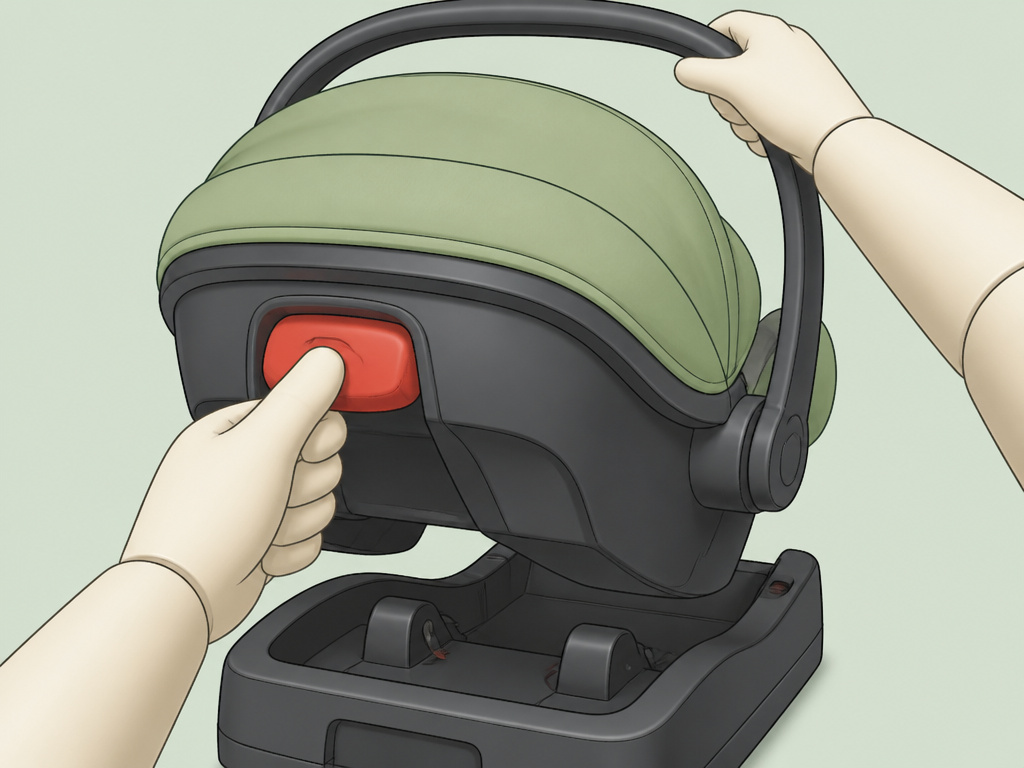
While the principles are universal, the location and naming of parts vary. Here’s a quick guide for major brands, drawn from their official manuals.
Evenflo REVOLVE 180° LITEMAX NXT: Squeeze the car seat release handle on the rear of the carrier while lifting up. To remove the base, you must open the LockStrong™ tray.
Chicco KeyFit: Lift the UAS Release Lever on the base to detach the carrier. Press the red button on each UAS Connector to detach the base from the vehicle.
Safety 1st onBoard FLX: Slide the base release handle up (on the seat back) and lift the seat out of the base.
UPPAbaby MESA V2: Pull and hold the carrier release button on the back of the carrier, then lift the carrier off the base.
Joie Rue: Press the carrier release button to detach the seat. The base uses red LATCH release buttons for removal.
If you own a system like the Doona car seat or the Cybex Cloud T, the process is similar but may involve a specific twist or pull motion, always defer to that product’s manual.
The Critical Post-Release Safety Check
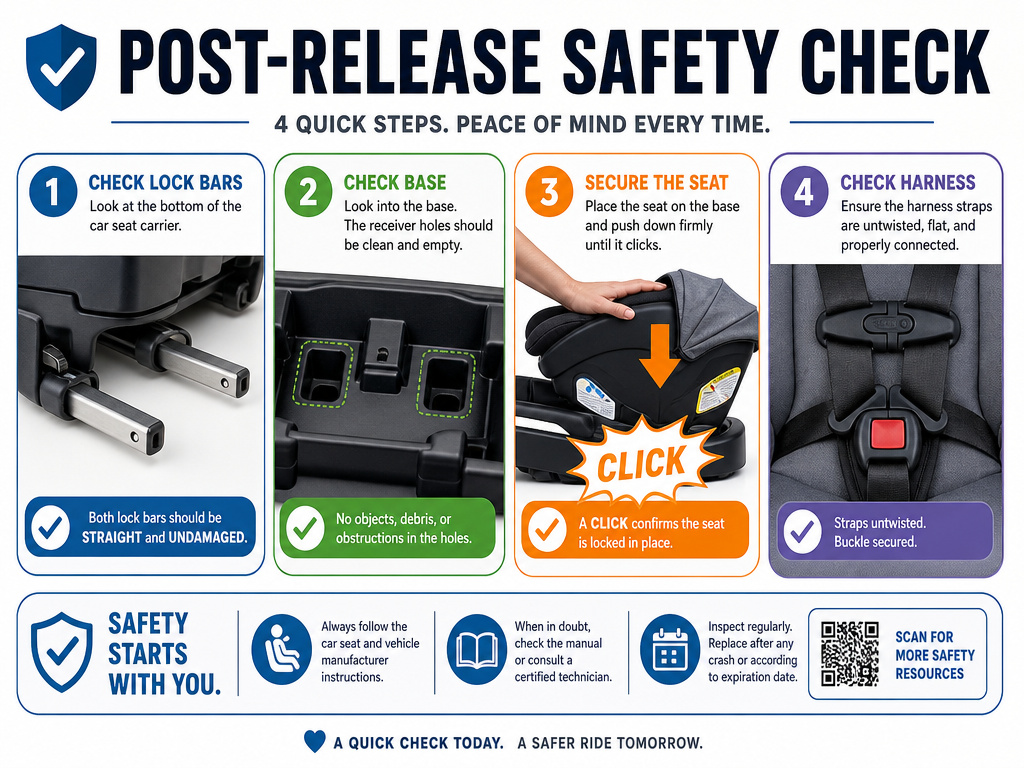
Releasing the seat isn’t the end of the job. Before you put your child back in, you need to verify the system is still sound.
- Inspect the Lock Bars. On the bottom of the seat carrier, find the two metal or thick plastic bars. Run your fingers along them. They should be smooth, straight, and free of deep scratches or cracks.
- Inspect the Base Receivers. Look into the holes on the base where the lock bars sit. Ensure they are empty, clean, and the internal hooks aren’t bent or broken.
- Test the Reattachment. Without the child in it, practice reattaching the seat. Align it and push down firmly until you hear a solid click. Then, pull up on the front corner of the seat (by the foot area). It should not lift off the base. If it does, the lock didn’t engage. Try again.
- Check the Harness. This is your moment. Since the seat is out, verify the harness straps aren’t twisted, the buckle latches cleanly, and the chest clip isn’t cracked.
Skipping this check is how small problems become big ones. A cracked lock bar you didn’t see today fails completely in a collision tomorrow.
Frequently Asked Questions
Why won’t my car seat release from the base?
The most common reasons are an unlocked carry handle, debris blocking the lock bars, or corrosion in the mechanism. Ensure the handle is upright, check for visible obstructions, and inspect metal parts for rust. If it’s still stuck, do not force it.
Is there a button to release a car seat?
Many models use a button or lever instead of a squeeze handle. Look for a “carrier release” button on the back or side of the infant carrier itself, or a release lever on the base. Refer to your specific product manual.
How do you remove a car seat base?
To remove the base, you must first unbuckle the vehicle seat belt routed through it. If installed with LATCH/UAS, press the red release button on each connector and unhook them from the vehicle’s anchors. The base is then free.
Can you release a car seat while the baby is in it?
Technically, yes, the release mechanism is designed to be operated with the child seated. However, for safety and control, it is always best to remove the child first, especially when troubleshooting a difficult release. The extra weight and wiggling can make the process unstable.
What if the release handle breaks?
If any part of the release mechanism breaks, the seat cannot be securely attached to its base. Stop using the seat immediately. Contact the manufacturer for warranty service or to order a replacement part. Do not attempt a DIY repair.
Before You Go
Releasing a car seat is a simple motion, squeeze, lift, clear. The real skill is knowing which of the three styles you have and respecting the one thing that stops them all: corrosion from bad storage.
Find your release handle or button today. Practice the motion without your child in the seat. Feel for that clean click. That click is the sound of a mechanism working as designed, which is the only way it keeps anyone safe.
When in doubt, your product manual is the final authority. It has the exact diagram for your model. A five-minute review beats a broken seat, every time.
