
How Do You Put a Newborn in a Car Seat Correctly & Safely
This post contains affiliate links. As an Amazon Associate, we earn from qualifying purchases.
Putting a newborn in a car seat requires matching three things: the seat’s minimum weight limit (often 4 or 5 pounds), the harness slot position at or below the shoulders, and a snug strap fit that passes the pinch test. Use any manufacturer-provided newborn insert for infants under 11 pounds, and always consult a doctor before the first trip for babies born before 37 weeks.
The 4-pound minimum on most infant seats isn’t a suggestion. It’s the threshold where the harness geometry actually works. Go under that weight, and the shoulder straps ride too high, the crotch buckle sits behind the infant’s back, and the whole restraint system fails to cradle the child during a crash.
What follows: the three-step fit check you do before every trip, the exact harness rules manuals print in bold, and the medical protocol for preterm infants that most guides gloss over.
Key Takeaways
- The car seat’s minimum weight limit is non-negotiable. The Chicco KeyFit Max starts at 4 lbs with its insert; the Evenflo LiteMax NXT starts at 5 lbs. Going under voids the safety certification.
- The harness must be tight enough that you cannot pinch a vertical fold in the strap material at the child’s shoulder. A loose harness lets the body eject upward in a crash.
- Preterm infants (born before 37 weeks) require a 90–120 minute hospital observation before discharge. Studies show 18–24% of these babies experience oxygen desaturation in a standard semi-upright seat.
- Never place blankets or bulky clothing between the child and the harness. A puffy coat compresses on impact, creating dangerous slack. Dress the baby in thin layers and lay a blanket over the secured harness.
- The chest clip is a pre-crash positioning device, not a restraint. It must be at armpit level to keep the harness straps properly placed over the shoulders.
The 3-Step Fit Test Every Newborn Must Pass
You do this check before you thread the first harness strap. If the baby fails any step, the seat isn’t safe for them yet.
First, verify the weight. Federal standards don’t set a floor, but manufacturers do. The Chicco KeyFit Max infant car seat manual states a 4-pound minimum only when using the included Newborn Positioner. Without it, the minimum is 11 pounds. The Evenflo LiteMax NXT starts at 5 pounds. This isn’t about comfort. Below these weights, the child’s pelvis isn’t developed enough to be secured by the crotch strap, and the harness routing can cause airway obstruction.
Second, check the harness height. The shoulder straps must route through slots at or below the baby’s shoulders. This is non-negotiable for rear-facing seats. If the straps are above the shoulders, the child can be thrown upward and out of the harness in a frontal collision. Most infant seats have multiple harness height settings. Move the straps before you put the baby in, not after.
Third, assess the head position. The top of the child’s head must be at least one inch below the top of the car seat shell. This ensures the shell contains and protects the head in a rear-impact crash. If the head is less than an inch from the top, the seat is outgrown, even if the baby is under the weight limit.
A proper fit means the child’s back and bottom are flat against the seat back, the harness straps are at or below shoulder level, and the crotch buckle is as close to the body as possible without resting underneath it. The harness should lie in a straight line without twisting or sagging.
These three checks take twenty seconds. They are the difference between a safety device and a decorative carrier.
Harness Rules: Snug, Straight, and at the Armpit
The harness is the only thing connecting your child to the crash protection of the seat. Get it wrong, and the seat is just plastic.
Start with a loose harness. Press the adjustment button and pull the straps fully out. Place the baby in the seat, ensuring their back is flat and they aren’t slouching. For a small infant, this is where you add the manufacturer’s newborn insert. Thread the harness straps over the shoulders and buckle at the crotch.
Tighten until it passes the pinch test. Pull the adjustment strap until the harness is snug. Now, try to pinch the harness strap vertically at the child’s shoulder. If you can pinch any material between your fingers, it’s too loose. The strap should be taut against the collarbone. A loose harness can allow up to six inches of forward movement in a 30-mph crash.
Position the chest clip at armpit level. This is the step everyone misplaces. The chest clip’s sole job is to keep the harness straps correctly positioned on the shoulders before a crash. It is not a primary restraint. If it’s too low (on the abdomen) or too high (on the neck), the straps can slip off the shoulders, rendering the harness useless. Armpit level. Every time.
| Harness Mistake | Immediate Consequence | Crash Consequence |
|---|---|---|
| Loose straps (fails pinch test) | Baby can wiggle arms out | Full upper-body ejection from harness |
| Chest clip on abdomen | Straps spread wide, fall off shoulders | Torso slides up, harness loses containment |
| Twisted strap | Pressure concentrates on a thin line | Strap can tear or cut into skin |
| Bulky coat under harness | Creates false sense of tightness | Coat compresses, creating deadly slack |
After securing the baby, do a final visual check. The straps are straight. The chest clip is level with the armpits. The buckle is fully latched. Now you can place a blanket over the secured child.
Special Cases: Preterm Infants and Small Newborns
The standard procedure assumes a full-term, average-size newborn. Two groups need different rules.
Preterm infants (born before 37 weeks) are at documented risk. Their cardiorespiratory systems are immature, and the semi-upright position of a car seat can cause apnea (paused breathing) and oxygen desaturation. A hospital car seat assessment study found 18.4% to 24% of preterm infants “failed” monitoring in a car seat. The American Academy of Pediatrics mandates a 90–120 minute observation period in the seat before hospital discharge for these babies.
If an infant fails, the hospital may recommend a car bed, a flat, crash-tested restraint, for the first few months. Do not attempt to recline a standard car seat further; altering the approved angle compromises crash protection.
Small but full-term newborns need the insert. Most infant seats come with a padded insert or “newborn positioner.” The Chicco KeyFit Max insert is for babies 4 to 11 pounds. Its purpose is to fill the empty space around a tiny infant, ensuring the harness fits the body correctly and the airway stays open. Never use aftermarket head supports or rolled blankets for this job. They aren’t crash-tested and can shift, posing a suffocation risk.
Where this goes sideways: Using a secondhand seat of unknown history. A seat from a garage sale could be expired, missing parts, or have been in a crash with invisible damage. The plastic shell degrades over time. If you don’t know its full story, you don’t know its safety.
What Not to Do: The Quickest Path to a Failed Installation
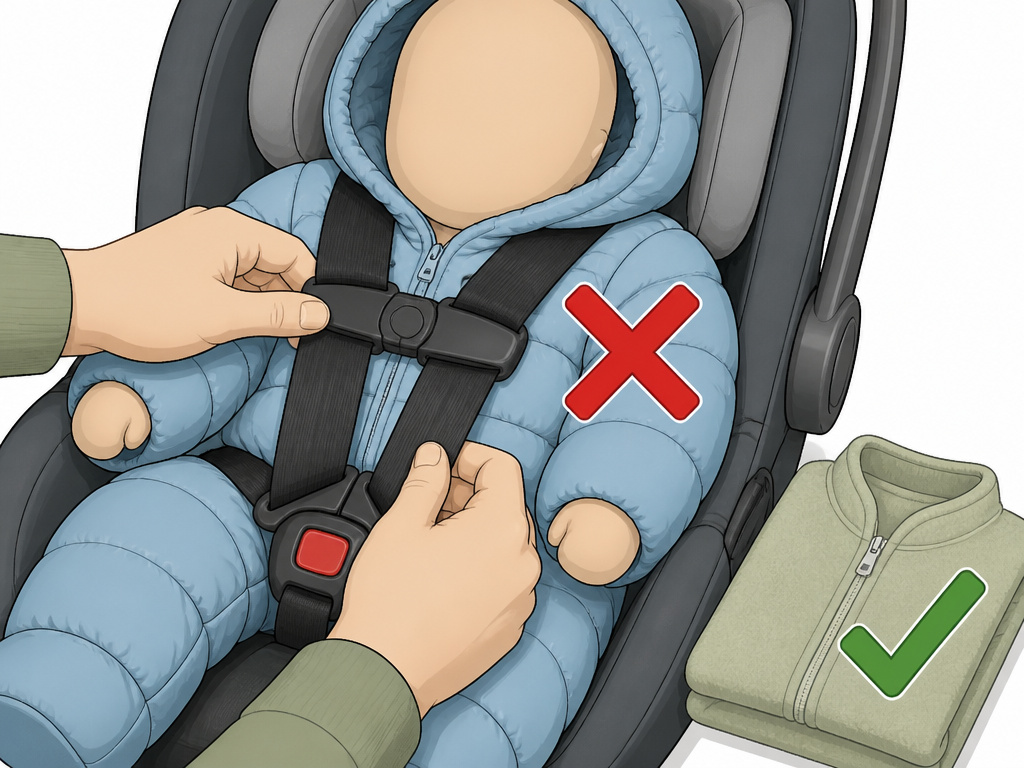
Some mistakes are so common they have their own statistics. Over 75% of car seats are used incorrectly. Here are the top offenders.
Never put the coat on the baby, put the coat on the seat. A winter coat is fluffy. It compresses under force. You might tighten the harness snugly over a puffy coat, but in a crash, the coat flattens, instantly creating inches of deadly slack. The solution: dress the baby in thin, warm layers (like fleece), secure the harness snugly against that clothing, then tuck a blanket around them or put their coat on backwards over the buckled harness.
Never install using both LATCH and seat belt. It says this in every manual. The two systems are not designed to work together. Using both can put unexpected stress on the seat’s structure and the vehicle anchors, potentially causing both to fail. Pick one method, either the lower LATCH anchors or the vehicle seat belt, and install it tightly.
Never place the seat in the front. Passenger airbags deploy with enough force to kill an infant in a rear-facing seat. The back seat is the only safe location. The center of the back seat is statistically the safest position, as it’s furthest from any point of impact.
Never let the handle be up unless the manual says so. For most infant carriers, the carry handle must be locked in the down or rearward position when in the car. An upright handle can become a projectile in a crash. Check your specific model’s rule.
Tools and Positioning Aids You Actually Need
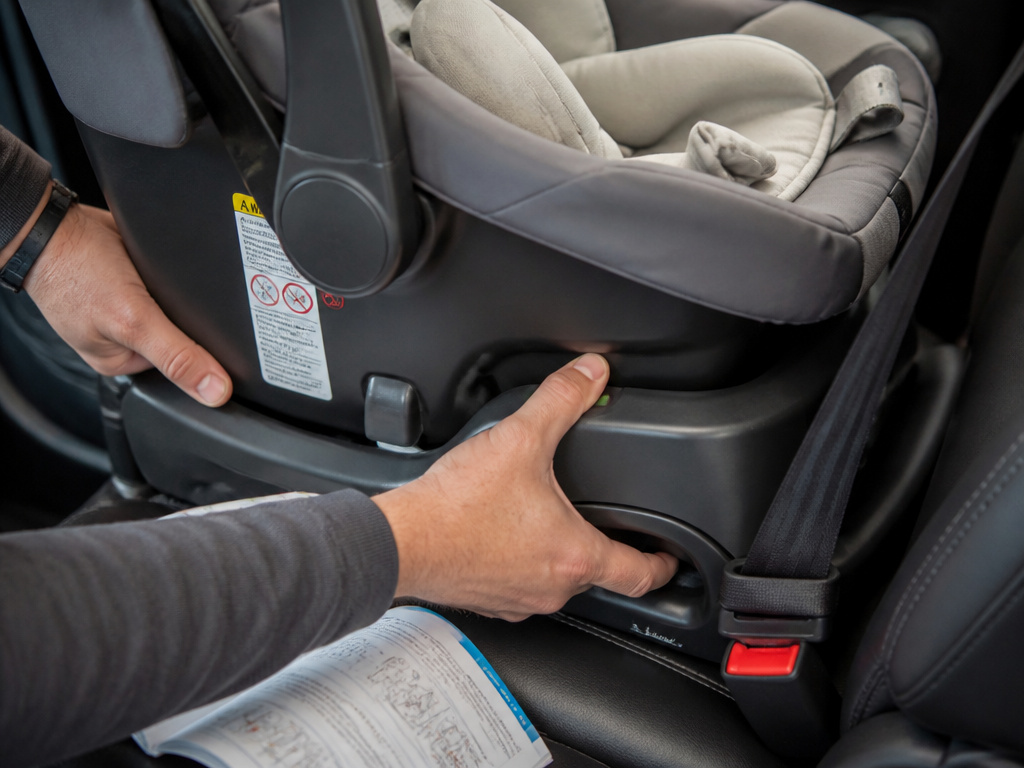
You need almost nothing extra. In fact, most add-ons are dangerous.
The only approved tools are the ones that come in the box: the newborn insert and the seat’s own base. The base is critical for achieving the correct recline angle, which is usually indicated by a level line or bubble. An overly upright seat can cause an infant’s head to fall forward, restricting their airway. A too-reclined seat offers less protection in a crash.
Aftermarket products like head positioners, strap covers, or mirrors that attach to the seat back are not crash-tested with your seat. They can interfere with the harness system or become projectiles. The safest interior is a bare seat with a properly harnessed child.
For installation, your tools are your hands and your vehicle manual. If you need help, seek a certified Child Passenger Safety Technician. You can find one through Safe Kids Worldwide or your local fire department.
Frequently Asked Questions
How do I know if the car seat is reclined enough for a newborn?
Check the seat’s built-in angle indicator, it’s usually a line or bubble that must be level with the ground. For most infant seats, this is a 30- to 45-degree angle. The correct recline ensures the baby’s head does not flop forward. If you’re using the base, adjust it until the indicator shows level. If installing without a base, use a rolled towel or pool noodle under the foot of the seat only if the car seat manual explicitly permits it.
Can my newborn sleep in the car seat during a long drive?
For monitored travel in the moving vehicle, yes. The seated, semi-upright position is safe when the child is properly harnessed and you are present. However, never let a newborn sleep in a car seat outside the car, not in the house, not on a stroller. The position can cause their chin to rest on their chest, cutting off their airway (positional asphyxiation). Once you arrive, move them to a flat, firm sleep surface.
What if my newborn cries every time they’re in the car seat?
This is common and agonizing. First, rule out a fit issue: are they too hot? Is the harness pinching? Is the seat angle uncomfortable? If the fit is correct, it may be sensory overwhelm. Try soft music, a pacifier, and ensuring you’re calm, they sense stress. For some babies, it’s a phase that peaks around 6-8 weeks. As one parent reported, “I avoided driving alone with her for over a year.” The crying usually improves as they get older and more accustomed to the car.
Do I need to buy a separate car seat for my newborn?
Not necessarily. You have two safe choices: an infant-only seat (like the Chicco KeyFit) that typically fits from 4-35 pounds, or a convertible seat (like the Graco 4Ever) installed rear-facing from 5 pounds upward. The infant seat is convenient for carrying a sleeping baby. The convertible seat lasts for years but stays in the car. Both, when used correctly according to their manuals, are equally safe.
Before You Go
The process boils down to a tight harness on a child who fits the seat’s specs. Check the weight, check the harness height, and tighten until you can’t pinch the strap. Use the insert if your baby is under 11 pounds, and never let a coat come between the child and the harness straps. For babies born early, that hospital observation isn’t optional, it’s a lifesaving preview of the trip home. Get the fit right in your driveway, and the seat will do its job on the road.
