
Understanding the Newborn Insert in a Car Seat for Safer Travel
This post contains affiliate links. As an Amazon Associate, we earn from qualifying purchases.
A newborn insert in a car seat is a manufacturer-supplied, model-specific padded component designed for infants between 5 and 11 pounds. Its sole purpose is to position a small baby’s body so the harness straps sit at or below the shoulders and the child is fully contained within the seat’s protective shell. Using any other padding—or skipping the insert when the harness rides above the shoulders—compromises the seat’s tested safety performance.
That 11-pound cutoff is the line where the seat’s engineering assumes the child’s proportions have changed enough that the insert becomes a hazard instead of a help. The manuals are blunt: go over 11 pounds, and the insert comes out.
What follows is a breakdown of the insert’s real job, the exact rules from Nuna, Chicco, and Cybex manuals, and the one mistake that voids your seat’s safety certification on impact.
Key Takeaways
- Newborn inserts are mandatory for infants 5–11 lb in most seats to achieve a safe harness fit at or below the shoulders.
- Never use an aftermarket or generic insert. Only the one supplied with your specific car seat model is crash-tested and approved.
- The 11 lb (5 kg) weight limit is a hard stop; exceeding it risks improper restraint and increased injury.
- Some seats, like the Cybex Aton 2, have a two-part system: a foam Newborn Inlay (to 11 lb) and a fabric Infant Insert (to 22 lb).
- The insert changes harness routing. For example, the Nuna EXEC requires the buckle to be in the inner position when the insert is installed.
The Newborn Insert’s Job: Fit, Not Fluff
Forget pillows and comfort. A newborn insert is a positioning tool. A full-term newborn’s body is mostly head and torso with minimal shoulder development. In a car seat shell designed to eventually hold a 40-pound toddler, that tiny baby can slump, causing the harness straps to ride up near their ears. Straps above the shoulders allow the child to ramp upward in a crash, risking spinal injury.
The infant insert is for infants who weigh between 5–11 lb (2.3–5 kg). DO NOT use the insert for a child who weighs more than 11 lb. – Nuna REVV Convertible Car Seat Manual, p. 26
The insert fills the void. It brings the baby’s body forward and up, ensuring the harness slots hit at or just below the shoulder line. It also provides lateral support to keep a sleeping baby’s head from lolling into a dangerous chin-to-chest position, which can restrict breathing.
This is why the ban on aftermarket inserts is absolute. A third-party pillow might look cozy, but it hasn’t been tested with your seat. It can compress unpredictably on impact, creating slack in the harness system. That slack is the difference between being held securely and being thrown forward.
The part nobody mentions: The insert often changes how you route the harness buckle. The Nuna EXEC manual specifies the buckle must be used in the inner position with the insert. Skip that page, and you’ve built a critical flaw into your installation.
What’s Inside: Manufacturer Specs and Rules
Not all inserts are the same, and some seats have more than one. Here’s how the major brands break down, directly from their manuals.
| Car Seat Model | Insert Name | Weight Range | Key Rule from the Manual |
|---|---|---|---|
| Nuna REVV | Infant Insert | 5–11 lb (2.3–5 kg) | Must be removed after 11 lb. Improves harness fit and recline angle. |
| Chicco Fit3x | Newborn Insert | 5–11 lb (2.3–5 kg) | “Do not use any other infant inserts or pillows. Only use the Fit3x newborn insert provided by Chicco.” |
| Chicco NextFit Zip Max | Newborn Positioner & Headrest | 4–11 lb (1.8–5 kg) | For use only in rear-facing mode with infants in this weight range. |
| Nuna EXEC | Infant Insert | 5–11 lb (2.3–5 kg) | Harness buckle must be in the inner position when the insert is used. |
| Cybex Aton 2 | Newborn Inlay (EPS foam) | To 11 lb (5 kg) / ~3 months | A rigid foam layer under the seat cover for proper positioning. |
| Cybex Aton 2 | Infant Insert (fabric) | To 22 lb (10 kg) | Can be removed if it pushes the head forward or compromises fit. |
The Cybex Aton 2’s dual-system is the outlier. The Newborn Inlay is a piece of EPS foam—the same energy-absorbing material used in bike helmets—that sits beneath the seat pad. The separate fabric Infant Insert provides head and torso support and can be used much longer. Their manual includes a crucial caveat: remove it if it pushes the baby’s head forward. This is the kind of car seat compatibility detail that matters.
Where this goes sideways: Assuming all “newborn inserts” are interchangeable. A Chicco insert in a Nuna seat changes the geometry the engineers tested. At 30 mph, that unknown variable can have severe consequences.
When to Use It (And When to Absolutely Not)
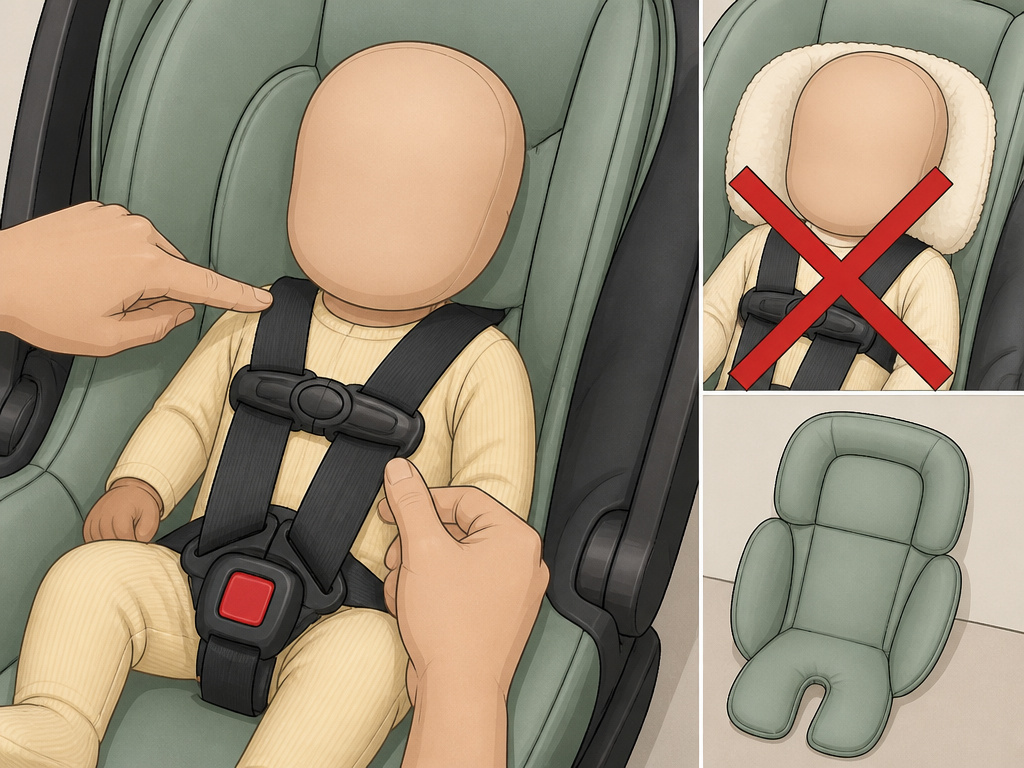
The decision tree is simpler than most parenting advice. It boils down to weight, harness fit, and the words in your manual.
- Check the weight. Is your baby between 5 and 11 pounds? For the Chicco NextFit, the range starts at 4 pounds. This is the primary gate.
- Perform the harness test. With the baby in the seat without the insert, buckle and tighten the harness. Where do the straps lie relative to the shoulders?
- At or below: The insert is likely optional for fit. You may still use it for added head support if the manual allows.
- Above: The insert is required. Install it and repeat the test. The straps should now be at or below the shoulders.
- Consult the doctor for preemies. The Chicco and Nuna manuals explicitly state you must consult a physician before using the seat for a premature infant. Their lung development and muscle tone are different.
Common mistake: Using the insert as a blanket substitute for a properly tightened harness. The insert positions, but the harness restrains. You should still not be able to pinch a horizontal fold in the harness strap at the collarbone.
The “never” list is short but critical: * Never use the insert for a child over 11 lb (or the weight specified in your manual). * Never add aftermarket padding, head head support pillows, or blankets under the baby. * Never use an insert from a different car seat model, even from the same brand. * Never use the insert in forward-facing mode. It’s for rear-facing only.
The risks of an aftermarket or misused non-approved insert aren’t theoretical. They add compressible material between the child and the harness, creating slack. They can also interfere with the proper routing of the buckle or straps, leading to partial engagement.
When to Remove It: The 11-Pound Rule and Beyond
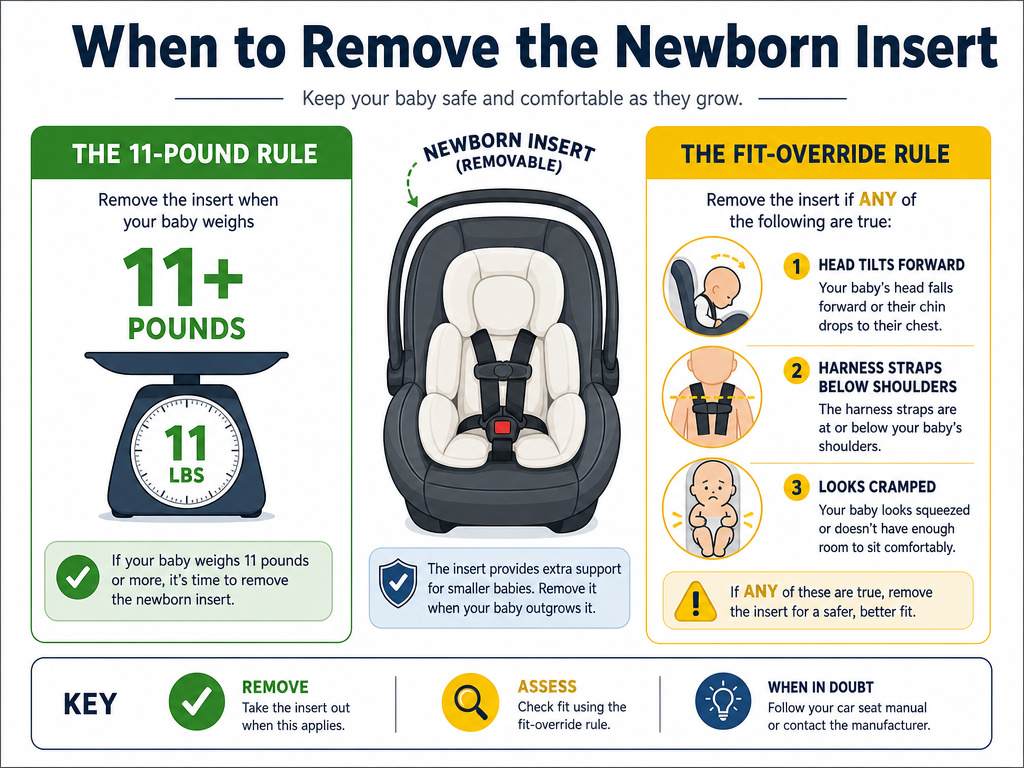
The timeline is about weight and, secondarily, fit. Every manual cited anchors the removal instruction to the 11-pound (5 kg) mark.
The hard rule: When your baby’s weight hits 11 pounds on an accurate scale, remove the insert. Don’t wait for the next doctor’s appointment. This is the engineering threshold.
The fit-override rule: Even before 11 pounds, remove the insert if it causes any of these issues: * The baby’s head is pushed forward into a chin-to-chest position. * The harness straps are forced below the shoulders by more than an inch. * The child appears cramped or “pushed up” out of the seat shell.
For the Cybex Aton 2 Infant Insert, the manual extends its use to 22 pounds but includes the same fit-override clause. The moment it compromises fit, it comes out.
The process of remove newborn insert is usually straightforward: unfasten any snaps, lift it out, and re-thread the harness straps through the correct seat shell slots (not the insert’s slots). This is a good time to adjust the harness height to the next set of slots if needed.
| Scenario | Action | Why |
|---|---|---|
| Baby weighs 12 lb. | Remove insert immediately. | The seat’s crash performance is validated for children over 11 lb without the insert. |
| Shoulder straps are at/below level without insert at 9 lb. | Insert is optional. Can use for support if desired. | Proper harness fit is already achieved. The insert is no longer a positioning necessity. |
| Insert forces chin to chest at 8 lb. | Remove insert. Check harness slot height. | Airway obstruction risk outweighs positioning benefit. |
| Using a Cybex Aton 2 insert at 18 lb. | Assess fit. Remove if shoulders are above top harness slots or head is pushed. | The insert’s job is done. Continuing use may restrict movement or fit. |
After removal, you might notice a gap around your baby’s head. This is normal. This is when a dedicated, crash-tested head hugger designed for your specific seat can be appropriate—but never use the newborn insert to fill that gap once it’s outgrown.
The One Insert You Should Never Buy
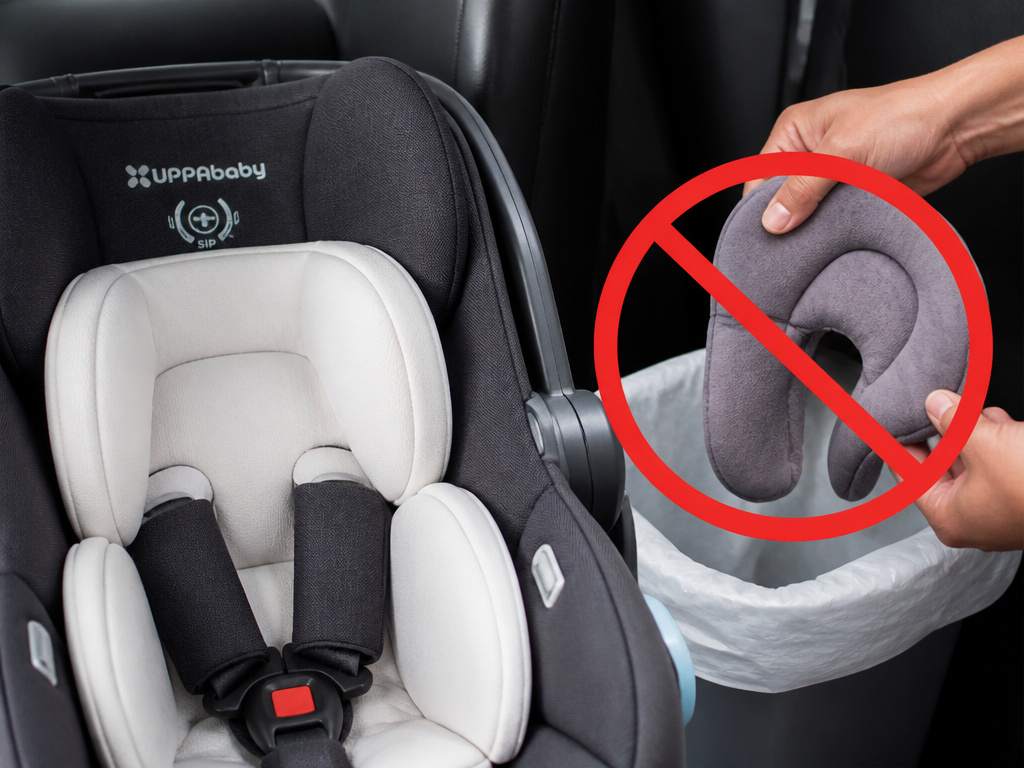
The market is full of plush, cozy-looking car seat accessories. They promise extra comfort, neck support, or warmth. Ignore them.
NEVER place extra padding under or behind the child. The Infant Insert is the only approved padding to be used with the Aton 2. – Cybex Aton 2 Manual
This warning is echoed by Chicco and Nuna. These unsafe car seat accessories fail in two ways. First, they invalidate the seat’s compliance with Federal Motor Vehicle Safety Standard (FMVSS) 213. In a crash investigation, their presence could shift liability. Second, they introduce unknown variables into a carefully engineered safety system.
What about winter? Bulky coats are a similar hazard. The correct method is to buckle the child in a thin layer, then place a blanket over the fastened harness or use a car seat cover that goes over the entire seat, not under the baby.
If your child needs additional support due to a medical condition, talk to your pediatrician about options that may include specially tested accessories or a different restraint system. Don’t gamble with a generic store-bought pillow.
Frequently Asked Questions
Can I use a rolled-up blanket instead of the insert?
No. Blankets are compressible and not secured. They will shift and flatten in a crash, creating dangerous slack in the harness system. Only the manufacturer-supplied insert for your specific seat model is crash-tested as part of the seat’s system.
My baby is long but thin. Should I keep the insert past 11 lb?
The 11-pound rule is a weight limit, not a suggestion. Remove the insert at 11 lb regardless of height or perceived thinness. The seat’s safety performance for children over that weight is certified without the insert. If the harness straps are above the shoulders after removal, you may need to move them to a higher slot position on the seat shell.
Are there any safe aftermarket inserts?
No car seat manufacturer approves the use of aftermarket inserts not specifically designed and tested with their seat. While some third-party companies claim their products are “tested,” they are not part of the official certification testing for your seat model. Using them voids the warranty and compromises safety.
How do I clean the newborn insert?
Always follow the cleaning instructions in your car seat manual. Typically, the fabric insert can be removed and hand-washed in mild detergent, then air-dried. Never put it in the dryer unless the manual explicitly states it is safe to do so, as heat can degrade the padding and fire-retardant materials.
What if I lost my original insert?
Contact the car seat manufacturer directly to order a replacement insert for your exact model number. Do not buy a used insert from another source, as its history and condition are unknown. Until the replacement arrives, use the seat without any insert if your child is over 11 lb or meets the harness fit test without it.
Before You Go
A newborn insert is a vital piece of safety equipment for the smallest passengers, with a strict 5–11 pound window of use. Its entire purpose is to create one thing: a correct harness fit.
Remember the three non-negotiables. Use only the insert that came with your seat. Take it out the day your baby hits 11 pounds. And never, ever let a fluffy aftermarket pillow come between your child and the harness that’s designed to save their life.
When in doubt, the final word is always in the manual tucked under the seat. That’s the document that matters.
