
What is a Good Infant Car Seat? The 3 Most Important Specs
This post contains affiliate links. As an Amazon Associate, we earn from qualifying purchases.
A good infant car seat meets three non-negotiable specs: it fits your child’s height and weight (typically 4-35 lbs, up to 35 inches), it installs securely in your specific vehicle with less than 1 inch of movement, and it carries current certification (FMVSS 213 or UN R129). The seat’s manual and your vehicle’s owner’s manual are the final authority, not marketing claims.
That answer is the standard. It’s also incomplete. A seat that ticks all three boxes can still fail in ways the manual buries on page 12 or a salesperson never mentions.
What follows is the rest of the story: the three specs, the two hidden hazards, and the one field report from parents in subcompact cars that reframes the whole search.
Key Takeaways
- The seat’s height and weight limits are printed on a label on the shell. Your child outgrows it when their head is within 1 inch of the shell’s top, regardless of weight.
- Vehicle fit is not guaranteed. The Joie i-Snug 2 manual explicitly states it “may not fit in all approved vehicles.” Test before you buy, or purchase from a retailer with a generous return policy.
- A 2012 case report in Pediatrics & Child Health documented an infant burn from an overheated car seat after a long, sunny drive. Always touch the shell and buckle before placing your child inside.
- Manufacturer guidance and pediatric safety groups sometimes disagree. Some manufacturers say replace a seat after any crash; the AAP states seats in minor crashes may still be safe.
- For a small daily driver like a Toyota Yaris, compact seats like the Joie Rue or Evenflo Lite Max work, but they will push the front seats forward.
The 3 Non-Negotiable Specs of a Good Infant Car Seat
Forget “best” lists. A seat that’s perfect for a minivan is a disaster in a coupe. Your search starts with three printed numbers and a vehicle manual.
Spec 1: Child Fit – Height and Weight Limits
Infant-only seats have a narrow range, usually 4 to 35 pounds and up to 32-35 inches tall. Convertible seats start at the same minimum but have higher rear-facing limits, often 40 or 50 pounds. The limit that matters first is almost always height. A child is too tall when the crown of their head is less than one inch from the top of the car seat’s carrier shell. Exceed that, and the harness can’t be positioned correctly on the shoulders.
The 1-inch rule is the universal outgrowing signal for infant carriers. Weight is the secondary limit, but height is the one that hits 90% of families first.
Spec 2: Vehicle Fit – The 1-Inch Installation Rule
A seat must install tightly in your specific vehicle. The NHTSA car seat safety guide states you should not be able to move the seat more than 1 inch side-to-side or front-to-back at the belt path. This is non-negotiable. A loose seat becomes a projectile in a crash.
| Installation Method | Best For | Critical Check |
|---|---|---|
| LATCH system (Lower Anchors) | Simplicity, newer vehicles | Weight limit: Child’s weight + seat weight ≤ 65 lbs |
| Vehicle Seat Belt | Older cars, center seat position | Locking clip required if belt doesn’t lock automatically |
| NEVER use both LATCH and seat belt together. The forces can interact unpredictably. Pick one secure method. |
Vehicle compatibility is a real hurdle. The manual for the Joie i-Snug 2 warns, “The enhanced child restraint may not fit in all approved vehicles.” This isn’t legalese. In a subcompact car, the seat’s recline angle or the front seat track position can make a proper install impossible.
Spec 3: Certification – FMVSS 213 or UN R129 (i-Size)
In the U.S., look for a sticker that says the seat meets Federal Motor Vehicle Safety Standard (FMVSS) No. 213. In Europe and increasingly elsewhere, the standard is UN Regulation No. 129, known as i-Size. I-Size seats are rated by height, not weight, and require ISOFIX (the European LATCH equivalent). Both certify the seat passed a specific crash test. A seat without this certification is not a car seat; it’s a plastic bucket.
The Hidden Hazards No One Talks About
The manual covers crash physics. It often glosses over environmental and usage risks that aren’t hypothetical.
Hazard 1: Thermal Burns from an Overheated Shell
This isn’t about a warm seat. A 2012 case report published in Pediatrics & Child Health described a burn to an 11-month-old “likely caused by a car seat during a long drive on a hot, sunny day.” The shell and metal buckle components can absorb and retain significant heat. Dark-colored seats are worse.
Where this goes sideways: Leaving the seat in a sunny car window for an hour before a trip. The surface temperature can exceed 60°C (140°F) – enough to cause a first-degree burn on contact with an infant’s thin skin.
The fix is simple but non-negotiable. Always touch the seat shell and buckle with the back of your hand before placing your child in it. If it’s hot to you, it’s a burn risk to them. Use a light-colored cover or a towel to shade the seat when parked.
Hazard 2: The Safe Sleep Misconception
An infant car seat is a travel restraint, not a bed. The angled recline designed for crash safety can cause a young infant’s head to fall forward, potentially restricting their airway. This positional asphyxia risk is why hospitals conduct “car seat tests” for preterm infants before discharge.
- Never leave your child sleeping unattended in the seat after you’ve arrived home.
- Do not use the car seat as a primary sleep location outside the vehicle.
- If your child falls asleep during a drive, transfer them to a firm, flat crib or bassinet as soon as the trip ends.
The convenience of carrying a sleeping baby inside is real. The risk of silent asphyxia is realer. Transfer them.
Vehicle Compatibility: Will It Actually Fit in Your Car?
This is the step that turns online shopping into a headache. A Consumer Reports car seat buying guide will tell you which seats score well in crash tests. It won’t tell you if that seat will fit behind the driver’s seat of your 2016 Toyota Yaris with the driver’s legs comfortable.
Reddit’s community of Child Passenger Safety Technicians (CPSTs) fields this daily. One tech, commenting on a Yaris owner’s query, noted: “Fellow sub-compact daily driver here… Evenflo Lite Max car seats… Fit in my car with the seat moved up. Joie Rue is great for small cars.”
The takeaway is blunt. If you drive a small car, your seat choices shrink. You are shopping for compact-specific models. The trade-off is often less padding, fewer “premium” features, and definitely less front legroom.
Your vehicle compatibility checklist:
- Consult your vehicle’s manual for rules about rear-facing seats and airbags.
- If possible, borrow a floor model from a store to try a physical installation.
- Prioritize seats known for compact fits: Joie Rue, Evenflo LiteMax, Chicco KeyFit 30.
- Remember, the center rear seat is often the safest position if you can get a secure install there.
Navigating Conflicting Advice: Manuals vs. Reality
You’ll find two areas where expert guidance and manufacturer fine print don’t align.
The Post-Crash Replacement Debate
Many car seat manufacturers state you must replace a seat after any crash, however minor. The AAP car seat information for families offers a nuanced view: seats in a minor crash may not need replacement. They define a minor crash as one where the vehicle could be driven away, the door nearest the seat was undamaged, no passengers were injured, and the airbags did not deploy.
The manufacturer’s stance is liability-driven. The AAP’s is practical. If you’re in a true fender-bender that meets the AAP’s criteria, the seat is likely fine. In any moderate or severe crash, replace it immediately. Your insurance should cover the cost.
The Lower Anchor Weight Limit
LATCH anchors in your car have a maximum weight limit: 65 pounds total. That’s the weight of the child plus the weight of the car seat itself. Most parents hit this limit long before the seat’s own weight limit. If your seat’s manual doesn’t state a maximum child weight for lower anchor use, you must calculate it: 65 lbs minus the seat’s weight.
Once your child exceeds that calculated weight, you must switch to a seat belt installation. The LATCH system is not rated for heavier children, even if the car seat is.
How to Choose: Infant-Only vs. Convertible Seats
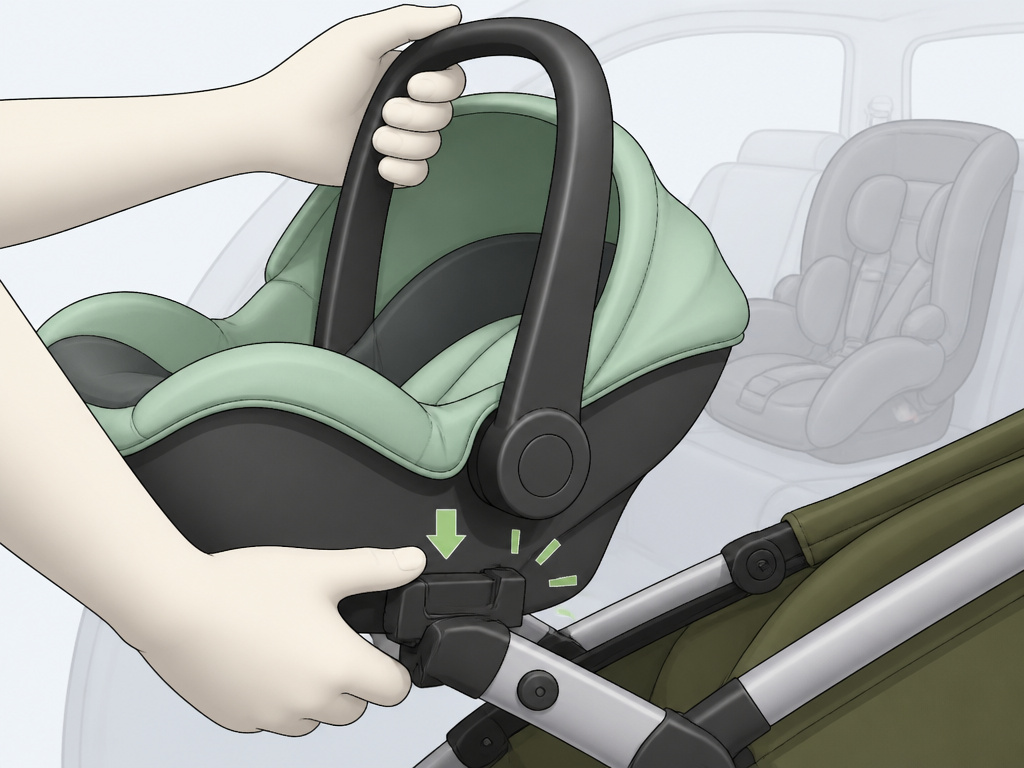
This is the first big fork in the road. Each has a clear job.
| Seat Type | Pros | Cons | Best For |
|---|---|---|---|
| Infant-Only | Removable carrier; clicks into a stroller; easier to carry a sleeping baby. | Outgrown quickly (by 12-18 months); requires a second seat purchase. | Families who use a stroller frequently, live in cold climates, or want the carrier convenience. |
| Convertible | Longer use (rear-facing to forward-facing); one purchase from infancy to toddler. | Heavy and bulky; stays in the car; no carrying convenience. | Families on a budget, those with larger vehicles, or who don’t mind transferring a sleeping baby. |
The infant carrier’s convenience is tangible. The convertible seat’s economy is logical. Most families with the budget start with an infant seat and a travel system, then move to a convertible. If you rarely use a stroller and don’t mind babywearing, starting with a convertible like the Graco Extend2Fit is a solid, one-stop choice.
Frequently Asked Questions
What is the number one mistake people make with infant car seats?
Harness tightness. The harness straps should be snug enough that you cannot pinch any slack at the child’s shoulder. Loose straps allow excessive movement in a crash, drastically reducing protection. Check it every single time you buckle them in.
How long can a baby stay in an infant car seat?
The 2-hour rule is a common guideline for continuous travel, based on the risk of positional asphyxia and discomfort. On long trips, stop at least every two hours, remove the baby from the seat, and let them move. Never let them sleep in the seat outside the car for extended periods.
Are more expensive car seats safer?
No. All seats sold in the U.S. Must pass the same federal crash test standards (FMVSS 213). A higher price typically buys convenience features (lighter weight, easier installation, nicer fabrics), not better crash protection. A $150 seat installed correctly is safer than a $400 seat installed poorly.
Can I use a second-hand infant car seat?
It’s risky. You must know its full history—it must never have been in a crash, all parts and the manual must be present, and it must not be expired (most seats expire 6-10 years after manufacture). The NHTSA car seat safety guide strongly recommends against used seats unless you are certain of all these factors.
When is it time to switch to the next car seat?
Your child has outgrown their infant seat when either: 1) The top of their head is within 1 inch of the top of the seat shell, or 2) They exceed the seat’s maximum weight limit. At that point, you’ll move to a convertible car seat used rear-facing.
The Bottom Line
A good infant car seat isn’t about a brand name or a luxury feel. It’s about a secure marriage between a shell, your child’s body, and the frame of your car. The work happens before you click “buy”—measuring your back seat, reading the vehicle manual, and understanding that the safest seat is the one that fits and is used correctly every single time.
Start with the specs. Then account for the hidden hazards. Your choice will be obvious, and it will be the right one.
