What Is the Car Seat Test for Newborns? The 90-Minute Check
This post contains affiliate links. As an Amazon Associate, we earn from qualifying purchases.
The car seat test for newborns, or Infant Car Seat Challenge (ICSC), is a 90- to 120-minute hospital procedure where a baby, typically born before 37 weeks or under 5 pounds 8 ounces, is monitored for breathing problems, low heart rate, and oxygen drops while secured in a car seat. It aims to catch infants who can’t safely maintain their airway in the semi-reclined travel position before they go home.
This isn’t a test of whether the seat fits. It’s a check of whether the baby’s immature cardiorespiratory system can handle the posture. The stakes are physical and immediate: a failure means oxygen levels dipping below 90% for ten seconds or a heart rate falling under 80 beats per minute. That’s why the monitors are non-negotiable.
What follows is a breakdown of the exact protocol from major hospital guidelines, the data on who actually fails and why, and the ongoing debate among pediatric specialists about whether this test should be routine at all. You’ll also get the prep checklist hospitals wish every parent knew.
Key Takeaways
- The test is mandated for infants born before 37 weeks or weighing less than 5 pounds 8 ounces, but individual hospitals may test other at-risk babies.
- Failure is defined by specific numbers: oxygen saturation (SpO2) below 90%, heart rate (HR) below 80 bpm, or apnea lasting over 20 seconds, sustained for at least 10 seconds.
- A 2014 study found the test has poor reproducibility, about 8% of infants who pass will fail a second test given just 17 hours later.
- If a baby fails, the next step isn’t always a longer hospital stay. For infants over 5 lbs, a car bed challenge is often the next option; for those under 5 lbs without a car bed, discharge may be delayed until they pass or gain weight.
- Aftermarket inserts and head supports are usually removed for the test because they can introduce harness slack and haven’t been crash-tested with your specific seat.
Who Gets a Car Seat Challenge and Why?
Hospitals don’t test every newborn. The protocol targets infants whose physiology makes the semi-upright car seat position a potential breathing risk.
The universal trigger is prematurity. The American Academy of Pediatrics (AAP) recommends testing for all neonates born at less than 37 weeks gestation. Many hospitals, like Northwestern Memorial, also automatically test any infant with a birth weight under 5 pounds 8 ounces. This is because low birth weight often correlates with less muscle tone and a weaker ability to keep an airway open against gravity.
Beyond these hard rules, a pediatrician may order a test for a full-term baby with specific health concerns. This includes infants with diagnosed respiratory conditions like chronic lung disease, neurological issues causing low muscle tone (hypotonia), or those who’ve had episodes of apnea or bradycardia in the nursery. The logic is the same: if their breathing is fragile in a crib, it’s likely more fragile in a seat.
Common mistake: Assuming a “late preterm” baby at 36 weeks is just like a term baby. A large retrospective review of 1,173 preterm infants found a failure rate of 4.3%, with 78% of those failures clustered in late preterm infants (34 to 37 weeks). Their systems are mature enough to leave the NICU but not always mature enough for the car seat.
How the Car Seat Challenge Works (Step-by-Step)
The procedure is standardized across most academic medical centers. If your baby needs one, here’s exactly what will happen, drawn from the Brigham and Women’s clinical practice guidelines.
Step 1: Preparation and Timing. The test happens 1-2 days before discharge. Your own car seat must be at the hospital. Nurses will remove any aftermarket items not included by the manufacturer. The baby must be at least 24 hours old and have fed well.
Step 2: Monitoring Setup. The nurse places three small electrode patches on the baby’s chest to monitor heart rate and breathing effort. A pulse oximeter sensor is wrapped around the baby’s foot or hand to measure blood oxygen saturation (SpO2). All wires connect to a bedside monitor.
Step 3: The 90-Minute Observation. The baby is securely strapped into the seat, which is placed on a stable surface, often using its base. For the next 90 minutes (or up to 120 minutes if your drive home is longer), a nurse observes the baby and records vital signs every 15 minutes and during any event.
Step 4: The Pass/Fail Criteria. The baby passes if they maintain a heart rate above 80 bpm and oxygen saturation above 90%, with no significant apnea. A failure is called for any of these events lasting 10 seconds or more.
| Vital Sign | Failure Threshold | Why It Matters |
|---|---|---|
| Oxygen Saturation (SpO2) | < 90% | Indicates the baby isn’t getting enough oxygen, which can stress organs and the brain. |
| Heart Rate (Bradycardia) | < 80 beats per minute | A sign the cardiorespiratory system is struggling, potentially leading to apnea. |
| Apnea | Cessation of breathing > 20 seconds | The most direct sign of respiratory failure in this position. |
Step 5: Post-Test. After 90 minutes, the baby is removed from the seat and placed back in a bassinet. The monitors are disconnected, and the nurse informs you of the results.
What most people don’t see is the nurse’s constant vigilance for subtle cues: a slight chin tuck, a change in skin color, or a change in breathing pattern. They’re not just watching numbers.
What Are the Specific Risks and Failure Rates?
The numbers vary wildly depending on the study and the population, which is part of why the test is controversial. Older studies from the 1980s reported failure rates as high as 30% to 60% in preterm babies. More recent, larger studies suggest the rate is much lower.
A 2013 study reviewed results from 1,173 preterm infants and found an overall failure rate of 4.3%. Crucially, most failures weren’t in the tiniest micro-preemies. They were in late preterm infants (34 to 37 weeks). These babies often move out of intensive care quickly but may still have immature breathing control.
The real concern isn’t just the failure rate, it’s the test’s inconsistency. Research on test-retest reliability shows the ICSC has poor reproducibility. In one study, 8% of infants who passed the first test failed a second test given a mean of 17 hours later. Another study found 11% of infants who passed a first test failed one of two subsequent tests.
Where this goes sideways: Relying on a single pass as an absolute green light. The inconsistency data means a pass one day doesn’t guarantee stability the next. This is a key reason some hospital consortia, like the UCSF Northern California Neonatal Consortium, argue against routine testing. Their official ICSC clinical protocol states the test should not be standard practice due to inconsistent results and a lack of proven link to mortality risk.
The physiological risk is airway obstruction. A preterm infant’s head is heavier relative to neck strength, and their trachea is more flexible. In a semi-reclined seat, the chin can fall forward onto the chest, kinking the airway like a bent straw. This leads to the oxygen desaturation and bradycardia the monitors catch.
What Happens If a Baby Fails?
 The protocol following a failure is specific and time-sensitive. It’s not simply “try again tomorrow.”
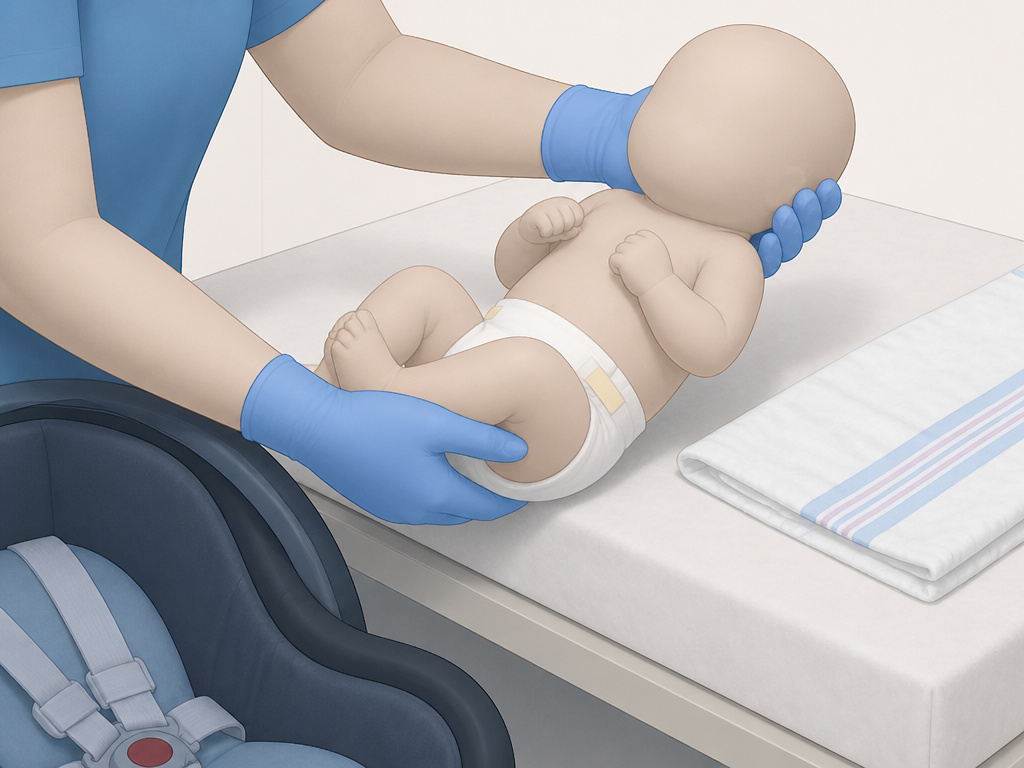
The immediate action is always the same: the nurse immediately removes the baby from the car seat and places them on a flat, firm surface like a warming table or bassinet, often while calling for additional support. If the baby’s vital signs don’t normalize quickly, a rapid response team may be activated.
The next steps depend almost entirely on the baby’s weight.
For babies weighing 5 pounds or more: After a 2-hour recovery period with monitored feeding, the team will typically conduct a car bed challenge. A car bed is a flat, crash-tested device that allows the infant to travel lying flat. If the baby passes the car bed test, they can be discharged with the car bed as their travel system.
For babies weighing less than 5 pounds: The options narrow. If the hospital has a car bed certified for infants under 5 lbs, that’s the next step. If not, and many hospitals don’t routinely stock these, the infant must remain hospitalized until they either reach 5 lbs or pass a repeat car seat challenge. This repeat is usually scheduled for 48 hours later in a higher-acuity setting like NICU triage.
This is when parents face the emotional whiplash of a delayed discharge. Understanding the consequences of failing the car seat test becomes critical for managing expectations and planning.
How to Prepare and What You Can Control
 Your role is preparation. Getting it right avoids delays and ensures the test reflects your baby’s true capability.
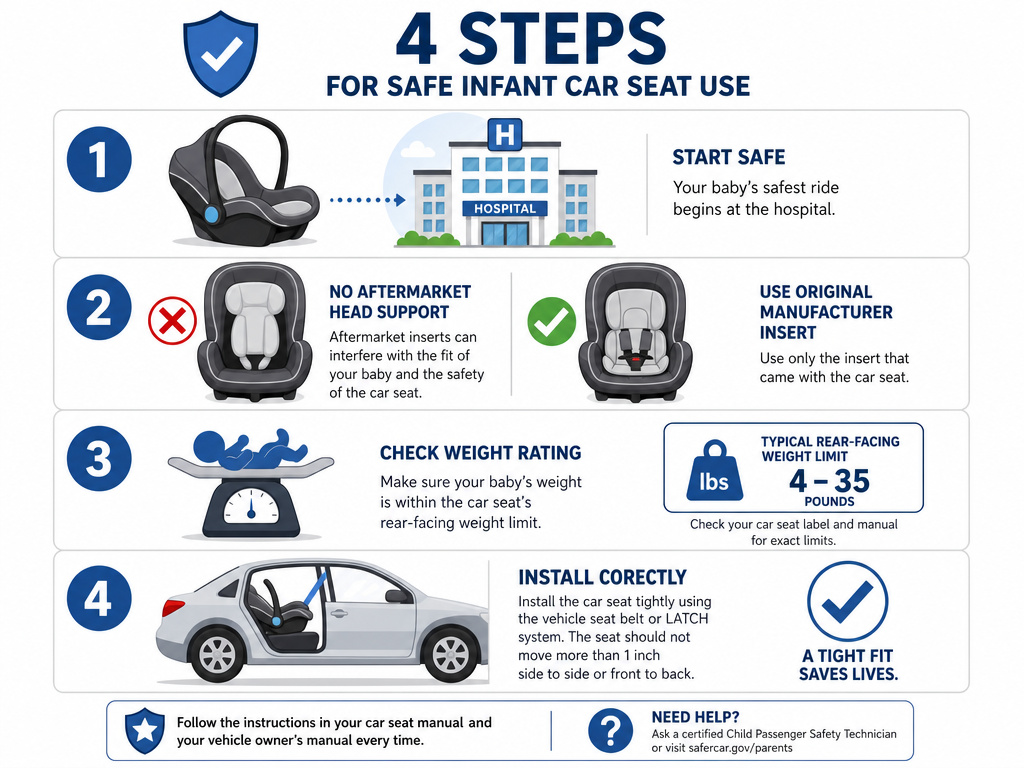
- Bring Your Seat Early. Have your infant car seat at the hospital the day before the planned discharge. Bring only the carrier; leave the base installed in your car unless instructed otherwise.
- Only Use Manufacturer Parts. For the test, provide only the inserts that came in the box with your seat. Remove all aftermarket head supports, body pillows, or strap covers. As noted in hospital guidelines, these can create harness slack and are not safety-tested with your seat.
- Know Your Seat’s Specs. Ensure your seat is rated for your baby’s current weight. If your 4.5 lb baby is in a seat that starts at 5 lbs, it cannot be used for the test or for discharge. This is a hard stop.
- Practice Installation. Use this as an opportunity to have a nurse or hospital-based CPST (Child Passenger Safety Technician) check your car seat installation in your vehicle before discharge day. A properly installed seat is the final, critical link.
The test itself is out of your hands. But your preparedness directly influences whether it happens on schedule and with the right equipment.
The Ongoing Debate: Is Routine Testing Necessary?
 Not all medical experts agree on the value of the car seat challenge for every preterm infant. The core of the debate is highlighted in the PMC peer-reviewed journal article on pre-discharge assessment, which notes a lack of clear evidence linking test results to long-term outcomes.
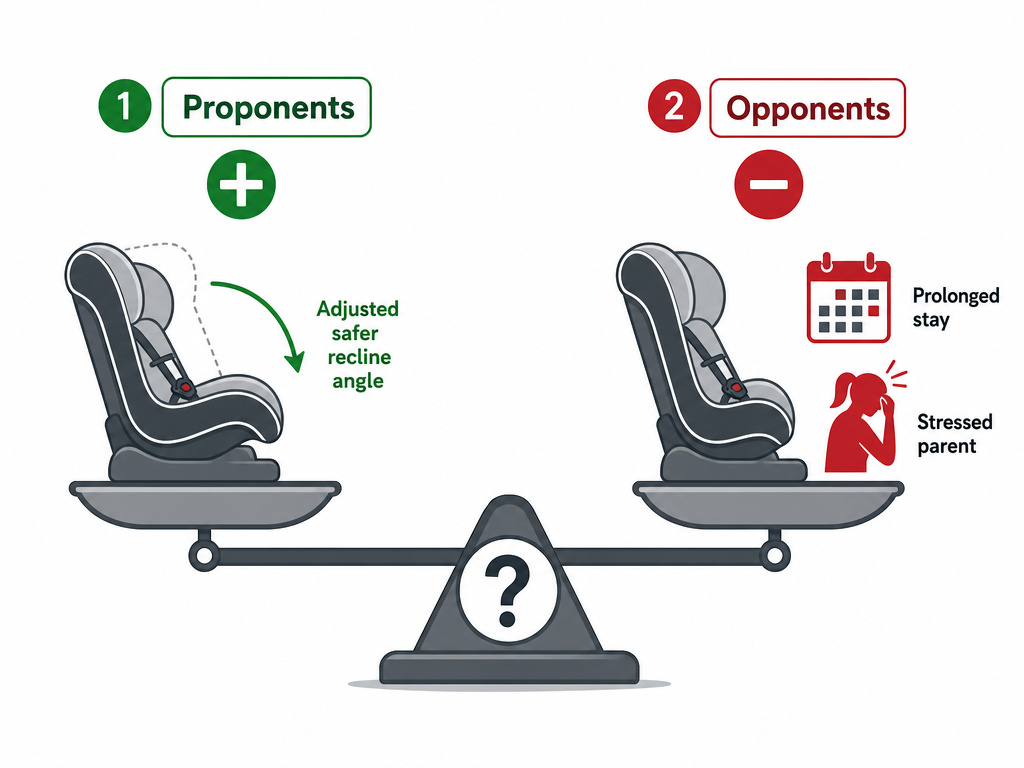
Proponents argue it’s a practical, non-invasive way to identify a vulnerable subgroup. They point to studies showing correction of desaturation simply by adjusting the seat’s recline angle, proving the test can lead to actionable, life-saving interventions.
Opponents, including the UCSF consortium, cite the high rate of false positives and the test’s poor reproducibility. They argue it leads to unnecessary prolonged hospital stays, parental stress, and the use of car beds without clear proof of benefit. Their position is that universal, vigilant proper installation and parent education on positional breathing risks are more effective than a one-time test.
Your hospital’s policy will fall somewhere on this spectrum. In regions like Northern California, routine testing has been largely abandoned. In much of the rest of the U.S., it remains a standard of care for NICU graduates.
Frequently Asked Questions
Can a full-term baby fail a car seat test?
Yes. While less common, a full-term baby can fail if they have an underlying condition affecting breathing or muscle tone, such as a neurological disorder or a congenital syndrome. The pediatrician may order a test based on clinical observation in the nursery.
What’s the difference between a car seat and a car bed?
Car seat is a semi-reclined, rear-facing restraint. A car bed is a flat, rectangular carrier where the infant lies supine (on their back), secured by a harness over their torso. It’s used for infants who cannot tolerate the seated position but still need a crash-tested travel device. Not all hospitals have them, especially for infants under 5 lbs.
Are aftermarket inserts ever safe to use?
They are not recommended for the test and are generally discouraged for use at all. Products not sold with the seat have not been crash-tested with it and can interfere with the harness system’s performance. If an insert seems necessary for fit, consult a CPST and consider a different seat model designed for smaller newborns.
How long should a newborn be in a car seat, even if they passed?
This is a crucial follow-up. Even babies who pass should not be in a car seat for longer than necessary. The 90-minute test simulates a drive home, not a cross-country trip. Limit travel time, take frequent breaks every 30-60 minutes to remove the baby from the seat, and never let them sleep in the seat outside the car. This vigilance is part of the safe winter layers strategy too, as bulky coats can create similar harness slack issues.
Does a convertible car seat change anything for the test?
Yes. The test is for the seat you will use to leave the hospital. Most hospitals require an infant car seat carrier for discharge. Policies for using a convertible seat directly from birth vary; some allow it if the seat is rated from 4+ pounds and fits the newborn perfectly, but many still prefer the handle-carrier system for initial transport. Always check with your specific hospital.
Before You Go
The car seat test is a snapshot, a 90-minute stress test for a newborn’s breathing in a travel posture. Its value lies in catching the occasional infant who would have silently struggled on the ride home. Your job is to bring the right seat, free of add-ons, and understand that a pass is a good sign but not a lifetime guarantee.
Watch for chin-to-chest positioning on every trip. Respect the time limits. And remember that the safest seat is the one that fits your child and your car, installed correctly every single time. The test is just the beginning of that vigilance.
