
What Is the Safest Infant Car Seat? Vital Federal Standards
This post contains affiliate links. As an Amazon Associate, we earn from qualifying purchases.
The safest infant car seat is a rear-facing restraint system that fits your child’s height and weight, installs with less than one inch of movement at the belt path, and is used according to the manufacturer’s instructions and federal performance standards. No single brand is universally safest; safety is a combination of correct product selection, proper installation, and consistent use.
That definition comes straight from the Code of Federal Regulations and crash test data. The brand name on the shell matters far less than whether you match three federal benchmarks: the seat passes FMVSS 213 dynamic testing, you install it within the vehicle and seat manufacturer’s limits, and you keep the child rear-facing until they outgrow the seat’s rear-facing height or weight capacity.
What follows: the three physical specifications from federal law that define “safe,” the two real-world failure modes most reviews skip, and how to read a car seat label so you know exactly what you’re buying.
Key Takeaways
- Federal Standard FMVSS 213 requires crash testing at specific temperatures (19–26°C) and humidity levels (10–70%). A seat that passes in Arizona in July may not perform the same in a damp Seattle winter if its foam degrades.
- Never install a car seat using both the lower anchors and the seat belt. This creates conflicting force paths and can cause the seat to fail in a crash.
- The maximum child weight for lower anchor use is 65 pounds minus the weight of the car seat itself. For a 10-pound seat, that means the anchors are only rated up to a 55-pound child.
- A 2012 peer-reviewed case study documented an infant burn from an overheated car seat during a long, hot drive. The manual’s warnings were found insufficient.
- Convertible seats that allow forward-facing too early, under 26.5 pounds per a 2023 federal update, compromise spinal protection for children under two.
The 3 Federal Benchmarks That Define “Safe”
Forget marketing claims about side-impact protection or energy-absorbing foam. The baseline definition of a safe infant car seat in the United States is codified in 49 CFR § 571.213, the Federal Motor Vehicle Safety Standard (FMVSS) for child restraint systems. A seat earns its certification by passing a series of dynamic sled tests under controlled conditions.
The performance tests required by FMVSS 213 must be conducted at ambient temperatures from 19 °C to 26 °C (66–79°F) and relative humidity from 10% to 70%. Belt webbing width is measured after conditioning for 24 hours in 48–67% humidity at 70–77°F. These are not arbitrary numbers; they are the environmental bounds within which the seat’s materials, straps, foam, plastic, are guaranteed to perform.
If your garage swings from freezing to sweltering, or you live in a consistently humid climate, the seat sitting in your car right now exists outside its certified test environment. That doesn’t mean it’s instantly unsafe, but it introduces a variable the law doesn’t account for. The foam’s indentation force deflection, a measure of its support, changes with temperature and humidity.
Benchmark 1: It Must Be Rear-Facing
The physics are non-negotiable. In a frontal crash, the most common and severe type, a rear-facing seat cradles the child’s head, neck, and spine, distributing crash forces across the entire shell. A forward-facing seat restrains the body but leaves the head to whip forward, placing immense strain on the undeveloped cervical spine. The CHOP newborn car seat guide cites research showing children up to age two are significantly more likely to be seriously injured forward-facing.
Benchmark 2: The Installation Must Have Less Than 1 Inch of Movement
A secure installation transfers crash forces into the vehicle’s frame. The NHTSA car seat safety guidelines state you should check for movement at the belt path, where the seat belt or LATCH strap goes through the car seat. If the seat shifts more than one inch side-to-side or front-to-back, it is too loose. This is the most common installation error and it directly voids the safety engineering.
Benchmark 3: The Harness Must Be Snug and Properly Positioned
The harness is the final link between the child and the restraint system. The chest clip must be at armpit level to keep the straps on the shoulders. You should not be able to pinch a horizontal fold in the harness strap at the child’s collarbone. Bulky winter coats compress in a crash, creating deadly slack. Ditch the coat, buckle the harness snug over thinner layers, and then add a blanket over the top.
How to Read a Car Seat Label (And Why You Must)
The sticker on the side of the seat and the manual in the box contain the only information that legally matters. Everything else is marketing.
| Label Section | What It Tells You | Why It’s a Safety Spec |
|---|---|---|
| Manufacture Date & Model Number | The seat’s birthday and unique identifier. | Car seats expire, typically 6–10 years from this date. Plastics degrade. The model number is essential for recall checks. |
| Height & Weight Limits for Rear-Facing Use | The maximum size of a child for this mode. | This is the law. Using the seat outside these limits means it was not certified to protect a child of that size. |
| Lower Anchor Weight Limit | The maximum combined weight of child + seat for using LATCH. | Exceeding this weight can overload the vehicle’s lower anchor bars, causing them to fail. If no limit is listed, use the 65-pound rule. |
| Compliance Statement | “This child restraint system conforms to all applicable Federal motor vehicle safety standards.” | This is the seat’s proof of certification to FMVSS 213. No statement, no legal sale in the U.S. |
The lower anchor weight limit is the most frequently misunderstood spec. The official child restraint system standards provide a clear calculation: if the label is missing, the maximum allowable child weight is 65 pounds minus the weight of the car seat. Find your seat’s weight in the manual. For a typical infant seat weighing 8–10 pounds, the lower anchors become unsafe once your child hits about 55 pounds, long before they outgrow the seat by height. After that, you must switch to a seat belt installation.
Common mistake: Assuming LATCH is always safer or easier than a seat belt installation. Beyond the weight limit, it isn’t. A properly locked seat belt installation is equally safe. Use whichever method gives you a tighter, simpler fit in your specific vehicle.
The Overlooked Physical Risks: Heat, Humidity, and Harnessing
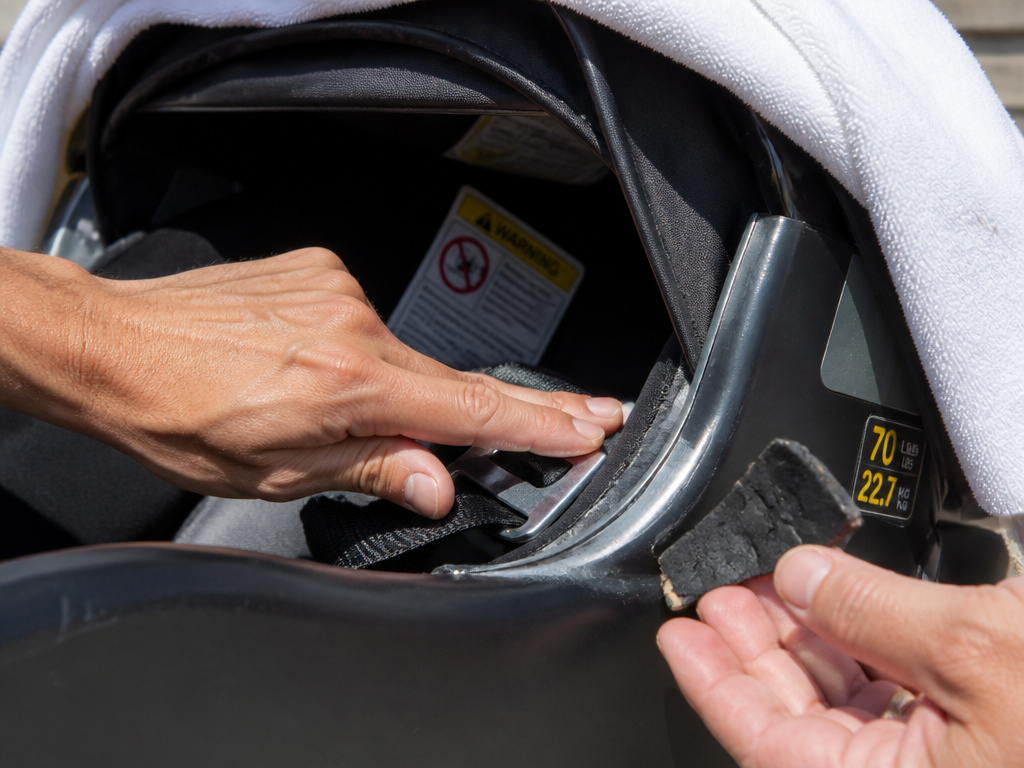
Federal testing happens in a climate-controlled lab. Your car lives in the real world. Two physical factors can undermine a seat’s performance in ways the manual might not mention.
Overheating and Burn Risk
A peer-reviewed case report in Pediatrics & Child Health documented an 11-month-old who sustained a burn from an overheated car seat during a long drive on a hot, sunny day. The authors noted it was uncertain if the car seat manual provided adequate warning. The materials, black plastic, dark fabrics, absorb solar radiation and can reach skin-damaging temperatures. This research on car seat importance is a non-commodity insight: a filter doesn’t just stop working; it can become a source of contamination.
On a summer day, shade the seat with a towel when parked, and feel the shell and buckle before placing your child inside. That metal buckle can blister skin in seconds.
Foam Degradation from Humidity
The 2023 Federal Register discussion on child restraint systems included a manufacturer note: the foam’s support properties (Indentation Force Deflection) change with density, temperature, and humidity. Storing a seat in a damp basement or a hot attic between children can alter the energy-absorbing foam meant to cushion your child’s head. If you’re using a seat passed down from a sibling or friend, inspect the foam for crumbling or permanent compression.
The Installation Choice: LATCH vs. Seat Belt
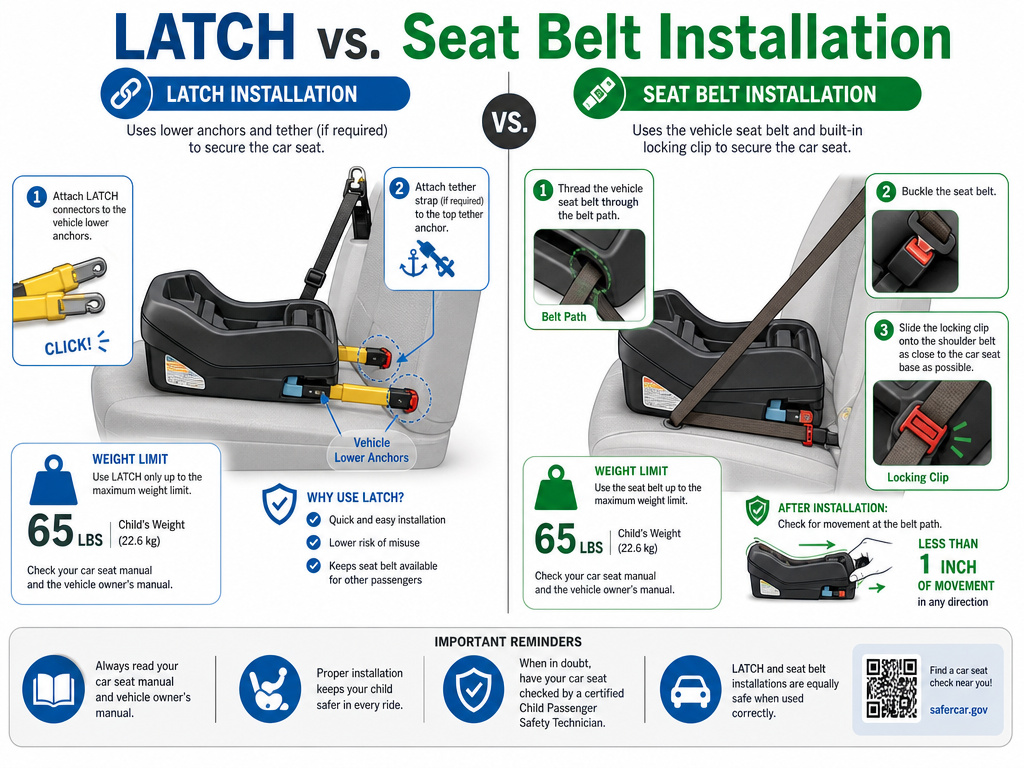
You have two approved paths, and you must pick one. Using both simultaneously is dangerous.
| Method | Best For | Risk If Misused |
|---|---|---|
| Lower Anchors (LATCH) | Quick, standardized installation in vehicles model year 2003+. Often easier to get a tight fit. | Overloading the anchors past the weight limit (child + seat weight). The anchors can bend or detach in a crash. |
| Vehicle Seat Belt | Necessary when child+seat weight exceeds LATCH limit, or in older vehicles without anchors. Universally available. | Failing to lock the belt (using switchable retractor or locking clip). The seat will tumble forward on impact. |
The federal motor vehicle safety standard requires that all car seats be installable by either system. Your goal is a rock-solid installation with less than one inch of movement. For many parents, the seat belt, when locked correctly, provides a tighter fit than the lower anchors, especially in vehicles with deep or soft seat cushions. Check your vehicle’s manual to locate its lower anchor bars and tether anchors.
Where this goes sideways: Installing the seat in the front passenger seat with an active airbag. If the airbag deploys, it will strike the back of the child seat with enough force to cause serious or fatal injury. The back seat is the only safe location.
Real-World Failure Modes: What the Crash Tests Miss
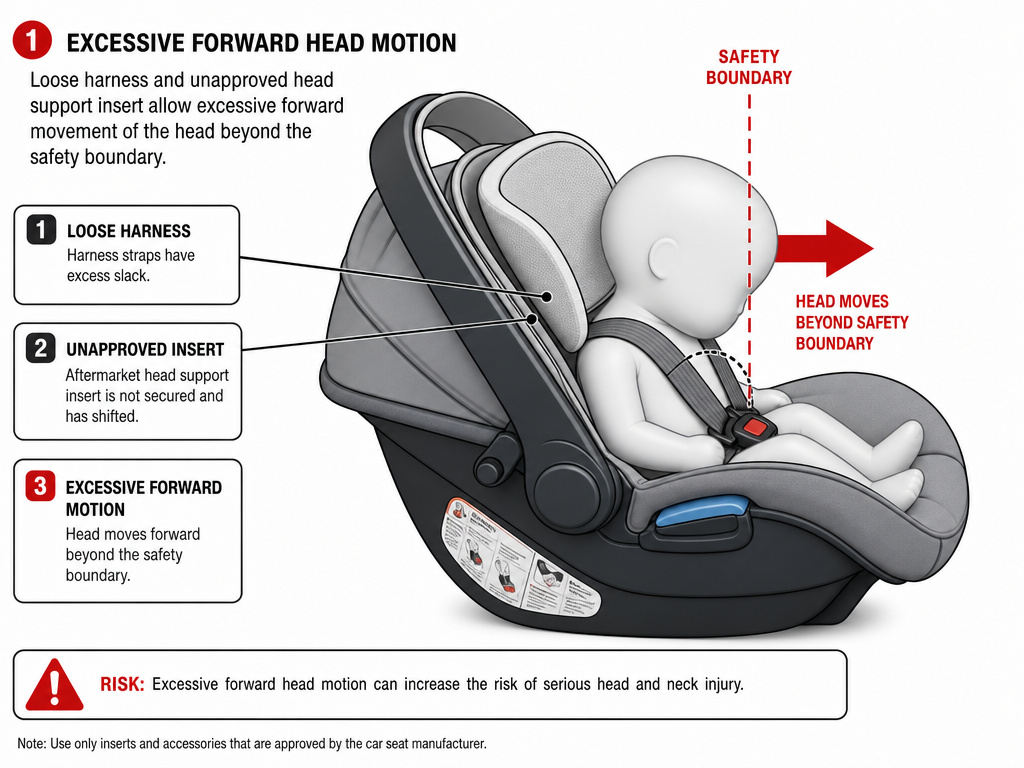
Dynamic testing is rigorous, but it happens with new seats under ideal conditions. Real life adds wear, misuse, and model-specific flaws.
Head Excursion Failures
The 2023 Federal Register noted four specific models, the Britax Marathon, Britax Frontier, Evenflo Titan Elite, and Diono Radian R120, failed head excursion limits in compliance testing. This means the dummy’s head traveled too far forward on impact, simulating a high risk of head strike against the vehicle’s interior. These failures led to recalls or design changes. A seat’s past performance is a data point, not a lifetime guarantee. Always register your seat to receive recall notices.
The “Small Newborn” Gap
Standard infant seats are designed for an average 7-pound newborn. Smaller or preterm babies may slump in a regular seat, risking airway obstruction. For these children, a car bed, a restraint system where the child lies flat, is the medically recommended alternative until they pass a car seat challenge test in the hospital. The infant car seat safety by age guidelines from Children’s Hospital of Philadelphia are clear on this distinction.
Aftermarket Add-Ons
Stick to the items that came in the box with your seat. Adding aftermarket head supports for car seats, non-approved infant car seat inserts, or strap covers not tested with the seat can interfere with the harness routing or create slack. In a crash, that extra material can compress, leaving the child improperly restrained. If your newborn seems swims in the seat, consult the manual for approved positioning aids; many manufacturers sell infant inserts designed and crash-tested for that specific model.
What About Brand Recommendations?
A good infant car seat from a major manufacturer like Graco, Chicco, or Britax that fits your child and vehicle is a safe choice. The differences emerge in ease of use, the clarity of the labels, the simplicity of the harness adjuster, the compatibility with your car’s seat contours.
For a small newborn, a model like the Graco Gomax Infant Car Seat often gets cited by child passenger safety technicians for its lower harness slots and removable insert designed for smaller infants. The Chicco KeyFit 30 is another frequent pick for its straightforward, tight installation in a wide range of vehicles. The brand is less important than the fit. Borrow a floor model from a store (with permission) to do a test install in your back seat before you buy. Check the angle indicator; many vehicles require a rolled towel or pool noodle under the seat to achieve the proper recline for an infant.
Your safest car seat position is in the rear center seat, if your vehicle has a seat belt or lower anchors there. This position offers the most protection from side impacts. If the center is not an option, the passenger side is generally preferable to the driver side for easier loading and unloading away from traffic. The debate over middle vs side installation often comes down to which position in your specific car allows for the tightest, most correct installation.
Frequently Asked Questions
Are infant-only seats safer than convertible seats?
No. Both types must pass the same federal crash tests. An infant-only seat is often more convenient for its portability and compatibility with travel systems. A convertible seat used rear-facing from birth may offer higher rear-facing height and weight limits, allowing you to keep your child rear-facing longer. Safety is equivalent when each is used correctly within its limits.
How do I know if my car seat is installed tightly enough?
Grab the car seat at the belt path (where the seat belt or LATCH strap threads through) and try to move it side-to-side and front-to-back. A seat that shifts more than one inch in any direction is too loose. You should put your body weight into the seat while tightening the belt or strap to remove slack.
When should I switch from rear-facing to forward-facing?
When your child exceeds the rear-facing height or weight limit listed on your car seat’s label. This is often 40-50 pounds and over 40 inches tall for modern convertible seats. The American Academy of Pediatrics and NHTSA recommend keeping children rear-facing until at least age two, and preferably longer. A 2023 federal update now discourages turning a child forward-facing before they weigh at least 26.5 pounds.
Can I use a second-hand car seat?
It’s risky. You must know its full history: it must never have been in a crash, all labels and the manual must be present, it must not be expired (check the manufacture date), and it must not have been recalled. Missing any part of this history means you cannot verify its integrity. For the cost of a new seat, you eliminate these unknowns.
Do I need to replace a car seat after a minor crash?
Follow NHTSA’s guideline: a car seat involved in any crash must be replaced unless the crash was minor and meets all of the following criteria: the vehicle could be driven away, the door nearest the seat was not damaged, no airbags deployed, and there was no injury to any occupant. If in doubt, replace it. Insurance often covers this cost.
The Bottom Line
The safest infant car seat is a system built by matching a federally certified seat to your child’s proportions, installing it with excruciating attention to movement and angle, and using it rear-facing every single trip until the numbers on the label say stop. The brand matters only insofar as its design helps you achieve that correct use.
Skip the marketing deep dive. Check the label for the rear-facing limit, practice the install until it doesn’t budge, and tighten the harness until you can’t pinch slack. That routine, more than any product name, is what keeps a child safe.
