
What’s a Convertible Car Seat? The Rule for Smart Savings
This post contains affiliate links. As an Amazon Associate, we earn from qualifying purchases.
A convertible car seat is a single child restraint designed to be used in three stages: rear-facing for infants and toddlers, forward-facing with a five-point harness for older toddlers and preschoolers, and as a belt-positioning booster for school-aged children. It eliminates the need to buy separate infant-only and booster seats, but it must be installed and reconfigured correctly at each stage.
That three-stage function is the whole point. It’s not just a seat that flips around. The harness, the belt path, the recline angle, and the vehicle’s own seat belt or LATCH system all have to be reset for each mode. Get one of those wrong, and the protection drops.
What follows: the exact weight, height, and age limits that trigger each stage, the mechanical difference between a rotating seat and a fixed one, and the single most common installation mistake that voids the seat’s safety rating.
Key Takeaways
- A convertible seat is a long-term investment, but it starts with a compromise: most don’t fit newborns under 5-7 pounds properly without optional inserts, and they aren’t portable like an infant carrier.
- The lower anchor (LATCH) system has strict weight limits—usually 40-45 pounds for the child plus the seat’s own weight. Beyond that, you must switch to the vehicle’s seat belt for installation.
- Rotating designs, like the Evenflo Revolve360, improve correct harness use by 1.4 times in rear-facing mode, but they often sacrifice rear-facing height limits and take up more vehicle space.
- Never use a forward-facing harness for a child under two years old or under 22 pounds. The immature spine and the force distribution of a crash make this a critical, non-negotiable rule.
- Register your seat with the manufacturer immediately. Recalls like the 2024 Nuna Rava harness defect notice are communicated directly to registered owners.
How Does a Convertible Car Seat Actually Work?
It works by reconfiguring three key systems: the harness, the belt path, and the seat shell’s orientation. This is a full reset.
The five-point harness is the constant thread. It has adjustable shoulder straps and a crotch buckle that stays through all harnessed modes. You move the harness straps to slots at or below the shoulders for rear-facing, and at or above for forward-facing. The chest clip must sit at armpit level every time.
A convertible car seat transitions a child from rear-facing to forward-facing harness use, and finally to a belt-positioning booster. It complies with FMVSS 213 and uses a five-point harness system that must be repositioned relative to the child’s shoulders for each mode. The seat shell includes multiple belt paths and recline angle adjustments specific to each installation orientation.
The belt path is the hidden mechanic. A rear-facing installation uses a different set of openings in the plastic shell than a forward-facing installation. You thread the vehicle’s seat belt or LATCH straps through the correct path marked on the seat. Using the wrong path leaves the seat inadequately secured.
The shell itself is designed to cradle a child’s back and head in a rear-facing recline, then sit more upright to support a forward-facing posture. Most seats have an adjustable foot or recline mechanism to achieve the correct angle for your vehicle’s seat contour. An incorrect recline in rear-facing mode can cause an infant’s head to fall forward, risking airway obstruction.
The 3-Stage Rule That Cuts Costs
The financial appeal is obvious: one seat from birth to around age 8. The practical reality is a series of gates defined by weight, height, and age. Skip a gate, and you compromise safety.
Stage 1: Rear-Facing (The Longest Hold)
This is the most protective orientation, and the goal is to maximize it. The American Academy of Pediatrics recommends keeping children rear-facing until they reach the maximum height or weight limit of their seat.For many convertible seats, that’s 40, 50, or even 65 pounds rear-facing.
The limits are absolute. The Evenflo Revolve360 Slim, for example, allows rear-facing use up to 50 pounds. The Peg Perego Primo Viaggio Convertible Kinetic stops at 40 pounds for LATCH installation and 45 pounds for seat belt installation. You must check your specific seat’s manual.
Where this goes sideways: Turning a child forward-facing before age two, even if they meet the weight minimum. A 2023 field study in the Journal of Pediatrics found children under two in forward-facing seats had significantly higher risk of spinal cord injury in frontal crashes. The harness can’t compensate for immature vertebrae.
Stage 2: Forward-Facing with Harness
This stage begins only when the child passes all three gates: weight, height, and age. Most seats require a minimum of 22 pounds and at least one year old, but two years is the strong safety standard.
The harness straps must move to the slots at or just above the child’s shoulders. This is the opposite of rear-facing. You must also engage the top tether strap for every forward-facing installation. The tether limits forward head movement in a crash by up to six inches. Not using it is like driving with a broken seatbelt.
| Stage | Weight Minimum | Height/Developmental Sign | Critical Action |
|---|---|---|---|
| Rear-Facing | 4-5 lbs (seat dependent) | Head 1+ inch below seat top | Harness at/below shoulders |
| Forward-Facing (Harness) | 22-25 lbs & 2+ years old | Ears below top of seat headrest | Engage top tether; harness at/above shoulders |
| Booster Mode | 40+ lbs & 4+ years old | Shoulders above harness slots | Use vehicle lap/shoulder belt; ensure proper belt fit |
Stage 3: Booster Mode
This is the final configuration, where the seat uses the vehicle’s adult lap and shoulder belt to position the belt correctly on the child’s body. The seat’s own harness is removed or stowed.
The child must be mature enough to sit properly without slouching for the entire trip. The vehicle belt must lie across the middle of the shoulder and chest, not the neck, and low across the hips, not the stomach. If it doesn’t, the child is not ready for booster mode, regardless of age or weight.
Convertible vs. Infant-Only: The Hospital Discharge Question
Can you leave the hospital with a convertible seat? Technically, yes, if it’s rated from 4 or 5 pounds and you have a proper installation. Practically, you might face resistance.
The issue is fit. A 6-pound newborn swims in most convertible seats. While seats like the Chicco NextFit iX Zip Air Plus include newborn inserts, they don’t replicate the snug, cocooned fit of a dedicated infant carrier designed for preemies and low-birth-weight babies. Hospitals are right to be cautious.
Skip this if: Your baby is expected to be under 6 pounds, is premature, or has any respiratory concerns. The AAP and NHTSA advise a separate evaluation for these infants before their first car trip in any rear-facing seat. An infant carrier is the safer, more convenient choice for the first 4-9 months.
The convenience factor is real. An infant carrier clicks in and out of a base, allowing you to move a sleeping baby without unbuckling them. A convertible seat stays in the car. For families running multiple errands or using daycare drop-offs, that lack of portability is a legitimate daily hassle.
The Installation Two-Step: LATCH vs. Seat Belt
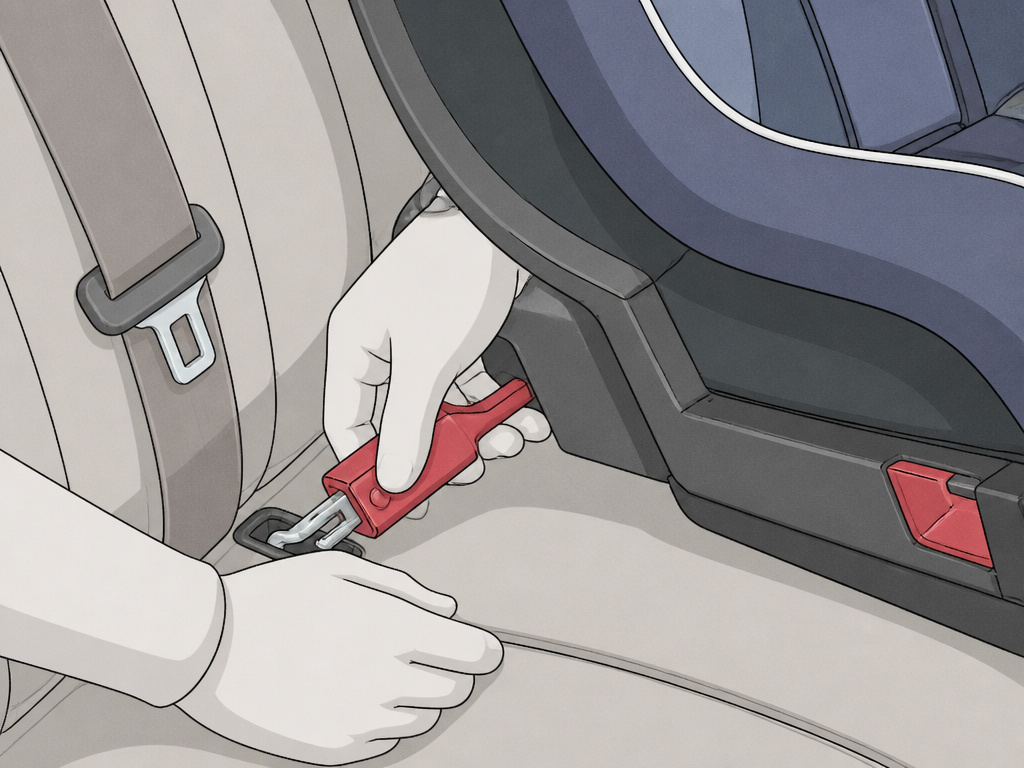
You have two approved methods to secure the seat to the vehicle: the LATCH system (Lower Anchors and Tethers for Children) or the vehicle’s seat belt. You only use one at a time. Using both does not make it safer and can put unintended stress on the seat structure.
LATCH is a standardized system of metal anchors in the vehicle seat bight and a top tether anchor behind the seat. It’s often easier to get a tight fit. However, it has a strict weight limit: the child’s weight plus the weight of the car seat itself cannot exceed 65 pounds.
Most vehicle manufacturers set a lower anchor weight limit of 65 lbs. To find your seat’s limit, check the label on its side. For example, if your convertible seat weighs 20 pounds, the maximum child weight for LATCH use is 45 pounds. After that, you must uninstall and reinstall using the vehicle’s seat belt.
The seat belt method is the fallback for heavier children or for seating positions without lower anchors. You must lock the seat belt, typically by pulling it all the way out and letting it retract, or using a locking clip if your vehicle has a switchable retractor. A proper seat belt installation should not allow more than one inch of movement side-to-side or front-to-back at the belt path.
Rotating vs. Fixed: The Space Trade-Off

Rotating convertible seats, such as the Evenflo Revolve360 or the Cybex Sirona S, have a base that remains installed while the seat shell swivels. The advertised benefit is easier loading: spin the seat toward the door, buckle the child, then spin it back to rear- or forward-facing.
The PubMed study on rotating child restraints found a tangible benefit. In rear-facing mode, rotating seats had 2.6 times greater odds of having the correct recline angle and 1.4 times greater odds of correct harness use compared to conventional seats. The ease of access leads to fewer installation shortcuts.
But the trade-off is space. The rotating mechanism adds bulk. These seats often have lower rear-facing height limits than their fixed counterparts. A tall 90th-percentile child will outgrow a rotating seat rear-facing months, or even a year, sooner than a space-optimized fixed seat like the Graco Extend2Fit.
| Feature | Rotating Seat (e.g., Evenflo Revolve360) | Fixed Seat (e.g., Graco Extend2Fit) |
|---|---|---|
| Ease of Use | High – simplifies buckling in tight spaces | Standard – requires climbing into vehicle |
| Rear-Facing Height Limit | Often lower (e.g., 48-50 inches) | Often higher (e.g., 49+ inches) |
| Space in Vehicle | Needs more front-to-back room for rotation | More compact footprint |
| Best For | Parents with back issues, tight parking situations | Families with tall children, smaller vehicles |
The choice is about your child’s proportions, your vehicle’s size, and your physical needs. If maximizing rear-facing time is the top goal, a fixed, extended rear-facing seat is usually the better car seat that grows with baby.
Common Mistakes and Recall Reality

Misuse rates for all child restraints sit between 65% and 94%. With convertible seats, the complexity drives specific, repeated errors.
First, harness tightness. The “pinch test” is the standard: if you can pinch a horizontal fold in the harness strap at the child’s collarbone, it’s too loose. The harness should be snug against the body, with no slack. A loose harness allows dangerous forward excursion in a crash.
Second, the top tether. In forward-facing mode, it is mandatory. It’s not an optional extra. I’ve seen seats where the tether strap was still neatly coiled in its storage pouch, years into forward-facing use. That seat is not performing to its rating.
Third, recalls are not rare. The NHTSA car seat safety guidelines database is full of them. The 2024 Nuna Rava recall (24C002) is a prime example. Debris could enter the harness adjuster button area, potentially causing the harness to loosen. Nuna’s interim fix was a specific test: push on the seat back with one hand while pulling the harness straps firmly with the other. If the harness lengthens, stop using the seat.
This is why registration is non-negotiable. Mail that card or register online the day you buy the seat. It’s the only way the manufacturer can contact you directly with a remedy.
Frequently Asked Questions
What’s the difference between a convertible and an all-in-one car seat?
An all-in-one seat is a subset of convertible seats that includes a booster mode. All all-in-ones are convertibles, but not all convertibles become boosters. Some, like many Maxi-Cosi models, are “convertible” only from rear- to forward-facing with a harness. If your goal is a single seat from birth to seat belt age, confirm it has a true belt-positioning booster mode.
Can I use a convertible seat from birth?
You can, if it’s rated for a 4 or 5 pound minimum weight and you have the correct infant inserts. However, for a very small or premature newborn, a dedicated infant carrier is medically recommended for a proper fit and to allow for monitored observation. The convenience of a portable carrier is also a major factor for many parents in the first year.
When should I switch from rear-facing to forward-facing?
Switch only when your child exceeds the rear-facing height or weight limit of your specific seat. Age two is an absolute minimum, but the longer you can stay rear-facing, the better. The rear-facing position cradles the head, neck, and spine, distributing crash forces across the entire back. There is no benefit to rushing the transition.
How long does a convertible car seat last?
Most have an expiration date stamped on the shell, typically 7 to 10 years from the date of manufacture. Plastic degrades over time due to temperature fluctuations and UV exposure. Using a seat past its expiration date is a safety risk, as the materials may no longer perform as tested.
Are more expensive convertible seats safer?
No. All seats sold in the U.S. Must meet the same federal safety standard (FMVSS 213). A higher price typically buys easier-to-use features (like a no-rethread harness, better padding, or a rotating base), lighter weight materials, or a more premium brand name. The safest seat is the one that fits your child, fits your vehicle, and that you will install and use correctly every single time.
The Bottom Line
A convertible car seat is a tool for long-term planning. Its value is in forcing you to learn the rules that keep a child safe from infancy to grade school.
The mechanics matter. The harness position, the belt path, and the tether are the system. A seat like the Graco Extend2Fit 3-in-1 or the Chicco NextFit Zip Max will do its job for a decade, but only if you do yours at each stage change.
Start with your vehicle. Measure the back seat. Read your manual’s section on LATCH anchors. Then choose a seat that fits the space and your child’s projected size. That’s how you get the true cost savings: a seat you won’t need to replace early because it was the wrong shape for your life from day one.
