
Infant Car Seat Recycling: How & Where to Recycle Legally
This post contains affiliate links. As an Amazon Associate, we earn from qualifying purchases.
You can recycle an infant car seat, but not by tossing it in your curbside bin. The process requires disassembly to separate plastics and metal from fabric and foam, then finding a specialized recycler or a state-run drop-off program. Most seats expire after six years, and a crash or recall also mandates disposal.
That six-year clock is about polymer science, not marketing. The plastic shell weakens under UV light and temperature swings. It becomes brittle. A seat that looks fine can crack under crash forces it was designed to handle when new.
What follows: the exact disassembly steps from a manufacturer’s manual, a map of the two types of recycling programs (and why one is almost always better), and the specific mistake that sends 90% of seats to the landfill regardless of good intentions.
Key Takeaways
- Curbside recycling rejects intact car seats. Municipal facilities cannot process the mixed materials. Tossing a whole seat into the bin guarantees it goes to the landfill.
- Disassembly is mandatory and physical. You must strip the fabric, remove padding, and unscrew the plastic shell from the metal frame. The Evenflo manual specifies this three-part separation.
- State-run programs are the gold standard. Programs like the Colorado DOT car seat recycling initiative offer free, year-round drop-off. Private mail-in services exist but cost $40-$60.
- Expiration is a material failure, not a suggestion. UV radiation breaks down the plastic’s polymer chains. After roughly six years, the shell may not withstand crash forces.
- Never donate a seat that’s expired, crashed, or recalled. Cutting the harness straps and marking “DO NOT USE” on the shell prevents dangerous reuse.
Why Recycling a Car Seat Isn’t a Curbside Affair
Municipal recycling systems are built for single-stream materials: water bottles, aluminum cans, cardboard. An infant car seat is a 15-pound puzzle of polypropylene plastic, steel frame, nylon harness straps, and polyurethane foam. The machines that sort glass from plastic cannot rip a seat apart. They jam.
Garbage workers do not try to disassemble a child restraint to recycle due to the time and effort in separating the parts.
This is the first wall you hit. Your local hauler’s rules likely list “no car seats” explicitly. The economic reality is brutal. The high-grade plastic in a seat has value, but the labor to extract it costs more than the raw material is worth. One analysis put the reclaim value at about one dollar per seat.
The safety standards that make the seat strong also make it a recycling nightmare. Federal Motor Vehicle Safety Standard 213 demands that the shell withstand enormous force. The parts are fused, riveted, and screwed together with permanent connections in mind. That structural strength is a recycling weakness.
The Three Legal Triggers for Disposal (It’s Not Just Size)
A child outgrowing a seat is the obvious trigger. Three other conditions legally and safely require you to take a seat out of service. Ignoring them risks a child’s safety for the false economy of holding onto a piece of gear.
1. The Expiration Date
Look for a stamped date on the plastic shell, usually on the bottom or back. Most manufacturers set a limit of six to ten years from the date of manufacture. This isn’t a ploy. Plastic degrades through a process called photo-oxidation. Ultraviolet light from the sun and heat cycles in your car break down the polymer chains. The plastic loses its flexibility and becomes brittle. In a crash, a compromised shell could fracture instead of absorbing and distributing energy.
2. Involvement in a Moderate to Severe Crash
Follow your car seat manual and vehicle manufacturer guidelines, but NHTSA advises replacement after any moderate or severe crash. The internal webbing of the harness can stretch, and the plastic shell can develop micro-fractures invisible to the eye. Insurance companies know this. They will almost always reimburse for a new seat after a reported accident.
3. An Unremedied Recall
Recalls are not rare. The Colorado Department of Transportation notes there are over 50 recalled car seat models listed on the NHTSA website at any given time. A recall might address a brittle buckle, a faulty harness adjuster, or a base that doesn’t secure properly. You can check your seat’s status using its model number and manufacture date on the NHTSA car seat safety website.
| Disposal Trigger | Why It Mandates Action | Visible Evidence? |
|---|---|---|
| Expiration Date Passed | Plastic shell has weakened via UV/heat degradation. | No. The seat looks normal. |
| Moderate/Severe Crash | Harness webbing stretched; shell has micro-fractures. | Usually not. |
| Active Recall | A component has a known failure mode. | Sometimes (e.g., cracked buckle). |
| Outgrown | Child exceeds height or weight limit on label. | Yes. Shoulders above harness slots. |
The 4-Step Disassembly Process (and Why It’s Non-Negotiable)
You must take the seat apart. No recycler, not even a dedicated program, wants the whole unit. The goal is to sort materials into streams their machinery can handle. The Evenflo REVOLVE 180° LITEMAX NXT manual gives a clear template for this, and it applies to nearly all seats.
Step 1: Remove All Fabric and Padding.
Unhook, unzip, and pull off the seat cover. Remove the infant head insert, body pillows, and any comfort pads. This separates the non-recyclable textiles and foam from the hard plastic shell. The manual notes that if your local center won’t accept the padding, you may dispose of it in the landfill.
Step 2: Cut the Harness Straps.
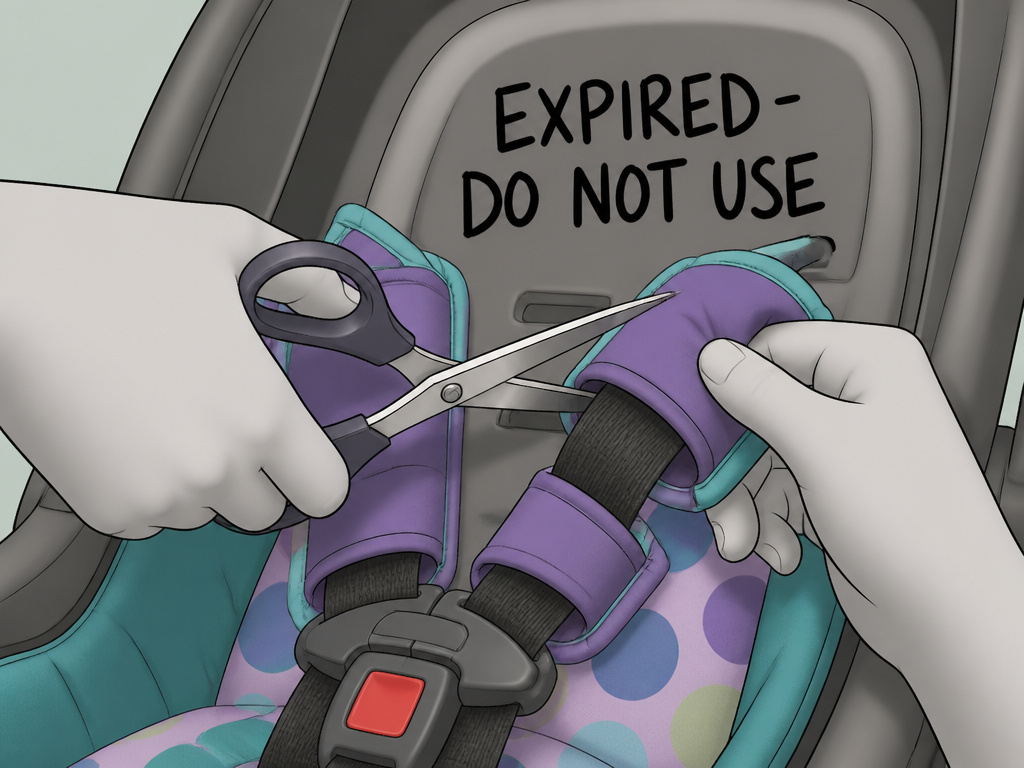
Use heavy scissors or a utility knife. Cut every strap, especially the five-point harness, into several pieces. This is a critical safety step to prevent someone from retrieving the seat and trying to use it. Never leave the harness intact.
Step 3: Disassemble the Hard Shell.
Flip the seat over. Remove all screws connecting the plastic shell to the internal metal frame or to other plastic pieces. You might need a Phillips head screwdriver and a socket set. This is the labor-intensive part the Florida OPRC guide references. Persist. The metal frame and the plastic shell must be separated.
Step 4: Sort and Bag.
Place all hard plastic pieces in one bag. Put the metal frame and any screws or LATCH connectors in another. The fabric and foam go in your regular trash unless a specific recycler says otherwise. Mark the plastic bag “HDPE/PP #5” if you know the plastic type.
Common mistake: Putting a fully assembled seat in a recycling bin. The sorting facility will pull it and send it straight to the landfill. Every time.
The disassembly is physical. You will sweat. The screws can be tight and rusted. That resistance is why most seats aren’t recycled. Pushing through it is the only way your seat has a chance.
Where to Take Your Disassembled Seat: Programs vs. Services
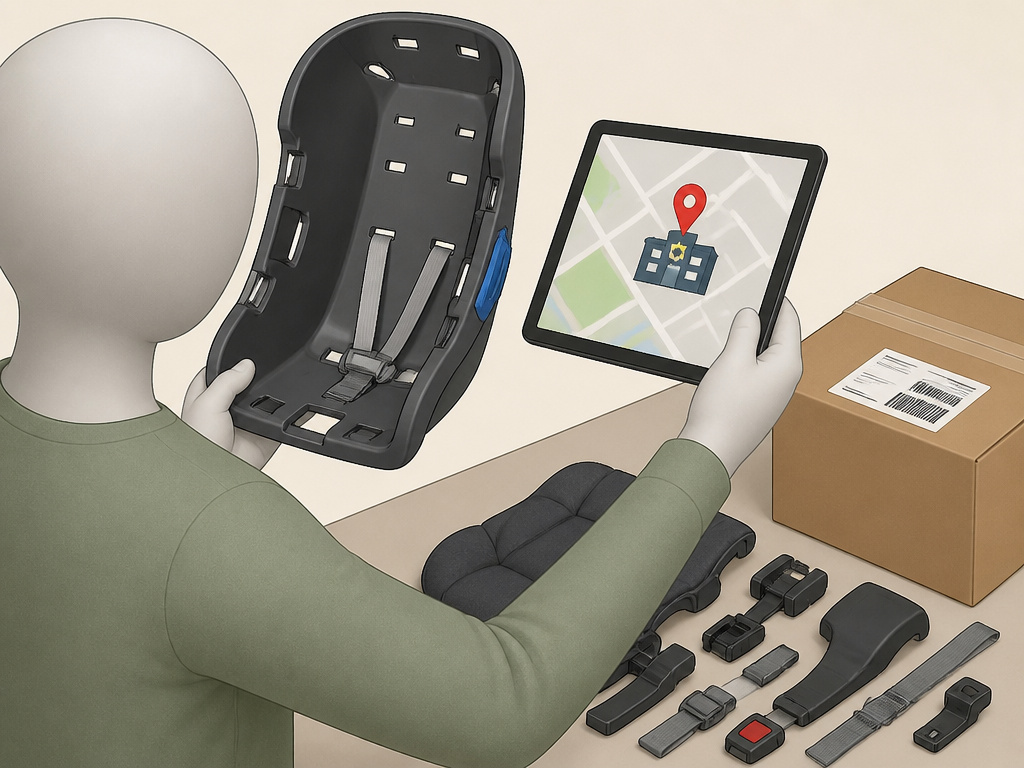
With your sorted materials, you now have two primary paths. One is often free and backed by safety agencies. The other is a paid convenience.
State and Safety Organization Programs
These are the best option. States like Colorado run official car seat recycling programs through their Department of Transportation. Drop-off is free at designated locations, often state patrol offices or safety coalition hubs. The seats are collected and bulk-shipped to processors that specialize in hard-to-recycle items.
Similar resources come from safety groups. The Florida OPRC child restraint recycling guide from the University of Florida is a model of clear, research-backed instructions for the public.
Private Mail-In Recycling Services
Companies like TerraCycle or specific car seat recycling startups offer a kit. You pay a fee (typically $40 to $60), receive a shipping label, box up your disassembled seat, and mail it. They handle the rest. This is a good solution if no local program exists, but the cost is prohibitive for many families.
Retailer Take-Back Events
Watch for occasional events at big-box stores like Target or Walmart. They may offer a discount coupon on a new seat in exchange for your old one during a limited promotion. These are not year-round solutions, and you must verify the seats are actually recycled, not landfilled.
| Option | Cost | Convenience | Best For |
|---|---|---|---|
| State DOT Program | Free | Moderate (requires drop-off) | Anyone near a drop-off location; the most responsible choice. |
| Private Mail-In | $40 – $60 | High (ship from home) | Those with no local program and who can afford the fee. |
| Retailer Event | Free (often with coupon) | Low (limited dates/locations) | Those who can time their disposal with an event. |
What Absolutely Does Not Work (And What to Do Instead)
Good intentions lead to bad outcomes here. Avoid these dead ends.
Do NOT Donate an Expired, Crashed, or Recalled Seat.
Thrift stores and community centers rarely have the expertise to verify a seat’s history. Passing on a compromised seat creates a liability and a real danger. The Jacksonville Beach safety guide strongly advises against buying used seats for this reason.
Do NOT Place It Whole on the Curb.
Even with a “FREE” sign, you have no control over who takes it. They might use it for a child, or it might just become street trash. If you must leave it for bulk pickup, destroy it first. Cut all straps, remove the cover, and write “EXPIRED – DO NOT USE” in permanent marker across the shell.
Do NOT Assume All Plastic is Recyclable.
The foam padding and fabric covers are almost never recyclable in municipal systems. The harness webbing isn’t either. Focus your effort on the hard plastic shell and the metal frame. Those are the components most likely to find a second life.
Your goal is to prevent reuse and maximize material recovery. The two go hand-in-hand.
The Long-Term View: From Infant Seat to Next Stage
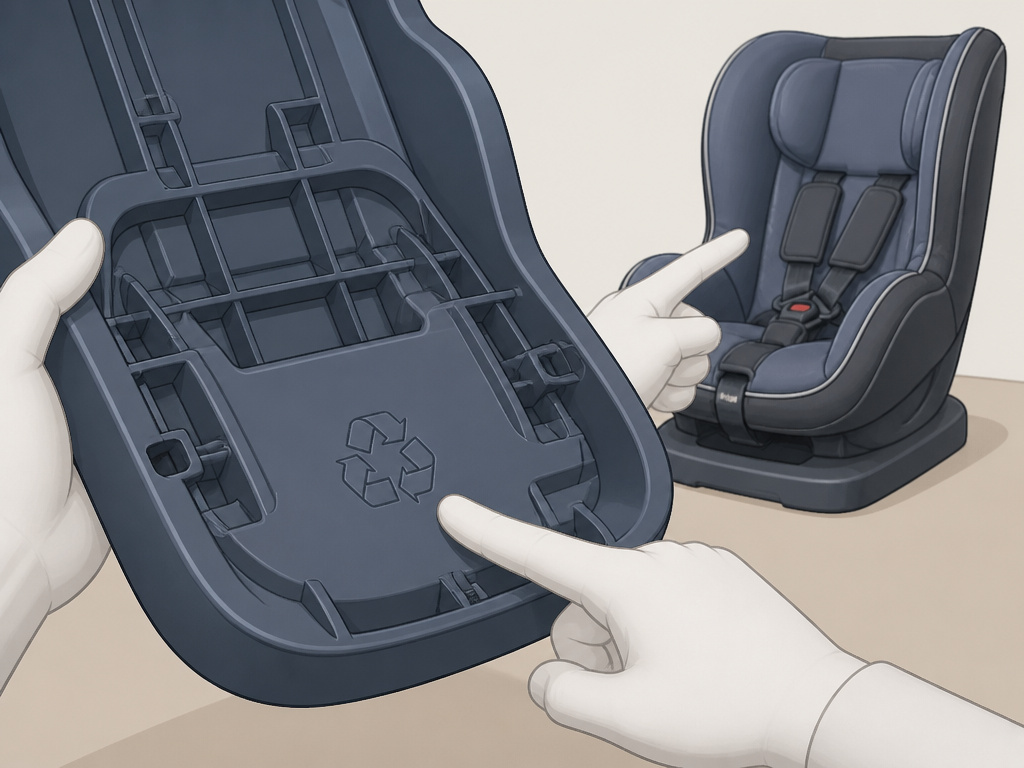
Recycling one seat feels like a drop in the bucket. But with 10-12 million seats sold annually in the U.S., proper end-of-life handling matters. It also connects to a smarter buying cycle.
When you choose your next seat—like a convertible car seat that lasts from toddler to booster—consider its longevity. A seat with a 10-year life span creates less waste over time than two shorter-lived seats. Brands like Graco and Britax design for this durability.
The moment you realize you need to switch from an infant car seat is the moment to plan for its end. Check for car seat expiration dates before you store it as a hand-me-down. That foresight stops the last-minute scramble and the guilty trip to the dumpster.
Frequently Asked Questions
Can I put my old infant car seat in the recycling bin?
No. Curbside recycling facilities are not equipped to process an intact car seat. The mixed materials (plastic, metal, fabric, foam) will contaminate the recycling stream and cause the entire seat to be sent to a landfill. You must disassemble it first and even then, only certain components may be accepted.
How do I find a car seat recycling program near me?
Start with your state’s Department of Transportation or Highway Safety office website. Search for “[Your State] car seat recycling program.” You can also contact local solid waste districts, check with children’s hospitals, or visit the website of Safe Kids Worldwide to find coalition partners in your area that may host collection events.
Why do car seats expire if they look fine?
The expiration date is based on the degradation of the plastic shell from environmental exposure. Ultraviolet (UV) radiation from sunlight and extreme temperature fluctuations in cars cause the plastic to become brittle over time. This material fatigue is not visible, but it means the seat may not perform as designed in a crash after its expiration date has passed.
What should I do with the car seat while waiting for a recycling event?
Store it disassembled. Take off the cover and padding, cut the harness straps, and separate the plastic from the metal. Store the components in bags in your garage or basement. This prevents anyone from mistakenly using it and makes it ready to go when you find a recycling solution.
Are there any free ways to recycle a car seat?
Yes. State-run programs, like the one offered by the Colorado DOT, are typically free. Some community safety events hosted by fire departments or hospitals also offer free recycling. These are your best options. Paid mail-in services are a fallback when no free local program exists.
Is it safe to use a secondhand infant car seat?
It is only safe if you can confirm its complete history. You must know it has never been in a crash, is not expired, is not under recall, and has all its original parts and the instruction manual. This is very difficult to verify, which is why safety organizations like SafetyBeltSafe U.S.A. Recommend against it.
The Bottom Line
Recycling an infant car seat is a deliberate act, not a passive one. You must disassemble it, hunt down the right program, and physically deliver the parts. The system is not built for convenience because the product was not built for deconstruction.
The win is twofold. You keep a complex, polluting object out of the landfill. More importantly, you put a definitive end to a safety device that has served its purpose. That finality is what keeps kids safe. When in doubt, destroy it. A cut harness is a clearer message than any goodwill.
