
Determining When to Use a Backless Booster Car Seat Safely
This post contains affiliate links. As an Amazon Associate, we earn from qualifying purchases.
A child is ready for a backless booster car seat when they meet four hard requirements: they are at least four years old, weigh between 40 and 110 pounds, stand 38 to 57 inches tall with their ears below the vehicle seat’s headrest, and can sit properly in a seat belt for the entire ride without slouching or moving the belt behind their back.
That last clause about behavior is the one most checklists leave off. It turns a simple spec-match into a judgment call you have to make every single trip. A child who meets the numbers but fidgets the shoulder belt under their arm is not safe in a backless booster, period.
What follows is the breakdown of each requirement, the physical reasons behind them, and the specific consequences of getting it wrong. We’ll cover the official NHTSA booster seat guidelines, compare backless and high-back models, and walk through the installation steps that actually matter.
Key Takeaways
- The minimum age is four years, but the critical limit is height: the child’s ears must not extend above the vehicle seat’s headrest.
- Backless boosters require a three-point lap-shoulder belt. Never use one with a lap-only belt.
- Maturity is non-negotiable. The child must keep the belt properly positioned; if they can’t, return to a harnessed seat.
- Canadian law forbids using U.S.-purchased booster seats, and has stricter headrest rules for backless models.
- Always secure an empty booster with the vehicle’s seat belt to prevent it from becoming a projectile.
The 5-Point Checklist for Backless Booster Readiness
Manufacturer manuals and the FMVSS 213 federal regulation agree on a short list of prerequisites. Missing one invalidates the others.
A child must be at least 4 years old, weigh 40–110 lbs (18–50 kg), stand 38–57 inches (97–145 cm) tall, have their ears below the vehicle seat headrest, and demonstrate the ability to sit properly in a seat belt for the entire car ride. This is per the Chicco GoFit and Evenflo Big Kid Sport manuals.
1. Age: At Least Four Years Old
This isn’t a guess. The Chicco GoFit and Evenflo Big Kid Sport manuals state it plainly. Bone development and muscle tone matter here. A four-year-old’s skeletal structure is more developed than a three-year-old’s, better able to withstand crash forces distributed by a seat belt.
2. Weight: 40 to 110 Pounds (18 to 50 kg)
This range is printed on the seat’s label. The lower limit of 40 lbs (18 kg) is a federal minimum under FMVSS 213. The upper limit of 110 lbs is common, but check your specific model. The Evenflo Big Kid Sport, for example, tops out at 100 lbs. Exceeding the maximum weight voids the seat’s safety certification.
3. Height: 38 to 57 Inches (97 to 145 cm)
Height ensures the seat belt geometry works. The lap belt must lie across the upper thighs, not the soft abdomen. The shoulder belt must cross the chest midway between neck and shoulder, not ride on the neck or fall off the shoulder. A child shorter than 38 inches likely won’t achieve this fit, even on the booster.
4. The Ear-to-Headrest Rule
This is the most concrete, visual check. The tops of the child’s ears must be at or below the top of the vehicle seat’s headrest. If the ears are above, the child’s head lacks support in a rear-impact crash. The booster raises the child, but the vehicle seat provides the head containment. No headrest, or a low headrest, means a backless booster isn’t an option.
5. Demonstrated Maturity and Posture
The manuals phrase this as “ability to sit relatively still and properly in a seat belt at all times.” In practice, it means the child does not slouch, lean forward, tuck the shoulder belt under their arm, or place it behind their back. If they do any of these things, the belt’s crash geometry fails. The lap belt rides into the abdomen, and the shoulder belt offers no upper-body restraint. This behavioral requirement is why some mature five-year-olds are ready, and some restless seven-year-olds are not.
How to Tell if Your Child is Ready
You have the numbers. The judgment call on maturity is harder. Watch for these specific behaviors on short, then longer, trial runs in a harnessed seat.
First, explain the rules: “The belt needs to stay right here on your shoulder and here on your lap. It’s your job to help keep it there.” Then observe.
Where this goes sideways: Allowing a child who slouches or moves the belt to use a booster. In a sudden stop or crash, the misrouted belt can cause internal abdominal injuries or fail to restrain the upper body, leading to head and neck impact with the front seat.
Does the child naturally sit back, or do they curl forward to see a book? Do they complain the shoulder belt is uncomfortable on their neck? That discomfort is a sign the belt fit isn’t correct, likely because they haven’t outgrown their forward-facing harness yet. A proper fit shouldn’t chafe.
If they pass a 20-minute ride, try an hour. The real test is boredom. A child who maintains posture only when engaged will fail on a long, quiet highway drive. If they can’t, the answer is clear. Return to a forward-facing harnessed seat. There’s no penalty for waiting; the harness is safer as long as the child fits within its limits.
The maturity check is a pass/fail gate. No amount of pleading or convenience overrides it. Your move to a booster is a safety downgrade from a five-point harness; the child’s behavior is the only thing that makes it acceptable.
Why the Rules Are What They Are (The Physics of a Crash)
A seat belt is designed to load the strongest parts of an adult body: the pelvis and the shoulder cage. A child’s body is proportioned differently. A booster seat’s sole job is to position the adult-sized belt onto those stronger child-sized points.
Lap Belt Positioning: The belt must lie low across the hip bones, touching the upper thighs. If it rides up onto the stomach, crash forces are transferred to the soft abdominal organs. The risk of internal injury like laceration or rupture spikes.
Shoulder Belt Positioning: The belt should cross the center of the collarbone. If it’s on the neck, the child will naturally move it, leaving themselves unrestrained. If it’s off the shoulder, it provides no upper-body restraint at all. In a frontal crash, the child’s torso can pivot forward, leading to head impact.
The vehicle seat’s headrest supports the child’s head and neck in rear-end collisions. A backless booster provides zero head support. That’s why the ear-to-headrest rule is absolute. If the child’s head extends above the seatback, in a rear-impact their neck can hyperextend over the top.
This is also why a high-back booster is often a necessary intermediate step. It provides built-in head support and side-wing protection a vehicle seat may lack.
Backless Booster vs. High-Back Booster: Which When?
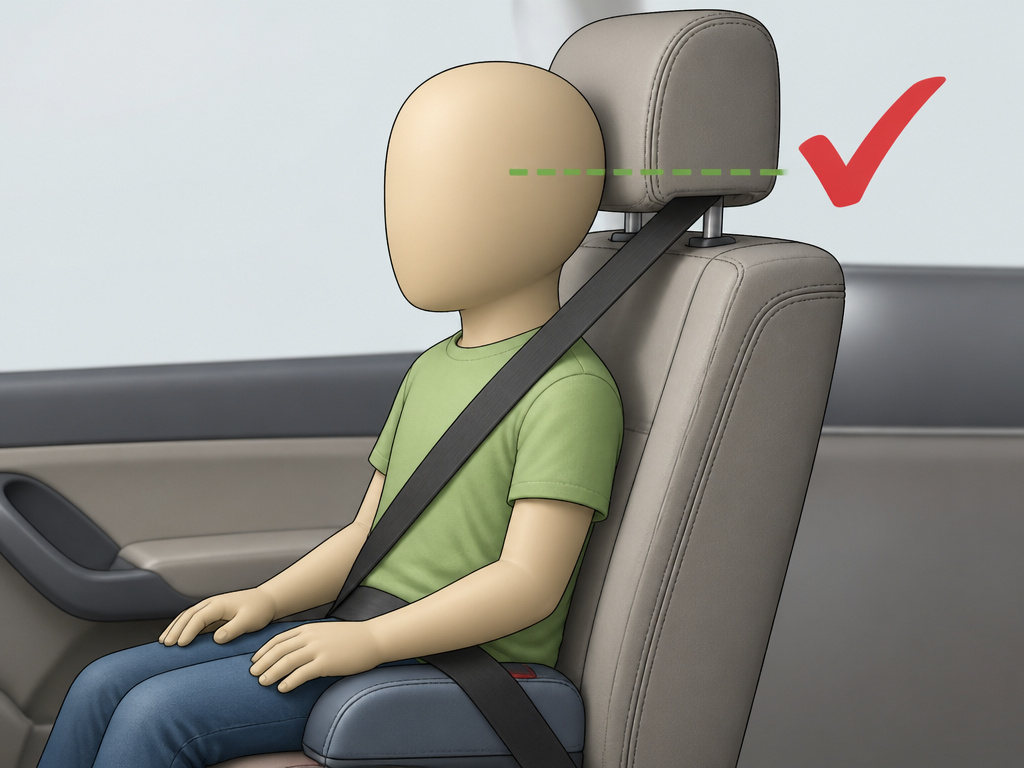
The choice isn’t about age. It’s about your vehicle and your child’s proportions.
| Consideration | Backless Booster | High-Back Booster |
|---|---|---|
| Head Support | Relies entirely on vehicle seat headrest. Child’s ears must be below it. | Has its own integrated headrest and side wings. |
| Vehicle Fit | Ideal for vehicles with tall, adjustable headrests. | Necessary if vehicle seatback is low or has no headrest. |
| Belt Guidance | May include a shoulder belt clip or guide. | Almost always includes built-in belt guides and shoulder belt positioners. |
| Portability | Extremely lightweight and easy to move between vehicles. | Bulkier, but often easier to get a consistent, correct belt fit. |
If your vehicle has low seatbacks or fixed, low headrests, a high-back booster seat is the only safe choice. The seat itself provides the critical head containment. A backless model in that scenario leaves the child unprotected from whiplash.
Many combination seats (like the Graco Tranzitions) convert from a forward-facing harness to a high-back booster, and finally to a backless booster. This path maximizes the use of the harness before moving to belt positioning. It’s a smart choice if you’re unsure about maturity, as it lets you delay the final decision.
Critical Warnings and Edge Cases
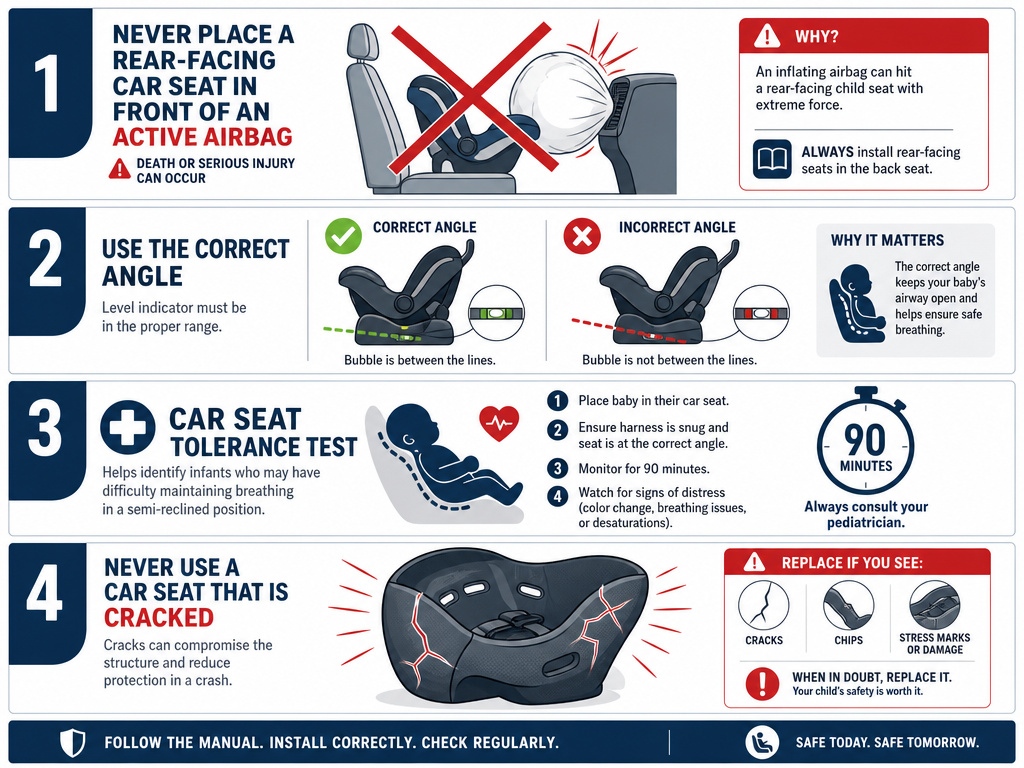
The manual fine print contains deal-breakers most people discover too late.
Never Use With a Lap-Only Belt. Backless boosters are certified for use only with three-point lap-shoulder belts. Using one in a center seat with only a lap belt is dangerous and violates the manufacturer’s instructions. The seat will not restrain the child’s torso in a crash.
Canadian Regulations Are Different. The Government of New Brunswick explicitly states: “Do not purchase booster seats in the United States since they do not comply with Canadian safety regulations.” Canadian standards (CMVSS 213.2) differ from U.S. Standards (FMVSS 213). A seat bought in the U.S. May not be legal or safe for use in Canada.
Secure It When Empty. The Chicco manual commands: “ALWAYS secure this Child Restraint with the vehicle’s Lap-Shoulder Belt when unoccupied.” An unsecured booster becomes a heavy projectile in a sudden stop or crash, capable of injuring other passengers.
Respect the Expiration Date. Look for a “Do Not Use After” date stamped on the seat, usually on the underside. Plastic degrades over time, and safety standards evolve. Using an expired seat is a gamble with its structural integrity.
Post-Collision Replacement. If the vehicle has been in a moderate or severe crash, replace the booster seat. Hidden stress fractures can compromise its performance in a subsequent crash. Some insurance policies cover this replacement cost.
Step-by-Step: Installing and Using a Backless Booster Correctly
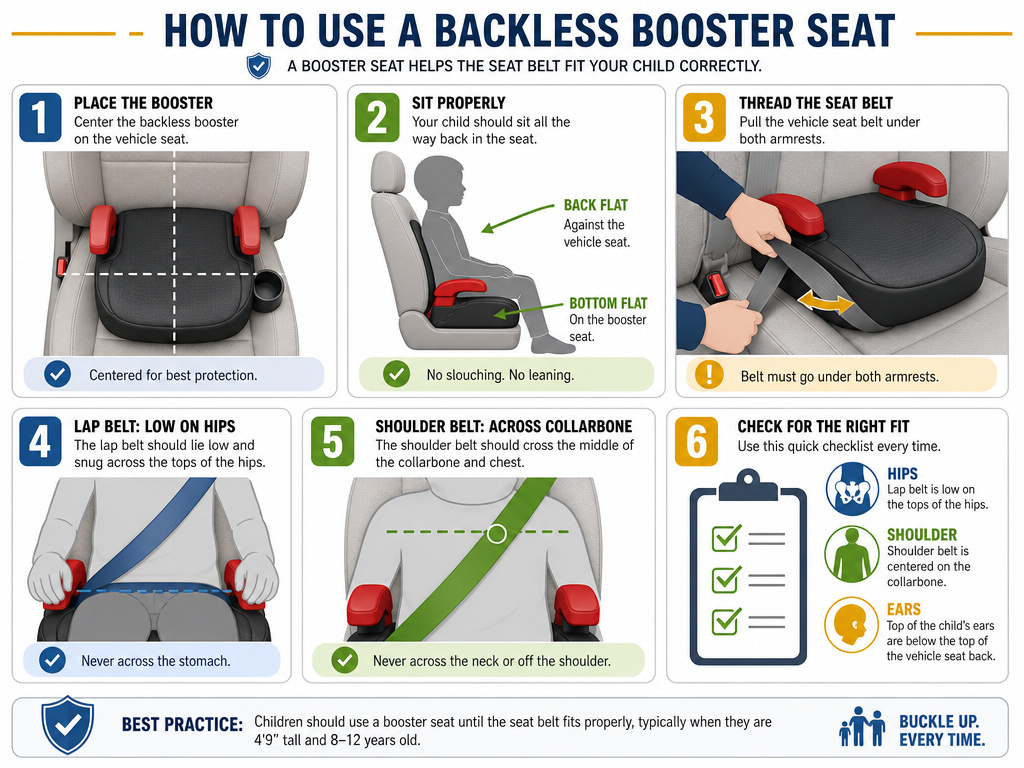
Proper use is a three-part ritual: install the seat, position the child, and secure the belt.
- Place the booster flat on the vehicle seat, centered and facing forward. Ensure the vehicle seatback is upright.
- Have the child sit all the way back, bottom flat against the booster, back flat against the vehicle seat.
- Pull the vehicle’s lap-shoulder belt across the child. For seats like the Evenflo Big Kid Sport, route the belt under the plastic armrests on the booster’s sides. Fasten the buckle.
- Adjust the lap portion. Pull it tight so it lies low and snug across the child’s hip bones, not the stomach.
- Adjust the shoulder portion. It should lay flat across the collarbone. If it rides on the neck, use the seat’s shoulder belt clip. Thread the clip onto the belt and slide it up or down until the belt rests midway between neck and shoulder.
- Perform the fit check. The lap belt is on the hips. The shoulder belt is centered. The child’s ears are below the vehicle headrest. The child is sitting upright.
For more detailed steps, see our guide on how to install a booster seat correctly. The process for a booster seat with seat belt is fundamentally the same, as these seats are not attached with lower anchors.
Common mistake: Forgetting to route the seat belt under the booster’s armrests. This prevents the lap belt from staying low and can cause the booster to tilt or the belt to ride up.
After the child gets out, re-buckle the belt around the empty booster. This habit prevents the “projectile seat” scenario and makes the next use faster.
Frequently Asked Questions
Can a 5 year old use a backless booster?
Yes, if they meet all five requirements: age (4+), weight (40+ lbs), height (38+ inches), ears below the headrest, and demonstrated maturity. Many five-year-olds still need the head and side support of a high-back booster, especially for longer trips or if they sleep in the car.
What is the weight limit for a backless booster?
Most models, like the Chicco GoFit, have an upper weight limit of 110 pounds (50 kg). Others, like the Evenflo Big Kid Sport, limit use to 100 pounds (45.3 kg). Always check the label on your specific seat. The federal minimum starting weight is 40 pounds (18 kg).
Are backless boosters safe?
When used correctly with a child who meets all size and behavioral requirements, backless boosters are a federally approved and safe step. They are not as safe as a five-point harness, which is why experts recommend keeping a child in a harness to its maximum limits before considering a transition from harness. The safety depends entirely on correct belt fit and child compliance.
Why does my child need a booster if they are over 40 lbs?
Weight alone doesn’t ensure proper seat belt geometry. A child can be heavy but short, causing the lap belt to ride up on their abdomen. The booster’s height ensures the belt contacts the body at the correct, stronger points. The maturity requirement ensures they don’t defeat the belt’s purpose by moving it.
Can I use a backless booster without a headrest?
No. Manufacturer instructions and Canadian regulations are clear: a backless booster may only be used if the vehicle seat has a headrest that ensures the child’s ears are below its top. Without a headrest, you must use a high-back booster model that provides its own integrated head support.
Before You Go
Moving to a backless booster feels like a milestone, but it’s a technical decision, not an emotional one. The numbers—40 pounds, 38 inches, four years—are the easy part. The hard part is the daily judgment call on your child’s posture and patience.
If you’re unsure, wait. Return to a harnessed seat. There is no award for moving up early, and the five-point harness is the gold standard. When you do move, choose a seat that fits your vehicle, like the Chicco GoFit for tall headrests or the Evenflo Big Kid Sport for its adjustable belt clip. Your final job is the same every trip: check the belt fit, check the posture, and secure the empty seat.
That routine is what turns a piece of plastic into a life-saving device.
