
Does Uber Require a Car Seat for Kids? Policy & Safer Options
This post contains affiliate links. As an Amazon Associate, we earn from qualifying purchases.
Uber does not require or provide car seats for children—state law does. The responsibility falls entirely on the passenger to supply and correctly install an appropriate child restraint for their kid’s age, weight, and height. Uber’s terms of service explicitly state drivers can refuse a ride if a passenger arrives without a legally required car seat, and using standard Uber without one violates both policy and local law.
That policy shifts all risk to you. A driver accepting the ride doesn’t make it legal or safe. Your local transportation code defines the car seat law, not Uber.
What follows: the exact legal stance, the specialized services that solve this problem, and the one field-test result that reframes the whole choice.
Key Takeaways
- Uber’s policy mirrors state law: you must provide the correct car seat.
- Drivers can and should cancel the trip if you show up without a seat, leaving you stranded.
- Services like Kidmoto and Kid Car operate in specific cities, offering pre-installed, professionally fitted car seats for a fee.
- For older children, a travel car seat vest can be a portable, legal alternative to a traditional booster.
- Never assume a driver’s vehicle has LATCH anchors or enough space for your seat—call ahead.
What Does Uber’s Official Policy Say?
Uber’s position is a direct reflection of child passenger safety laws. The company states that riders are responsible for providing the proper car seat or booster seat for their children. Drivers are instructed not to provide rides if a child who legally requires a restraint does not have one.
This isn’t a corporate loophole. It’s a practical and legal limitation. Uber drivers are independent contractors using their personal vehicles. They aren’t trained or equipped to stock, install, or verify multiple types of child restraints. The liability for an incorrect or improperly used seat is enormous.
Uber’s Help Center article on car seats is a third-party, pronoun-free technical snippet: “Car seats and boosters are not available through the Uber app. You are responsible for providing and using the correct car seat or booster seat required by law. Drivers may decline a trip if a rider doesn’t have a proper child restraint. Some areas offer Uber Car Seat—check the app for availability.”
Where this goes sideways: A driver reluctantly agrees to the ride. You buckle your child in with the adult seatbelt. In a minor fender-bender, that child is at severe risk of injury. The driver’s insurance likely denies coverage for an illegal ride, and you bear full civil and criminal liability for violating child restraint laws.
The Legal Reality You’re Actually Facing
The law isn’t interested in Uber’s app. It cares about the vehicle on the road. When you hail a standard UberX or Uber Comfort, you are hiring a private vehicle for hire. In the eyes of the law, the same child passenger safety statutes apply as if you were in a personal car or a taxi.
This means fines, points on your license (if you’re the parent/guardian), and potentially criminal charges in the event of an injury. The driver also faces penalties for operating a vehicle with an unrestrained child.
| Jurisdiction Type | Typical Car Seat Law | Enforcement Risk in Uber |
|---|---|---|
| State / Provincial | Required for children under 8 yrs, 4’9″, or 80 lbs (varies). | High. A traffic stop reveals the violation. |
| City / Municipal | Can be stricter than state law. | Very High. Local police know rideshare pickup zones. |
| Airport Property | Often has its own security and traffic enforcement. | Highest. Violation can delay your entire travel party. |
The safest path is to know your local law and follow it exactly. Assuming “it’s just a short ride” or “I’ll hold them tight” are the phrases that precede preventable tragedies.
Your Practical Options for Getting a Safe Ride
You have three concrete paths forward. Only one removes the burden of carrying a seat.
1. Bring and Install Your Own Car Seat (The Default)
This is the most versatile and reliable method, assuming you can manage the seat. You control its history, cleanliness, and fit for your child.
What you need to do:
- Call the driver immediately after match. Say, “I have a [rear-facing convertible] car seat to install. Does your vehicle have LATCH anchors in the rear outboard seats?” This avoids a last-minute cancellation at the curb.
- Practice a 60-second install. Use either the LATCH system or the seatbelt. You should be able to secure the seat with a firm handshake test at the belt path before the driver gets impatient.
- Have a portable cart. A lightweight travel cart turns a bulky seat into manageable luggage.
Common mistake: Assuming any Uber will fit your seat. Some compact cars have impossibly small back seats. A rear-facing convertible won’t fit in a Fiat 500 without the front passenger seat crammed against the dashboard. You’ll be canceling rides until a minivan appears.
2. Use a Specialized Car Seat Service
For airport transfers or scheduled rides in supported cities, dedicated services solve the hardware problem. They supply the seat, installed correctly by a trained driver.
Kidmoto is the largest, operating in over 100 cities globally. They specialize in airport runs. Their drivers are trained by car seat technicians, and they provide convertible seats for children from 5 lbs to over 70 lbs. You must book in advance via their app or website.
Kid Car serves specific metro areas like New York, Los Angeles, and Atlanta. Founded in 2006, they offer scheduled reservations with professional drivers and a choice of vehicles, equipped with up to three correctly installed car seats.
| Service | Best For | Key Limitation |
|---|---|---|
| Kidmoto | Airport transfers in major cities. | Not for spontaneous local trips; requires advance booking. |
| Kid Car | Scheduled rides (medical, events) in its 8 served metros. | Geographic coverage is narrow. |
| Uber Car Seat | Spontaneous rides only if it’s live in your city (e.g., NYC). | Extremely limited availability; often only forward-facing seats. |
These services cost more than a standard Uber, but the premium is for the guaranteed, lawful safety equipment. It’s not a luxury; it’s compliance.
3. Consider a Certified Travel Vest for Older Children
For kids who have outgrown a 5-point harness but are still too small for an adult seatbelt, a travel car seat vest is a legitimate alternative. Products like the RideSafer Travel Vest are FMVSS 213 certified. They pack into a backpack, turning any vehicle seat into a safe, lap-and-shoulder-belted position for a child.
This is a middle ground between hauling a full booster seat and breaking the law. It’s specifically designed for taxi and rideshare use where carrying a seat is impractical.
Specialized Services That Provide Car Seats
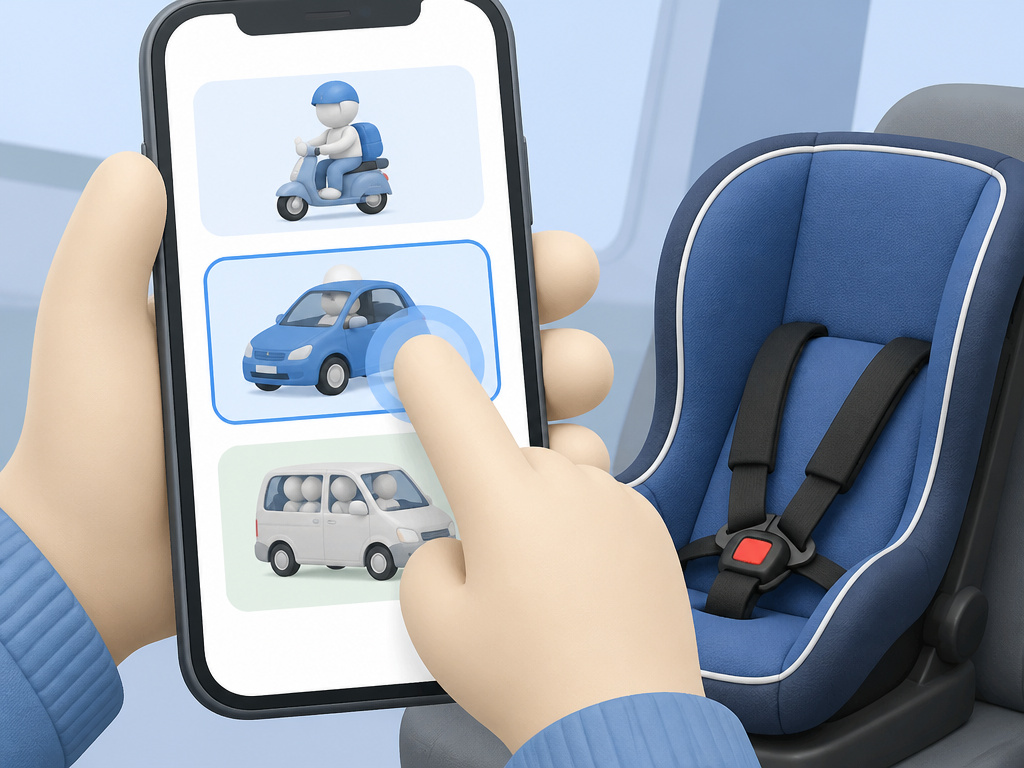
When “bring your own” isn’t an option, these are the operators that fill the gap.
Kidmoto functions like a traditional car service with a family focus. The process is straightforward: download their app, schedule a ride, and select the number of car seats needed. Their fleet is maintained to ensure seats are clean and undamaged. The trade-off is flexibility—this isn’t an on-demand, five-minute-away solution.
Kid Car takes a more premium, scheduled approach. You’re booking a dedicated vehicle with a vetted driver, often for events, medical appointments, or airport travel. Their model ensures availability and eliminates the wait-time uncertainty of standard rideshares. They also offer shared rides for multiple families, which can reduce cost.
Yuni Rides represents a different model focused on non-emergency medical transportation and school district contracts, particularly for students with special needs. While not a general-purpose Uber alternative, it highlights a sector where compliance, driver training, and specific vehicle standards are non-negotiable. For families with children who have specific transportation needs outlined in an IEP, services like Yuni are essential.
What About Uber Car Seat or Uber Car Seat Option?
Uber has intermittently tested a feature called “Uber Car Seat” in a handful of markets like New York City. When available, it appears as a separate vehicle option in the app, priced higher than UberX. The driver provides and installs a forward-facing car seat.
Do not rely on this. Its availability is vanishingly rare and unpredictable. Even in NYC, it’s not a guaranteed option. Furthermore, these seats are typically only suitable for children above a certain weight and height, excluding infants and toddlers who need rear-facing or convertible seats. Basing your child’s safety on a feature that might not exist in your app is a profound risk.
The High Cost of Getting It Wrong
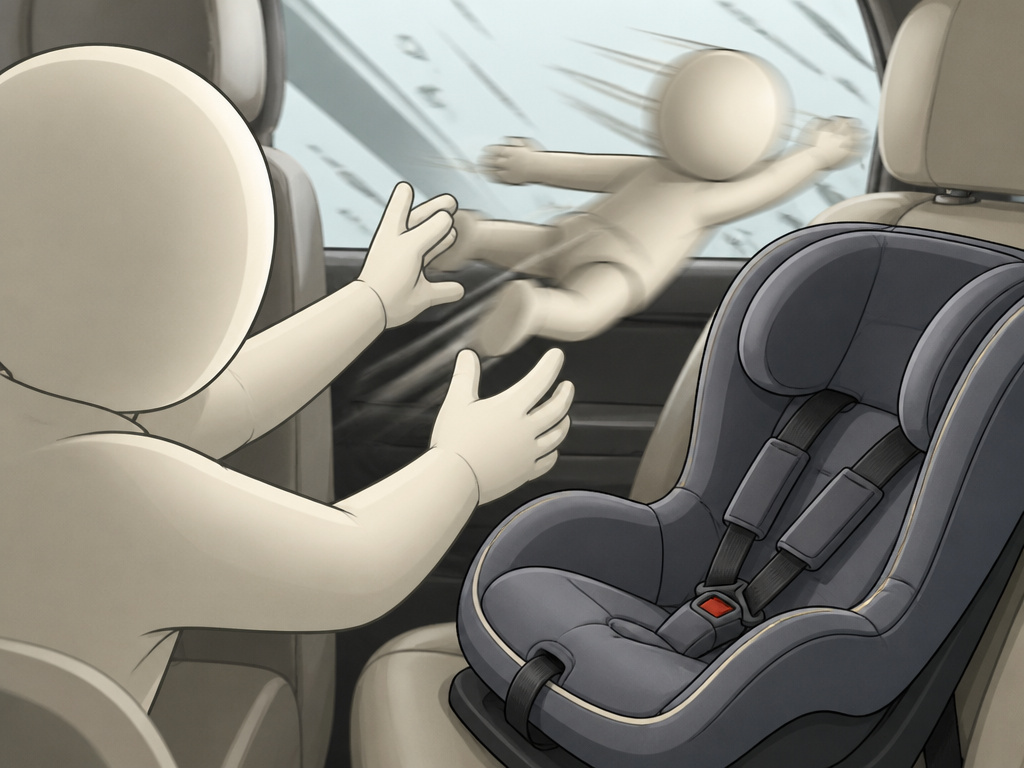
Choosing to ride without a car seat is a decision with layered consequences. The first layer is legal: a ticket that can cost hundreds of dollars. The second is financial: in an accident, medical bills for a child’s preventable injuries are staggering, and insurance companies will fight coverage for an illegal trip.
The final layer can’t be measured. It’s the lifelong regret of a split-second compromise. The mechanics are brutal: in a 30 mph collision, a 30-pound child becomes a 900-pound projectile. No adult can hold onto that.
The process of installing your own car seat correctly is the barrier that keeps kids safe. Skipping it because it’s cumbersome is the single point of failure in the system.
Frequently Asked Questions
Can I use a booster seat in an Uber?
Yes, if your child meets the legal requirements for a booster in your state (typically over 4 years old, 40+ lbs, and able to sit properly for the entire ride). A high-back booster provides better side-impact protection and belt positioning than a backless one. For maximum portability, a certified travel vest is often a better fit for rideshare use.
What if the Uber driver doesn’t have seat belts?
This is exceptionally rare in modern vehicles, but if a driver arrives in a car with non-functional rear seatbelts, cancel the ride immediately. Report the vehicle to Uber via the app. It is illegal and unsafe to operate. Do not attempt to install a car seat without a functional seatbelt or LATCH system.
Are taxis exempt from car seat laws?
Laws vary wildly. Some cities exempt taxis from car seat requirements, but many do not. The exemption, where it exists, is a legal loophole, not a safety recommendation. A crash doesn’t care if the car has a taxi light on its roof. The safest practice is to use a seat in a taxi just as you would in any other vehicle.
How do I know if my car seat is installed correctly in an Uber?
Perform the “inch test.” Grab the car seat at the belt path (where the seatbelt or LATCH strap goes through it) and try to move it side-to-side and front-to-back. It should not move more than one inch in any direction. Also, ensure the seat is at the correct recline angle for your child’s stage. If you’re unsure, our guide on how to check for proper car seat installation walks through the key checkpoints.
The Bottom Line
Uber doesn’t require a car seat—the law in your street does. The company’s policy simply offloads that legal duty onto you. Your choices are clear: manage a personal car seat in Uber, book a verified service like Kidmoto, or use a legal travel vest for an older child.
For spontaneous trips in most cities, bringing your own seat is the only reliable method. For pre-scheduled airport transfers, a dedicated car seat service is worth every penny for the peace of mind and guaranteed compliance. Never roll the dice on a driver looking the other way. The stakes are your child’s safety, and the system offers no shortcuts.
