
Proper Technique for How to Hold an Infant Car Seat Safely
This post contains affiliate links. As an Amazon Associate, we earn from qualifying purchases.
Hold an infant car seat with two hands: one hand firmly on the carry handle and the other supporting the bottom of the seat shell. The handle must be locked in the manufacturer-approved carry position, which is almost always upright or slightly reclined, never folded over the seat. This two-point contact prevents the seat from tipping, rotating, or slipping from your grip.
That grip is non-negotiable because an infant seat is top-heavy. The baby’s weight sits high in the shell, above the center of gravity. A one-handed hold lets the seat pivot on the handle. The bottom swings out, the top leans forward, and in one second the whole thing is falling.
What follows is the mechanics of a secure hold, the manufacturer rules most people miss, and the specific situations where your grip will be tested. We will cover the two-hand rule, the correct handle position, navigating stairs and doors, and why a decade-old seat is a handling hazard regardless of its appearance.
Key Takeaways
- Always lock the carry handle in the position specified in your car seat’s manual before lifting. For most seats, like the Cybex CLOUD G PRO, this is the upright “carry” position.
- Use two hands: your primary hand on the handle and your other hand under the seat’s bottom or side for stability and control.
- Never use the infant seat’s handle to hang the seat on a shopping cart. This can damage the handle’s locking mechanism and is a leading cause of tip-overs.
- A car seat more than 10 years old has plastic that may be brittle. The handle or shell can crack under normal lifting stress, even if it looks fine.
- Bulky winter covers and aftermarket inserts can make the harness straps loose and compromise your secure hold on the child inside the seat.
The Two-Hand Rule for Safe Carrying
You need two points of contact. One hand manages the balance point—the handle. The other hand controls the seat’s mass and prevents rotation.
Your dominant hand goes on the carry handle, with a full, firm grip. Your other hand cups the bottom of the seat shell or braces against its side. This second hand is your safety. It stops the seat from swinging if you turn your body. It takes the weight if your grip on the handle slips. It steadies the load when you’re setting the seat down.
A properly held infant car seat should not pivot or swing independently of your body’s movement. The child’s weight is centered high in the shell, creating a pendulum effect if the seat is held only by the handle. The second hand under the base counters this momentum, keeping the seat stable and level during transport.
Why does one hand fail? The seat’s center of gravity is above the handle’s attachment points. Hold it with one hand and it becomes an unbalanced lever. A slight jostle, a shift in the baby’s weight, or a simple turn can make the bottom kick out. Your wrist isn’t strong enough to counteract that torque for more than a few seconds.
Where this goes sideways: Carrying the seat in the crook of your elbow like a purse. This seems natural but puts all the weight on one forearm. The seat dangles, the baby’s head can slump, and your control is minimal. You cannot react quickly if the seat starts to fall. That posture is for brief transfers, not for actual carrying.
Handle Position: Your First Safety Check
The carry handle is a structural part of the seat, not just a grip. In a crash, many handles are designed to act as a rebound bar. Using it incorrectly weakens the seat and makes it unstable to carry.
Check your manual. Every model has a specific rule. The Cybex CLOUD G PRO manual, for instance, instructs you to “LOCK the Handle in the CARRY position” when lifting the seat onto its base. For most infant seats, the safe carry position is fully upright or at a specific recline angle. The handle should be locked with an audible click.
| Handle Position | Purpose | Risk If Used for Carrying |
|---|---|---|
| Upright / “Carry” | Safe for transporting seat with infant. | None when locked. |
| Fully Reclined | Often used for installation in the car base. | Seat is unbalanced; baby’s head can flop forward. |
| Folded Forward | Storage position to save space. | Handle may not be locked; seat can detach from grip. |
Never carry the seat with the handle folded over the top towards the baby’s feet. That position is for storage only. The locking mechanisms are not engaged, and the handle can collapse. You are one stumble away from dropping the seat.
You must hear the click. If you don’t, find the release button and try again. A handle that isn’t fully locked can gradually slip back mid-carry. This is how a sleepy parent thinks they have a good grip only to feel the seat lurch.
Common Carrying Mistakes and Their Consequences
Mistakes here have immediate physical consequences. They are not theoretical.
Using the shopping cart as a seat stand. This is the most frequent error. You hook the car seat handle over the cart’s push handle or place it in the cart’s top basket. The shopping cart is not engineered for this. The car seat’s center of gravity is now far above the cart’s wheels. A slight turn or a bump can tip the entire cart over. The Chicco OneFit LX manual states a car seat should not move more than 1 inch when installed; a shopping cart offers zero secure attachment. The result is a tipped cart and a fallen seat.
Carrying with bulky clothing or blankets under the harness. The Cybex manual explicitly warns against this. A puffy snowsuit creates slack in the harness straps. Even if the seat itself is held securely, the child inside is not snug against the shell. In a fall, the child can move violently within the seat, increasing the risk of injury. To keep a baby warm, place a blanket over the secured harness after buckling.
Relying on a worn or expired seat. The Chicco OneFit LX manual has a clear rule: “DO NOT use this Child Restraint if it is more than 10 years old.” Plastic degrades. A decade-old handle can fracture at the stress points where it attaches to the shell. It might hold for ten lifts and snap on the eleventh. The “Do Not Use After” date on the seat’s label is a handling safety deadline.
Trying to carry too much at once. You have the seat in one hand, a diaper bag on your shoulder, and you’re reaching for your keys. Your attention and balance are divided. This is when you misjudge a step or a doorframe. The Mayo Clinic car seat mistakes article lists distraction as a key factor in installation errors; it’s just as critical for safe carrying. Put other items down first.
Navigating Real-World Obstacles: Stairs, Doors, and Cars
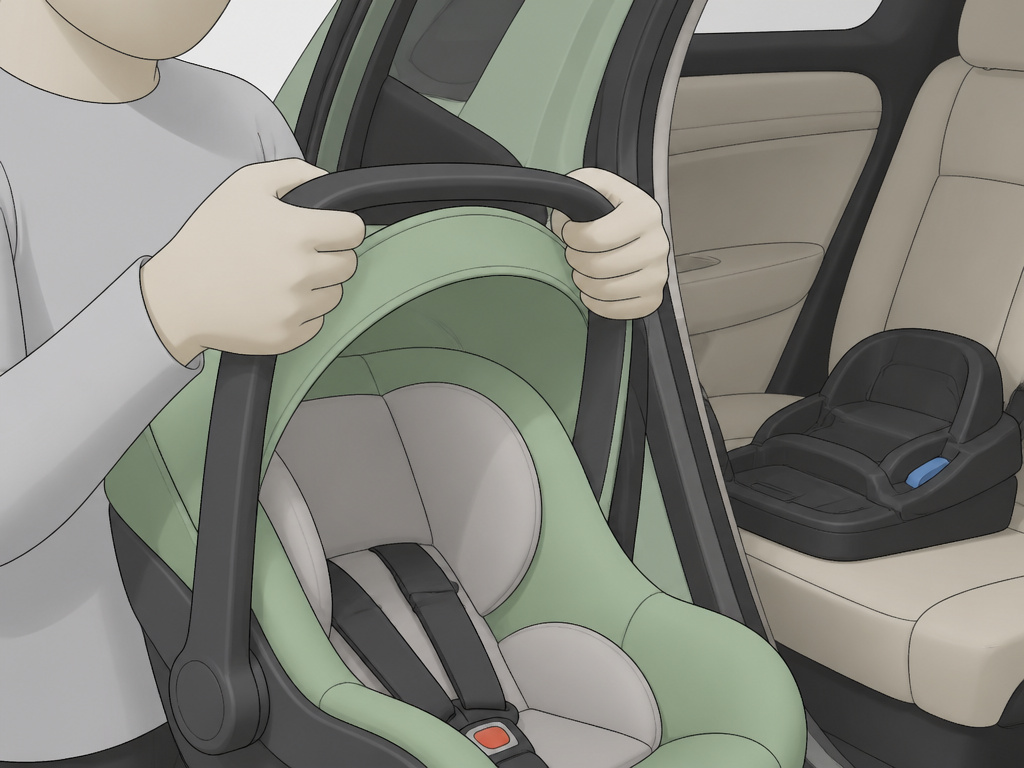 The two-hand rule is your foundation. These scenarios test its application.
Stairs: Always face the stairs. Do not walk backwards or sideways. Hold the seat close to your body with both hands. If possible, have a free hand to grip the railing. For longer flights, consider a travel system that allows you to click the seat into a stroller frame rather than carrying it.
Doors: Set the seat down securely before opening a heavy door. Do not try to hold the seat and push a door simultaneously. The door can swing back into the seat or throw you off balance. Automatic doors are not always reliable; have a backup plan.
Getting in/out of a vehicle: This is a high-risk transfer. The sequence matters. 1. Set the seat on the ground or a stable, level surface next to the car. 2. Secure the child in the seat and fasten the harness. 3. With two hands, lift the seat and guide it into the vehicle base or seat. 4. Listen for the click that confirms it’s locked onto the base or that the seat belt is tight.
Reverse the process when removing. Never unbuckle the child while the seat is still in the car unless you are physically holding them. The proper installation of your base is the first step to a safe transfer.
Gear and Accessories That Help (and Hinder)
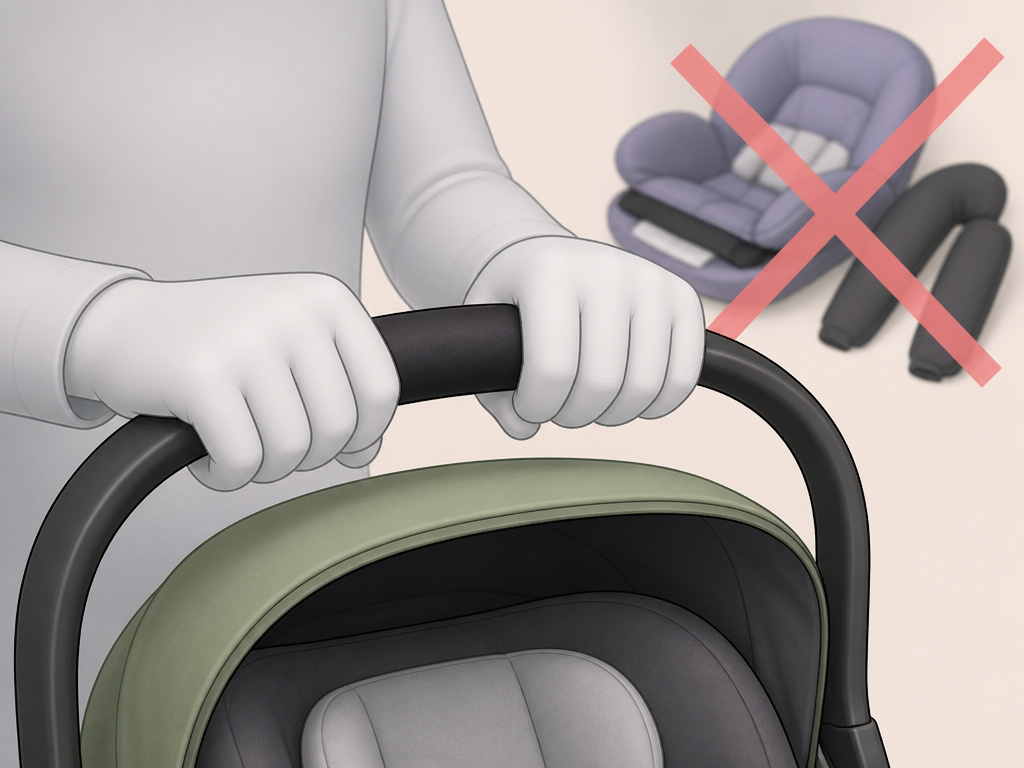 Your equipment choices directly impact safety.
Helpful: A car seat travel bag. A quality travel bag with padded handles and backpack straps distributes weight evenly when the seat is empty. This is for transporting the seat through an airport, not for carrying it with a baby inside.
Helpful: A fitted infant insert. If your seat comes with a newborn insert, use it. It positions the baby correctly so their head is supported and doesn’t slump to one side during carries, which can affect your balance.
Hindering: Aftermarket strap covers or head supports. Unless approved by your car seat manufacturer, these can interfere with the harness routing and the official NHTSA car seat safety guidelines. They can also make it harder to get a tight, proper fit.
Hindering: Thick, non-fitted car seat covers. A bulky car seat cover can prevent the handle from locking into its correct position. It also adds bulk that makes it harder to get a firm grip on the seat shell itself. For winter, use a thin, fleece-lined cover that fits like a shower cap or a weatherproof winter cover designed for your specific model.
The Role of the Car Seat Base
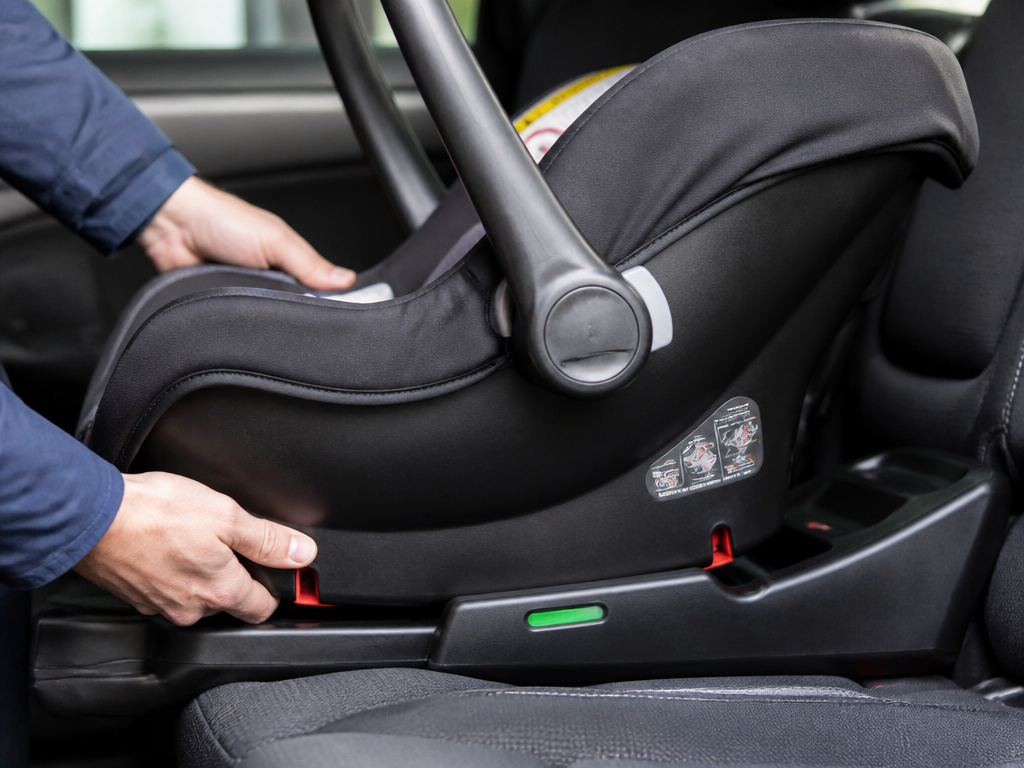 A secure base simplifies the holding equation. A properly installed base means you are placing the seat onto a stable platform, not wrestling it into a tangled seat belt every time.
A good car seat base has clear visual indicators—usually a color-coded system—to show when the seat is correctly attached. You should hear and see a positive lock. This reliability means you can focus your effort on the carry, not the connection.
The base also dictates the handle’s position in the car. Most require the handle to be moved to a specific, often reclined, position when driving. Remember to return it to the upright carry position before you lift the seat out. This small habit prevents the mistake of carrying with the handle in the wrong, unstable drive position.
Frequently Asked Questions
Can you carry an infant car seat by the handle only?
You should not. Carrying by the handle alone makes the seat prone to swinging and tipping. Always support the bottom of the seat with your other hand for control and stability. This is the core of the two-hand rule.
What is the correct way to hold a car seat when walking?
Hold the seat close to your body with two hands. Keep it level so the baby remains in the proper semi-reclined position. Walk deliberately, watching the ground ahead for obstacles. Avoid carrying other items that impair your balance or grip.
How do you carry an infant car seat up and down stairs?
Face the stairs directly. Hold the seat close with both hands, keeping it level. Use a railing for support if one hand is free. Never walk backwards or sideways on stairs while carrying the seat. For long flights, consider using a stroller frame.
Is it safe to put an infant car seat on a shopping cart?
No. Placing a car seat on a shopping cart, either hooked on the handle or in the basket, is a top cause of tip-overs. The cart becomes unstable. Always use a stroller or a dedicated grocery cart designed for this purpose, or place the seat in the cart’s main basket if you must.
How do you travel through an airport with an infant car seat?
You have three main options for airport check-in: check it as baggage in a protective travel bag, use it on the plane if you purchased a seat for your child, or gate-check it. For navigating the terminal, a travel bag with backpack straps or a stroller frame is far safer and easier than trying to carry the seat long distances.
The Bottom Line
Holding an infant car seat is an act of stability, not just strength. The two-hand grip—handle plus shell support—is the physical guarantee against a tip or a fall. This rule is backed by the simple mechanics of a top-heavy object and reinforced by every manufacturer’s warning label.
Lock the handle. Support the base. Ignore the temptation to multitask or take shortcuts, especially around stairs and shopping carts. Your grip is the last layer of safety between a secure ride and an accident. Make it count every single time.
