
Learn Exactly When Your Infant Outgrows Their Infant Car Seat
This post contains affiliate links. As an Amazon Associate, we earn from qualifying purchases.
Infants outgrow their infant car seat when they reach the manufacturer’s maximum height or weight limit, which is typically 30-35 inches tall or 30-35 pounds. The more urgent limit is often height: when the top of the child’s head is less than one inch from the top of the car seat shell, the seat is no longer safe. A Graco seat manual, for example, specifies a rear-facing limit of 40 pounds or 40 inches, whichever comes first.
The one-inch headroom rule is the physical failsafe. The plastic shell is a crash cage; if the head can rise above it in a collision, the neck and spine take forces the seat wasn’t engineered to manage. The weight limit guards the seat’s structural integrity and the lower anchor system. Hitting either limit means the seat has done its job and you need the next stage.
What follows: how to find your seat’s exact limits, the visual signs people miss, what happens if you wait too long, and the straightforward path to the next safe seat.
Key Takeaways
- The printed height and weight limits on your seat’s label or manual are law, exceeding them voids the safety certification.
- The one-inch head clearance rule is critical. If your baby’s head is closer than that to the top of the hard shell, they have outgrown it regardless of their weight.
- Harness straps must be at or below the shoulders for rear-facing use. Straps above the shoulders can cause the child to submarine downward in a crash.
- Infant seats have an expiration date, usually 6-10 years from manufacture. An expired seat is an outgrown seat, as the plastics degrade.
- The next step is almost always a rear-facing convertible car seat, which has higher height and weight limits to keep your child rear-facing longer.
The Two Hard Limits That Matter Most
Your car seat’s manual is the engineering document that certified the seat as safe. The maximum height and weight printed there are the absolute ceilings.
Manufacturers determine these limits through crash testing with weighted dummies. The 40-pound limit on a common Graco model isn’t arbitrary; it’s the point at which their testing showed the seat’s structure and the vehicle’s LATCH anchors could no longer guarantee proper performance in a collision. The NHTSA car seat safety guidelines state you must stop using the lower anchor attachments once your child outgrows the manufacturer’s established weight limit.
Height is the silent outgrower. Tall, lean babies often hit the height limit months before they approach the weight limit. The shell is a fixed size.
A rear-facing car seat’s shell cradles the head, neck, and spine, distributing crash forces along the child’s back. When the child’s head extends above the shell, those forces concentrate on the neck. The one-inch buffer ensures the head remains fully contained even during the violent rebound phase of a crash.
| Limit Type | What It Is | Where to Find It | Consequence of Exceeding |
|---|---|---|---|
| Maximum Height | Typically 30-35 in. / 76-89 cm | Seat side label & manual | Head not contained by shell; neck injury risk. |
| Maximum Weight | Typically 30-35 lbs / 14-16 kg | Seat side label & manual | Overloads seat structure & LATCH anchors; ejection risk. |
| Head Clearance | <1 inch from top of hard shell | Visual check | Direct violation of containment safety principle. |
| Harness Slot | Must be at/below shoulders (rear-facing) | Visual & manual check | Child can submarine under harness in frontal crash. |
Check the label on the side of the seat itself. It’s a sticker with the model number, manufacture date, and the crucial height and weight limits. If the sticker is faded, download the manual from the manufacturer’s website using your model number. Do not guess.
The Visual and Physical Fit Checklist
Numbers are half the story. Your eyes and hands give the final verdict each time you buckle your child in. This checklist takes 10 seconds.
Shoulder Harness Position: For rear-facing, the harness straps must come from the seat back at or below the baby’s shoulders. This positions them to hold the child down and back into the seat cushion during impact. If the straps are above the shoulders, the child can ramp upward and out of the harness. Most infant seats have multiple harness height settings; use the one that matches this rule.
Head Clearance: With your child seated normally, place your hand flat on top of their head. Slide it back until your fingers touch the top of the hard plastic seat shell. If you have less than one inch of space between your child’s head and the shell, they have outgrown the seat. The soft, padded headrest doesn’t count, it’s the rigid shell underneath that matters.
Body Proportion: An outgrown baby looks cramped. Their legs may be bent sharply or pressed against the vehicle seat back. While this is often a co-occurring sign with the critical headroom issue, legs are flexible so it is not a safety issue in itself.
Common mistake: Confusing the removable infant headrest pillow with the actual seat shell. The safety shell is the hard plastic you feel if you push the headrest padding aside. Measure to that.
If any item on this checklist fails, it’s time to switch to convertible car seat. The seat has finished its job.
Why “Outgrowing” Isn’t Just About Size
Three other conditions mean your infant seat is effectively outgrown, even if your baby is still tiny.
1. The Expiration Date. All plastic degrades. UV exposure, temperature swings, and the natural stress of use make it brittle over time. The expiration date, usually 6 to 10 years from manufacture, stamped on the seat, is the manufacturer’s guarantee that the plastic will perform as tested. A Graco manual explicitly states: “STOP using this car seat and throw it away 10 years after the date of manufacture.” An expired seat is an outgrown seat.
2. Unknown History (Second-Hand Seats). If you didn’t buy it new, you can’t be sure. Was it in a crash? Were cleaners used that degraded the harness webbing? Was it stored in a damp garage? Transport Canada notes that this unknown history “could lead to less than optimal safe performance.” If you can’t verify its full history, treat it as outgrown.
3. A Missing Manual. The manual is part of the certified safety system. Without it, you don’t know the exact limits, proper installation path, or critical warnings. You can’t safely use the seat.
These rules remove the guesswork. When in doubt, move on. The consequence of using an outgrown seat is the seat failing to perform its one function during the one time you truly need it.
What’s Next? Your Post-Infant Seat Options
The infant seat phase is the shortest. The next stage lasts years. Your main choice is a convertible seat, which installs rear-facing first, then converts to forward-facing later.
Convertible seats like the Graco 4Ever or the Maxi-Cosi Pria All-in-One have much higher rear-facing limits, often 40-50 pounds. This lets you follow the gold-standard safety advice: keep your child rear-facing as long as possible, ideally until age 3 or 4. The AAP car seat transition guidelines emphasize that children should ride rear-facing until they reach the highest weight or height allowed by their car seat.
For families who use multiple cars or ride-shares, this is the logistics shift. An infant carrier is portable; a convertible seat is semi-permanent. You have two practical paths: buy a seat for each vehicle, or choose a lightweight, easy-install convertible model you can move when needed. The discussion in the BabyBumpsCanada subreddit confirms this is a common hurdle, parents without a car simply reinstall the convertible for each trip.
This is the moment to choose the next car seat with your long-term needs in mind. Think about your vehicle size, how often you’ll move it, and your child’s growth percentile.
The One-Step Transition Plan
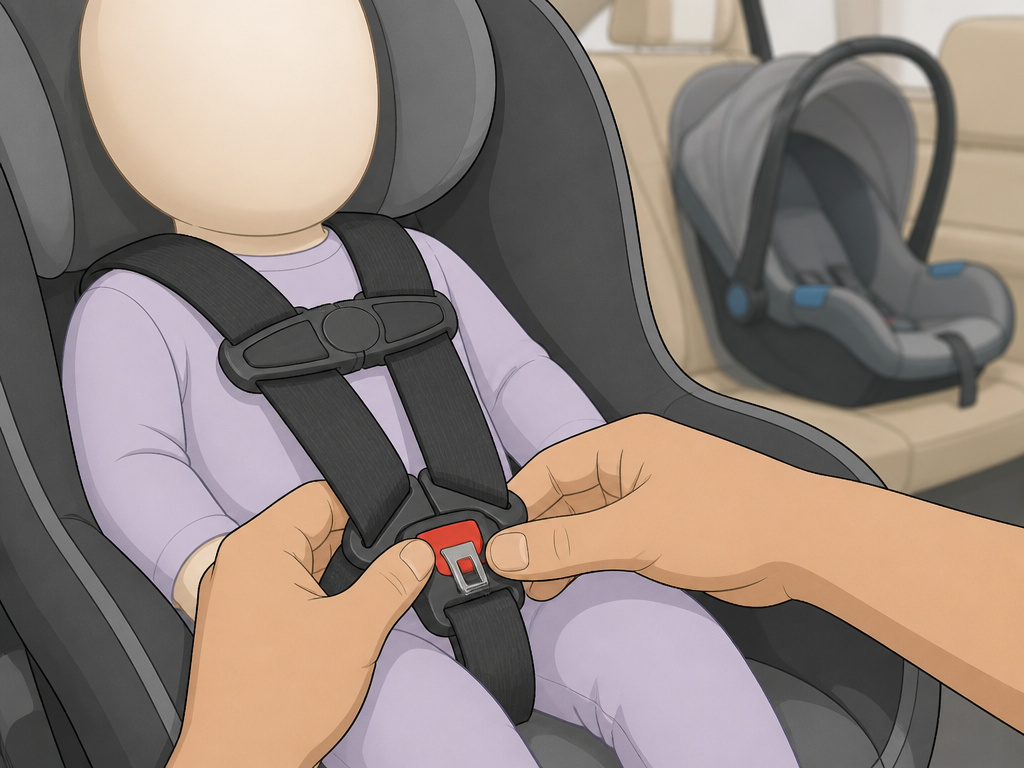 Don’t wait until the day your baby fails the one-inch test. Plan the transition from infant seat a month in advance.
First, purchase and install the new convertible seat. Practice installing it rear-facing in your vehicle using either the seat belt or LATCH, ensuring a tight fit (less than one inch of movement at the belt path). Tether it if the manual requires. Get it inspected at a local car seat check event.
Second, do a trial run. Take a short drive with your baby in the new seat. This lets you both adjust to the different buckling process and confirms your child is comfortable.
Third, retire the infant seat. Once you’re confident, remove the infant seat from the vehicle. If it’s not expired and has no damage, you can store it for a future child or pass it to someone with the full manual and history. Otherwise, disable it (cut the harness straps) and dispose of it so it can’t be used again.
This phased approach avoids a last-minute safety scramble. It turns a milestone into a non-event.
Frequently Asked Questions
My baby is 9 months old and her feet touch the car seat back. Is she outgrown?
No. This is not a safety concern. Children are flexible and can safely sit with legs crossed or bent. The critical limits are the height of the head relative to the shell and the shoulder harness position. Focus on those.
Can I just turn the seat forward-facing instead of buying a convertible?
No. Infant car seats are not designed or certified to be used forward-facing. They lack the internal structure, harness geometry, and tether attachments required for forward-facing safety. You must move to a seat that is certified for forward-facing use, which is a convertible or combination seat.
What if my baby is under the weight limit but over the height limit?
They have outgrown the seat. You must go by whichever limit is reached first. The height limit is usually the more restrictive one because it governs head containment, which is non-negotiable for spinal protection.
Are there infant seats with higher limits for bigger babies?
Yes, some models have higher limits. For example, certain seats go to 35 inches and 35 pounds. However, even the largest infant seats will be outgrown by height long before a convertible seat would be. If you have a large infant, your most economical and safest choice is often to move to a convertible earlier, which will keep them rear-facing much longer.
Is it safe to buy a used infant car seat?
Only if you can be 100% certain of all the following: it has never been in a crash, all parts and the manual are present, it has not been recalled, the harness straps are clean and not frayed, and it is well before its expiration date. The overwhelming advice from safety agencies is to buy new when possible due to the risks of unknown history.
Before You Go
Your infant seat has one job: protect your child until they’re too big for its specific shell. The rules are clear, printed on the label. Watch the headroom, watch the shoulders, and know your seat’s birthday.
The move to a convertible seat is a step up in longevity, letting you keep your child in the safer rear-facing position for years longer. Get the new seat early, install it right, and you’ve turned a potential worry into another box checked on the parenting list.
