
When to Convert to a Convertible Car Seat: Essential Guide
This post contains affiliate links. As an Amazon Associate, we earn from qualifying purchases.
Switch to a convertible car seat when your child exceeds the rear-facing height or weight limit of their infant seat, or when the combined weight of the child and the convertible seat nears 65 pounds, the federal limit for lower anchor use. The official move is dictated by the manufacturer’s label on your specific seat, not by age.
That 65-pound figure isn’t a suggestion. It’s a mechanical ceiling set by vehicle and car seat engineers. Once the child-plus-seat weight hits it, the lower anchor connectors are no longer certified to hold. You must reinstall the entire seat using the vehicle’s seat belt.
What follows: how to read your seat’s label, the math for the lower anchor limit, the real consequence of missing a seat’s expiry date, and the one standard. U.S. Or European, that actually governs your purchase.
Key Takeaways
- The switch trigger is printed on your car seat’s label: move from an infant seat when your child exceeds its rear-facing limits, and from rear-facing to forward-facing when they hit the convertible seat’s rear-facing cap.
- Calculate the lower anchor weight limit by subtracting your car seat’s weight from 65 pounds. Exceed that, and you must switch to a seat belt installation.
- In Canada, using a car seat past its expiry date isn’t just risky, it can be illegal per provincial law, as it voids the certification to Canada Motor Vehicle Safety Standards.
- U.S. Standards (FMVSS 213) are based on weight; European i-Size (ECE R129) is based on height. Your seat must meet the standard for your region.
- Forward-facing installation always requires a tether in the U.S. For optimal safety, a step most rear-facing installations skip.
The Manufacturer’s Label Is Your Decider
Forget “around age one” or “when they look cramped.” Your car seat’s manufacturer prints the exact limits on a sticker on the side of the seat. This label is the contract between you and the engineers who crash-tested that specific model.
If your infant seat says “Rear-Facing: 4-35 lbs, up to 32 inches,” your child has outgrown it the day they hit 36 pounds or 33 inches. The same rule applies for the rear-facing mode on your convertible car seat. Many convertibles now have rear-facing limits up to 40 or 50 pounds, which lets most kids stay rear-facing past their second birthday. That’s the goal.
Common mistake: Judging by age or comfort. A child’s legs touching the vehicle seatback is safe and normal. Turning them forward-facing because their knees are bent is a comfort choice, not a safety one. The safety rule is the label.
The label also tells you when to make the final transition within the convertible seat itself: from rear-facing to forward-facing. That moment comes when your child maxes out the seat’s rear-facing height or weight limit, not before.
The 65-Pound Lower Anchor Rule You Can’t Ignore
Lower anchors are those metal bars hidden in your vehicle’s seat crack. They make installation easier, but they have a firm weight limit: 65 pounds total. That’s the combined weight of your child and the car seat itself.
The NHTSA car seat safety guidelines provide the formula. Find your car seat’s weight in its manual, say, a Graco Extend2Fit weighs about 21 pounds. Subtract that from 65 pounds. The result, 44 pounds, is the maximum child weight you can have while still using the lower anchors. If your child weighs 45 pounds, you’ve exceeded the limit.
| Component | Weight | Role in the 65-lb Limit |
|---|---|---|
| Car Seat (e.g., Extend2Fit) | ~21 lbs | Fixed weight you subtract from 65 lbs to find the allowable child weight for lower anchors. |
| Child | 44 lbs | Maximum weight allowed for lower anchor use in this example. |
| Total (Child + Seat) | 65 lbs | Hard stop. Exceed this, and you must switch to seat belt installation. |
What happens if you ignore this? The lower anchor connectors or your vehicle’s anchors can overstress in a crash. They’re not designed to handle more. The fix is simple, but it changes your routine: unclip the lower anchor straps and reinstall the entire seat using your vehicle’s seat belt, following the seat’s manual for a belt installation.
This rule is why weighing your child and knowing your seat’s weight matters. It’s also a clear milestone. If you’re nearing the limit, it’s time to plan the transition to convertible seat if you haven’t already, or to practice a seat belt install.
Why Expiry Dates Are a Legal Line in Canada
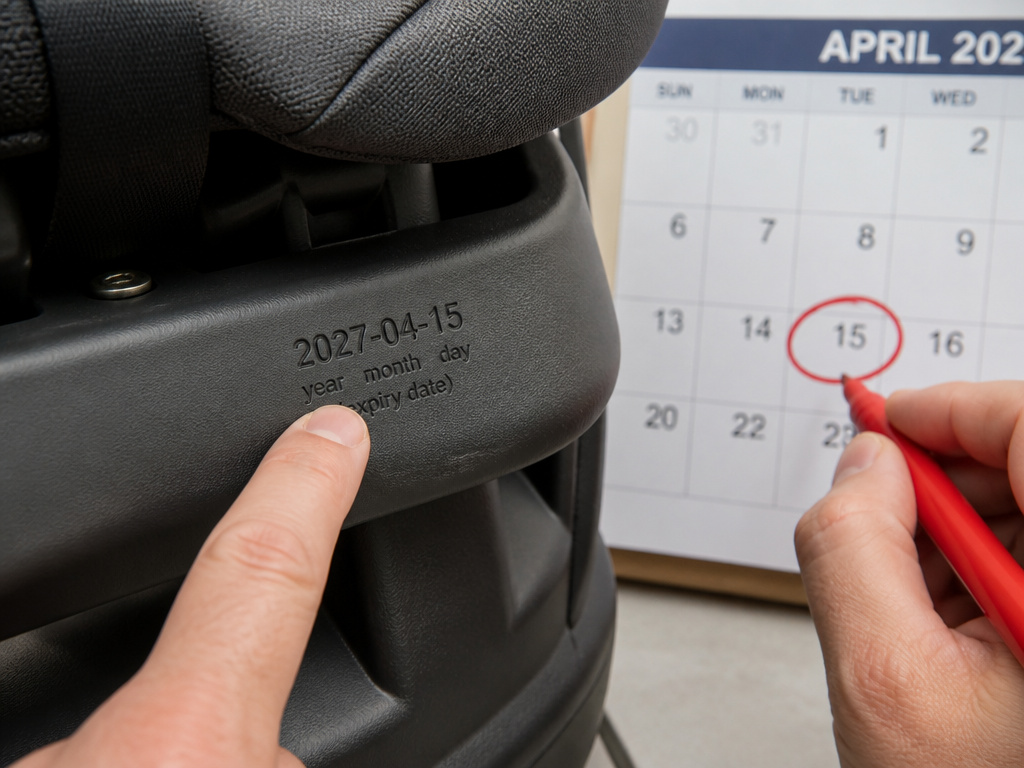
In the United States, car seat expiry dates are a manufacturer recommendation. In Canada, they’re woven into the law. Transport Canada states all seats have an expiry or useful life date, typically 6 to 10 years from manufacture.
The reasons are physical and legal. Plastic degrades from sunlight and heat. Webbing and buckles wear from use and cleaning. But the legal hook is certification. Provincial law requires seats to be certified to Canada Motor Vehicle Safety Standards (CMVSS). Using a seat past its expiry date voids that certification.
Using a car seat past its expiry date isn’t just risky, it can be illegal per provincial law, as it voids the certification to Canada Motor Vehicle Safety Standards.
You’re not just using a weakened seat. You’re using an uncertified seat. If stopped, you could be fined. More importantly, in a crash, its performance is unknown. This date is stamped on the seat. Find it, circle it on your calendar, and plan your next car seat purchase before it arrives.
U.S. Standards (Weight) vs. European i-Size (Height)
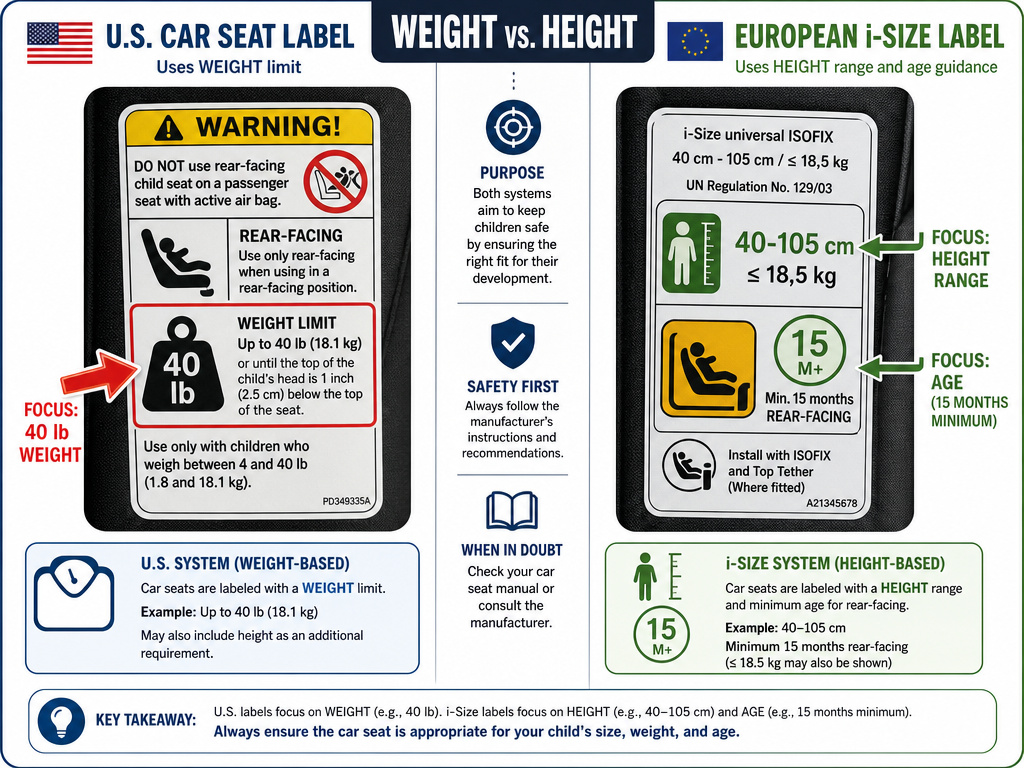
The standard your seat meets decides how you measure the “when to convert” moment. In the U.S., Federal Motor Vehicle Safety Standard (FMVSS) 213 is weight-based. You follow the pound and inch limits on the label.
In Europe, the newer i-Size standard (ECE R129) is height-based. It requires children to stay rear-facing until at least 15 months old, regardless of weight. You then use the seat’s height range.
| Standard | Basis | Key “Convert” Rule | Region |
|---|---|---|---|
| U.S. FMVSS 213 | Weight | Convert when child exceeds seat’s labeled weight limit. | United States |
| European i-Size (R129) | Height | Must rear-face until at least 15 months old. | European Union/UK |
If you bought your seat in the U.S., ignore the i-Size age rule. Follow your seat’s weight label. If you imported an i-Size seat to the U.S., you must follow its height and age rules, but know it may not comply with FMVSS 213. This is why buying a seat designed for your market avoids a tangled web of conflicting rules when deciding to front face baby.
The Installation Shift: Tethers and Seat Belts
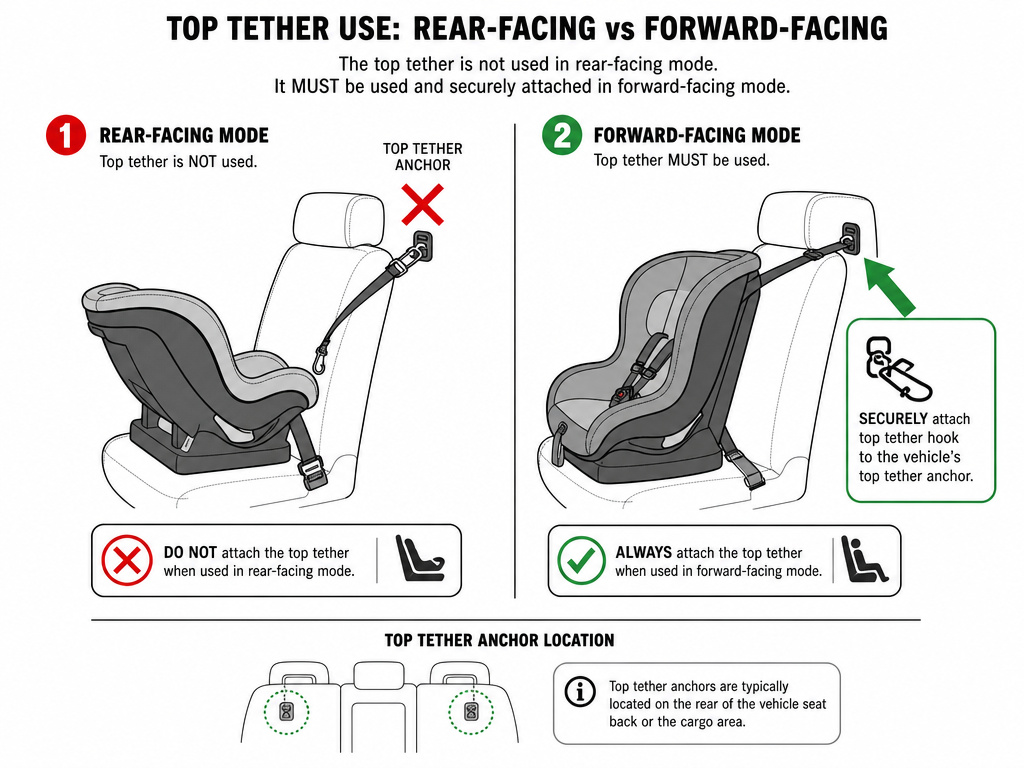
How you install the seat changes when you convert it from rear-facing to forward-facing mode. This is where most installation errors happen, a fact detailed in the NHTSA convertible CRS installation study.
In rear-facing mode, you typically do not use the top tether. You install with either lower anchors or the seat belt.
The moment you turn the seat forward-facing, the tether becomes non-negotiable for safety. NHTSA recommends always using the tether with a forward-facing seat. It limits the child’s head excursion, how far the head jets forward, in a crash by anchoring the top of the seat back.
If you’ve hit the 65-pound lower anchor limit and are now using the seat belt to install, you still must use the tether. The sequence is: secure seat with vehicle belt, then attach and tighten the tether strap. Missing the tether step is one of the most common and dangerous errors. It’s the difference between a controlled stop and a whiplash-inducing jolt.
How to Choose Your Convertible Seat (The Short List)
You need a seat that fits your child’s current size, your vehicle, and your budget. Don’t buy for the distant future. Buy for the stage you’re in now, primarily, extended rear-facing.
The Graco Extend2Fit is the default pick for most families. It rear-faces to 50 pounds, has a clear leg extension panel for taller toddlers, and its weight works with the lower anchor math for years.
For smaller vehicles or tighter budgets, the Cosco Scenera Next is a lightweight, narrow option. It rear-faces to 40 pounds. Just know its lower weight means you’ll hit the 65-pound lower anchor limit sooner.
If you want the clearest, simplest installation indicators, look at the Britax One4Life or ClickTight models. Their visual feedback, green indicators for correct belt tension, eliminates guesswork, which is the source of most misuse.
Don’t shop for a “10-year seat.” Shop for a seat that excels at the rear-facing stage you’re about to enter. The infant car seat limits are your starting gun; the convertible’s label is your race plan.
Frequently Asked Questions
What are the signs my baby has outgrown the infant seat?
The hard signs are on the label: their weight or height exceeds the seat’s rear-facing limit. Soft signs include the top of their head being less than an inch from the shell top, or their shoulders being above the top harness slot. If the carrier feels dangerously heavy to lift, that’s a practical sign to switch from infant car seat to a convertible that stays in the car.
Is it okay to turn my 1-year-old forward-facing?
No. The AAP recommends rear-facing as long as possible, until the child reaches the top height or weight limit of their convertible seat. A one-year-old’s spine is still ossifying. Rear-facing cradles the head, neck, and spine in a crash, distributing forces across the entire shell. Forward-facing too early turns the harness into a pivot point, placing dangerous stress on the neck.
How do I find my car seat’s expiry date?
Look for a molded date on the plastic shell, often on the back or bottom. It may say “DATE OF MANUFACTURE” or show a month/year. The expiry is typically 6 to 10 years from that date. Some labels state “DO NOT USE AFTER” followed by the date. If you can’t find it, check the manual or contact the manufacturer.
Can I use a European i-Size seat in the United States?
Technically, you can use it, but it may not comply with FMVSS 213, the U.S. Safety standard. This could raise issues with legality and insurance in a crash. More critically, its instructions will be based on i-Size height/age rules, which conflict with U.S. Weight-based guidelines. For clarity and compliance, choose a seat certified for your market.
What comes after a convertible car seat?
After your child exceeds the forward-facing weight or height limit of their convertible seat (often 65 pounds or 49 inches), they move to a booster seat. The booster positions the vehicle seat belt correctly across their lap and shoulder. This move to booster seat happens around age 5-8, but is always dictated by the child fitting the booster’s requirements, not by age alone.
Before You Go
The clock on your convertible seat starts the day you install it. Its label tells you when to turn it around. Its weight manual tells you when to ditch the lower anchors. Its stamped date tells you when to throw it away.
Your job is to read those three numbers, limit, weight, expiry, and let them make the decisions. The seat doesn’t care about birthdays or growth percentiles. It was tested to a standard. Your child stays in each mode until they hit the number that defines it. That’s the only rule that holds up in a crash.
