
Do You Need a Car Seat Base | The 1″ Rule That Decides
This post contains affiliate links. As an Amazon Associate, we earn from qualifying purchases.
You do not legally need a car seat base to transport your child safely. An infant car seat can be installed directly in a vehicle using the seat belt. However, a base is the method car seat manufacturers design, test, and certify for easiest, most repeatably secure installation. Skipping the base means mastering a more complex seat belt installation every single time.
That gap between “possible” and “intended” is where installation mistakes happen. A base turns a three-minute, variable-rich task into a 30-second click. It removes the human error of a twisted belt, a loose latchplate, or a misrouted shoulder strap. The car seat’s manual shows you how to install it without the base because they have to. The first 50 pages show you how to use it with the base because that’s how it’s meant to work.
What follows: the physics of why a base locks down tighter, the three scenarios where you genuinely should skip it, and the hidden expiration dates that apply even if the base looks fine.
Key Takeaways
- A base is not a legal requirement, but it is the manufacturer’s primary, certified installation system designed for maximum security and ease.
- Installing without a base is possible and safe when done correctly, but it relies entirely on a perfect seat belt lock, which is harder to achieve consistently.
- All car seat bases have an expiration date, typically 7 years from manufacture for brands like Graco, and up to 15 years for others like BeSafe. Using an expired base voids its safety certification.
- You must replace the base after any moderate or severe crash, even if it looks undamaged. Internal structural compromises are not visible.
- Bases are not universal. A Graco Click Connect seat only works with a Graco base; a Nuna PIPA seat only works with a Nuna PIPA series base (except the urbn model).
The Short Answer: No, But Yes for Convenience
The law requires a child to be secured in a federally approved child restraint system. It doesn’t specify that the restraint must include a base. Therefore, you can legally and safely install a car seat without its base using the vehicle’s seat belt.
A car seat base is a convenience product that facilitates a secure, standardized installation. It provides a locked, semi-permanent foundation in the vehicle, turning the carrier into a removable capsule. Without it, the entire car seat must be installed and uninstalled as a single unit each trip.
That’s the technical reality. The practical reality is different. Most parents find a seat belt installation far more challenging to get right every time. The base eliminates variables.
The 1″ Rule That Decides Security
Whether using a base or a seat belt alone, the final security test is the same. At the belt path, where the LATCH strap or vehicle belt holds the restraint, you should not be able to move it more than 1 inch (2.5 cm) side-to-side or front-to-back. This tolerance is printed in every manual, from the Graco SnugRide 35 Lite to the Evenflo LiteMax 35. A base makes hitting this mark trivial. A seat belt installation makes you work for it.
How a Base Actually Makes Installation Safer
It’s not magic. It’s mechanics. A base turns two separate problems, securing the shell and achieving the correct recline angle, into one solved system.
First, the base itself is secured using either LATCH or the seat belt. This creates a fixed, upright platform. Second, the base has a built-in recline mechanism and level indicator. This ensures the infant’s head does not flop forward, which is a critical airway safety issue. When you strap in without a base, you must manually create both the tight fit and the perfect recline using rolled towels or pool noodles, a much less precise operation.
The click-and-connect mechanism between carrier and base is also a safety lock. It’s a positive engagement you can feel and hear. When you buckle without a base, you’re relying on the seat belt alone to hold the carrier’s angle, and it can shift.
| Installation Factor | With Base | Without Base (Seat Belt Only) |
|---|---|---|
| Security Method | LATCH or seat belt locks base; carrier clicks in. | Seat belt must directly lock carrier. |
| Recline Angle | Adjusted via base lever; checked with built-in level. | Must be manually set with towels/pool noodles. |
| Repeatability | High. Base stays put; carrier click is consistent. | Low. Belt routing and tightness can vary each time. |
| Time & Effort | Low (after initial base install). | High (full install required every trip). |
Where this goes sideways: Assuming a seat belt install is “just as good” without practicing it. The first time you try it shouldn’t be in a dark parking lot with a crying baby. You’ll rush, the belt will twist, and the seat will slide.
When You Genuinely Don’t Need a Base (And When You Do)
You should plan to use the base in your primary vehicle. It’s the default for a reason. But life isn’t always default. Here are the clear scenarios for going base-free.
Skip the base when:
- Traveling by taxi, rideshare, or airport shuttle. Dragging a base through an airport for a five-minute cab ride is impractical. Knowing how to install without the base is a travel essential.
- Using a caregiver’s or grandparent’s car occasionally. Buying a second car seat base is ideal, but for once-a-month use, a proper seat belt install is a reasonable alternative.
- In a vehicle without LATCH anchors (model year ~2000 or earlier). A base still works with a seat belt, but if space is extremely tight, installing the carrier directly can sometimes fit better.
You need the base when:
- This is your daily driver. The convenience and security payoff is immense.
- You have a preemie or a child with special medical needs. The precise, consistent recline a base provides is non-negotiable.
- You are not confident in your ability to achieve a rock-solid seat belt installation every single time. That’s not a failing; it’s why bases exist.
If you do travel frequently, the question of whether to bring the base when traveling is real. For a week-long rental car trip, yes, bring it. For a city-hopping tour in cabs, no.
The Hidden Rules: Expiration, Crashes, and Compatibility
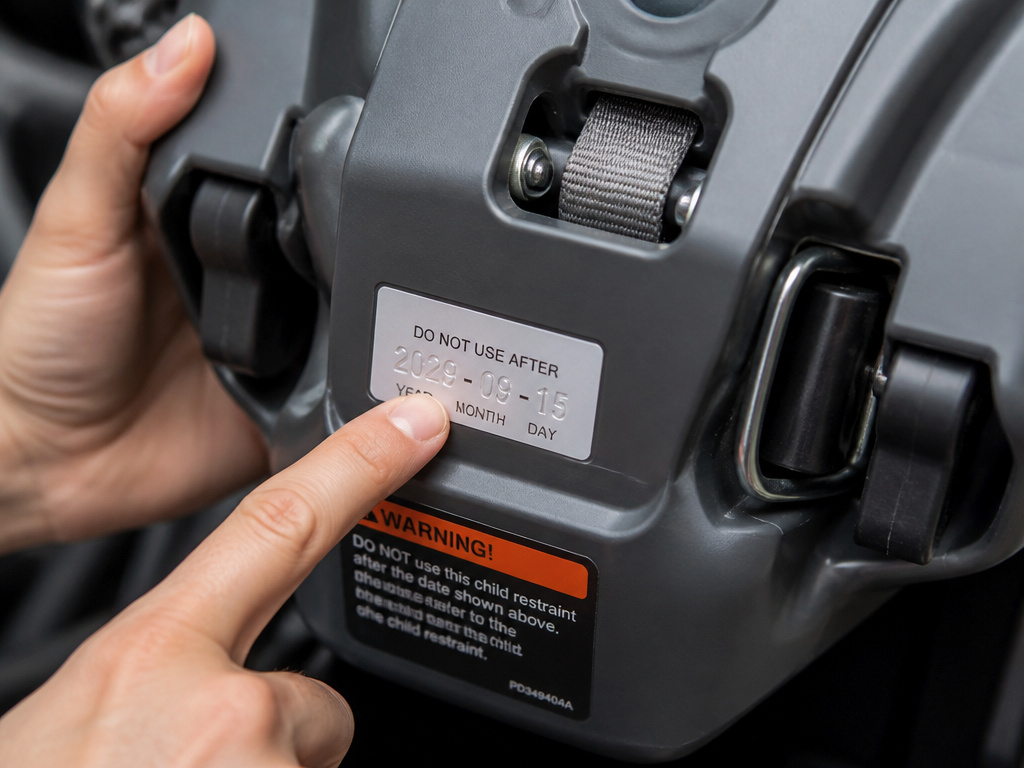
A base isn’t a one-time purchase. It comes with lifespan rules that many parents miss, and ignoring them turns a safety device into a liability.
Expiration Dates Are Real
Like the car seat itself, the plastic and materials in a base degrade over time. UV exposure, temperature swings, and general stress weaken the structure. The expiration isn’t a suggestion.
- Graco, Evenflo, Baby Jogger: 7 years from the manufacture date.
- BeSafe: 15 years from manufacture.
- Nuna, Chicco, others: Varies; check the label on the underside of the base.
This count starts at manufacture, not purchase. Always check the sticker. An expired base should be dismantled and disposed of so it cannot be reused. The car seat base expiration is a fixed countdown.
The Non-Negotiable Crash Replacement Rule
Every manufacturer. Graco, Nuna, Evenflo, BeSafe, states the same rule: replace the base after any moderate or severe crash. BeSafe’s manual specifies any crash at 10 km/h (about 6 mph) or above. The National Highway Traffic Safety Administration (NHTSA) says replacement isn’t needed after a minor crash where no one was hurt, the car was drivable, and the door near the seat wasn’t damaged.
Common mistake: Keeping a base after a fender-bender because “it looks fine.” The internal energy-absorbing foam and plastic structure can have hidden cracks that compromise performance in the next crash. When in doubt, replace it. Your insurance should cover this.
Compatibility Is Not Universal
You cannot mix and match brands. A Graco seat only works with a Graco Click Connect base. A Nuna PIPA seat works with a Nuna PIPA series base, except the PIPA urbn, which doesn’t use a base at all. Even within a brand, check your specific model. Using an incompatible seat on a base is unsafe; the locking mechanism won’t engage correctly.
If you need an extra base, buy the model designed for your specific seat. Don’t hunt for deals on used or off-brand bases. The risk isn’t worth the savings.
Choosing and Using Your Base Correctly
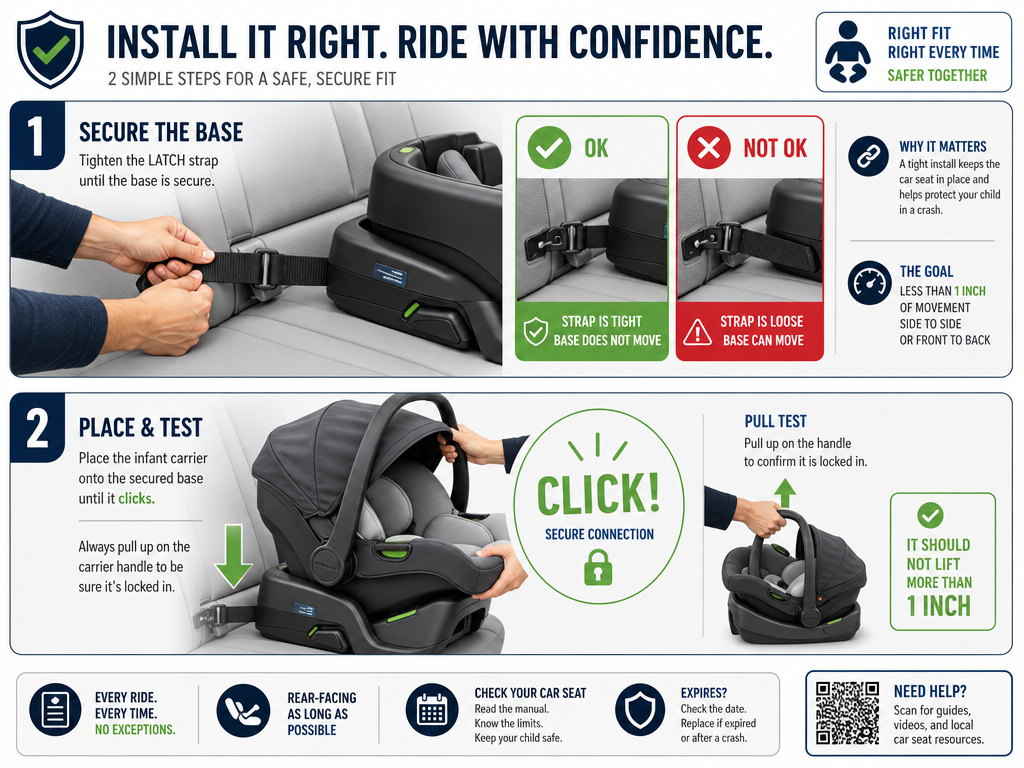
If you’ve decided a base is right for your primary setup, use it right. Start with a good one. The best infant car seat base for most people is the one made by the same brand as your seat. The Graco SnugLock series bases are popular for their easy tightening system. The Nuna PIPA series bases are known for a super-solid rigid LATCH connection.
Installation is a two-part process:
- Secure the base to the vehicle. Use LATCH if your car has it (anchors in the seat bight). Pull the strap until the base is snug, with less than 1″ of movement. If using a seat belt, ensure the belt is in locked mode (consult your car manual). Recline the base so the level indicator shows green (or the appropriate zone for your child’s weight).
- Attach the carrier. Place the carrier onto the base and press down firmly until you hear a distinct click. Pull up on the handle to confirm it’s locked. Tug the carrier near its foot; it should not separate from the base.
Every single time you place your child in the car, perform these two checks: base movement at the belt path (1″ rule) and carrier locked onto base (audible click, visual confirm). Make it a ritual, like putting on your own seat belt.
Frequently Asked Questions
Can I use any base with my infant car seat?
No. Car seat bases are not universal. You must use a base designed by the same manufacturer for your specific seat model. For example, a Graco SnugRide 35 Lite seat requires a Graco Click Connect base. Using an incompatible base can result in a failed connection and is unsafe.
How long can I use a car seat base?
Most bases expire 7 to 10 years after their manufacture date, which is stamped on a label on the base itself. Some, like BeSafe, have a 15-year lifespan. These dates account for plastic degradation and material fatigue. Do not use an expired base.
Do I need to replace the base after a minor crash?
It depends. According to NHTSA guidelines, if the crash was minor (vehicle drivable, no injury, no airbag deployment, no damage to door near seat, and no visible damage to the seat itself), replacement may not be necessary. However, most manufacturers have stricter policies. If you are unsure, the safest course is to replace the base. Contact the manufacturer with your specific details.
Is it safer to install with LATCH or the seat belt on the base?
Both are equally safe when installed correctly. LATCH is often easier because it’s designed specifically for child seats. The seat belt method is crucial for vehicles without LATCH or when the child’s weight exceeds the LATCH limit (usually 65 lbs total, including seat). Choose the method that gives you the tightest, simplest installation.
Can I install a base in the front seat?
You can, but you should not. The rear seat is statistically the safest place for children. If you must install in the front (e.g., in a truck with no rear seat), you must disable the passenger airbag. Many modern vehicles will not allow you to disable the airbag, making front-seat installation impossible and dangerous. Always consult both your car seat manual and your vehicle owner’s manual.
Before You Go
You don’t need a base, but you will want one. It transforms car seat use from a daily puzzle into a simple routine. The goal isn’t to check a legal box. It’s to achieve a secure, correct installation every single time with the least amount of doubt. A base is the tool engineered to do exactly that.
If your base is lost, broken, or expired, you can safely without the base. Learn that skill. Practice it in daylight. But for your everyday car, invest in the system as it was designed. Get the right base, install it tightly, check the level, and listen for the click. That sequence is what safety sounds like.
