
Find Where to Get a Car Seat Installed Correctly & Safely
This post contains affiliate links. As an Amazon Associate, we earn from qualifying purchases.
To get a car seat installed, go to a certified Child Passenger Safety (CPS) Technician. The National Highway Traffic Safety Administration (NHTSA) maintains a directory of free, in-person inspection stations. Many fire departments, hospitals, and police stations host these events, and some locations now offer virtual inspections. The technician will ensure your seat doesn’t move more than 1 inch (25 mm) side-to-side or front-to-back, the universal benchmark for a safe install.
That 1-inch rule is the physical standard printed in every manual, from a Chicco Fit360 to a Graco 4Ever. It’s not a suggestion. It’s the measurable line between a seat that holds in a crash and one that becomes a projectile. The gap between a snug hand-pull and a certified technician’s verification is where most DIY installations fail, specifically on the third or fourth attempt when frustration sets in and you accept “close enough.”
This guide walks through the three verified paths to a certified check: permanent stations, community events, and virtual appointments. We’ll break down what the technician actually does, what to bring, and how to handle the two most common conflicts, vehicle manual limits versus car seat manual limits, and when your child’s weight forces a switch from LATCH to the seat belt.
Key Takeaways
- The NHTSA website is the primary tool for finding local, free car seat inspections with certified technicians. Virtual options are now listed there too.
- A proper installation allows no more than 1 inch (25 mm) of movement at the belt path when tested side-to-side and front-to-back. This is a non-negotiable spec.
- Always bring both your vehicle owner’s manual and your car seat manual to the inspection. Technicians reconcile conflicting instructions daily.
- Lower anchor (LATCH) systems have strict weight limits set by both the car and seat manufacturers, exceeding them voids the safety certification.
- If a seat has been in a moderate or severe crash, it must be replaced. No inspection can certify a crashed seat as safe for reuse.
The 1-Inch Rule: The Physical Test Every Installation Must Pass
Every car seat manual states the same tolerance. The Chicco Fit360 guide is explicit: “Belt should remain tight and Child Restraint should not move more than 1” (25 mm) from vehicle seat back or side-to-side.” This isn’t about making it “pretty tight.” It’s an engineering threshold. In a collision, forces multiply. A seat that shifts 3 inches under your hand-pull can slam forward 18 inches on impact, colliding with the front seat or door frame.
The 1-inch (25 mm) movement test is the definitive check for proper installation. You perform it by gripping the car seat at the belt path, the location where the seat belt or LATCH strap routes through the seat’s shell, and pulling firmly side-to-side, then front-to-back. The seat itself may flex, but the point where it connects to the vehicle must not shift more than an inch.
Where do you grab? Most people pull at the top of the seat or the carry handle. That gives a false reading. You must grip down low, where the hardware anchors the seat to the car. If you can’t get it tight enough, the problem is usually one of three things: the seat belt isn’t locked, the LATCH connectors aren’t fully engaged, or you’re installing on a contoured vehicle seat that requires a rolled towel or pool noodle for leveling. A certified technician spots which one in ten seconds.
Where to Go: A Breakdown of Inspection Locations
You have three main avenues for a professional car seat check: permanent inspection stations, scheduled community events, and virtual appointments. Your best choice depends on urgency and local availability.
| Location Type | How to Find It | Best For |
|---|---|---|
| Permanent Station | NHTSA website lookup; often at fire departments, hospitals, or health departments. | Urgent checks, specific model questions, repeat visits. |
| Community Safety Event | Local police department bulletins, children’s hospital calendars, library flyers. | Families wanting a weekend option, multi-seat checks. |
| Virtual Inspection | Listed on NHTSA site; conducted via video call (Zoom, FaceTime). | Rural areas, caregivers with mobility issues, initial guidance. |
Permanent stations are your most reliable bet. They’re staffed by technicians who see hundreds of seats a year. The technician will not just check your work; they’ll make you install it under their guidance. This is the core of a true car seat inspection, you learn the method, not just get a pass/fail. Bring both manuals. I’ve watched a parent with a Honda Odyssey and a Britax Boulevard spend 20 minutes stuck because the vehicle manual said to use the outboard seats only, but the car seat manual demanded a center installation for that model. The technician pulled the Odyssey manual, found the clause on reinforced center LATCH anchors, and solved it.
Community events are fantastic but can be busy. Show up early. These are often where you’ll find the most current information on recalls, technicians have tablet access to the NHTSA database on the spot. Virtual inspections are a newer, legitimate option. You’ll need a smartphone and good lighting. The technician will guide you through camera angles to show the belt path, the latch connectors, and the level indicator. It’s surprisingly effective for catching major errors like a twisted strap or an unlocked seat belt.
Common mistake: Going to a big-box store’s baby department for an “installation.” Many retail employees are not certified CPS Technicians. They may offer well-meaning help, but without certification, they can miss critical errors like an expired seat or a LATCH weight limit violation. Always verify the person’s credentials.
What a Certified Technician Actually Does (And What They Won’t)
A Child Passenger Safety Technician follows a strict protocol. Their job is to educate you, not to install the seat for you. Expect a hands-on lesson, not a drop-off service. Here’s what a typical 30-minute session covers:
- Expiration and Recall Check. They’ll find the manufacturing date and “Do Not Use After” label, usually on the seat base. They’ll cross-reference your model number with the latest NHTSA recall list using their mobile database.
- Manual Reconciliation. They’ll open your vehicle owner’s manual and your car seat manual side-by-side. This is where they resolve conflicts about allowable seating positions, airbag rules, and the use of accessories.
- Hands-On Installation Guide. You’ll empty the seat, find the correct belt path for your child’s size (rear or forward-facing), and physically install it. They’ll teach you the knee-in-the-seat and pull-the-strap techniques for getting a tight installation.
- The 1-Inch Test. They’ll have you perform the test. Then they’ll do it themselves to confirm.
- Harness Fit Check. Once the seat is installed, they’ll place a doll or your child in it to check harness height (at or above shoulders for forward-facing, at or below for rear-facing) and tightness (the “pinch test”, you shouldn’t be able to pinch a horizontal fold in the harness strap at the collarbone).
They will not install a seat that’s visibly damaged, expired, or has been in a severe crash. They will not approve a seat belt installation if you’re using a locking clip incorrectly when your vehicle has a switchable retractor. They will, however, show you the right way. This process turns a nervous parent into a confident installer. The goal is that you can uninstall and reinstall the seat correctly yourself next time.
The Two Manuals Rule: When Your Car and Car Seat Disagree
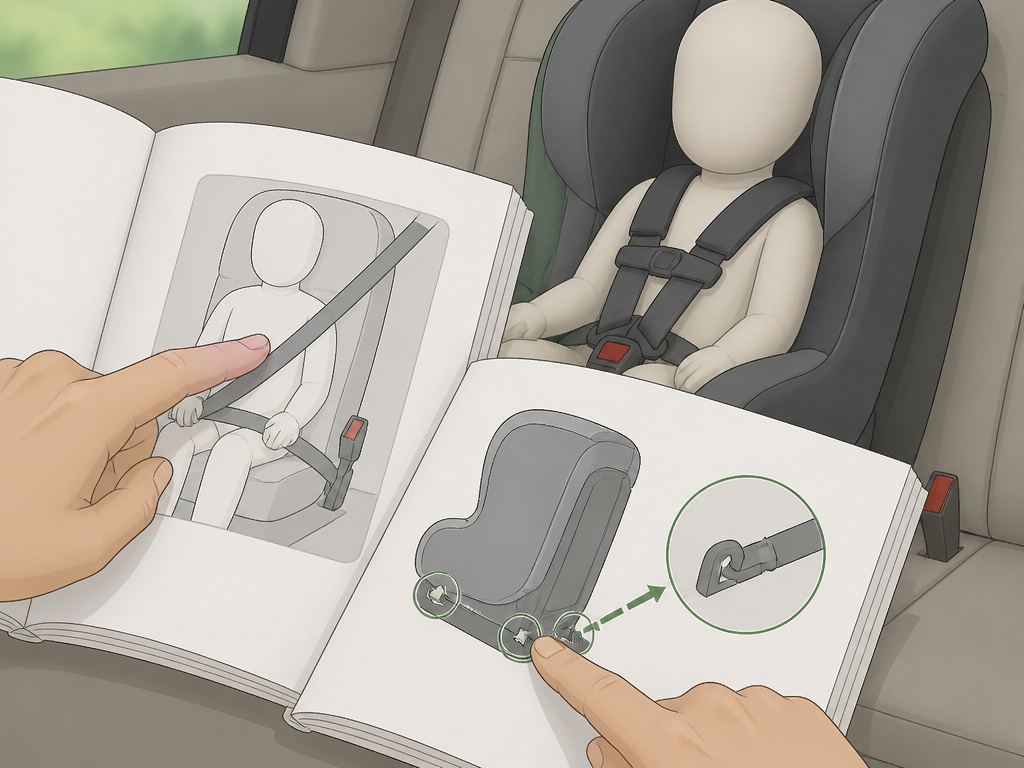
Your vehicle owner’s manual is law inside your car. Your car seat manual is law for that specific product. When they conflict, the stricter rule wins. This happens most often with two things: lower anchor weight limits and seating position.
All lower anchor (LATCH) systems have a combined weight limit for the child plus the car seat. The Chicco Fit360 manual states: “DO NOT use the lower anchors… REAR-FACING when restraining a child weighing more than 30 lbs (13.6 kg) or FORWARD-FACING when restraining a child weighing more than 35 lbs (15.9 kg).” Your vehicle manual may set a lower limit, like 40 lbs total weight. You must use the lower number. The moment your child hits that weight, you must switch to a seat belt installation. The anchors are not rated for more.
Where this goes sideways: Assuming LATCH is always safer. Beyond its weight limit, a seat belt is the only approved, crash-tested method. Continuing to use LATCH on a 40-pound child in a 20-pound seat voids the safety engineering. The belt path changes, and the technician will make you practice the switch.
Seating position arguments are common. Your car seat manual might say “center is safest.” Your vehicle manual might say “do not use LATCH in the center seat, use seat belt only.” You must follow the vehicle’s rule for how to attach it (seat belt), but you can still place it in the center if that’s your goal. The technician’s job is to navigate this maze with you. This is why a professional installation check is worth the time, they’ve seen the Honda Odyssey center-seat LATCH quirk, the Toyota Sienna eighth-seat prohibition, and the Ford F-150 airbag switch procedure.
How to Prepare for Your Inspection Appointment
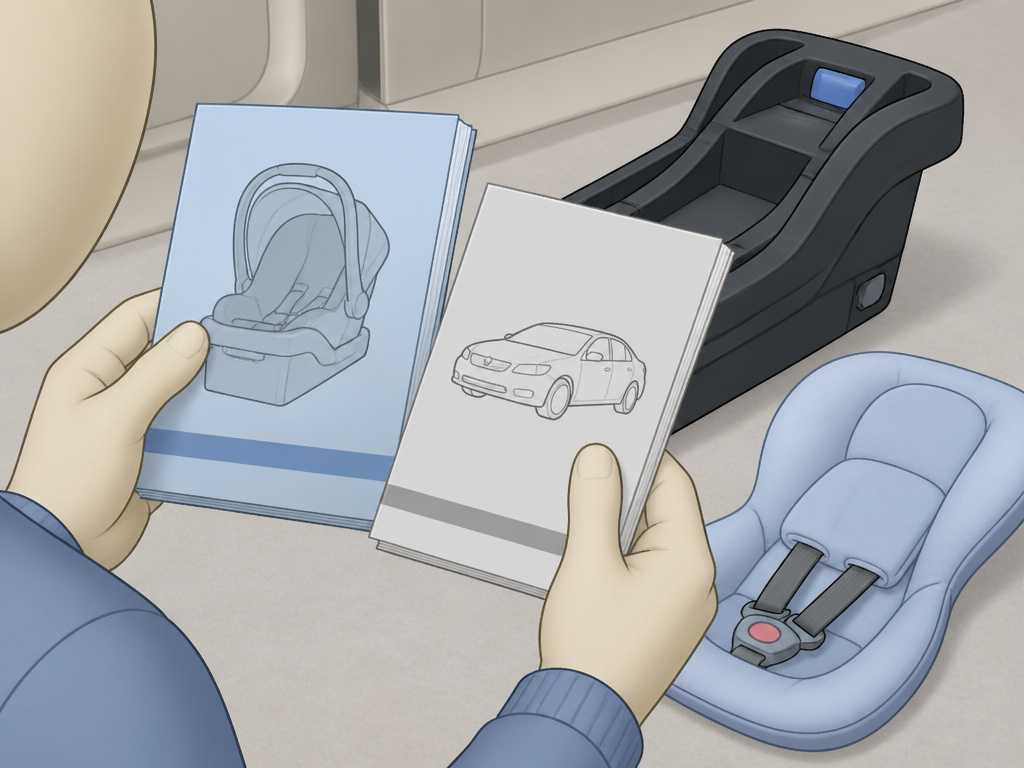
Walking in prepared turns a good check into a great one. Here’s your checklist:
- Your Car Seat. Empty it of toys, crumbs, and the extra cover. Bring all parts, including the infant insert if you have one.
- Both Manuals. Physical copies of your vehicle owner’s manual and your car seat user guide. Download the PDF to your phone if you’ve lost it.
- Your Child. If possible, bring them. The harness fit check is a critical part of the process. If not, a doll or stuffed animal of similar size works.
- Your Patience. Plan for 30 to 45 minutes. This isn’t a drive-through.
- Your Questions. Write them down. “Why does it tilt?” “Can I use this aftermarket sunshade?” “What’s the next seat I should buy?”
Tell the technician everything. Mention if the seat was purchased second-hand, if it was ever in a minor fender-bender, or if you’ve had persistent trouble getting it tight. This isn’t a test you pass or fail. It’s a collaborative fix. The installation verification you walk away with is confidence, not just a sticker.
Frequently Asked Questions
Are car seat inspections really free?
Most are. Services listed through the NHTSA directory and offered by public agencies like fire departments or health units are typically free. Some private clinics or baby stores may charge a small fee, which should be stated upfront. Always ask when you book.
What if I can’t get my car seat base tight enough?
This is the most common DIY problem. First, ensure you’re using the correct belt path. For a car seat base installation, press your full body weight into the base (a knee works) while tightening the LATCH strap or seat belt. The vehicle seat cushion compresses; you’re locking it in its compressed state. If it still moves, your vehicle seat may be highly contoured, requiring a rolled towel in the seat bight to level the base. A technician can diagnose this instantly.
Is a virtual inspection as good as in-person?
For catching major errors and teaching fundamentals, yes. A skilled technician can spot a twisted harness or an unlocked retractor over video. However, they can’t physically feel the tightness or assess subtle vehicle seat quirks. It’s an excellent first step or alternative for remote areas, but an in-person check is preferable if accessible.
How often should I get my car seat checked?
Get a professional check after you first install any new seat. After that, a check is wise if you move the seat to a different vehicle, switch it from rear to forward-facing, or if anyone else reinstalls it. You don’t need a monthly check, but an annual review isn’t overkill, especially as your child grows and adjustments are needed.
Can I install a car seat in a pickup truck?
Yes, but with strict rules. The back seat is always safest. If your truck has no back seat, a rear-facing seat can only go in the front if the passenger airbag can be manually turned off with a key or switch. Most modern “advanced” airbags that auto-disable are not approved for this by car seat manufacturers. The federal NHTSA car seat safety guidelines and your manuals are the final authority here.
Before You Go
Don’t guess with the one thing designed to survive a crash for your child. The resources exist. Use the NHTSA website to find a car seat inspection station near you. Call ahead. Bring the manuals. Let a certified technician put their hands on it and teach you the 1-inch test. That specific, physical standard is what turns a collection of plastic and straps into a life-saving device. Your job isn’t to be an expert installer on the first try. It’s to know where to find one.
