
Expert Tips for How to Calm Baby in Car Seat Successfully
This post contains affiliate links. As an Amazon Associate, we earn from qualifying purchases.
To calm a baby in a car seat, start by ruling out physical discomfort: a wet diaper, hunger, or being too hot or cold. Then, ensure the car seat fits correctly, the harness must be snug, the chest clip at armpit level, and the seat reclined properly. Use motion, white noise, and familiar music to soothe. For persistent crying, pull over safely to offer comfort before continuing.
That “check the basics” advice is commodity. Every listicle has it. The non-commodity part, the reason a baby stays upset even when fed, dry, and correctly strapped in, is usually a mismatch between their physiology and the seat’s hard shell. An infant’s head is proportionally large and their spine is still forming cartilage. In a rear-facing seat, that’s protective. In a forward-facing seat or one that’s poorly fitted, it’s a recipe for strain and pain they can’t articulate beyond crying.
What follows is a guide that moves past the generic “sing a song” advice. We’ll cover the five physical checks that stop crying before you leave the driveway, the sensory toolkit that works mid-drive, and the one documented burn hazard that means you should never, ever let a car seat bake in the sun before you buckle your child in.
Key Takeaways
- A 2012 case report documented an infant burn from an overheated car seat after a long drive on a hot, sunny day, always check the seat’s surface temperature before placing your child.
- The NHTSA states that if your car seat lacks a label, you can calculate the lower anchor weight limit by subtracting the seat’s weight from 65 pounds. Exceeding this stresses the vehicle anchors.
- The American Academy of Pediatrics allows one specific exception to the “no aftermarket inserts” rule: a tightly rolled small diaper or cloth between the crotch strap and your child to prevent slouching.
- Research from the Children’s Hospital of Philadelphia shows children up to 2 years old in forward-facing seats are more likely to be seriously injured than those rear-facing; premature turning can cause spinal discomfort that manifests as crying.
- A Manitoba study found a 70% rate of car seat misuse, with incorrect harnessing being a top error. A harness you can pinch a fold in is too loose and allows painful shifting.
The 5-Step Pre-Drive Checklist That Stops Crying Before It Starts
Most frustration happens because parents are troubleshooting while driving. Solve the solvable problems before the car moves.
Step 1: Temperature Audit. Feel the seat’s shell, the harness straps, and the buckle tongue with the back of your hand. If anything is hot to the touch, cool the seat before placing your child inside. A 2012 case report in Pediatrics & Child Health described an infant burn “likely caused by a car seat during a long drive on a hot, sunny day.” The metal buckle alone can reach a temperature that causes a first-degree burn in seconds. Park in the shade, use a sunshade, or remove the seat and bring it inside between trips.
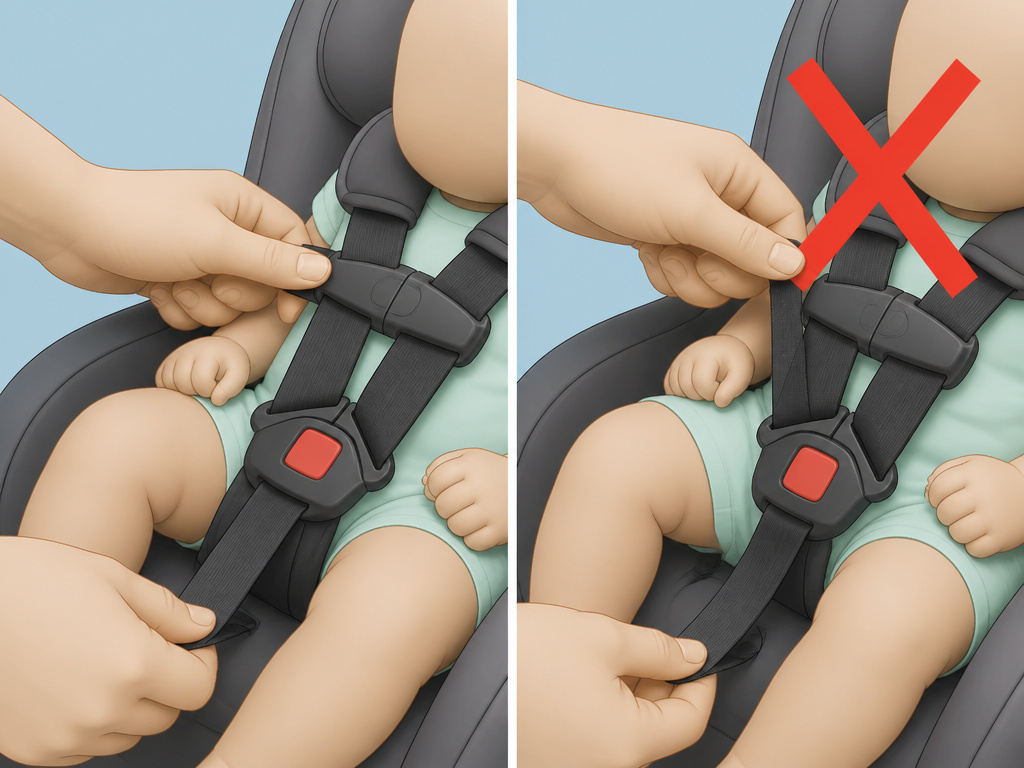
Step 2: The Pinch Test. Buckle your child in normally. Now, try to pinch a fold in the harness strap material over their collarbone. If you can grab any material, the harness is too loose. A loose harness lets your child slump and twist, which pulls the straps across their neck and shoulders uncomfortably. The rule from the Children’s Hospital of Philadelphia is simple: if you can pinch it, tighten it.
Step 3: Chest Clip Alignment. The top of the chest clip must be at armpit level. Too high, and it presses on the soft tissue of the neck. Too low, and it rides on the abdomen, which is both uncomfortable and dangerous in a crash. This is not a minor detail. A misplaced clip is a direct source of fussing.
Step 4: Harness Slot Check (Rear-Facing). For a rear-facing child, the harness straps must come from slots at or below their shoulders. If the slots are above the shoulders, the straps will pull the child’s shoulders down and forward, contorting their posture. You’ll see their head pushed forward onto their chest, a guaranteed crying trigger. Refer to your seat’s manual to change the slot height; most convertible seats allow this without rethreading.
Step 5: The Recline Angle. A baby needs to ride semi-reclined to keep their airway open. If the seat is too upright, their head will flop forward. If it’s too flat, they can slump. Most seats have an indicator line or angle guide. Use it. For an infant carrier, the handle position often sets the angle. Follow the manual.
Where this goes sideways: Skipping the surface temperature check. A buckle that’s been baking in a closed car can reach 60°C (140°F) within 30 minutes. Your child will react to that heat the moment it touches their skin, and you’ll spend the drive wondering why they’re screaming.
Why Your Baby Might Be Crying (And What to Do While Driving)
Once you’ve ruled out fit and immediate discomfort, the crying has another source. Use this table to diagnose the likely cause and apply a targeted solution while you’re on the road.
| Signs & Symptoms | Likely Cause | In-the-Moment Fix |
|---|---|---|
| Intense crying that starts shortly after buckling in | Harness buckle is too hot, or strap is pinching skin. | Pull over safely. Unbuckle, cool the metal with a damp cloth, and check for twisted straps. Re-buckle. |
| Fussing, squirming, trying to arch back | Uncomfortable posture due to slouching or improper recline. | If rear-facing, check the recline angle. Place a tightly rolled small diaper (AAP-approved) between crotch strap and child. |
| Crying that escalates with road noise or vibration | Overstimulation or inability to sleep due to sensory overload. | Turn on white noise (app or car stereo) louder than the road noise. Offer a pacifier if they use one. |
| Whimpering that turns into full crying over time | Boredom, loneliness, or feeling too warm/cool in their seat. | Have a passenger engage them. Adjust climate control. For solo drives, try an interactive song or story on audio. |
| Sudden, sharp cries during turns or braking | Head slumping to the side due to lack of support or being forward-facing too soon. | Ensure head support is in place. If forward-facing under age 2, consult your pediatrician about switching back rear-facing. |
The “tightly rolled diaper” intervention is a specific, manufacturer-approved exception to the strict rule against aftermarket inserts. The AAP notes it can prevent slouching, which is a common source of discomfort that doesn’t resolve itself.
The part nobody mentions: Boredom isn’t trivial for a baby. Their field of view in a rear-facing seat is the seatback and a slice of the side window. Without visual change, their nervous system seeks stimulation and, finding none, defaults to distress. That’s why a simple car seat mirror installed correctly can sometimes short-circuit a crying jag, they see a face.
Your Sensory Toolkit: Motion, Sound, and Touch
When the checklist is complete and the car is moving, your tools are sensory. The goal is to provide the kind of input that calms the nervous system.
Motion is Your First Tool. The car’s movement is inherently soothing. If crying starts, sometimes slightly increasing your speed (within legal limits) on a highway can introduce a smoother, more rhythmic vibration. Avoid stop-and-go traffic when possible with a fussy baby; the constant acceleration and deceleration are jarring.
Sound Overrides Sound. A crying baby is loud. To break the cycle, you need a sound that is both louder and more rhythmically predictable. White noise, the static of a untuned radio, a dedicated app, or a portable white noise machine, works because it masks the irregular, distressing sound of their own crying. Turn it up until the crying lessens, then gradually lower it.
Music With a Beat. Lullabies are fine, but sometimes a strong, steady beat is more effective. Think of the rhythm of a heartbeat. Music with a clear, moderate-tempo beat can help regulate a baby’s breathing and heart rate. Create a “car calm” playlist of songs with 60-80 beats per minute.
The Limited Touch Option. If you have a passenger, their job is to provide safe, gentle touch. A hand resting on the baby’s foot or stroking their cheek can be grounding. Do not unbuckle or adjust the child while the vehicle is in motion.
I prefer a portable white noise machine over car stereo apps. The machine’s sound is consistent and doesn’t cut out if your Bluetooth disconnects or you need navigation audio. The Hatch Rest Go is one example, it clips onto the handle and doesn’t rely on the car’s battery.
The Hard Rules: Safety Non-Negotiables That Also Prevent Crying
Many calming strategies are unsafe. Here’s what you should never do, because the safety risk is severe and the alternative is a child who is genuinely uncomfortable.
Never Add Aftermarket Padding or Supports (except the rolled diaper). Mattress toppers, head positioners, and strap covers not made by your seat’s manufacturer can compress in a crash, creating dangerous slack in the harness. They also change the fit, leading to pressure points and chafing.
Never Loosen the Harness for “Comfort.” A loose harness is a primary cause of both injury and discomfort. It allows the child to move into positions where the straps dig in or the buckle presses awkwardly. Comfort comes from proper snugness, not looseness.
Never Turn Forward-Facing Early to “See Them.” The NHTSA car seat guidelines are clear: rear-facing as long as possible, at least until age 2. A child’s spine ossifies (hardens) over years. Forward-facing too early can cause physical strain that they express as crying. The view isn’t worth the risk or the discomfort.
Never Leave a Child Unattended in a Car Seat Outside the Car. This is a SIDS risk and a positional asphyxiation hazard. The seat’s angle is different when not installed in the vehicle, and a baby’s head can fall forward, blocking their airway.
Never Use Food as a Distraction for Young Infants. For babies under 6 months, feeding should happen before or after the trip, not during. The risk of choking while the car is moving is real. For older infants, only offer soft, dissolvable snacks if you have a passenger who can monitor them.
Following these rules isn’t just about safety compliance. It removes variables that cause physical distress. A child in a correctly installed, properly fitted seat is a child who is physically supported. That’s the baseline for calm.
When to Pull Over and When to Push Through
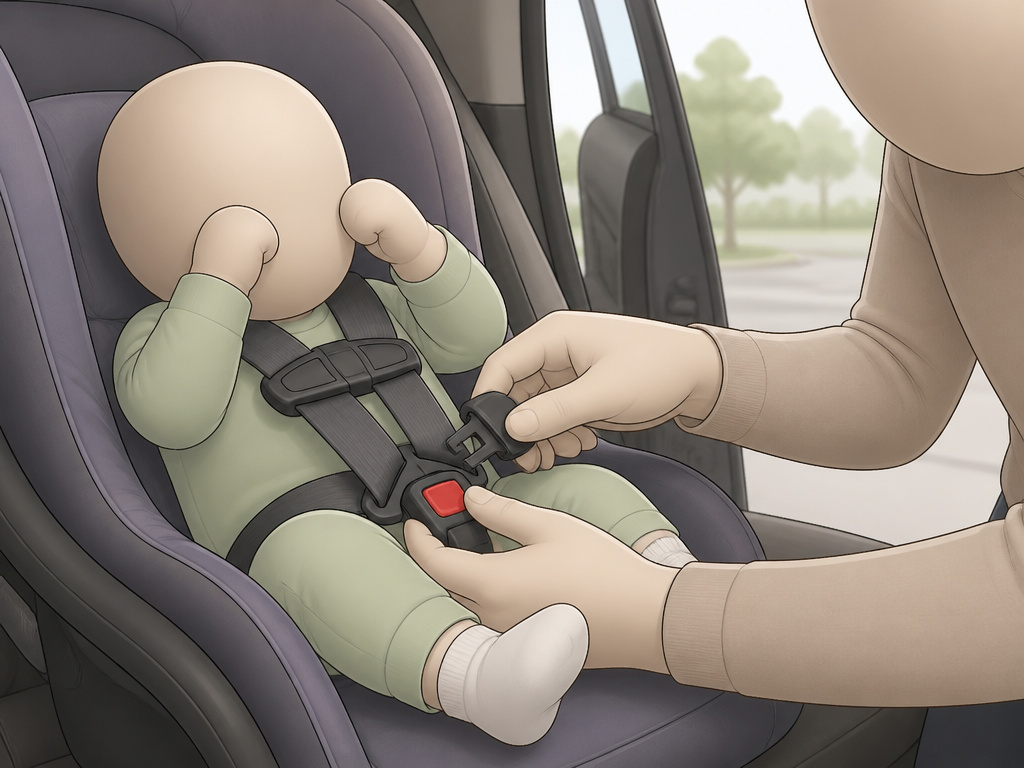
You’ve done everything. The baby is still crying. Now you face the driver’s dilemma: stop or continue?
Pull Over If:
- The crying is frantic, breathless, or sounds pained.
- You suspect a physical issue you haven’t checked (a hair tourniquet on a toe, a twisted strap).
- Your own stress level is affecting your driving focus.
- It’s been more than 15-20 minutes of sustained, unrelenting crying.
Find a safe, legal place to stop. Turn off the car, get out, and take a breath. Then address your child. Unbuckle them, hold them, check them over. Sometimes a two-minute reset is all they need. This is a core strategy for liking the car seat, it teaches them that the seat isn’t a trap.
Push Through If:
- The crying is more whiny and intermittent than hysterical.
- You are on a highway with no safe stopping area for miles.
- You are minutes from your destination and the child is otherwise safe.
- You have a passenger who can provide comfort.
The decision hinges on safety, yours as the driver and the child’s. Driving while distracted by intense crying is a risk. The AAP car seat information for families emphasizes that a safe driver is part of a safe trip.
Products That Can Help (And Ones to Avoid)
The market is full of gadgets. Only a few address a genuine need without compromising safety.
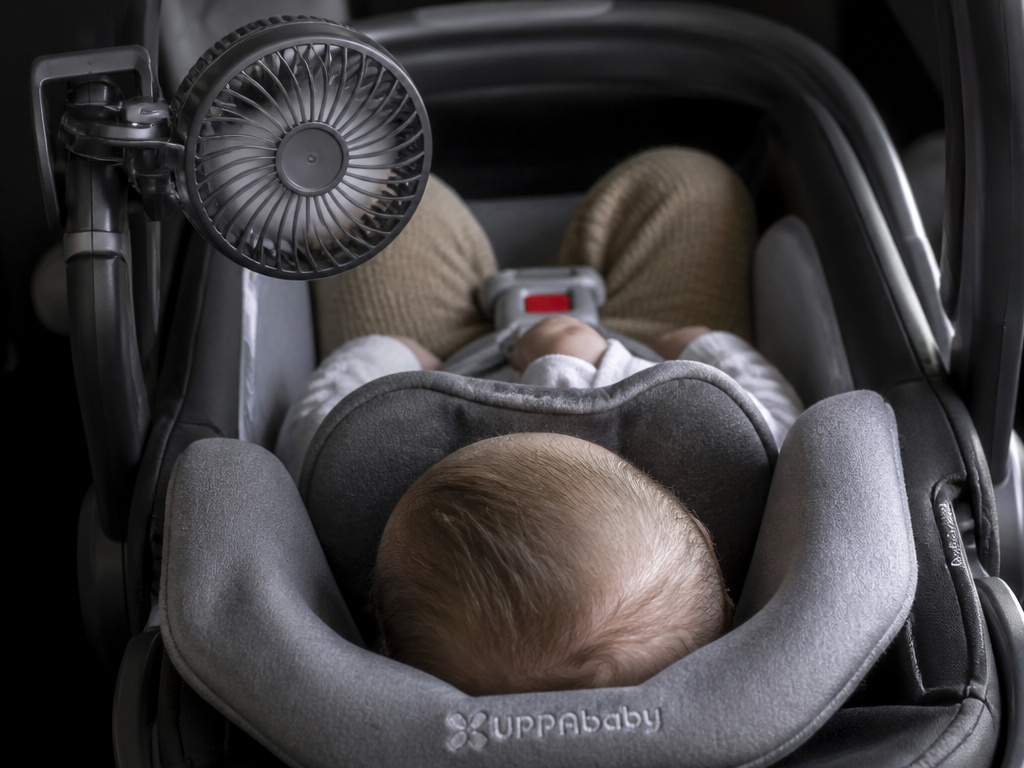
Helpful: A Certified Car Seat Fan. Look for a fan that clips securely to the seat, has soft blades, and is powered by a portable battery pack. It addresses overheating, a direct cause of fussiness. The Brica On-the-Go Fan is one example that attaches with a sturdy hook. It provides white noise, too.
Helpful: A Proper Head Support. For newborns and infants with poor head control, a support that cups the sides of the head without pushing it forward can prevent painful head slumping. It must not interfere with the harness. The products for head support designed for your specific seat model are the only safe choice.
Avoid: Car Seat Covers That Wrap Around the Shell. These can interfere with harness routing and hide incorrect installation. They also trap heat, exacerbating the temperature problem.
Avoid: Hanging Toys on the Handle. In a crash, these become projectiles. Any toy in the car must be soft, lightweight, and secured independently of the seat’s moving parts.
The principle is simple: anything you add must not touch the harness, must not change the seat’s geometry, and must be securely attached so it cannot fall on the child. When in doubt, leave it out.
Frequently Asked Questions
Why does my baby scream the moment she’s buckled in?
This is often a conditioned response or immediate physical discomfort. Check for a hot buckle or a strap pinching skin. Also, ensure the experience isn’t always followed by a long, boring drive. Try short, positive trips with a fun destination to rebuild the association.
Is it okay to let my baby cry it out in the car seat?
No. Prolonged, hysterical crying can lead to vomiting, which is a choking hazard if you cannot pull over immediately. It also spikes stress hormones for both of you. The safety considerations for crying during travel emphasize pulling over to provide comfort as the safest protocol.
How can I get my baby to sleep in the car seat?
Time your drive with their natural sleep window. Use strong white noise to mask road sounds. Ensure the seat is reclined correctly for their age. Darkness helps; consider sunshades. Avoid stopping if you see them starting to nod off. The motion will often carry them the rest of the way.
My baby only cries when I’m driving alone with him. Why?
This is likely separation anxiety combined with your divided attention. A mirror so he can see you might help. Also, talk to him constantly in a calm voice, even if he doesn’t understand the words. Your voice is a comfort. Pre-plan your route to minimize stressful lane changes.
Are some car seats more comfortable than others?
Yes, but comfort is secondary to safety and proper fit. Seats with deeper side wings and more padded harness covers can reduce pressure points. However, the most expensive seat will still cause crying if the harness is loose or the child is overheated. Fit the seat to your child and your vehicle first.
Before You Go
Calming a baby in a car seat isn’t about finding a magic trick. It’s a systematic process of eliminating physical discomfort first, overheating, poor posture, incorrect harness fit. Then, you layer sensory tools like motion, sound, and safe touch. The evidence is clear: a baby who is physically supported and sensorily soothed is a baby who can tolerate the ride.
Remember the one fact that changes the summer driving equation: a car seat can get hot enough to cause a burn. Touch it before you buckle them in. That single act prevents a world of hurt. Everything else, the white noise, the rolled diaper, the perfect snugness, builds from there. Your goal isn’t just a quiet car. It’s a safe, comfortable child who learns that travel is a part of life, not something to dread.
