
What Car Seat Comes After Infant? A Guide to the Two Options
This post contains affiliate links. As an Amazon Associate, we earn from qualifying purchases.
The car seat that comes after an infant car seat is a convertible or an all-in-one car seat. Both types are designed to be installed rear-facing first, then transition to forward-facing with a harness. You choose based on whether you want a seat that stops at forward-facing (convertible) or continues to a booster seat (all-in-one). The switch happens when your child exceeds the infant seat’s height or weight limit, not at a specific age.
That “height or weight limit” clause is where most parents trip. The manual says one thing, but your child’s proportions say another. The real trigger isn’t the calendar; it’s the top of their head reaching within an inch of the seat shell or their weight hitting the printed maximum. Miss that, and the seat’s protection drops sharply in a crash.
What follows: a breakdown of the two seat types that actually come next, the new federal rule that changes when you can turn them forward, and the exact signs your infant seat is finished. This isn’t about buying the most expensive model. It’s about matching a seat to your child’s size today and for the next four years.
Key Takeaways
- The next car seat must be installed rear-facing first. Federal rules now require a minimum child weight of 26.5 lbs before a seat can be labeled for forward-facing use.
- Convertible seats (rear-facing → forward-facing) are the most common next step. All-in-one seats (rear-facing → forward-facing → booster) cost more upfront but replace three separate seats.
- Your child outgrows an infant seat by height first, typically when the top of their head is within 1 inch of the shell top. Weight limits (usually 30-35 lbs) are the secondary check.
- Always prioritize your child’s height and weight over the seat’s advertised age range. A large 10-month-old may need the next stage, while a small 2-year-old might not.
- Never buy a used seat unless you know its full history and can verify it has never been in a crash. Plastic and harness materials degrade.
The Two Next-Stage Seat Types: Convertible vs. All-in-One
You have two valid paths after the infant carrier: a convertible car seat or an all-in-one car seat. The difference is longevity, not initial safety. Both must be installed rear-facing for toddlers and switched to forward-facing only when the child is large enough.
A convertible seat is a two-mode seat. It installs rear-facing for infants and toddlers, then converts to forward-facing with a 5-point harness for preschoolers. It does not become a booster seat. An all-in-one seat is a three-mode seat. It covers rear-facing, forward-facing with a harness, and finally functions as a high-back or backless booster using the vehicle’s seat belt.
The Chicco OneFit LX All-in-One Car Seat manual specifies it is for children from 5 to 100 pounds (2.3 to 45.3 kg) and 57 inches or less in height. This single seat can, in theory, last from birth to around age 10, covering the entire car seat progression explained.
The choice hinges on your budget and long-term plan. A convertible seat like the Graco Extend2Fit is a significant investment that will last 4-6 years. An all-in-one seat is a larger upfront cost meant to eliminate buying a separate booster later.
Why Rear-Facing is Non-Negotiable (And For How Long)
This isn’t a parenting style. It’s physics. A young child’s spine is still ossifying—the vertebrae are connected by cartilage, not solid bone. In a frontal crash (the most common and severe type), a forward-facing body is thrown forward, held by the harness, with immense force concentrated on the neck and spine. Rear-facing allows the seat shell to cradle the child’s head, neck, and back, distributing crash forces across the entire body.
The old rule of thumb was to turn forward at age 2. The current NHTSA child passenger safety guide and most pediatricians advise keeping children rear-facing until they reach the maximum height or weight limit of their convertible or all-in-one seat. Many modern seats support rear-facing to 40, 45, or even 50 pounds.
Where this goes sideways: Turning a child forward-facing at the old 20 lb minimum. A 2023 federal rule now mandates that seats can only be labeled for forward-facing use for children weighing at least 26.5 lbs—the weight of a 95th percentile 1-year-old. Turning before the seat allows it often violates the manufacturer’s instructions, voiding its safety certification.
When Your Child Has Actually Outgrown the Infant Seat
The move isn’t scheduled. It’s triggered by one of two hard limits, and height almost always comes first. Infant seat shells are short; toddlers get tall fast.
First, check the height limit. The universal rule: the child has outgrown the seat when the top of their head is less than 1 inch from the top of the hard plastic shell. Not the headrest padding—the actual shell. This ensures the shell can contain and protect their head in a rear-impact crash. Second, check the weight limit. Most infant seats max out between 30 and 35 pounds. Your child must be under both limits.
| Outgrown Sign | How to Check | Consequence If Ignored |
|---|---|---|
| Height Limit | Top of child’s head is within 1 inch of seat shell top. | In a crash, the child’s head lacks shell containment, risking severe neck injury. |
| Weight Limit | Child’s weight meets or exceeds seat’s maximum (e.g., 30 lbs). | The seat’s harness and structure are not tested beyond this weight; failure risk increases. |
| Shoulder Height | Child’s shoulders are above the top harness slot. | Harness cannot be routed at or above shoulders; child can submarine out of seat in crash. |
These physical milestones for outgrowing are printed in your seat’s manual. The “1-inch rule” is not a suggestion. A child whose head extends past the shell is unprotected.
How to Choose: Convertible or All-In-One?
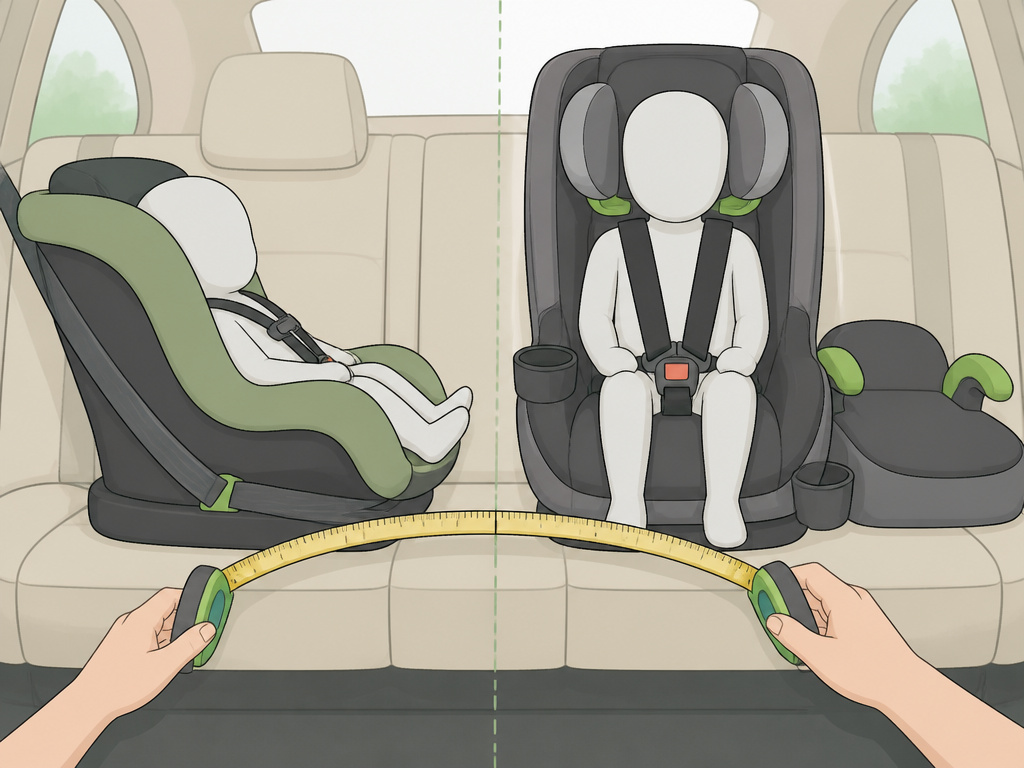 This is the core decision. Both are safe when used correctly. Your choice should be driven by your car, your budget, and whether you want to think about a booster seat purchase five years from now.
A convertible car seat is the standard next stage car seat. It’s typically less bulky than an all-in-one, which can make it easier to fit in smaller vehicles. You will need to buy a dedicated booster seat later, around age 5-7. Popular models include the Graco Extend2Fit (known for high rear-facing limits) and various Britax convertibles.
An all-in-one car seat is a long-term investment. It’s often larger and heavier, and its booster mode might not fit smaller children as well as a dedicated booster when the time comes. The trade-off is that you buy one seat for the entire journey. The Chicco OneFit LX and Graco 4Ever DLX are leading examples.
Common mistake: Choosing an all-in-one for its booster function without checking if it fits your vehicle in booster mode. Some become too tall for the vehicle’s headrest or roof, or the seat belt geometry doesn’t align correctly for a small grader.
Use this table to frame your decision.
| Consideration | Convertible Seat | All-in-One Seat |
|---|---|---|
| Primary Use | Rear-facing → Forward-facing (harness) | Rear-facing → Forward-facing (harness) → Booster |
| Best For | Families who want a dedicated, potentially better-fitting booster later. | Families wanting one purchase from toddler to grade school. |
| Vehicle Fit | Often smaller profile; easier in compact cars. | Often larger; can be tight in smaller back seats. |
| Cost Over Time | Lower upfront cost, plus booster seat cost later. | Higher upfront cost, no booster to buy later. |
| Example Model | Graco Extend2Fit Convertible | Chicco OneFit LX All-in-One |
Bottom line: If you drive a smaller car or want maximum flexibility, go convertible. If you have space and prefer the simplicity of one seat, go all-in-one. Neither is universally “better.”
The Critical Installation Shift: No More Base
 This is the practical change nobody mentions until they’re in the driveway with a new seat. The infant carrier and its detachable base are gone. Your new convertible or all-in-one seat installs directly onto the vehicle seat, and it stays there.
You must achieve a tight, rock-solid installation using either the vehicle’s seat belt or the LATCH system (Lower Anchors and Tethers for Children). For rear-facing, the seat must also be reclined at the correct angle—usually indicated by a level line or bubble on the seat itself. Too upright, and an infant’s head can fall forward, restricting their airway. Too reclined, and crash protection is compromised.
Before you start: Read both your car seat manual AND your vehicle owner’s manual. Vehicles have specific rules for LATCH use, tether anchor locations (for forward-facing), and which seating positions are approved. Using the wrong seat belt path or a non-approved seating position is a common installation error.
The switch from infant seat to a permanent seat is a commitment. You’ll lift your child in and out of the car seat itself. The convenience of carrying a sleeping baby inside is over. The payoff is a seat that is fundamentally more secure and designed for the higher forces a growing child will exert.
What About a Booster Seat?
A booster seat is not the next step after an infant seat. It comes much later. Boosters are for children who have outgrown the forward-facing harness mode of their convertible or all-in-one seat.
This typically happens between ages 5 and 7, when a child reaches 40-65 pounds, depending on the seat’s limit. The booster’s job is to “boost” the child so the vehicle’s lap-and-shoulder belt fits correctly: the lap belt low across the upper thighs (not the stomach) and the shoulder belt crossing the mid-chest and shoulder (not the neck).
The part nobody mentions: A high-back booster is almost always safer than a backless one. It provides side-impact protection and proper seat belt routing. A backless booster is only appropriate when the vehicle seat has a high back and head support, and the belt fits the child correctly without it.
Thinking about the transitioning to booster stage now is premature, but it informs your buying decision. If you buy a convertible seat today, you will need to buy a booster in a few years. If you buy an all-in-one, that cost is bundled in.
Frequently Asked Questions
Can I just turn my infant seat forward-facing when it’s outgrown?
No. Infant-only seats are federally certified for rear-facing use only. The label on the side of the seat will state this. Turning it forward-facing is dangerous and invalidates its safety certification. You must move to a seat designed for forward-facing use.
My 18-month-old is tall but light. What seat is best?
Look for a convertible or all-in-one seat with a high rear-facing height limit, not just a high weight limit. The Graco Extend2Fit, for example, has an extendable panel that increases the legroom and effective height limit for rear-facing. Prioritize the seat that will keep them rear-facing the longest.
Are all-in-one seats as good as dedicated seats in each mode?
They are safe and federally certified, but they can be a compromise. The booster function on an all-in-one may not fit a small 5-year-old as well as a dedicated high-back booster designed for that size range. For the rear- and forward-facing harness modes, they are generally excellent.
How do I know if a used convertible seat is safe?
The AAP car seat guidelines for families strongly advise against used seats. If you must, you must know its FULL history: no crashes, all parts and manuals present, harness straps not frayed or faded, and it must not be past its expiration date (usually 6-10 years from manufacture, found on a label). If any detail is missing, walk away.
What’s the single most important feature in the next seat?
The highest rear-facing weight and height limits you can find within your budget. The longer your child rides rear-facing, the better protected they are. Features like cup holders and easy-clean covers are conveniences, but extended rear-facing capability is a genuine safety upgrade.
The Bottom Line
The path after the infant carrier leads directly to a convertible or all-in-one car seat, installed rear-facing. Your decision should be guided by your child’s current height and weight, your vehicle’s space, and whether you prefer to pay once for an all-in-one or twice for a convertible-plus-booster combo. Ignore generic age recommendations. Anchor your choice to the specific height and weight limits printed on the seat you’re considering—that’s the data that actually matters. For a detailed look at top-rated models, the Consumer Reports car seat buying guide offers independent testing data that cuts through marketing claims. The right next appropriate stage seat is the one that fits your child, your car, and can be installed correctly every single time.
