
How Does a Baby Fail a Car Seat Test? Reasons & Criteria
This post contains affiliate links. As an Amazon Associate, we earn from qualifying purchases.
A baby fails a car seat test when their oxygen saturation drops below a specific threshold or their heart rate slows to a symptomatic level while secured in the seat. The most common clinical failure point is two or more episodes where oxygen saturation (SpO2) falls below 88% for at least 10 seconds, or a single drop to 80% or lower. Symptomatic bradycardia, a heart rate under 80 beats per minute, is a less common but critical failure mode. These tests, often called Infant Car Seat Challenges (ICSC), are primarily for preterm and medically fragile infants before hospital discharge.
That 88% number isn’t arbitrary. It’s the threshold where clinicians see a shift from normal variation to a sign of respiratory compromise in a semi-reclined position. The car seat’s angle, which is necessary for crash safety, can put pressure on a small infant’s chest and diaphragm. For a baby with underdeveloped lung control or low muscle tone, this position can make breathing work harder than lying flat.
What follows is a breakdown of the exact failure criteria pulled from hospital protocols, the specific infant group with a 26% failure rate, and the growing medical consensus that questions the test’s predictive value for every preterm baby. You’ll see the numbers from the studies, the dates from the recalls, and the one piece of advice every parent needs before discharge day.
Key Takeaways
- Late preterm infants (34–37 weeks) fail at a 26% rate. Their younger gestational age and lower muscle tone are the biggest risk factors, not always an underlying illness.
- Oxygen drops cause 74% of failures. The clinical red flag is two or more desaturations below 88%, each lasting 10 seconds or longer.
- The test is controversial. Leading institutions like UCSF Benioff Children’s Hospitals advise against routine testing due to inconsistent results and no proven link to mortality risk.
- Failure usually means more monitoring. A failed test often leads to a longer hospital stay for observation in a flat crib, not necessarily a diagnosis.
- Seat fit and condition matter independently. A recalled or improperly used seat is a separate, critical safety failure that no hospital test can catch.
The Two Official Failure Criteria (and What They Mean)
The monitor alarms. A nurse glances over. In a hospital’s discharge unit, a car seat test is a quiet, high-stakes observation. The official failure criteria are binary and measured.
Common mistake: Assuming a brief dip in oxygen is a fail. The protocol looks for a pattern: two or more distinct episodes where SpO2 is below 88% for a minimum of 10 seconds each, or any single drop to 80% or lower.
First, oxygen desaturation. A healthy, full-term baby might have brief dips, but they recover quickly. The failing pattern shows the baby can’t self-correct in the seated position. The 88% threshold comes from clinical studies on infant respiratory stability. Below that, blood oxygen levels are considered insufficient.
Second, symptomatic bradycardia. A heart rate falling below 80 beats per minute is a more serious sign. It often accompanies a significant oxygen drop, indicating the cardiovascular system is struggling. This accounts for only about 3% of failures, but it triggers immediate intervention.
| Failure Criteria | Clinical Threshold | What It Indicates |
|---|---|---|
| Oxygen Desaturation | ≥2 episodes of SpO2 <88%, each lasting ≥10 seconds, OR any single drop to ≤80%. | Respiratory compromise; the infant cannot maintain adequate oxygen levels in a semi-reclined posture. |
| Symptomatic Bradycardia | Heart rate <80 beats per minute (duration as observed by clinician). | Cardiorespiratory instability; the heart is not compensating for the lack of oxygen. |
Why do these happen in a car seat? The infant’s posture is the culprit. A properly installed seat holds a baby at a 30- to 45-degree angle. This angle prevents the head from flopping forward and obstructing the airway, a serious crash-safety feature. But for a preterm infant with a floppy airway and weak neck muscles, this same position can cause the chin to tuck toward the chest. That slight tuck can partially block the trachea. The baby works harder to breathe, tires, and oxygen levels fall.
You cannot see this struggle. It’s silent. That’s why the monitors are non-negotiable for at-risk infants.
Why Late Preterm Infants Are the Most Likely to Fail
If your baby was born between 34 and 37 weeks, often called “late preterm”, the statistics are important. This group looks healthy, often feeds well, and seems ready for home. Yet, they are the most vulnerable to failing a car seat test.
A 2016 peer-reviewed study in Pediatrics & Child Health analyzed 313 late preterm infants. The result: 26% failed their initial test. That’s one in four. The primary reason wasn’t a hidden heart defect; it was simple physiological immaturity. Younger gestational age was the strongest predictor.
Where this goes sideways: Discharging a late preterm infant without any observation in their car seat. Their failure rate is high enough that many hospitals still consider them the core group for testing, despite the broader debate.
These babies have spent less time developing the muscle tone and neurological control needed to keep their airway open against gravity. Their “tone” is lower. In a car seat, their head can slump, the jaw drops back, and the airway narrows. Their brain’s respiratory center is also less mature, making it slower to respond to rising carbon dioxide levels. They might just “forget” to take a deep breath now and then, a condition called apnea of prematurity.
The study found something else telling. Infants who passed the test were, on average, 39.4 hours older than those who failed. Just an extra day and a half of maturation outside the womb made a measurable difference. This underscores that failure is often about developmental timing, not disease.
The Hospital Protocol: What Actually Happens During the Test
The test itself is straightforward, but the setup is specific. It’s not about how the seat is installed in a car. It’s about monitoring the baby in the seat, in the hospital room.
- The Seat: Parents are usually asked to bring their own infant car seat to the hospital. This is crucial. It checks the specific seat the baby will use.
- The Setup: The seat is placed on a stable floor or a crib, not in a moving vehicle. The baby is dressed in their going-home outfit, no bulky coats or snowsuits that compress under the harness.
- The Monitoring: Nurses attach a pulse oximeter (a small sensor wrapped around the baby’s foot or hand) to continuously measure oxygen saturation and heart rate.
- The Observation: The baby sits secured in the seat for a set period, typically 90 to 120 minutes. This simulates a short car ride home. A nurse periodically documents the readings and observes the baby’s color and breathing effort.
- The Result: The monitor’s data and the nurse’s notes are compared to the unit’s failure criteria (the 88%/80% rule). Pass or fail.
Before you start: If you’re bringing your own seat, ensure it’s not under an active safety recall and that you know how to buckle the harness snugly. A loose harness lets the baby slump, which can cause a test failure that’s about fit, not physiology. Check the NHTSA car seat safety guidelines for recall lookup and proper use.
The goal is to catch a problem in the safe, controlled hospital environment. If a baby fails, the immediate remedy is simple: take them out of the seat, place them on their back in a crib, and see if they recover. Most do, rapidly. That rapid recovery is what points to the seat’s posture as the issue, not a fundamental illness.
What Happens Next: After a Failed Test
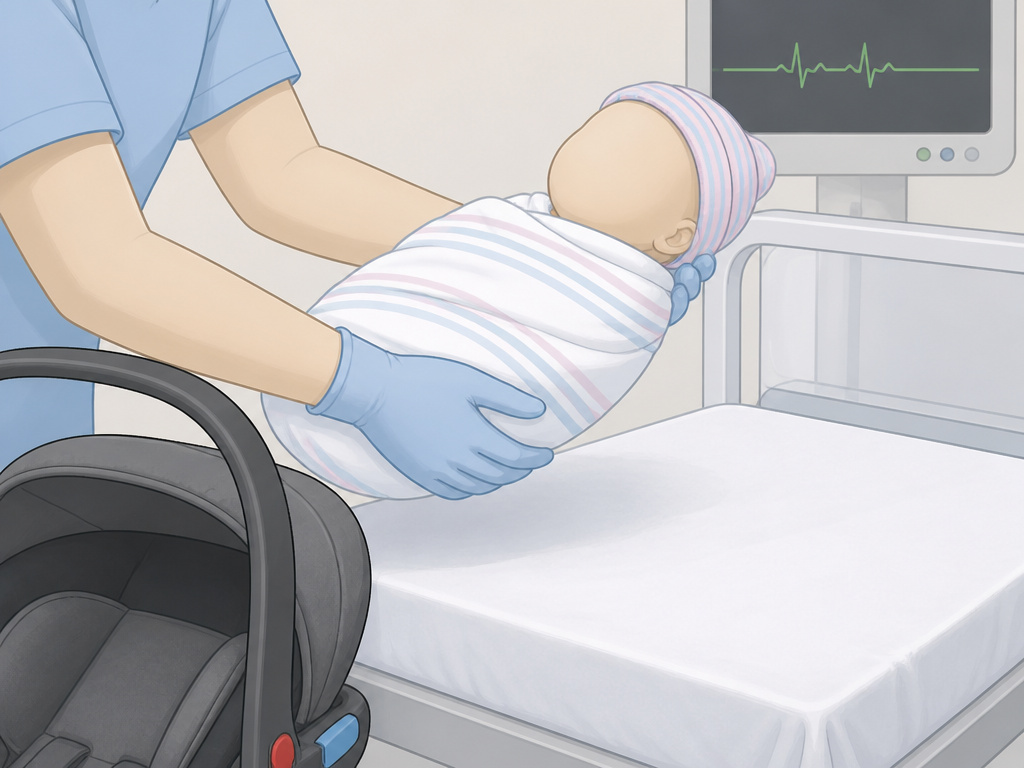
A failed test is a pause, not a crisis. The clinical response follows a standard pathway designed to rule out larger issues.
Immediate Action: The baby is immediately removed from the car seat and placed supine (on their back) in their hospital crib. Nurses monitor for a rapid return to normal oxygen and heart rate. This almost always happens within minutes.
The Next Steps: The medical team then decides on a plan. Common pathways include: * Extended Observation in the Crib: The baby may stay in the hospital for another 24-48 hours for monitoring while lying flat, to ensure the event was positional. * A Follow-Up Test: The baby might be retested in the car seat in 24-48 hours after more time to mature. Some studies show over a third of infants fail a second test. * Consultation with a Specialist: A pulmonologist or neonatologist may be consulted to rule out underlying respiratory or neurological conditions. * Discussion of a Car Bed: For infants who consistently fail, a flat “car bed” that meets FMVSS 213 standards may be recommended for travel. This is a rare outcome.
The part nobody mentions: A significant percentage of infants who fail are admitted to a higher level of care (like the NICU) for observation after the test, even if no cause is found. This means a longer hospital stay.
The key thing for parents to understand is that a failed car seat test is a functional test of the baby in that seat at that moment. It is not a diagnosis of a chronic condition. It is data point that says, “Today, under these conditions, your baby wasn’t ready.” The management is watchful waiting.
The Growing Medical Debate: Is Routine Testing Worth It?
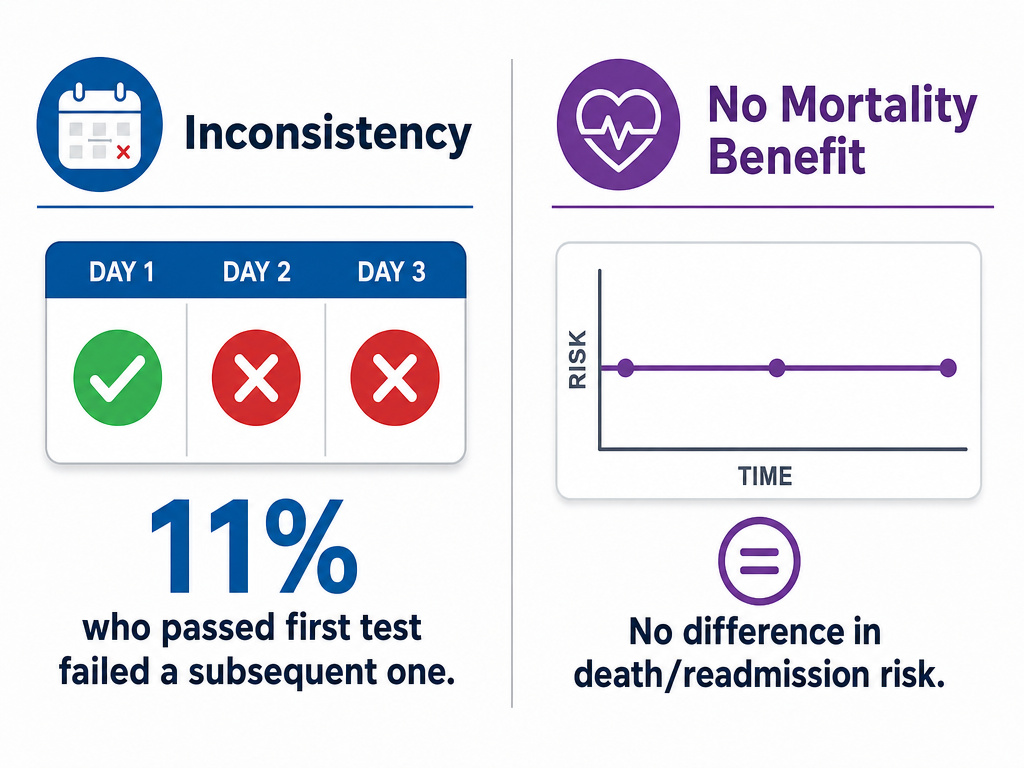
Here is where the consensus fractures. The American Academy of Pediatrics (AAP) historically recommended testing for all infants born before 37 weeks. But a major counter-voice has emerged.
The UCSF Benioff Children’s Hospitals, part of a large neonatal consortium, published a formal Consensus Statement for ICSC that explicitly does not recommend routine testing. Their reasoning is twofold and pulls directly from the data.
First, inconsistency. One study they cite found that 11% of infants who passed a first test failed one of two subsequent tests. The result is not reliably predictive from one day to the next.
Second, and more critically, no proven mortality benefit. Their analysis of thousands of cases found that failing a car seat test was associated with longer hospital stays but showed no difference in the risk of death or readmission within 30 days. The test, they argue, may catch transient immaturity but not the infants who will have life-threatening events at home.
This creates a real dilemma for hospitals and parents. The test can prevent the discharge of a baby who might have struggled in the car. It also leads to longer, more expensive hospital stays for many babies who would have been perfectly fine. The Consensus Statement for ICSC shifts the focus: instead of a blanket test, ensure all parents know how to use their seat correctly and watch for signs of distress (like turning blue or going limp) on every trip.
A Different Kind of “Failure”: When the Car Seat Itself Isn’t Safe
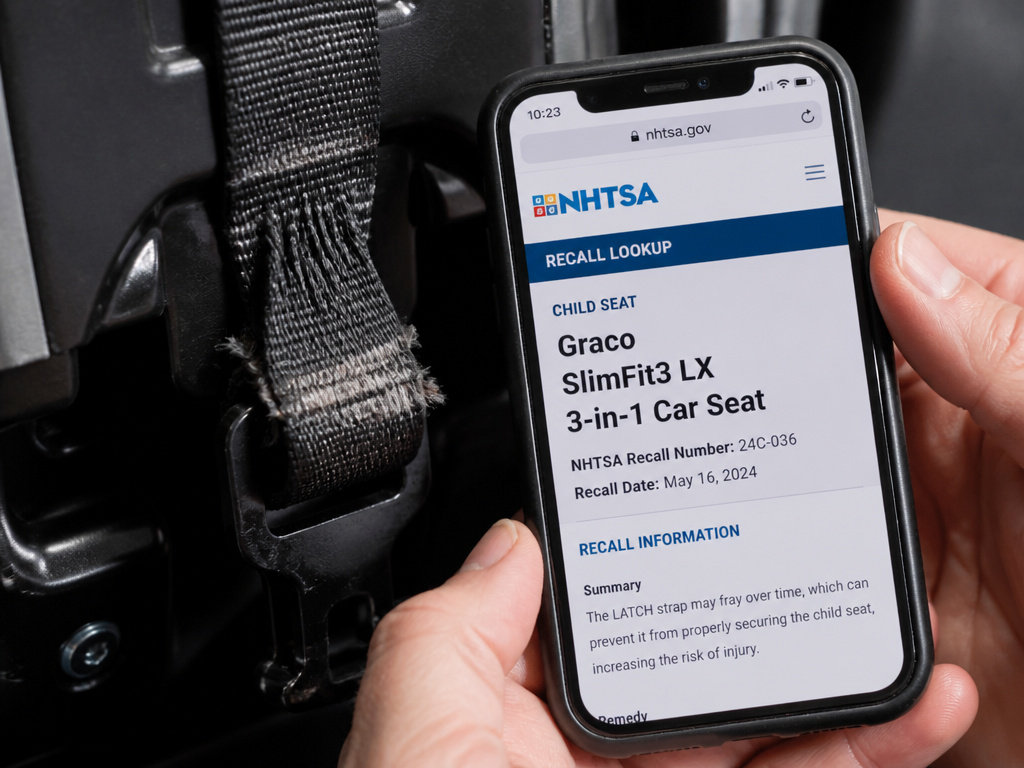
A baby can “pass” a hospital physiological test but still be in grave danger due to the seat itself. This is a mechanical failure, governed by federal law, not hospital policy.
All car seats sold in the U.S. Must comply with Federal Motor Vehicle Safety Standard (FMVSS) 213. Sometimes, seats that passed initial certification are later found to be non-compliant. Two recalls illustrate this:
- Maxi-Cosi Pria 70 (2019 models): In 2021, Dorel Juvenile Group determined a noncompliance. When tested with a 10-year-old dummy using only a lap belt (no top tether), the dummy’s head excursion exceeded the 813 mm limit. The risk? A forward-facing child over 65 lbs could hit the vehicle interior in a crash.
- Baby Trend Hybrid 3-in-1 (Dec. 2021 lot): A production lot of 2,600 seats was recalled in 2023 because the LATCH strap webbing did not meet the minimum breaking strength in FMVSS 209. A frayed strap could fail in a crash.
These recalls are unrelated to a baby’s breathing. They are about the seat’s structural integrity during a collision. A hospital car seat test will never catch this. It is the parent’s responsibility to check for recalls, install the seat with the correct method (using the top tether for forward-facing seats is critical), and ensure the harness is snug. Physiological safety and crash safety are two separate worlds that meet where your child sits.
Your Role: Observation and Safe Positioning
Whether your baby has a test or not, your observation is the final and most important safety layer. The hospital test is a snapshot; you are on duty for every ride.
Positioning is Everything: Even with a passed test, always ensure your infant’s head is not slumping forward. Their chin should be off their chest. Rolled muslin cloths or specially designed supports can be placed along the sides of the head and torso for alignment, but never behind the back or under the buttocks. For help, see our guide on how to prevent a baby’s head from falling in a car seat.
Dress for the Seat: Overheating can stress an infant’s system. Dress them in thin, breathable layers and add a blanket over the buckled harness. Use a cooling car seat cover or a breathable car seat liner in summer, and safe, thin layers under a coat in winter. Never put a bulky coat under the harness.
Watch, Don’t Just Drive: On early trips, have another adult sit next to the baby to watch their face and breathing. Pull over immediately if you notice grunting, a dusky color around the lips, or if the head slumps into a dangerous position.
Frequently Asked Questions
What is the most common reason a baby fails a car seat test?
The most common reason is oxygen desaturation. Specifically, the clinical failure is defined as two or more episodes where the baby’s oxygen level drops below 88% for at least 10 seconds each while secured in the seated position. This accounts for about 74% of failures.
Can a full-term, healthy baby fail a car seat test?
It is very uncommon but possible. Routine testing is not recommended for healthy full-term infants. If a full-term baby appeared to have an episode of color change or breathing trouble, a test might be ordered, but failure would be rare and would prompt investigation for an underlying issue.
If my baby fails, does it mean they can’t ever go in a car seat?
No. Almost all babies who fail will eventually pass after more time to grow and mature. In the short term, the hospital may recommend a follow-up test in a day or two, continued monitoring, or, in very rare cases, discharge using a flat car bed approved for crash safety. The car seat itself is not the long-term problem.
How can I help my baby pass the car seat test?
You can’t directly control their physiology, but you can optimize the setup. Bring your actual car seat to the hospital so they test the real configuration. Dress your baby in light, fitted layers, no thick coats. Ensure the nurses buckle the harness snugly (you shouldn’t be able to pinch a horizontal fold in the strap at the shoulder). Proper positioning reduces slumping, which is a controllable factor.
Are there alternatives to the car seat test?
The main alternative, supported by some hospitals, is to forgo routine testing and instead provide extensive parental education on safe car seat use and warning signs of distress. Some institutions use a “car seat challenge” only for infants with specific respiratory conditions or extreme prematurity, not as a blanket policy for all late preterm infants.
Before You Go
A baby fails a car seat test on monitor numbers: oxygen below 88%, heart rate under 80. The infants most likely to hit those numbers are the late preterms, the 34- to 37-weekers who seem ready but have a 26% failure rate. The test is a tool, but its value is now debated by leading hospitals who see inconsistent results and no clear link to preventing death after discharge.
Your takeaway is two-part. First, understand the test’s limits. It checks physiology in a specific seat at a specific time. Second, and more critical, master crash safety independently. Check for recalls, buckle the harness tight, use the top tether, and watch your baby like a hawk on those first rides home. The monitor’s beep is one data point. Your vigilance is the constant.
