
Can I Sell My Infant Car Seat? Follow This Legal Checklist
This post contains affiliate links. As an Amazon Associate, we earn from qualifying purchases.
You can sell your infant car seat if it passes a five-point legal and safety checklist: it was manufactured on or after January 1, 2012 (in Canada), is at least two years from its expiration date, has a verifiable history of no crashes, has no active recalls, and has all original parts with no modifications. Missing any one point makes the seat illegal to sell or unsafe to use.
The 2012 date is the legal cutoff under the Canada Consumer Product Safety Act, after which seats from before that year cannot be advertised or given away. That’s the first filter, and it catches a lot of well-meaning sellers.
What follows is the full breakdown of each checkpoint, the physical evidence you need to prove it, and the specific steps to clean, document, and legally attest to your seat’s history. This turns a vague “maybe” into a clear yes or no.
Key Takeaways
- In Canada, selling a car seat made before January 1, 2012 is illegal under the Canada Consumer Product Safety Act.
- Expiration dates are model-specific: the Chicco Fit360 expires at 8 years, while the Chicco OneFit LX lasts 10 years.
- A minor crash doesn’t automatically doom a seat, but you must have the manufacturer’s specific written guidance to prove it’s still safe.
- Resale platforms like GoodBuy Gear require sellers to sign a legally binding attestation confirming they are the original owner and the seat has never been in a crash.
- Never sell a seat missing its infant insert or harness covers; these are non-negotiable safety parts, not comfort accessories.
The 5-Point Legal & Safety Checklist
Selling focuses on liability. If you sell a seat that fails later, you are responsible.This checklist is your shield.
Before you start: You are certifying this seat will protect a child in a 70-mph crash. A missing part, a hairline crack in the shell, or an unreported fender bender voids that certification. The consequence is injury. The timeline is instantaneous.
1. Verify the Manufacture Date & Legal Status
Find the white, rectangular label on the seat shell. It’s often under the seat pad or on the side. You’re looking for the manufacture date.
If you’re in Canada, this date must be on or after January 1, 2012. The Canada Consumer Product Safety Act (CCPSA) makes it illegal to advertise, sell, or even give away a seat made before this date, as it may not meet current safety standards. This isn’t a best practice; it’s black-letter law.
For U.S. Sellers, the legal focus shifts to expiration and recalls, but the date is still critical for the next step.
2. Confirm It’s Not Expired (And Know Your Model’s Limit)
Expiration isn’t a myth. Plastic degrades, harnesses fatigue, and safety standards evolve. The label that gave you the manufacture date should also state the expiration date or “do not use after” notice.
If it doesn’t, you must know your model’s limit. These aren’t all the same. | Car Seat Model | Expiration Timeline | Source | |——————-|————————|————| | Chicco Fit360 | 8 years from manufacture | Chicco Fit360 Manual, p.1 | | Chicco OneFit LX | 10 years from manufacture | Chicco OneFit LX Manual, p.1 | | Most Infant Seats | 6-7 years | Industry Standard | | Convertible Seats | Up to 10 years | Model Dependent |
Resale platforms add another rule: the seat must be at least two years from its expiration date to be accepted. Selling a seat that expires in six months is functionally useless to the next family and ethically dubious. You can learn more about this critical timeline in our guide to infant car seat expiration dates.
3. Prove a Crash-Free History
This is the hardest thing for a buyer to verify and the most important. The rule is absolute: a seat involved in a moderate or severe crash is garbage. Full stop.
The edge case is the minor crash. Some manufacturers may allow continued use after a minor incident, but the burden of proof is on you, the seller. You must have the specific section of your seat’s owner’s manual that outlines the manufacturer’s “minor crash” criteria. Without that printed guidance, the seat is unsellable.
Where this goes sideways: Assuming a parking-lot tap doesn’t count. The forces in a 10-mph impact can stress the seat’s plastic structure in ways you can’t see. If you can’t swear to a crash-free history, you cannot in good conscience sell the seat.
4. Check for Recalls and Missing Parts
Every part in the manual is there for a reason. Before listing, lay out every piece: the seat, base, infant insert, shoulder pads, harness covers, and canopy. Match them against the manual’s parts diagram. The infant insert is a common missing item that instantly disqualifies a seat.
Next, use the model number from your label to check for recalls on the NHTSA car seat safety guidelines website. An active recall makes the seat illegal to sell. If a recall was repaired, you must have the documentation from the manufacturer to prove it.
5. No Modifications Whatsoever
This means zero. No aftermarket strap covers not sold by Chicco, no extra padding tucked behind the back, no boards under the butt to change the recline angle, no harness straps that have been washed in harsh detergent. Any modification voids the safety certification and makes the seat unsafe.
The harness straps should show no fraying, and the buckle should click firmly and release smoothly. The plastic shell should be free of cracks, deep scratches, or any whitening stress marks.
How to Prep and Price Your Seat for Sale
Once the seat passes the checklist, your job is to make its condition transparent.
Clean it like the manual says. Most manuals forbid soaking the harness straps or using harsh chemicals, which can weaken the fibers. Use mild soap, water, and a soft cloth. Let it air-dry completely.
Take photos of everything. Your listing must include: * The label with model number and date. * The expiration stamp. * All parts laid out. * Close-ups of the harness, buckle, and shell from all angles. * The front cover of the owner’s manual.
Write a brutally honest description. State the manufacture date, expiration date, and explicitly write: “Never in a crash, all original parts, no modifications.” If you’re the original owner, say so. This honesty is what separates a legitimate sale from a risky one.
Pricing is about remaining useful life. A four-year-old infant seat with three years left is worth more than a six-year-old convertible with one year left. Research sold listings for your specific model on reputable resale sites or local marketplaces. Remember, programs exist for families in need; if selling feels fraught, look into free infant car seat donation or recycling programs.
Where and How to Sell Safely
Your selling venue dictates the level of scrutiny and protection.
Specialized Resale Platforms (e.g., GoodBuy Gear): This is the safest route. They use a 30-point proprietary safety inspection conducted by a Child Passenger Safety Technician. The trade-off is they take a commission and have strict acceptance rules. You will sign a legal document attesting to the seat’s history. This transfers liability and gives the buyer confidence.
Local Marketplace (Facebook, Craigslist): Higher risk, higher reward. You keep all the money but carry all the liability. Meet in a public place, allow a thorough inspection, and provide copies of the manual. Be prepared to walk away if a buyer seems unaware of safety checks. Your goal is to find a buyer who knows what to look for, not just the lowest price.
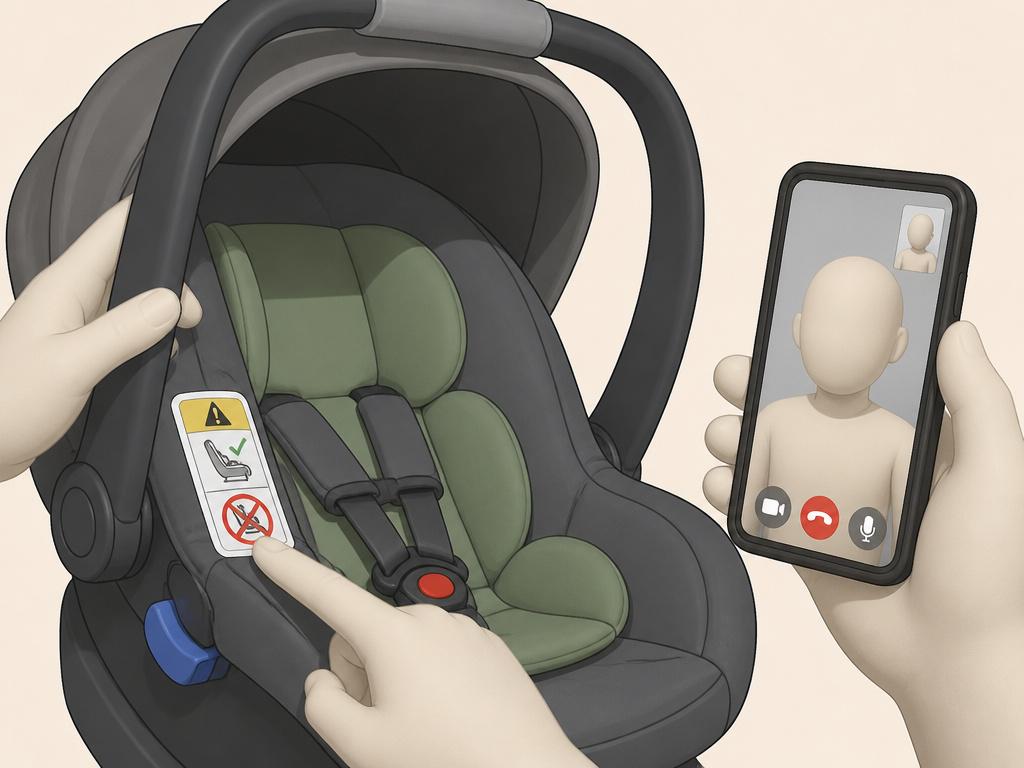
What not to do: Never sell to someone who doesn’t ask questions. An informed buyer is a safe buyer. Never ship a seat without the buyer verifying the labels first via video call.
The One Question That Decides Everything
Are you the original owner who knows every car ride this seat has ever taken? If yes, and it passes the checklist, you can sell. If no, you cannot guarantee point three—the crash-free history. It becomes unsellable.
This is why manufacturers like Cybex explicitly state in manuals: “We do not recommend giving or selling the seat to anyone.” Their liability ends with the first owner. When you sell, you assume that liability. The checklist isn’t just for safety; it’s your due diligence to manage that risk.
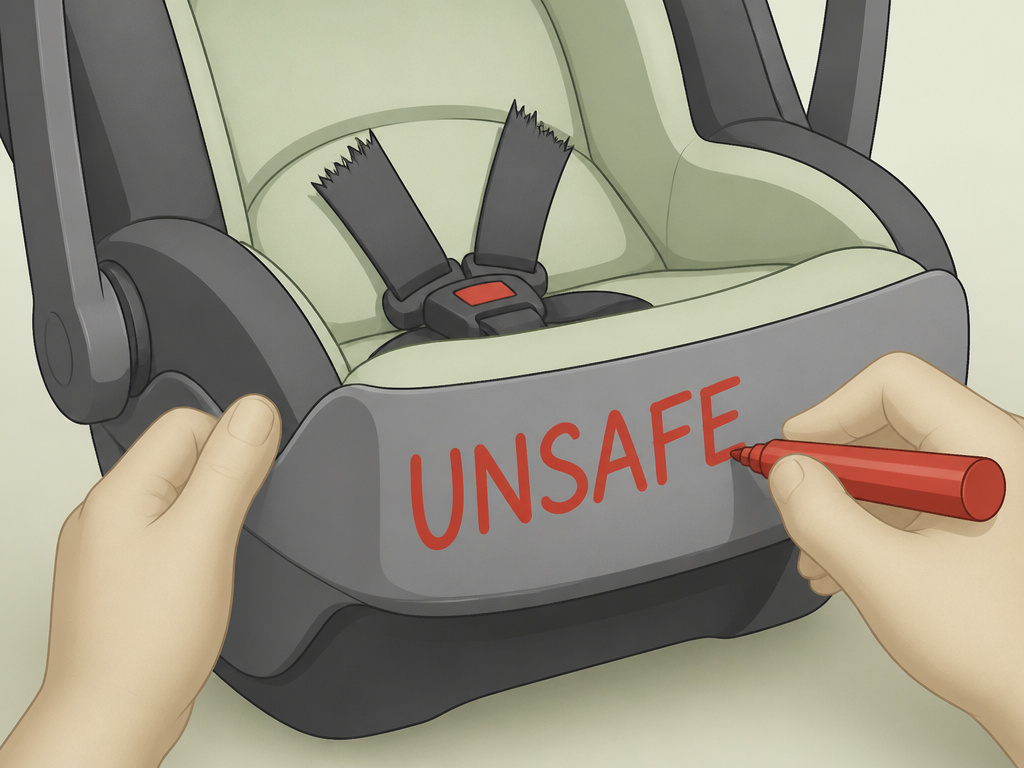
If your seat doesn’t pass, don’t trash it. Many municipalities have car seat recycling programs. Cut the harness straps, write “UNSAFE” on the shell in permanent marker, and recycle the components. This prevents it from being pulled from the trash and used.
Frequently Asked Questions
Can I sell a car seat that’s been in a minor crash?
Only if your specific owner’s manual has a defined “minor crash” policy and the incident met every criterion. You must have that manual section to show a buyer. Without it, the answer is no.
Where is the expiration date on an infant car seat?
Look for a permanent stamp molded into the plastic on the underside or back of the shell, or a statement on the white manufacturer’s label. It will say “Do not use after [date].” Do not confuse this with dates on sewn-in fabric tags, which are for the harness material only.
Is it illegal to sell a car seat?
In Canada, it is illegal to sell a seat manufactured before January 1, 2012. In the U.S., it is illegal to sell a seat that is under an active recall or that you know to be damaged. Selling a seat that fails basic safety criteria, while not always explicitly illegal, exposes you to significant civil liability if it fails.
What do I need to include when selling a car seat?
The seat, all its original parts (base, inserts, pads), and the owner’s manual. The manual is non-negotiable; it’s the instruction book for protecting a life. If you’ve lost it, download the exact PDF from the manufacturer’s website before you list.
How long do infant car seats last?
Most infant-only seats expire 6 or 7 years after their manufacture date. Always check your specific model’s manual for its official expiration, as some, like the Chicco Fit360, have an 8-year life, while convertible seats can last up to 10.
Before You Go
Selling a used infant car seat is a transaction built on trust and verified facts. It’s not a garage sale item. Use the five-point checklist: legal manufacture date, valid expiration, verified no-crash history, clear recall status, and all original parts. Document everything with photos. Choose a selling platform that matches your risk tolerance.
If your seat doesn’t qualify, recycle it responsibly. The goal is to ensure the seat that protected your child can do the same for another, without compromise.
