
Does Your Infant Car Seat Expire? Key Safety Rules to Know
This post contains affiliate links. As an Amazon Associate, we earn from qualifying purchases.
Yes, every infant car seat expires. The lifespan is set by the manufacturer, typically 6 to 7 years from the Date of Manufacture (DOM), not the date you bought it. Using a seat past this date is unsafe and, in Canada, can violate provincial law. The countdown starts the day the plastic shell is molded.
That 6-to-7-year window is a ceiling, not a guarantee. Transport Canada states all seats sold in the country have an expiry date, even though the regulation itself doesn’t require one. Manufacturers set these limits because plastic degrades, safety standards evolve, and an older seat’s history, like a prior crash, becomes impossible to verify. Your job is to find the DOM on the seat’s label and do the math.
What follows: where to find that critical label on major brands, the one policy change that shifts the countdown start for some seats, and the concrete steps to retire an expired seat so it never gets reused.
Key Takeaways
- Infant car seats typically expire 6 to 7 years from their Date of Manufacture (DOM). Brands like Chicco and Nuna Pipa may use the purchase date if you have proof.
- Transport Canada mandates that all car seats have an expiry date and warns that using an expired seat may break provincial law.
- The Date of Manufacture (DOM) is printed on a sticker or label on the seat shell or base, it is not your purchase receipt date.
- Peg Perego changed its policy in 2023: expiration is now based on date of purchase (7 years for infant seats), falling back to DOM if the receipt is lost.
- An expired seat should be destroyed, not donated. Cut the harness, mark the shell “EXPIRED,” and check local recycling programs.
Why Infant Car Seats Expire (It’s Not Just the Plastic)
The expiration date isn’t a marketing ploy. It’s a calculated endpoint for the seat’s ability to perform in a crash. Three forces work against the seat from day one, and the manufacturer’s lifespan accounts for all of them.
First, material fatigue. The plastic shell and internal energy-absorbing foam are exposed to extreme temperature cycles, from freezing Canadian winters to hot summer sun baking through your car windows. This thermal stress makes plastics brittle over time. A study on polymer degradation in vehicles notes this weakening isn’t always visible; a shell can look intact but crack on first impact instead of flexing.
Second, safety is a moving target. Federal motor vehicle safety standards (CMVSS in Canada) are updated. A seat made in 2015 may not incorporate the side-impact protection or belt path reinforcement required in 2025 models. The expiration date ensures children eventually graduate to seats meeting the latest known safety benchmarks.
Where this goes sideways: Buying a second-hand seat without its full history. Transport Canada lists an unknown crash history and lost instruction manuals as key reasons for expiry. A seat from a fender-bender five years ago may have stressed components you cannot see.
Third, part integrity. The harness webbing, buckle mechanism, and LATCH connectors suffer from UV exposure, spilled food, and repeated use. The harness can fade and weaken; buckles can collect debris that prevents a secure latch. The expiration window anticipates this cumulative wear.
| Reason for Expiry | What Degrades | Consequence if Ignored |
|---|---|---|
| Material Fatigue | Plastic shell, EPS foam | Brittle shell fractures on impact instead of absorbing energy. |
| Evolving Standards | Overall safety design | Seat lacks current mandatory protection features (e.g., enhanced side-impact). |
| Component Wear | Harness webbing, metal buckles, adjusters | Harness tears, buckle fails to latch, or adjuster jams during a crash. |
How to Find Your Infant Car Seat’s Expiration Date
You need two pieces of information: the Date of Manufacture (DOM) and the manufacturer’s stated useful life for your specific model. The DOM is on the seat itself. The useful life is in your manual or on the brand’s website.
Step 1: Locate the Date of Manufacture (DOM).
Turn the seat over. Look for a white or silver sticker, usually on the back or bottom of the plastic shell, or on the side of the car seat base. The DOM is often printed as a month/day/year sequence or as a Julian date (e.g., 12324 for the 123rd day of 2024). Some newer Britax seats print the expiration date directly here.
Step 2: Find the Manufacturer’s Lifespan.
Check your owner’s manual. Look for the sentence that says “discontinue use of this child restraint if it is older than…” If the manual is gone, a common issue Transport Canada flags, visit the brand’s website. We’ve compiled the major brand specs below.
Step 3: Calculate.
DOM + Useful Life = Expiration Date. If your Chicco KeyFit 30 has a DOM of June 2020 and Chicco’s lifespan is 7 years, it expires in June 2027.
The serial label is your source of truth. The date of purchase on your receipt is irrelevant for most brands, the clock starts when the seat is made, not when you take it home.
Brand-Specific Infant Car Seat Lifespans
Use this table to cross-reference your brand. These timeframes are from manufacturer data compiled by Transport Canada and the companies themselves.
| Brand | Typical Infant Seat Lifespan | Critical Note |
|---|---|---|
| Britax (Willow, Cypress) | 6 years (from DOM) | ClickTight® infant models have a 10-year lifespan from DOM. |
| Graco | 7 years (from DOM) | For seats with plastic-reinforced belt paths. |
| Chicco (KeyFit) | 7 years | From DOM, or from date of purchase if you have proof of receipt. |
| Nuna Pipa | 7 years | From DOM, or from date of purchase if you have proof of receipt. |
| Peg Perego | 7 years | From date of original purchase (policy changed Jan. 2023). If unknown, use DOM. |
| Baby Trend | 6 years (from DOM) | |
| UPPAbaby (Mesa) | 7 years (from DOM) |
The Peg Perego policy change is a major exception. For their infant seats, the 7-year timer now starts the day you buy it, assuming you keep the receipt. This is a consumer-friendly shift, but it puts the onus on you to keep that paperwork for nearly a decade.
The Legal and Safety Risks of an Expired Seat
This isn’t just a suggestion. In Canada, provincial and territorial highway traffic acts require that child restraints be used according to the manufacturer’s instructions. Using a seat past its expiry date violates those instructions.
If you are in a collision with an expired seat, you could be found liable for failing to properly restrain your child. Insurance companies may scrutinize the seat’s validity. More importantly, you are betting your child’s safety on materials that the manufacturer has explicitly stated are beyond their certified performance window.
Never donate or sell an expired car seat. Transport Canada is explicit: “the car seat should be permanently discarded rather than donated to a charitable organization, second hand store, or given to friends or relatives.” A thrift store cannot verify its history, and the next parent will assume it’s safe.
The safe, responsible way to retire a seat is to make it unusable. 1. Cut the harness straps in several places with heavy-duty scissors. 2. Remove the cover and discard it separately. 3. Write “EXPIRED – DO NOT USE” in large, permanent marker on the plastic shell. 4. Check for recycling. Some municipalities have programs that take the polypropylene plastic. If not, dispose of it with your regular waste.
When Expiry Isn’t Your Only Deadline
The expiration date is a long-term deadline. More immediate deadlines can force a seat’s retirement long before that date arrives.
A car seat involved in a moderate or severe crash must be replaced immediately, even if it’s only a year old. Insurance should cover this. Check your specific manufacturer’s guidelines, some require replacement after any crash, even minor fender-benders.
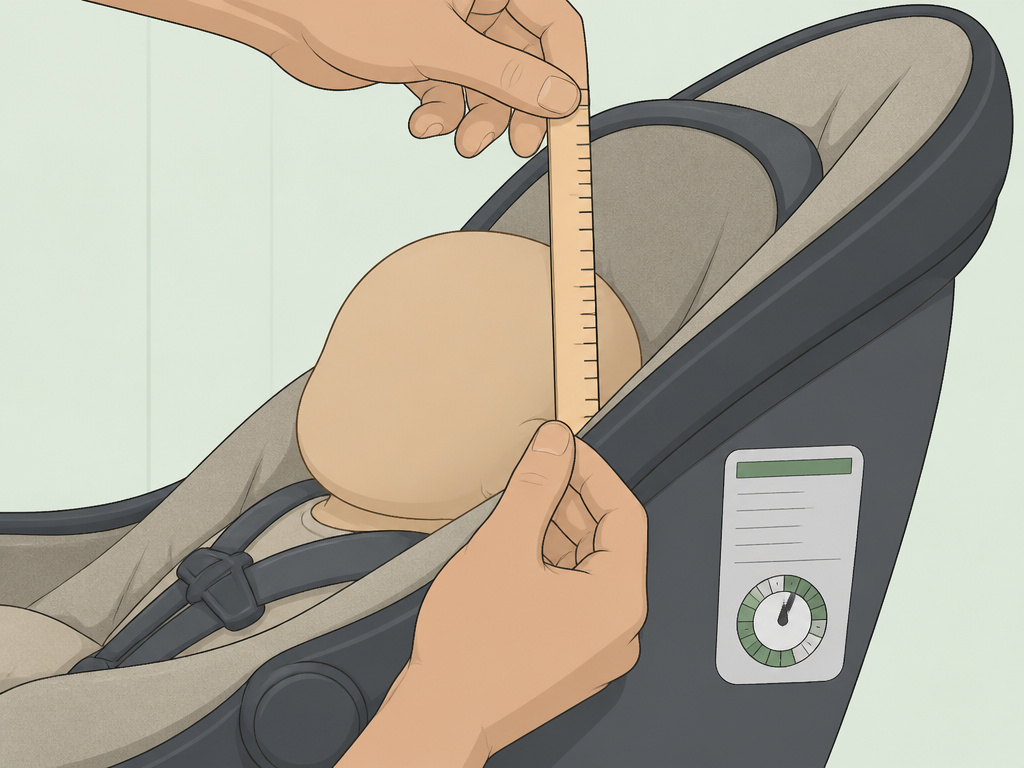
Your child will also outgrow the infant seat by height or weight long before it expires. Most infant carriers have a maximum height of 32 inches or a weight limit around 30-35 pounds. The moment your baby’s head is within an inch of the shell top or they hit the weight limit, you must switch from the infant seat to the next car seat.
This is where planning matters. If you buy a premium infant seat like a Nuna Pipa for a short infant stage, invest your research energy into the convertible car seat they’ll use for the next 4+ years. That’s the seat that needs to be a best car seat after infant.
Frequently Asked Questions
Does the car seat base expire too?
Yes, the car seat base expires on the same schedule as the infant carrier. It has the same DOM label and is made of the same plastic, undergoing the same stress. Always check its date.
I lost my manual. How do I find my seat’s lifespan?
Your first stop is the manufacturer’s website. Most, like Britax and Graco, have support pages with expiration FAQs. You can also call their customer service with the model name and DOM from the label. As a last resort, use the most conservative timeframe from our brand table (6 years) until you can confirm.
Can I use a second-hand infant car seat?
It’s strongly discouraged. You cannot verify if it was in a crash, if it was cleaned with harsh chemicals that degraded the harness, or if all parts are original. Most critically, you likely cannot confirm its true DOM or whether it’s already expired. The only potentially safe hand-me-down is from a trusted immediate family member where you have the full history, manual, and can verify the DOM.
My seat is expired, but it looks fine. Is it really unsafe?
Yes. The degradation that matters, micro-fractures in the plastic, chemical changes in the harness fibers, is not visible. The expiration date is based on laboratory stress testing that simulates years of thermal cycling and material aging. “Looks fine” is not a safety standard.
The Bottom Line
An infant car seat’s expiration date is a non-negotiable safety limit. Find the Date of Manufacture on the seat’s label, add 6 or 7 years (check your brand), and mark that date on your calendar. Treat it like the expiry on a medicine bottle, past that point, you cannot trust its performance.
When the time comes to move from an infant seat, let expiration be one less thing to worry about. Choose a quality infant seat with a clear DOM label, and focus your long-term planning on a highly rated car seat for toddlers that will see them through the preschool years safely.
